Beijing Haidian –one village sets up a checkpoint to collect fees and manage the floating population, but are forced to suspend the practice
Source:China Broadcast net
http://www.chinadaily.com.cn/dfpd/bj/2011-04/07/content_12285941.htm?prolongation=1
2011-04-07
Xiaoniufang village, reporter for Voice of China, Wang Xian, editor Xu Yinjuan
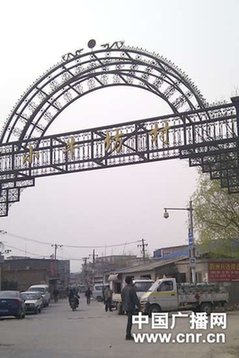
The storm roiled up by the demolishing of Tangjialing have not quite subsided. The media has reported on the village of Xiaoniufang, not far from Tangjialing, which set up a checkpoint, to collect a “maintenance fee” from members of the floating population. The village originally had 1000 residents, but the influx of migrants expanded the population to 20,000. How was the village to manage this difficult problem? Could they compel people to pay this fee without any suitable basis?
At noon the village is bustling with people, most of them not village residents. Everyone had heard that they will now be subject to paying water and sanitation fees.
Reporter, to a passerby: Will you pay these fees?
No, I’m not. Most of us are planning to move instead.
A Mr Wang Xishuo said his whole family lived in the village, For many years they have never had to pay water and sanitation fees. Since his family consists of a number of people, if they had to each pay the fee every month, it would be a considerable amount.
At the village, there is a high metal entrance gate that is obviously newly-built. An electrified barrier pole is also set in place. No one is inside the sentry box, but there is a notice there that states that after 04-03 those without a pass will be prevented from entering. “Please go to the floating population office to obtain a pass.” A person in the village said, the “proof” to obtain the pass was to pay money. Each individual had to pay 15 yuan each month. Since they had not collected the fee before, the first time an individual had to pay an additional 5 yuan, making a total of 20.
Several persons in the village said they could not afford anything like this.
At the village committee office, this reporter got a copy of the “Plan to collect a fee for floating population management,” and spoke with a village cadre.
Cadre: The collecting of fees was suspended [due to media attention and backlash]. After waiting carefully for the right moment, we will again put this in effect. The aim is chiefly to register everyone in the village, and strengthen management.
The majority of members of the floating population have paid nothing up to now, while a comparatively small number of village residents pay 10 or 20 yuan. On the receipt for these payments it says “Maintenance fee.” What is involved in this term, “maintenance fee?” According to the cadre, it really refers to water and sanitation fees. To relieve the financial burden of managing the floating population, it is also necessary to collect a sum of money.
The cadre: We don’t have enough financial resources. For instance, every day this village produces 10 tons of garbage. If we register everyone and collect some money, we can unify management practices and make a better environment.
The village committee says it has suspended the collection of fees to receive a pass, but in the future “sealed management” may be necessary.
Perhaps because Xiaoniufang village is close to the Shangdi High Technology District, the floating population has increased. It is already beyond the resources of the village committee to count exactly how many are in the village, and to manage the situation.
Haidian district in 2009 issued guidelines on floating population management. “When they arrive, register them; when they leave, cross them out. When they rent, make a record of it; when they give up the room, cancel the record.” In practice, this is not easy to do. Xibeiwang town is in the middle of a comprehensive community management effort. This involves organizing groups in neighborhoods, building an entrance gate, installing video cameras, increasing the amount of patrol staff.
A specialist said, there is no legal basis for forcing members of the floating population to pay fees. According to professor Wang Conghu, of the school of public management, it is important to respect their rights. The overall goal of social management is to preserve social stability and public order, and if the rights and interests of one segment of society are curtailed, this is in conflict with that goal. It may be necessary to get better information on the comings and goings of the floating population, but to increase the level of control over them is counterproductive.
Wang Conghu urges the village committee to be more flexible. Have the village resident landlords provide the information on their tenants. That way, the village committee will have a complete record of everyone residing in the village.
Villagers have expressed trepidation about sealing off the village, worried that their tenants are preparing to leave and go someplace else. In all the areas where urban and rural zones are intermixing, with cheap rentals and convenient mass transit, this same problem is occurring, and a solution must be found as soon as possible.
konjaku: “If you are going to do some construction in the new apartment, the contractor you hired can’t get in. There’s a gang of local hoodlums outside, watching over the place. They will let you in, if you use the building company they recommend” (previous post.) While the person who made this comment was a Tangjialing villager moving into replacement housing, a similar situation occurred in Beiwu in 2011. Beiwu is one of the two villages which served as a model of how urban rural unification was supposed to work, as undertaken by the Beijing city government. The village was demolished, and the villagers moved into a new residential complex, “Beiwu Jiayuan.”
In Beiwu Jiayuan, cement and sand gangs forcibly monopolize the construction site
http://finance.ifeng.com/money/roll/20110913/4577055.shtml
2011-09-13
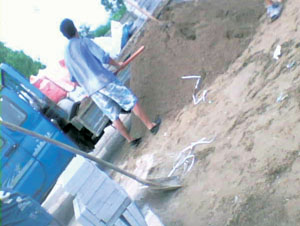
Cement gang member in Beiwu Jiayuan

The gang’s sign on the sidewalk at Beiwu Jiayuan advertising their cement and sand
Since 2009, in our city there have been gangs that monopolize the use of sand in house renovation. After being active for some time, the gangs kept silent and lay low, but recently, they emerged from hibernation and have started activities again.
Recently, this reporter, following up on tips from several readers, has investigated activities of gangs in Haidian district Beiwu Jiayuan. Gangs at Beiwu Jiayuan are using violent means to force builders doing building renovation to buy their sand at high prices. Those who refuse are met with swinging fists.
Recently, a Mr Chen,doing remodelling on his new residence at Beiwu Jiayuan, was threatened by a gang when he made an objection to buying sand from them at a higher price.
Mr Chen went with a team of workers he had engaged, to begin renovations on his new residence. When they got there, a few well-built young men came forward and stopped him, asking, “Are you going to do some renovation?”
“Yes, I am, what about it?” One of then handed him a business card, “To use our sand, just call the number here.”
Mr Chen took the card,” How much are you selling sand for?”
“3 yuan a bag, that’s our price.”
“How much in a bag?”asked Mr Chen.
“3 shovelfuls. Also we provide home delivery. If it’s above the first floor, we add 50 cents.”
“That’s very expensive, I won’t need it,“ said Mr Chen, “I can go outside the neighborhood and buy a cubic meter of sand for a little over 50 yuan, I’ll get my sand myself.” The young men, hearing this, suddenly turned hostile, “if you don’t use our sand you won’t get anything done –just try and see if you can!” Mr Chen’s renovation crew saw that they were outmatched, and promised to use the gang’s sand. The group then left, taunting them.
Mr Chen then understood for the first time that he had met with a so-called “cement gang.” They used force to make sure any construction crews in the area bought their sand at a high price.
Mr Chen went to the building maintenance office of the residential complex, but the staff members there said they didn’t understand the situation.
Around the same time, Mr Wang hired a crew to do some work on his new residence. The crew estimated that for two rooms of 90 square meters, a new floor, kitchen, and porcelain tiles in the bathroom, they would need 3.5 cubic meters of sand. If they bought it from the gang it would cost close to 1000 yuan, but if they went outside the area to buy, they could get enough for 200 yuan. They decided to buy their own sand.
There was a place near Beiwu Jiayuan that sold sand for 250 yuan a truckload, one load being 4 tons. On the morning of 07-13 the truck came, but unexpectedly there were several men guarding the gate, who did not let the truck in. They threatened the driver, saying if he made the delivery they would break his truck. The frightened driver beat a hasty retreat.
After this Mr Wang went to building maintenance office. There they said the people guarding the gate were not building maintenance staff, therefore they had no connection to the matter at all.
The same day in the evening. Mr Wang was walking by the east gate of Beiwu Jiayuan, going out to dinner with his family. Several strangers blocked his way. Without explanation they began beating him with hands and feet. When they left they said, “If you again get your own sand, we’ll kill you.”
Not far outside Beiwu Jisyuan to the south and west, there is a sand hill, and next to the hill there is a sign, “Local Wholesale Sand, Diamond Brand Cement, LaFarge Cement, Light-weight Bricks”
Minding the place are a man and a woman. The woman looks to be 19, the man is also quite young. It seems like these two are the sellers, but actually, behind them, there are many others in the business. These others disperse during the day, checking to see who is doing renovation in the residential area, and gathering at the entrances of residential complexes, to intimidate anyone else from bringing sand into the area.
I (this reporter) asked them how much their sand cost. They quoted the price, 3 yuan a bag, plus extra for carrying it above a first floor. I said, that’s very expensive. I can go outside the area and get a truckload for 200 yuan. The young man became somewhat indignant, and he said grumpily, “ Outside, it may be, but here, in this area, this is the price!”
To provoke him I said, “I’ll buy my sand outside the neighborhood.” The young man then taunted me, “ If you really have the ability have your sand hauled in here, that’s the question.” Then he turned and left.
When this reporter went to another building materials dealer in the vicinity, and asked if he could have sand delivered to Beiwu Jiayuan, the dealer said, “No delivery! No Delivery! No matter how much money you give me!” He said several of his drivers had already been roughed up by the concrete gang.
One dealer named Zhang tried to avoid a conflict with the gang by unloading his sand outside Beiwu Jiayuan, and the residence owner brought the sand inside himself. When the gang discovered this, they smashed all the windows of Zhang’s delivery truck, and forced him to carry out all the sand that had been brought inside. Zhang said he would never again go to Beiwu Jiayuan.
To gather more information, this reporter went to the west entrance of Beiwu Jiayuan, on the pretense of doing some renovation, I sought out the guard at the gate, and said I was planning to bring in some sand, and asked him what was the procedure. The guard said there was sand from in the area, and I should buy it. I said it was too expensive. The guard responded, Beiwu Jiayuan has a rule, that no sand from outside the area can come in. I asked, why is that? The guard gave no answer.
This reporter than walked to the road by the northern entrance to get in his car. As I was doing so, a small van pulled up and stopped in front of me, and three young men got out. One of them pointed a finger at me and said, “I’m telling you, don’t ask for trouble!” They swaggered back to their van and drove off.
Why do victims of the cement gang not report it to the police? The answer: fear of retailiation. Take the case of Mr Huang. Last year, on a renovation projection in another residential complex nearby, he refused to buy cement from the gang, because the price was too high. As a result the gang threatened him and beat him up. He reported it to the police, but because he had no injuries at the time, the police let the gang go after giving them a warning.
Things went OK for a while, but before long there were strange occurrences one after another. When he left his car and went back, all his tires were punctured. Or, super-adhesive 502 glue was sprayed into the door lock. After a while, he didn’t dare to drive his car into the housing district. Although a friend told him to report these new incidents to the police, he did not dare to.
konjaku: from two blogs. The first is about one person’s experience of the demolition of Tangjialing. The second, from almost a year later, is about the process of moving into the new replacement housing.
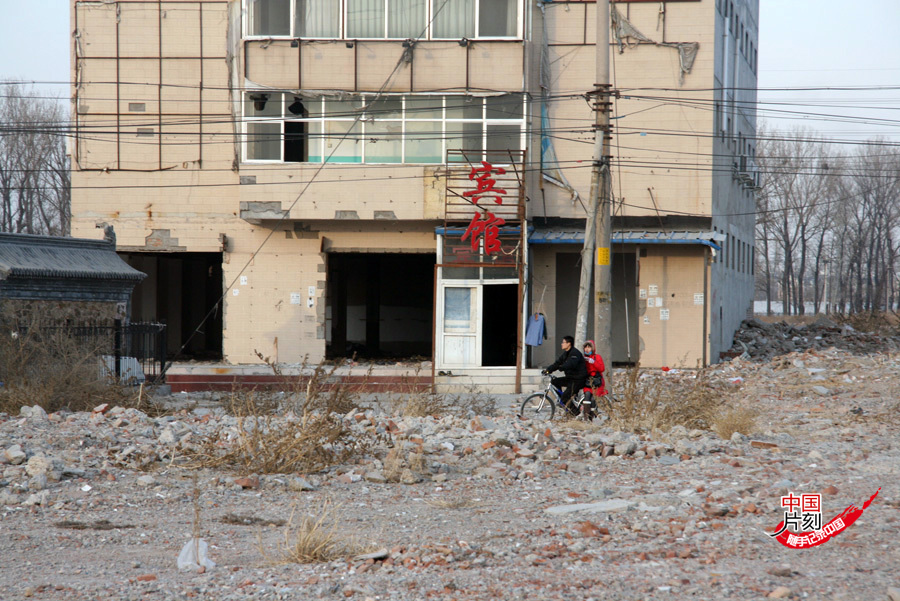
2011-09-02
Tangjialing is demolished by force! Who is in control?
http://bbs.tianya.cn/post-39-1063197-1.shtml
On 2007-04 I began to make preparations. After 5 months of work, I opened my own business, an internet café. I went through every legally required procedure and all the red-tape, submitted myself to examinations by 14 government departments, and at the end the Ministry of Reconstruction and Commerce gave me a license to operate as an independent business.
From 2007-09 to 2010-06 I was in business. I cooperated with every one of the annual inspections by different departments. I paid my taxes on time. In addition, I made social assistance payments for two handicapped persons. I employed 12 persons who had previously been unemployed, as cashier, network manager, cleaner, etc. I contributed enthusiastically to every disaster relief effort, including the Sichuan earthquake, the ‘09 snowstorm, typhoon, etc. During my operation of the business there was never anything illegal, and I never received stricture or punishment from any government department. I assisted Public Security, using the net to locate and help arrest two criminals at large.
2010-06. My internet café was within the area slated to be torn down in the remaking of Tangjialing. My café was on village collective land. The village collective had lent the land to a businessman from Henan, who had built the building on the land, which I rented from him. The Tangjialing village committee and the Xibeiwang township both inspected and approved the rental. Then I went through the 14 government departments:Public Security, Fire, Culture, Taxation, Auditing, Industry and Commerce, Public Health, Farming and Forestry, Telecommunications, etc., for approval.
As the demolition process got underway, the demolition corporation classified my building as an illegal construction, denied to grant compensation, and got ready to forcibly demolish it. Since I had previously been to all these government departments, why did not one of them, when I sought approval, inform me that the building was illegally constructed? They all gave me legal certification, but when demolition comes, suddenly the building is not legal.
Many times I went to the village committee and Xibeiwang township government in regards to the demolition, but without result. As demolition in Tangjialing proceeded, 3 out of 6 internet cafes in the village were torn down, their computers, desks and chairs buried in the rubble. Then in 2010-12 a new demolition policy was issued, and my café escaped utter disaster. However, in the demolition that occurred in the immediate vicinity, the building was seriously damaged, with one wall and the roof collapsing. The building was in danger of collapsing completely. Water and electricity were cut off. It was impossible to use for normal business operations.
I went to the Haidian complaints office, and the staff member said this was a Tangjialing demolition problem, and they would not take up my case. I went to the Xibeiwang government office, and they sent me back to the Tangjialing village committee. In this I was bounced back and forth with no result. They all just passed the buck, passed the buck.
Now it is 2011-09, more than a year has passed. I have received no explanation, or assistance of any kind for the great economic loss I have suffered. Now the Tangjialing area is demolished. 6 internet cafes are gone, with a cumulative loss of 10 million yuan, and 80 people now unemployed. I ask the government. Who will take responsibility for this, when will our experience be taken seriously, and will some attempt to be made to settle our losses?
2012-07-05
http://bbs.tianya.cn/post-39-1121487-1.shtml
It is often said in media reports that the demolition of Tangjialing village will free the villagers from an abyss of suffering, and propel them onto the broad road of happiness. But, in reality, what do the reporters really know?
Newspaper and tv has been saying from the 6th month we can have the keys, but we haven’t seen a trace of them. Even if we have keys, without gas water and electricity how can I fix up the place? More annoying is the building maintenance fee, 2.38 yuan per square meter, how did that get worked out? Why, just to get the key, do we have to pay one year of building maintenance fee?
If you are going to do some construction in the new apartment, the contractor you hired can’t get in. There’s a gang of local hoodlums outside, watching over the place. They will let you in, if you use the building company they recommend.
If the builders get in, then you have to pay 3000 yuan for management expenses, 5000 yuan if the apartment is over 80 square meters. What are they managing for me? They are just pocketing my money.
konjaku: the phenomenon of a gang loitering around and inside a new residential complex, trying to squeeze money out of former villagers who they assume are sitting on a large compensation payment, occurred in Beiwu as well. See the next post.
konjaku: The village, seen from a distance (2009). It is a bit blurry.
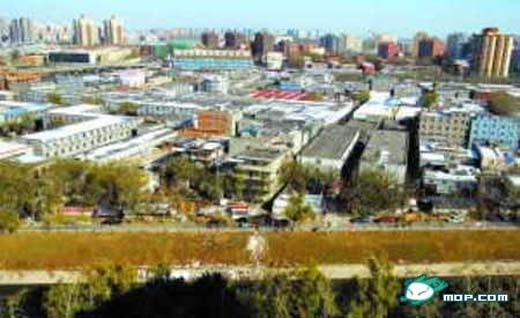
photo credit:
http://observers.france24.com/content/20091218-beijing-graduates-packed-intellectuals-slums-ants

photo credit:
http://district.ce.cn/newarea/roll/201203/21/t20120321_23176165.shtml
Some photos by “Zhongguancun” taken in 2010-05 to 2010-07
http://www.panoramio.com/photo/35612234

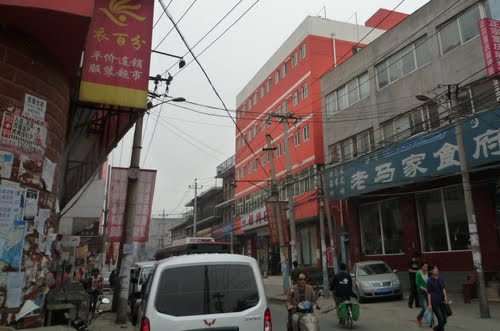
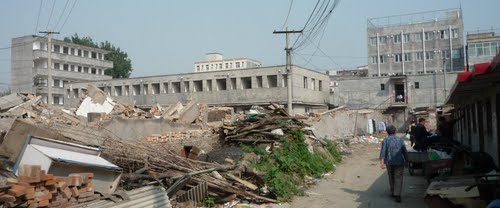
This is Tangjialing in 2011-04. (Click on photo for original size).

photo credit:
http://auserexperience.blogspot.com/2011/04/new-satellite-images-show-demolition-of.html
konjaku: if Tangjialing villagers distrusted the compensation package they were getting, some of their neighbors had a different reaction. Urban restoration plans set off unpredictable ripple effects.
Demolishing village houses magnifies disputes among peasant families
2010-07-14
http://www.chinanews.com/estate/2010/07-14/2400507.shtml
This reporter has learned from the Haidian district Shanhoucun law court, that many disputes are arising over the previous purchase of homes in Shanhou village by city residents, disputes spurred on by the current demolition of Tangjialing village. The origins of the disputes have the following history. Apparently Shanhoucun village still has a pleasing natural environment, but is also not far from the city proper. As far back as the ‘80s and ’90s, the local peasants began selling their own family homes which had become vacant for some reason, to city residents. At that time, for a few 10,000s of yuan one could buy a decent house with a small courtyard. When the nearby Tangjialing became a “listed up village” slated to be demolished, each Tangjialing village household received a compensation fund of 1 million yuan or more, based on the size of their village household compound. Seeing this huge economic benefit, many Shanhoucun villagers who had previously sold homes to city dwellers 10 or 20 years before, began to have regrets. They filed suits in the Shanhoucun court, trying to have the original agreements revoked, on the basis that they had sold the homes without getting the consent of all the family members.
The city high court, in such cases, consistently rules that agreements city residents make to buy peasant homes are invalid. In an absolute majority of cases, the court decision requires the city residents to vacate the peasant home, and at the same time requires the sellers (the peasant household) to refund to the buyers 70% of the appraised value of the house.
Judge Jin Chuan of the Sanhou court informed this reporter, that the judges in his court have found that implementing this type of decision laid down by the city high court ends up creating two problems. The first is that the purchasers, the city residents, when forced to vacate, have no second home, and therefore no residence to move into. They are faced with the difficulty of finding a new place to live. The second is that because land and real estate prices have skyrocketed in the Beijing suburbs in recent years, when the house in question is appraised, the peasant family (the original owners) have no means to refund 70% of the house value, which now runs to a million yuan or more. The only way they could come into possession of such funds is if their village is demolished and they receive a large compensation from the government.
The Sanhou court is rendering a new judgement to resolve these disputes. The two parties, purchasers and sellers, enter into an agreement that if in the future the house in question is to be demolished under an urban renewal plan, the two parties will divide the compensation fund at a percentage fixed in the agreement. In this way, the city dwellers do not have to move out unless the area is to be demolished, and the peasant families does not have to be anxious about not receiving a compensation for what was originally their property. The Sanhou court is using this solution for all such cases which come before it.
Reporter Li Gang
konjaku: they don’t say how the percentage is to be fixed, however.
konjaku: still in 2010. Following this article, I compare it to the previous post.
Tangjialing: 151 village households sign contracts to move –stand in line all day and all night to collect inducement awards and new housing
2010-07-19
http://www.soufun.com/news/2010-07-19/3565048.htm

Looking over the new housing
The 20 day period to consider the compensation package has now passed. Yesterday began the phase to agree to move out and fix the inducement awards.
According to the Jibeiwang township government statistics, as of yesterday evening at 11 PM, 151 households have signed the compensation package [to receive a specified compensation amount and agree to new housing] and 221 families have selected lot numbers for new housing. After signing the agreement, the village household has 15 days to move out of their residence, and starting on 08-03 they will be able to choose and buy replacement housing.
Villager line up 22 hours in advance to “snatch a lot number”
According to a villager, for two days the village committee has driven a sound truck around the village broadcasting information about the procedure, advising the villagers that they must go to the village committee office on 7-18 at 8:45, to receive a card , as a preliminary to signing the contract. The card has a number on it, which will be their lot number to pick replacement housing. The lot numbers will be given out in the order that persons appear at the office. In order to get priority to select the new housing, since the day before yesterday, villagers have been lining up to “snatch a lot number,” that is, some 22 hours before the time broadcast. By afternoon of that day, the numbers steadily increased. An eyewitness said that by 5 PM, there were close to 200 people assembled in the public square outside the village committee office, with many expressing the intent to stay there all night.
Soon afterward, the village committee began advising people to return home and wait. They registered people in the order they were in line, and promised that if they came back early the next morning they would be processed according to the order they were in line. By that night at 8 PM, the villagers had dispersed. 170 persons had registered for the next day.
Yesterday morning at 5 AM, several hundred impatient villagers were waiting in the public square, and after three hours, they were at long last able to receive a card with a lot number. According to government statistics, there are more than 1500 households in Tangjialing who will need to move. On the first day of the inducement award period, 221 households took a lot number, but only 151 actually signed the agreement. “First get a lot number, and take a good look at the details of the agreement first. In any case, this first award period will last for 30 days.”The villagers were still taking a wait and see attitude, seeing how much surface area in the new housing they could get, and how large an inducement award was possible.
As for compensation amounts, the Xibeiwang government states that since every villagers house situation is different, the amounts will vary, and they do not want to publicly release them. In earlier drafts of the plan, amounts varies between 2500 yuan to 3800 yuan per square meter.
After a villager signs the agreement, the family must move, vacating their house, within 15 days. Only after that will they be able to choose their replacement housing. The village committee yesterday designated the movie theater as the place where housing selection would take place. They put out scale models of the residential complex to be built, and on the walls hung various floor plans of the types of apartments that would be available. According to a village committee notice poster, the first selection period would start on 08-03, and last for 12 days.
konjaku: There are (or, were) some 3000 Tangjialing villagers, 1500 households. 1300 villagers signed the Accusation Letter denouncing the village committee. Although it ia hard to say with certainty from just these two articles, 221 families lining up for lot numbers is a minority of the total population. It seems most of the villagers initially made a choice not to participate in the process, ostensibly because of the compensation amounts. The Beiwu village compensation amount was 3500 yuan per square meter (“slightly higher than standard”), but in Dawangjing, a case in which the government was assured of getting high profits for developing the land, the rate was 6500 to 8100 yuan per square meter. The Tangjialing high rate of 3800 does not seem that bad, perhaps what was more important was the villager’s distrust of those offering the compensation package.
konjaku: retracing the demolition and rebuilding of Tangjialing village, these posts go back to 2010.
Tangjialing villagers, dissatisfied with the compensation for demolition and removal, seek an audience with the authorities
2010-05-15
http://news.163.com/10/0515/02/66ML62V600011229.html
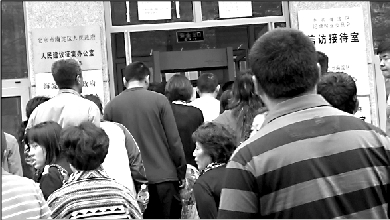
Villagers assemble at provincial government office

Government staff member addresses villagers
More than 100 Tangjialing villagers assembled at the Xibeiwang district government entrance, stating that they have not yet been informed of the details of the compensation settlement, and they request that the settlement which was recently announced publicly be cancelled, until they have time to discuss it and give their input. The district government is investigating the matter.
On the 12th, the compensation settlement for Tangjialing village was reported by various media outlets. In reaction to this, the 100 villagers yesterday came to meet with the official in charge of the demolition, Mr Zhao, assistant town headman, asking that the settlement as published be rescinded, because the compensation amounts are less than what was originally cited to them.
Villager Li Yu (alias) said, when she heard the details on t.v., she was stunned. “This was nothing like I heard before.” She said, in the middle of the 4th month, the compensation proposal was presented to the village. Then the highest payment standard was 3800 yuan per square meter. The village representatives rejected this. In the new proposal, the high standard is 3000 yuan. Many villager say they do not understand how this proposal, which offers less, could have been accepted by the village.
How could this proposal have been passed? The villagers have now learned, that apparently this new proposal passed by a large margin of votes in the village representative assembly. There were 43 representatives, each one a delegate for 15 households. Now they have become the targets of public criticism and scorn.
“Now, whenever anyone sees me they curse me and say I should not have signed, ”said Zhang Ying (alias). She feels that she did not know what was going on at the time, and was essentially deceived. On 05-08 at 10:00 AM, she received a notice from the village committee to attend a meeting. Soon afterward, with 15 other representatives, she was taken by car to the Guesthouse. In the conference room, a village cadre had her sign a blank piece of paper. “He said it was a consent form for the work team entering the village to do the demolition.” The meeting continued until noon. Then some delegates proposed taking a break for lunch as they had in the past, but the cadre refused. However, one batch of delegates signed, and they were invited to a meal with wine.
The next day, Zhang Ying with 32 other delegates was taken to Xiaotangshan [a hot spring resort], where they met with the remaining 11. At that time, a majority of the delegates ended up signing their names. Another delegate who wouldn’t give his or her name confirmed Zhang Ying’s account. As for the villagers criticizing the delegates for being taken to the hot springs, Zhang Ying responded that the delegates take a pleasure trip in the 8th month every year, this year it just happened to come sooner. Another 60 year old delegate said he or she came wearing a swim suit, without understanding there was going to be a meeting.

Xiaotangshan hot spring
A Xibeiwang township official said all the village delegates signatures were taken down and recorded at the assembly of all the delegates. At that time, they all knew what they were signing. Only later, when they were afraid of taking responsibility, did they falsely claim they did not know what they were signing.
A number of villagers believe that the village committee hoped to shirk responsibility for demolition of the village, and lay it instead on the shoulders of the village delegates. Since the village delegates had not yet informed villagers of the proposed plan or had a chance to hear the villagers’ opinions on it, they could not actually be said to represent the villagers.
Yesterday [the day more than 100 Tangjialing villagers assembled at the Xibeiwang district government entrance] the villagers gradually returned home at 10 at night.. Villager Liu stated, at 9 PM, a government staff member received them to hear them out. The staff member promised to send a team to the village to conduct a further investigation, “but the staff member said the compensation package would not change.”
Source:Jinghua Times, reporter Zhang Weihua
Tangjialing demolition and removal process involves corruption
http://finance.jrj.com.cn/2010/07/1715447776599.shtml
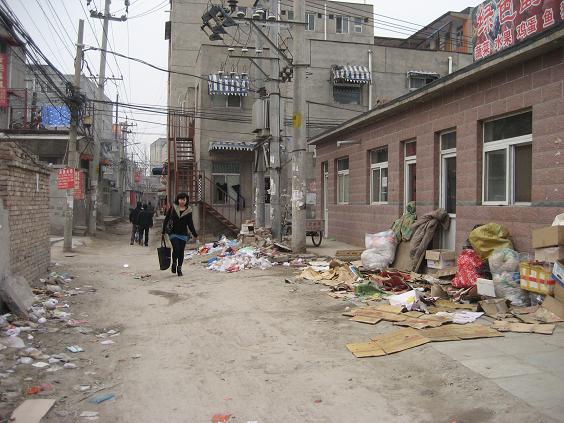
Tangjialing before demolition
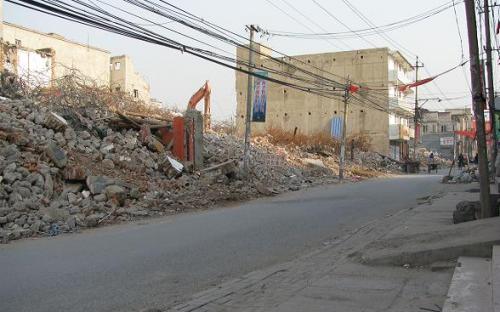
Demolition begins
To a certain extent, the problems that occurred in the the demolition and rebuilding of Tangjialing, are a microcosm of the other 50 focal point villages.
On 7-6, the hottest day in Beijing since the beginning of summer 2010, Li Cunbei (a pseudonym), wearing a yellow t-shirt, was waiting at the south gate of Tangjialing for a bus. “ I already found a new place. I just came back today to move my t.v.” Li Cunbei came from Gansu to Beijing, and has been struggling to make a go of it. Because Tangjialing is being demolished, he has to move from his residence of two years, to a rental three kilometers farther out, near Beijing Physical Education University, paying 300 yuan a month.
Behind Li Cunbei, and across the street, the rumble and roar of machinery drowns out the sound of the summer cicadas. Temporary workers, in this soup of 40 degree heat, are wielding hammers and pickaxes. Shops all have signs saying “Relocation sale–bargain prices,” and everywhere, amid the utter dilapidation, are hung red posters urging villagers to move out as soon as possible…
Even though there was an incentive award offered of 50,000 yuan for villagers who moved out early, almost none of the Tangjialing villagers accepted this and moved. On the contrary, as far back as 2010-05, two documents, “The Tangjialing villagers appeal to the authorities,” and “Accusation Letter” signed with the villagers’ real names, were delivered to the Haidian District Commission for Inspecting Discipline.
A China Business reporter got exclusive access to these documents, upon which 1300 Tangjialing villagers signed and affixed seals, accusing the Tangjialing party branch secretary Qu Fu of “using his official powers to conclude and sign a sham agreement for personal profit,” with “huge amounts of property going unidentified.”
Tangjialing village is one case of the urban rural unification project, here undertaken jointly by Beijing city and the Haidian district government. The push to demolish and rebuild at all possible speed did not go as smoothly as imagined.
Li Cunbei works as an electrician at construction sites. In a good month he makes 3800 to 3900 yuan, in a not so good month barely 3000. For him, 300 yuan is not a small amount. But the Tangjialing villagers, in which one household has a monthly income of under 900 yuan, now face the loss of rental income from 50,000 migrant workers, on which they depended.
The Beijing outer suburb where Tangjialing is located, is only 3 or 4 kilometers from Zhongguancun (Beijing’s “silicon valley”) and Peking University Science park. Because of this, the area drew as many as 50,000 members of the “ant tribe” (college graduates and other migrants seeking work). Not only did they rent, they needed to eat –this demand hastened Tangjialing’s development, and it became famous as the urban village with the greatest concentration of the “ant tribe.”
“Since 2006, when the village was linked up to public transportation, the mass of people coming from outside to rent rapidly expanded. ” A village insider told this reporter that the village committee has not yet been able to reach an agreement with the villagers as a whole as to compensation (for demolition and removal). 2800 villagers, an absolute majority, are worried about their loss of income from rentals.
This China Business reporter has found that in the first six months of 2010, the Xibeiwang town government (which has jurisdiction over Tangjialing village) and the village committee have five times issued notices, encouraging the villagers to move out quickly, so the village can be demolished.
According to the 6-18 report, from 7-18 to 10-15, there will be three 30 day periods in which inducement awards will be offered. The compensation statement for the first period stipulates 50,000 yuan ($8000) for moving out of household compound in advance of the specified date, for cooperating with the construction 250,000 yuan ($40,102), if one’s house has a second story there would be a supplement of 200,000 yuan ($32,000). In the second period amounts are reduced. Cooperating with the construction goes down to 200,000 yuan, the supplement for a second story becomes 100,000 yuan. In the third period moving out before the date is 50,000 yuan, cooperating is 150,000 yuan($24,000).
“The standard for compensation kept changing. At first it was 3000 yuan per square meter, then it dropped to 2500, then 1500. For a second story, it was only 800 yuan per square meter. ”A person in the know stated, “ Even though the village committee sent people to measure the surface area of each household, in some cases confirmation of those numbers is still in progress. Those that have been confirmed, match the village committee numbers. However, these figures are not the same as the villagers’ own measurements. If there was any household that borrowed money to build additions to their homestead exceeding 267 square meters, the village committee limited their area eligible for compensation to 266 square meters.”
In regard to the many disputes that have emerged, the People’s Mediation Committee member Dong Haiquan said he had not yet received all the villagers opinions. At the same time, he divulged that he had little contact with the party branch secretary Qu Fu, “I don’t have his cell phone number.”
In Tangjialing the process of demolition and relocation has already begun. But aside from the guesthouse which was on village collective land, the only house being demolished is that of the son of Qu Fu, which has now lost its second story.
Qu Fu is going along with the leaders’ orders and is taking the lead in demolishing his own house, but this is all on the surface. In reality, he is getting the maximum amount of compensation by demolishing, but he also owns a villa and two other multi-story buildings.” A villager told this reporter, that the villagers have changed the words of the village song, to go, “Qu Fu moves out of his house but he still has a villa to go to, the villagers demolished and have nowhere to live. Qu Fu demolishes Le po du [unknown], the villagers have nowhere to weep. Qu Fu’s family for 8 generations have no worries, the villagers taste hardship.”
The Written Accusation states, that Qu Fu has a villa, his “original villa” at Xinzhuangqiao, Badalingfu road, and the city district purchased another villa, “if this villas was sold, the price would be 28,000 yuan per square meter. The construction and sale all occurred through the state-operated Dongbeiwang Nongchang corporation.” Gu Fu also “has an apartment of over 100 square meters in the Bejing Renjia housing complex, and another in the Dongxinyuan residential development (also built by Dongbeiwang).”
This reporter has not yet been able to find the selling price of the “original villa” from the real estate company website, but in the nearby Zongguancon Yuancu development nearby, 2 kilometers from Tangjialing, a multi-story residence retails for 30,000 yuan per square meter.
This report of the villagers concerning Qu Fu abusing his position of authority for personal gain, is an important problem.
It states that in 2005, Qu Fu, knowing that the proposed Jingbao Expressway would pass by Tangjialing, secretly took a 30 sixth-acre piece of land [village collective land] within the proposed route of the expressway and gave it over to his son Qu Xuebao for rent at the low price of 150 yuan per sixth acre, for a period of 10 years. At the time, the land was planted with 1250 five year old peach trees and 500 mature jujube trees, and should have been rented out for at least 10,000 yuan per square acre.
In 2009, Qu Xuebao, from the Jingbao expressway project received 1,803,200 yuan ($289,108) in compensation for the value of the land with its fruit trees. According to the Written Accusation, the Jingbao Expressway only used a 4.5 sixth-acre plot of the land, and the village committee lied about 10.5 sixth-acres.
In compensation the other villagers received 150,000 yuan per sixth-acre for land they had planted with fruit trees over 10 years before, while Qu Xuebao received 180,000 yuan for land he had had just three years. That the village committee had signed such a contract with Qu Xuebao is a clear case of using authority for personal gain.
The Accusation also itemizes multiple examples of Qu Fu harming the interests of the village: breaking regulations in drawing up contracts, forging census registers to cheat the state compensation fund.
In 2000, we began to report to the authorities about the previous village party branch secretary, Qu Fu’s predecessor. In 2003, this secretary was arrested for corruption. At that time, the head of the village agricultural production team, Qu Fu, was elected village head, and afterwards he concurrently held the post of secretary. The Accusation says, “we did not expect Qu Fu to turn out to be more greedy than his predecessor.”
This reporter phoned Qu Fu, and also phoned the Haidian District Commission for Inspecting Discipline Secretary to find out how the Written Accusation charges were being dealt with. As this paper went to press, the Haidian District Secretary had not called back. As for Qu Fu, he stated that a number of months ago he had talked to the Xibeiwang town Commission for Inspecting Discipline staff member, and that the truth was different from what was stated in the Accusation. He at the same time confirmed that the real estate development corporation which the Tangjialing village committee had given the principal role to[in demolition and rebuilding], was in fact headed by himself.
“Up to the present, we have not discovered any violation of law or precedent committed by Qu Fu,” the Xibeiwang town Commission for Inspecting Discipline member Liu Han told our reporter. Asked whether they had checked the apparently suspicious process by which Qu Fu had come into possession of his several residences, Liu Han made no direct reply, but only said the Commission has its own procedures to follow.
The problems associated with the demolition and rebuilding of Tangjialing are actually not unusual. The same problem has occurred in another focal point of the Beijing urban rural unification project, the transformation of Beiwu village in the Haidian district. [Omitted: summarizes the conclusions of Xu Zhiyong, Haidian district representative and activist, that the Beiwu villagers were forced to move out to allow the demolition of the village, even though they had doubts about the compensation they would receive, and that they were not given due process, but illegally stripped of their properties by the village committee. For more, see https://konjaku.wordpress.com/2012/07/12/beiwu-follow-up-4-resistance/
konjaku: an article in the previous post had this: “In 2009, Haidian took the lead in urban transformation with the Beiwu project, and achieved a significant result. With this as a basis, Haidian started to transform 20 focal point villages. In 2012 Tangjialing, Bajia, Houying, Zhongwu, Zhenxing, Mentou, and Liulang were fundamentally transformed, with all inhabitants moved. The Haidian urbanization process is going in leaps and bounds…”
The first village mentioned, Tangjialing, was briefly well known, the subject of articles in the media in 2010, because a large number of college graduates flocked there, renting rooms and looking for work in the high tech companies close by. These college students, nicknamed the “ant tribe,” were novel because even though highly educated, they were, at least temporarily, living the same sort of lives as migrant workers.
http://observers.france24.com/content/20091218-beijing-graduates-packed-intellectuals-slums-ants
Shortly after this attention, the plan to demolish Tangjialing and move the residents was announced. In 2 years, the process was completed. In this and the next few posts, I will follow up on Tangjialing today and its transformation. The first article is a portrait of an elderly woman who enjoys life in the new residential complex, much like these articles about other transformed villages:
https://konjaku.wordpress.com/2012/07/24/beiwu-follow-up-9-a-well-earned-rest/
https://konjaku.wordpress.com/2012/10/09/now-we-can-take-a-little-rest/
There has been little treatment as to how convenient these new complexes are for people not yet at retirement age. The article that follows takes up one angle of that.
The remaking of Tangjialing, a Beijing urban village, is complete. The villagers, following demolition and removal, are divided among seven buildings
2012-09-20
http://house.ifeng.com/news/detail_2012_09/20/17757736_0.shtml

Jingbao net reporter Wang Haiyan
Since old Yan Shumin moved from a spare and economical building to this new city district, her life has become easy and comfortable, photo Wang Haiyan
“Come, come look at my house!” Yesterday, when this reporter went to see the new residential quarter at Tangjialing, 64 year old Yan Shumin enthusiastically invited him.
We took the elevator to the 10th floor. Entering the living room, it was open, light and spacious. There was a sofa, a tea table, a modular cabinet, all brand new. Hanging on the wall was the character “blessing.” There were three bedrooms, two facing south, one facing north. The kitchen and bathroom had gleaming white porcelain, neat and tidy.
“The apartment is 123 square meters, running north-south, living in it is a joy!” Yan Shumin showed this reporter every room, her face lit with smiles.
Looking out of Yan Shumin’s bay window, this reporter counted 18 similar multi-story buildings within the residential complex, all the same in appearance and height, with dark grey exterior walls, simple and elegant. Between the buildings were green spaces with Chinese pines, locust trees, parasol trees, and ginkgos, the branches and leaves thick and green.
This in no way resembled a village, it was like a top grade city district. Sighing with emotion, Yan Shumin said, This is no different from being in the city!
Two years ago, Yan Shumin did not feel this way. At that time, in the old village, she lived in a spare and economical building. As a matter of fact, it was a non-conforming building they had put up themselves. Everyone added on to their house, and rented out to migrants. At its peak, the village had 60,000 migrant workers. and non-conforming buildings bloomed like flowers, some with two or three stories, some with four or five stories, and some as many as seven.
The village water, electricity and roads could not bear the demand from the new influx of people. “There was garbage everywhere. On rainy days, wastewater flowed across the ground. One had to put on boots just to go outside.”
In 2010, Beijing started the project to transform 50 “focal point” villages, and Tangjialing was one of them. The more than 3000 villagers were to move out of the village into new living quarters. In the space of just two years, 18 tall buildings rose from the ground, at a site to the north of the village. Besides the residential buildings, the new district had an elementary and middle school, a kindergarden, bank, nursing home, supermarket, public service center, etc. Starting in 2012 6th month, the villagers began moving in.
“Since the area of our old village homestead was large, in compensation we received seven apartments in the new facility”. Yan Shumin’s face lit up with joy. “I and my husband live in one, our two children with their families each have their own. We have more than we need. A few days ago, someone from the housing administration came, and said we needed to register the left over apartments, in order for them to become public rentals, and we registered two.”
As for the future of Tangjialing villagers, renting unneeded apartments will not be their only source of income. “Can you see that patch of vacant land to the north?” From her living room north window, Yan Shumin pointed it out. “That is designated as multi-use land for the village, for commercial enterprises. They say they will break ground soon.”
On this vacant land, in the not so distant future the plan is to build 10,000 square meters of rental housing and business enterprises. “I heard the village cadre say, income from these rentals will be converted to stock shares, and divided among all the villagers.”
Since moving here, another thing Yan Shumin likes to do is stroll in the park, located to the south of the residences. She can see it from her window, green and luxuriant. Framed by the blue sky and white clouds, it makes one feel carefree and happy.
“Let me take you for a look around!” With Yan Shumin leading the way, we went out the residential complex north gate, and walking south for about 10 minutes we came to the park. On the undulating slopes were many varieties of trees, and chrysanthemums. Other residents were strolling on the path composed of bluestone, in groups of two and three. “This park is called Zhongguancun Forest Park. It covers over the site of our old village. I usually come here every day and stroll around. I love the scenery here!”
Just like Yan Shumin, the other 3000 villagers of Tangjialing are in the process of moving into this new city district. They will now live the life of city-dwellers. The old days of the dirty and disorderly village are over, completely transformed into a new city district that has sprung up in northern Haidian, history made over. Tangjialing, reborn!
——————–
Before Tangjialing was rebuilt public transportation in the area withdrew, and it has not yet returned
2012-12-05
http://bj.house.sina.com.cn/news/2012-12-05/0819424362.shtml
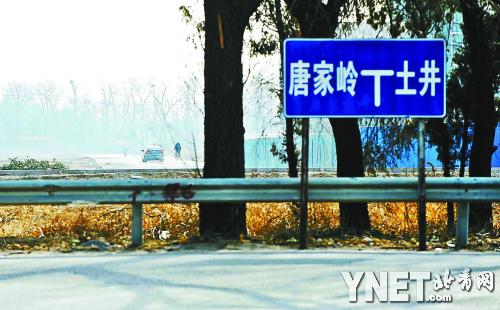
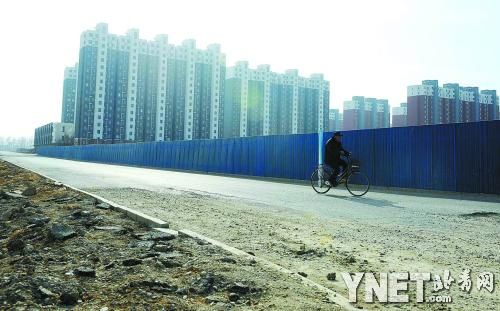
From the 6th month of this year [2012], more than 3000 villagers from the former Tangjialing have started moving gradually into the replacement housing at the northwest corner of the former village site. While the residences are spacious, and the living environment better, the surrounding roads are not served by public transportation. When the village was about to be transformed, the public transportations routes were not adjusted to the new conditions, therefore the villagers in their new residences have to go far to find a public transportation route.
“For my daughter to get to work at the Beijing World Trade Center, her father has to drive her to the Xi’erqi subway station, a distance of just under 5 kilometers–otherwise she would need to ride a bicycle, but it’s a 20 minute bike ride.” Mrs Liu and her family moved to the new housing in the 9th month. The road out to the replacement housing is somewhat remote and out of the way, it would not be safe for her daughter to bicycle home alone at night. Her husband has to go and pick her up at the station in the evening. As another recent resident Ms Yu said, although many residents have their own cars, being without public transportation is a big problem. Several residents said that for old people to go to the hospital. or even to go out and buy a few things, the lack of public transportation is a real inconvenience.
Before Tangjialing was rebuilt, there were five transportation lines serving it. Because public transportation was convenient, the “ant tribe” wanted to rent there.
A person of responsibility in Public Transportation said, they try to follow the subway lines with linking bus lines, and ensure that the transportation system changes to accomodate new city districts. However, in the case of the Tangjialing new residential district, at present they have no choice. There is not even one road in the area that meets public transportation standards, therefore any development of public transportation has temporarily been shelved. He said if the district repairs just one road, Public Transportation will made it a priority to consider putting in a bus line.
Yesterday this reporter wen to investigate the state of the roads. There are two roads running e/w in the center of the Tangjialing new district. These are barely wide enough for one small car, and those using this road were riding bicycles. On the south side, there was a a road wide enough for two cars to pass each other, but not big enough for a bus.
On the north side there is a road wide enough for two cars to pass. In the future it will be a main road linking to the expressway on one side and to Yongfeng Road on the other, but for now it is just a “village road” unable to support bus traffic.
This reporter discovered that the closest three bus stops are each some 2 kilometers away, about a half hour walk. Villager Tang Lanxiang proposes that if one of the existing bus routes makes a southern detour near Tangjialing, this would solve the problem. But a transportation official said that making minor changes throws the whole transportation system out of balance. It would require a new round of investigation and research, as much as establishing a new bus line.

Zhongguancun Software Park
(click on image above for larger size)
konjaku: previously I posted about Beiwu, a village which in 2009-2010 was demolished as part of a huge project to transform the periphery of Beijing, under the rubric, “unification of the urban and rural.” Beiwu was a pilot project, a model in how to change a seedy village into a shiny residential complex and park. To satisfy the villagers they were given generous compensation packages and the promise of a share in future development on their former land. The Beiwu contract was, as expressed by the village collective: “We ourselves move out of our homes, we ourselves then build the new buildings, manage, and control the capital fund.” The villagers through their collectively held land would participate in the urbanization process.
In 2013 the “Beiwu model” is still invoked, but the emphasis has shifted. In discussions about Beiwu, the focus was on how to transform the “urban villages,” which had become densely crowded and overburdened with migrant workers flooding into cheap rentals offered by the villagers. Whether the villagers’ actual interests were being considered or not, the plan was, in name at least, about turning them into urban residents, a form of betterment.Here, the emphasis is on creating science and technology industrial parks on a new scale, with a greater influx of capital and a higher level of sophistication. The future of villages that happen to be in these areas is now bound up in these large development projects, and their designated role is to be part of the infrastructure. The planners have not forgotten social services for villagers, but their main priority seems to be the ecological green zone which will display the industrial parks to their best advantage. The “Beiwu model” seems reduced to giving the village collective the money from surplus rentals in their replacement housing, instead of the promise of self-determination “we ourselves then build the new buildings,manage, and control the capital fund.”
Haidian District extends the “Beiwu model” to make villagers more well-off
http://spzx.foods1.com/show_1961335.htm
2013-01-14
The 15th session of the Haidian district People’s Congress has just ended, In exploring new models for urbanizing the rural areas in the district, Haidian district will again take the lead. In the north of the district, north of Baiwangshan, there is an area of 216 square kilometers encompassing 62 administrative villages and the 4 towns of Xibeiwang, Wenquan, Sujiatuo and Shangzhuang. The 2013 Congress set out the initiative to push forward development in the whole district towards science and technology, altering the economic pattern currently in place. The management of urban rural unification works toward promoting an infrastructure capable of supporting this increased new development. This urban rural unification also involves an effort to improve the lives of the peasants and raise the level of education, as well as to improve the quality of medical treatment and other public services.
In 2009, Haidian took the lead in urban transformation with the Beiwu project, and achieved a significant result. With this as a basis, Haidian started to transform 20 focal point villages,. In 2012 Tangjialing, Bajia, Houying, Zhongwu, Zhenxing, Mentou, and Liulangzhuang were fundamentally transformed, with all inhabitants moved. The Haidian urbanization process is going in leaps and bounds, extending into the south area of the district as well. The crackdown on illegal building has been strengthened with repeated enforcement efforts. There has been a “100 day offensive,” a “spring offensive,” a “summer offensive,” etc., and these have achieved effective results. Reporter, Dong Haixia.
In north Haidian villages are relocated, drawing lessons from the Beiwu model
2012-10-21
http://www.cqn.com.cn/news/xfpd/szcj/dflb/636427.html
Yesterday the city municipal party committee released its 5 year plan for the north area of Haidian district, to develop a new district devoted to science and technology. By 2020, employment opportunities will be managed to reach 600,000. The population inside the district, and market-priced housing, will be kept under tight control. The villages forced to move will follow the Beiwu model.
By tradition, Baiwangshan marks the boundary between the northern and southern parts of Haidian. The northern area covers 226 square kilometers and contains 53% of the population, with some 120,000 people, 55,000 of them engaged in agriculture. Compared to Zongguancun[the Chinese “silicon valley”] in south Haidian, north Haidian lags behind.
The pace of development in north Haidian was accelerated by the Beijing city administration starting in 2010. After producing a plan going in detail down to street level, up to the present over 92.2 billion yen have been invested. Focal points of development are the Zhongguancun Software Park, the Cuihu Science and Technology Park, and the Yongfeng High and New Technology Industrial Base.
By the end of 2011, more than 600 businesses had taken spaces in the industrial parks in north Haidian, generating a gross annual income of 90 billion yuan(approximately 14.5 billion dollars)
The plan will safeguard the villagers’ land ownership
According to the plan, over 5 years the major development will be concentrated in the Cuihu and Yongfeng sites concentrated in 40 square kilometers, an ecologically developed science and technology new district. Most of what is utilized will be state owned land, but organically integrated with village collective land, earmarked for building at lower costs.
The plan insists upon putting ecological concerns first. It equitably distributes space allotted for residences, constraining the scale of the population. The deputy director of North Haidian Xiaomin Peng said there were two aspects involved. The current population is about 200,000. By 2020 there will be a projected 400,000 to 600,000 jobs. But only 10, 000,000 square meters (10 square kilometers) will be set aside for residential housing.
Since ecology is a priority, 68% of the area will be greenery, wetlands, and agricultural land. An ecological green corridor and urban green passageway, this green zone will occupy two thirds of the area.
Dispelling doubts:
1. Will or will not Northern Haidian become a “bedroom community?” [konjaku: bedroom community, or “sleeper’s town,” is defined as a concentrated residential area outside the city proper, in which the inhabitants commute to the city during the day and only return to sleep at night. An area with residences but without fully developed commercial, educational, and entertainment facilities. Tongzhou, Tiantongyuan, Huilongguan, and Wangjing are called “sleeper’s towns”]
By 2020, the number of employment positions created will be based on the size of the current population, multiplied 1 or 2 times. A large number of businesses are slated to move in. People are worried that after this, north Haidian will resemble those new city districts and turn into a “sleeper’s town.”
Deputy director of North Haidian, Xiaomin Peng responded, the plan is for northern Haidian to become a complete city with all the required facilities. The building standard will be high, it will even exceed southern Haidian. We will avoid its becoming a sleeper’s town. For the urban infrastructure –electricity, water , and heat –we will go a step further to make these all complete. The track of the Haidian Shanhou line [a new subway line in the 2015 Beijing subway plan] and the Xishan tunnel are nearing completion, in coordination with this, schools and hospitals are being constructed, a high end service center and businesses are being developed, as well as a public culture center for literature and art.
Do the inhabitants of all 62 villages need to be moved? There are 62 villages in northern Haidian. Of these, already 10 have been demolished. Last year, in starting the project to build the Cuihu and Yongfeng science and technology parks, 12 villages were slated to have the villagers relocated and that process is now complete. The next step is to begin construction on that site. People guess that all 62 villages fall within the construction zone.
Xiaomin Peng responded, not all the villages will be subject to relocation. By 2020 the process of relocation of villagers will be complete. There will still be some villages remaining, but they will be transformed or rebuilt as a new rural zone.
3. How will the relocation of the villagers take place? After the villagers lose their land, they are concerned what their future will be like. Many scholars are recommending the “Beiwu model.”
Xiaomin Peng stated that the relocated villages are at present are concentrated in construction sites in the area of the 4 towns of Xibeiwang, Sujiatuo, Wenquan and Shangzhuang. The villagers there have moved to new housing. The new housing, according to the principle of ‘build replacement housing near jobs’ is located on the periphery of the science and technology parks, convenient for the villagers to seek employment. After the villagers moved into the new housing, there were some residential units left over. Following the Beiwu model, there are being rented as public housing, and the income from rents is being returned to the villagers.
Reporter: Li Tianji
The secret tricks scalpers use to exploit the imprinted-name ticket system
http://news.sina.com.cn/c/2013-01-27/021926131542.shtml

Once again it is spring rush, and railway tickets are hard to come by. On the ticket selling website, within three minutes after tickets go on sale, they all change from “available” to “non-available.” while standing in a long line before the station window, one hears a voice in front, in response to a question, saying, “standing room tickets are all gone as well.”
In each of Beijing’s main railway stations, on the periphery of the ticket selling areas, the scalpers ply their trade, adding 300 yuan or more to the ticket price. The imprinted name ticket system has been in force for two years now. How have the scalpers been able once again to infiltrate into the system?
In a week of investigation, this reporter found out two of the scalpers secrets. One is “request far and buy near.” In other words, a person outside the station buys a scalped ticket to a far destination for a high price, but also buys a ticket to nearby, local destination, and uses that ticket to enter the station, thus avoiding the requirements of the imprinted name ticket system [to show one’s identification and ticket to a station guard]. Two, “instant snatch of a returned ticket.” If the scalper holds a ticket a passenger wants, the scalper returns the ticket, in such a way that the purchaser can buy the ticket and as soon as it reappears in the database [in that way, the ticket is bought with the new purchaser’s identity].
A person who has been a legitimate ticket agent for many years said the ticket selling database, between 4 days to 1 day before departure, will post any spare or returned tickets for sale again on the site. Most people are not aware of this, giving the scalper an opportunity to exploit the system.
First Secret: “request far and buy near.”
According to the procedures of the name-imprinted ticket system, the passenger’s ticket or proof of identity may be checked 5 times: at the entrance into the station, at the entrance to the waiting area, at the ticket checkpoint in the waiting area, at the door of the train car, and while on the train. “As long as you can enter the station, the others are no problem,” according to a scalper named Liu. At the station entrance is the only place they check a person’s ticket and proof of identity to see if they match. At the others they don’t check one’s identification.
“If you don’t believe “request far and buy near” works, why don’t you try it? Mr Liu was over 50, he had derived his income from scalping tickets for many years. Following Liu’s instructions, this reporter bought two tickets, on 1-23 from Beijing to Zhuozhou [city in Hebei bordering Beijing in the north] on the K401 for 12.5 yuan, and on the same day a ticket bound for Handan (in Hebei, 294 miles by train) on the high speed rail G6735 for 209 yuan.
On the 23rd at 6 PM, this reporter, carrying his identification and K401 ticket, entered Beijing West station. The station staff member checked my identity and the K401 ticket, stamped “passed through” on the ticket face, and let me go through.
The K401 train travelers went to the Number 4 waiting room, the G6735 travelers to the Number 8 waiting room. At the number 8 waiting room entrance the way was blocked by guards, but the 4 or 5 station staff members only motioned passengers to show their tickets, and waved them through. I entered easily without having to show my identity.
At the ticket checkpoint there is an electronic gate with a place to swipe one’s identity card in order to pass through. If I swiped my card, but was holding in my hand a ticket from a scalper which was not in my name, my way would be blocked.
But when I got to the gate, I discovered I did not have to swipe my identity card. To pass through, all I needed to do was insert my ticket in the ticket slot.
At 7:30, at the entrance to the G6735 train car, there was no train attendant checking tickets. Inside the train, at 8:07, a train attendant came through checking tickets, but he only checked the ticket, not my identification. There was no checking of passengers when the train arrived at its destination, Handan East station, at 9:53.
Since one’s identity is not checked after going through the station entrance, one can indeed buy a long distance ticket from a scalper [which has someone else’s name on it] and use a short distance ticket to pass into the station. [During spring rush, long distance tickets are all sold out, so the only recourse is to buy one from a scalper. But short distance tickets can still be easily purchased legitimately, and the passenger uses this short distance ticket to enter the station, as instructed by the scalper.]
The scalper Liu said if they checked passengers identity at each of the five places (listed above), this trick of “request far and buy near” would not work. “Possibly they don’t have enough staff to do this during spring rush, when there are so many passengers.” When asked by this reporter, a person of responsibility in the station affirmed that it was their policy to only check identification at the station entrance.
2 : “instant snatch of a returned ticket.”
On the 24th, this reporter was at Beijing station, speaking to a scalper with a northwest accent. This reporter said he wanted a ticket to Panjin in Liaoning, The scalper said, “We have our own special office, with people on the web buying tickets and releasing tickets. We have bought in advance a large supply of the most in demand tickets. Lend me your identification, and I’ll get in line and get you the ticket you want.”
Zhou Rong has been in the ticket selling business a long time, and he is familiar with how the scalpers operate. He gave me a demonstration of how “instant snatch of a returned ticket” works. On the 24th at 9:45, on the ticket website there appeared one Beijing West– Wuhan ticket on the G501 train. “Right away. I’ll buy it.” Zhou Rong immediately used a different computer to log in and buy the ticket. Skilled from long practice, by 9:47 the screen showed that the ticket had indeed been purchased. Now there were no tickets left for sale on the 24th for this route.
Then,, Zhou Rong clicked on “Return ticket.” At 9:48, the screen indicated that the operation was completed. When he refreshed the screen, a G501 ticket had appeared. Zhou Rong clicked on the ticket on the screen, and showed this reporter, looking at the details, “see, it is the same ticket I just returned.”
As Zhou Rong demonstrated, when one returns a ticket online, that ticket immediately shows up for sale on the selling webpage. Now it can be sold to another person. If you catch sight of it the moment it appears, the chances of a blunder are very small. According to Zhou Rong, scalpers usually handle this operation with two people. One person takes the customer’s identity card and lines up at the selling window, and another is on the net, ready to return the already purchased ticket [which the scalpers have hoarded in advance]. When the latter returns the ticket, he informs his partner, now at the front of the line, who grabs it the moment it becomes available.
According to Zhou Rong, many scalpers boast of their connections to railway staff members inside the station [as the way they obtain tickets to sell], but what they actually do is manipulate the vulnerable areas of the ticket system. This year was different from other years in that a number of tickets reappeared for sale 4 days or less before the departure date, either from hoarders returning tickets, or the railway responding to public pressure to release tickets they had set aside.
——–
Under the name-imprinted ticket system, why are there still scalpers?
http://news.xinhuanet.com/comments/2013-01/16/c_114383736.htm
Shandong Jinan city railway station public security bureau launched “Operation Falcon 2013” to ensure order and safety during the spring rush. Up to the present, they have uncovered 16 cases involving turning over tickets, seized 355 tickets, and arrested 26 people. While we must consider the police richly rewarded for their efforts, we also have difficulty understanding why there are still scalpers, since the name-imprinted ticket system was implemented to rid us of them? Did not the railway department boast shamelessly, “the scalpers have eaten their farewell banquet [and disbanded for good]”?
In fact, the scalpers have not had a farewell banquet. They are more numerous than ever, and more hidden. They are still parasites upon the system, reselling tickets at a profit. Before they operated somewhat at random, now they take orders and use proofs of identification to buy tickets, hiking the price. Previously they were reviled, but now people sympathize with them. The media reported the case of a young husband and wife who helped temporary workers who did not know how to use computers, to buy tickets to return home on the internet, charging 10 yuan per ticket. When the couple were arrested and punished, the workers cried out that this was an injustice (Nanfang Daily, 1-14). The workers said, “if we had to go to the station ourselves to buy the tickets, it probably would have cost us more than 10 yuan, and we would have been less sure to get a ticket.” It is clear that people will continue to rely on scalpers, even handing over their proof of identity, because tickets are still hard to acquire. The imprinted-name ticket system does nothing to change this fundamental reality. As long as this is true, the scalpers will continue to earn a livelihood, as they did before.

