Liulangzhuang will be torn down 2010-08-18
http://liyongle19841102.blog.163.com/blog/static/2471018201071816508/
I just saw in the paper that the Liulangzhuang I know well will be completely torn down. Last year when I first came to Beijing, I lived in Liulangzhuang, an urban village two stops away from Zhongguancun [Beijing’s silicon valley].
At that time I lived in a small three story building built by a family. I lived in a very small room on the first floor. Monthly rent was 430 yuan, internet fee 50 yuan, electricity 10 yuan, water I did not have to pay. I estimate the room’s area was less than 8 square meters. Two single beds fit inside: on one I slept, on the other I put my things. The landlord’s older sister every day swept the corridors, mopped. The inside of the building was very quiet. At night she checked to see that the water and electricity were shut off or not. One time at 11:30 at night, I went to the washroom to wash my hands, she was there sweeping, and said to me, “ Young miss, be quiet, don’t make noise that bothers others, don’t forget to turn off the light.” She was really very good.
The landlord had a black dog that was always at the entrance, named “Little Black.” Little Black was actually a big dog, whenever a stranger came he discharged his duty by barking loudly. The strange thing was, he never once barked at me, but let me stroke his ears, just like my dog back home. When my schoomate came to visit me, he barked for a long time..I still remember him…
The internet connection was not very good. Everyday it dropped off, or there was some kind of disruption. At that time I was looking for a job. During the day the connection was OK, but at night, no good. I spent many sleepless nights then. At about 6 or 7 in the morning, when dawn came, and I heard the neighbors beginning to get up, I turned my computer off and went to sleep.
In Liulangzhuang, getting a meal was inexpensive, not more than 7 yuan. There were many small restaurants, especially a number of “Shanxi Noodle Shop” outlets [a chain]. I often went to one of these outlets, everyday I had noodles, fried noodles, stir-fried minced cake with meat and vegetables [chaobing] or boiled dumplings. In the evening people came home from work, the streets were full of people, many, many people, and bicycles. Most of them were temporary workers in Zhongguangcun. Many venders set up stalls as well.

The most inconvenient thing was taking a bath or going to the toilet. In the washroom there was a showerhead, but the water was always cold. One could go to the landlord’s own bathroom on the third floor, for 5 yuan each time, or 50 yuan a month. Inside the building there was no toilet, you had to go outside to the public toilet, this was not a flushable toilet…dirty, messy, smelly. Since coming to Beijing, the first place I knew was Liulangzhuang, the second was Tangjialing. The Tangjialing “ant tribe” [college graduates swarming to Zhongguangcun to look for work] got a lot of attention from the media, but Liulangzhuang was more low key.
During the period I was looking for work, every day I took the 374 bus, got off at the Beijing Earthquake Office, transferred to the 10 subway and hurried to various interviews or written exams. I didn’t have a chance to eat or sleep well. 20 days after arriving in Beijing, I had already lost 4 kilos [8.8 lbs] As soon as I got a job, I moved away.
The summer I was there, there was the Summer Music Festival in Haidian park, I could walk there on foot. Every weekend I went to see bands perform, I enjoyed it a lot. That way I found out about the band “Nanwu” and the one called “Idiots”
I have several friends who still haven’t moved out of Liulangzhuang. I only hope that from henceforward their lives in Beijing get better and better!
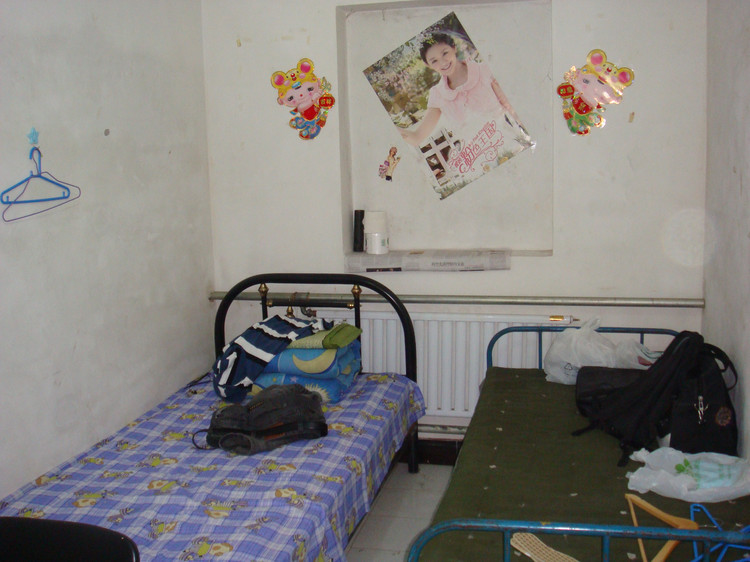
This was my room
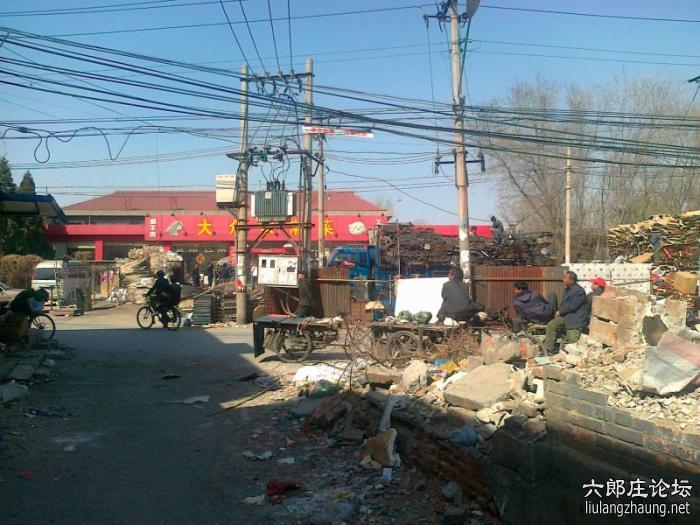
http://liulangzhuang.net/read.php?tid=3
Liulangzhuang is a village with several hundred years of history. We villagers lived here for generations, but our peaceful rural existence shielded from the outside world no longer exists, it has been replaced by something the media and the village officials characterize as dirty, disorderly and bad! May be ask, if one sees a dirty and disorderly house, is it legitimate to criticize the heads of the household as responsible for the mess? If so, when there is a dirty and disorderly village environment, can the village head and village party secretary evade responsibility for that? To relocate the whole village in the name of it being “dirty, disorderly and bad” is something we villagers cannot accept!
In the village now there are slogans that say relocating will benefit us by creating a better environment for our children, but, may be ask, what is there in the plan that deals with improving our lives in the present? We already made a livelihood for ourselves by building new buildings with our own two hands, why is it necessary to tear down the homes we have lived in for generations? What about the good farmland sold off cheaply, the village factories leased out? The income was not used to improve the lives of the villagers at all, instead we lost our means of earning income, with no guarantee for the future. The leadership turned a blind eye to us, we are not to add to the nation’s worries and be a burden, but must solve the problem of how we will subsist from now on by ourselves. In the meantime, for various reasons they have invaded and seized our private property, and dealt with us harshly about what we will get in compensation. We are determined to resist! The reasons are:
1. The village representatives were not selected from among village residents. The majority do not live in Liulangzhuang, they are relatives of village officials, therefore they do not serve the villager’s interests.
2. The problem of compensation for years of agricultural labor has not been settled.
3. When villagers transfer from rural to urban household status, the issue of what sort of social security payments they will receive has not been settled. Many villagers are already near retirement age, but social security ordinarily requires a minimum of 10 year payments by individuals into the system in order to be eligible.
4, According to state law, property rights should not be violated. [details omitted]
As the organizing body of the collective economy [of the village], the village committee has decided to violate the lawful rights and interests of the members of the collective [the villagers]. Those whose rights have been violated, we villagers, appeal to the People’s Court to rescind their actions.
We strongly demand that the financial dealings of the village committee be made public!
The village we knew in former days has become distorted beyond recognition. We have to carry the reputation of being dirty, disorderly, and bad. But you[ the village committee] have for many years done not one small thing for us. When it came to selling off our property you sold it off, when it came to squeezing us dry, you exploited us in full. Now the village we have lived in for hundreds of years is today going to be demolished! When it comes to filling in the financial accounts, you concoct various pretexts to cheat us, taking the income for yourselves. And you are the village representatives? It’s too ridiculous! We realize how much we have been insulted.
konjaku: This blogger does not express criticism of the transformation of Liulangzhuang village. However, there is a sense of sadness and loss. I have omitted some historical details and added explanatory photos.
http://blog.sina.com.cn/s/blog_488579410101m66q.html
In the 90s Liulangzhuang started on the road to demolition and removal. In 1998, in order to build the 4th ring road, a large section of the village SE corner was requisitioned. This was the villagers’s first experience of demolition. A number of folks used their compensation fund to build buildings of two or more stories.
As the 21st century dawned, Beijing city planned to establish an urban green zone. In this plan, an area in the vicinity of the village was to become the Wanliu Sports Park. For this, a large section of the SE and NW was taken over. However, the Sports Park was not built, and, in the name of greenifying, the Wanliu Golf course was built instead. This was the second time Liulangzhuang experienced demolition. A small number of villagers who lost their homes used their compensation to buy apartments in the Wanliu New Homeland development.
In 2011 Beijing slated the entire village to be removed to make way for a “tree village.” All villagers were to be moved to the “Liulangzhuang New Village.” This third experience of demolition is to improve the villagers’ housing conditions, although there are still people who do not want to leave the existing village.
The villagers now would have to part from what they had lived and worked on and with for generations: the old land, old houses, fellow villagers, the fields, the trees, the rivers, the streets and lanes, and move to this Liulangzhuang New Village adjacent to the Shangdi Science and Technology Park zone. The hardworking and decent villagers must place their dreams and hopes for the future upon life in Liulangzhuang New Village.
I grew up in Liulangzhung. I love every blade of grass, every tree and bush, every building and every road, with an indelible love. From historical documents I find out the village’s past, from people of my father’s generation I hear about the village’s yesterday, with my eyes I discern the village’s present, within myself I earnestly hope for the village’s wonderful future.
Liulangzhuang today: the site was supposed to be part of the western green zone, with one section especially devoted to a sports park. Instead, in reality, in the NW there is the Wanliu Golf Course, and in the SE, the scattered ruins of demolition. On these ruins is supposed to be built the Summer Palace extended garden area, as specified in the Three Mountains Five Parks plan.

Wanliu Golf Course
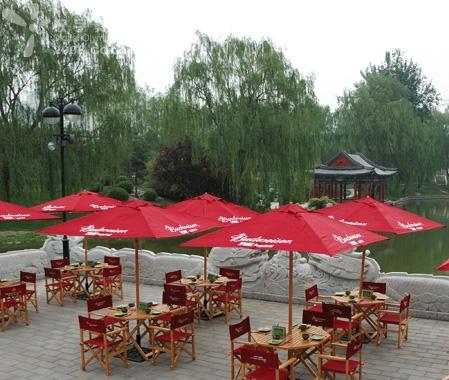
Wanliu Golf Course

Wanliu Golf Course

Wanliu Golf Course
2013-04-18 I return to Liulangzhuang to take a look around. Inside the village there are still four or five households still holding out. The temple, tea booth, and the former residence of the painter Tian Shiguang have been listed as cultural protected sites and are still standing tall in their original places. The Liulangzhuang elementary school, the Liulangzhuang store, the vegetable stand, and the state-owned houses await demolition, but everything else is torn down, scattered ruins.

Tian Shiguang

Tian Shiguang painting

Liulangzhuang Zhenwu temple
The large pagoda tree in front of my house still stands there, the magpie nest still above in the branches. The magpie I know well still hops in the branches and comes down to the ground. The jujube with its crisp sweet fruit, the persimmon with its abundant golden yellow fruit, these are just starting to bud out with tender shoots. At my former neighbors houses close by there are a large willow, a paulonia, an old elm; these still raise their heads waiting for their owners to return. In the streets and lanes with the old telephone poles I know so well, only a few stray dogs remain. They are reluctant to leave, they long for the tomorrow of Liulangzhuang.
The Beijing Evening News says: in 2013 they start building the Three Mountains Five Parks historical and cultural zone. The Liulangzhuang site will be greenified, adding onto the already completed Haidian Park and Jingmi Canal greenbelt, altogether making up a green protective screen. At the Summer Palace north gate area, the Qinglong Bridge old town will be restored. At the base of the Fragrant Hills they will restore the old merchant district, Meichang street.
In the Qing era, there were some 30 villages in the Summer Palace area, the population a mix of Manchu (Eight banners) and Han. Of the old villages in Haidian, Liulangzhuang should be the first choice to be protected [as having historical and cultural significance], since, from the beginning of the Ming, it has had a deep connection with the “Three Mountains Five Parks” area. During the latter Qing, paddy fields around the village were turned in to a garden with a small forest at the center. To the east of Liulangzhuang is Changchun garden and Xihua garden, to the west is Qingman garden, to the north is the old summer palace grounds. Inside the village is the Zhenwu temple [dedicated to Guan Yu] founded by the grandfather of Cao Xueqin [author of Dream of the Red Chamber], Cao Yin. In the Kangxi reign period the village was a sub-division of the imperial family paddy fields.
In the Three Mountains Five Parks plan, Liulangzhuang will become a scenic area extending from the Summer Palace. The basic road pattern will be preserved, the historical relics will remain, a certain quantity of Jingmi rice will be planted, there will be some historical reconstruction.
Liulangzhuang villagers’ future: the Liulangzhuang New Village standing tall, neighbor to the Shangdi Science Park. The New Village will be a complete residential complex, equipped with a kindergarden, exercise facilities, health and sanitation office, a Bianmin Supermarket, a cultural square, and all the modern infrastructure of an urban district. The New Village will occupy more than 14 hectares, the buildings will comprise 410,000 square meters altogether, with 4034 residential units. There will be 27 buildings eight stories or higher. In one stroke this will improve the living conditions of 4600 people, in 2700 households.
2013-04-15, for the second time, this writer went back to the construction site of the Liulangzhaung New Village. What I saw: there is a broad straight sidewalk dividing the southern and northern sections. The 27 buildings are arranged in three lines of nine, purplish red in color with pale outlining, eye-catching against the blue sky and white clouds. The main part of the buildings is finished, they are in the course of installing external pipes, leveling the roads, putting up fences. The dream of a new life for the villagers has already begun.

Liulangzhuang New Village
As a Liulangzhung villager I am proud of Liulangzhuang’s long history and cultural achievements. I am fortunate to be able to achieve a comparatively good living standard in the New Village. As a Liulangzhung villager I am happy, I am industrious and courageous, keen of vision and ready to exert myself…
Wang Zhongzhen 2013-04-19
The Haidian “Three mountain five gardens” area gas been transformed –the removal of the village of Liulangzhuang, outside the Summer Palace, has been completed
http://bj.people.com.cn/n/2013/0716/c82838-19087438.html
Source: Beijing Evening News 2013-07-16
In Haidian, substantial progress has been made on the “three mountain five gardens” historical and cultural scenic district. The removal of the village of Liulangzhuang, just outside the Summer Palace wall, has been completed. The village site has some land allotted for development and the rest for the green zone. The removal and transfer of villages in the area outside the west wall of the Central Communist Party School began in the 4th month of this year. At present 70% of the villagers have signed a contract, it is estimated that by the end of this year the transfer of residents will be completed. A Haidian district official said, with hard work the whole “three mountain five gardens” project, involving transforming urban villages and creating a better urban environment, will be completed in three to five years.
The “three mountain five gardens” historical and cultural scenic district is bordered on the east by the number 13 subway line and the Jingi canal, on the west by the Haidian district boundary, on the north by the Western hills range and the fifth ring, and on the south by the west ring, comprising 68.5 square kilometers in all. The area that is a focal point for redevelopment is between the summer palace and the old summer palace, including the Shijiqingzhen and the Fragrant Hill areas. It consists of five administrative villages and 43 natural villages. Within 488 hectares, there are 40,000 registered residents, and 150,000 members of the floating population. The population density is comparatively great, amenities for tourism and public infrastructure is lacking, land use is unproductive, the urban environment is disorderly, public security problems can erupt at any time. The current state of the area is unfit to be part of the imperial palace garden scenic district.
In and around the parks the project to build a green zone accelerates
Inside the “three mountain five gardens” historical and cultural scenic district there is a large amount of wetlands, parks, and scenic areas. Already completed are Yudong park and Beiwu Park. Still under development is the Liulangzhuang Green Area, Yuquan Park, Danqing Garden, etc. There are a number of open spaces along the Beichang River watercourse being remade. These spaces are not well-known to tourists or city dwellers, but they have excellent soil and water distribution –an ecologically sound landscape of unaltered mountains and waters, along with the deep cultural and historical resonances of the imperial family gardens. Based on extensive study, the Haidian district plan will transform an area of 200 hectares, bringing the area inside and outside the parks into one comprehensive system and structure, with Yuquan mountain as the nucleus.
Reporter Lan Jie; Editor, trainee Gao Xing

NOTICE
The period in which villagers could take their own initiative in regards to the demolishing and relocation of Liulangzhuang came to an end on 2011-12-31. After 2012-01-04, the Liulangzhuang village committee will begin forcible removal of those village [residents] who have not yet signed an agreement, according to the “Liulangzhuang Demolition Plan.” The persons subject to forcible removal will bear full responsibility for any expenses which arise from the process. These will be deducted from their compensation amounts.
Towards those village [residents] who have not yet signed contracts, the village committee will proceed with forcible demolition, set in determination, firm in measures. If the committee meets with any difficulties or resistance, it will definitely not stop halfway, it will go forward to the finish, it will not allow a few people to have an influence on the best interests of the many. We will not allow the few to have an influence on the advancement of Beijing’s urban rural unification, and on the economic development of the property of the village collective. During the period of forcible demolition, the compensation policy will not change. The town government will not allow those who had faith in the government and who have already signed agreements to be treated unfairly in any way. Those who have not signed agreements, at this final juncture, need to recognize their situation, ponder their possible gains and losses. Will they take the initiative to relocate now and protect their own interests, or will they do harm to themselves by their own actions?
Haidian town Liulangzhuang Village Committee
2012-01-06
konjaku: The village committee says in this Notice it will undertake forcible removal 強制腾退 of resisters. As of January 2011, the State Council enacted a new rule concerning demolition and removal: “No violence or coercion could be employed to force the homeowners to leave. Nor could measures, such as illegally cutting water and power supplies, be used in the relocation work… if the government could not reach agreement about the expropriation or compensation with the homeowners, demolition could only be carried out after the court’s review and approval, the regulation said.” Source (Xinhua):
http://www.china.org.cn/china/2011-01/23/content_21799222.htm
There is no mention here of a court review of the process.
konjaku: “In 2009, Haidian took the lead in urban transformation with the Beiwu project, and achieved a significant result. With this as a basis, Haidian started to transform 20 focal point villages,. In 2012 Tangjialing, Bajia, Houying, Zhongwu, Zhenxing, Mentou, and Liulangzhuang were fundamentally transformed, with all inhabitants moved. The Haidian urbanization process is going in leaps and bounds, extending into the south area of the district as well. The crackdown on illegal building has been strengthened with repeated enforcement efforts. There has been a “100 day offensive,” a “spring offensive,” a “summer offensive,” etc., and these have achieved effective results. ” (https://konjaku.wordpress.com/2013/03/14/north-haidian-a-complete-city-with-all-the-facilities/)
Looking at each village in this list of demolished Haidian villages “fundamentally transformed” would be a way of examining the continuing process of “unification of the urban and rural” of the Beijing periphery after Beiwu.(For Beiwu, see earlier posts in this blog, begining with https://konjaku.wordpress.com/2012/05/24/beijing-unification-of-urban-and-rural-1-beiwu-and-dawangjing/
However, for most of these villages I find very little material. After Tangjialing, of which there has been more coverage because of its moment in the media spotlight, there is some record of what happened in Liulangzhuang , a large village situated on potentially valuable real estate (like Tangjialing) due to its proximity to Zhongguancun (Beijing’s silicon valley), and to the Summer Palace.
The first article here, from 2009, argues that reason for removing Liulangzhuang is to improve the integrity of the historical area around the Summer Palace. However, in the personal account of what happened in 2011 which follows, some of the village land is described as being sold off to become a golf course. There seem to have been numerous twists and turns in the succession of events, and many different perspectives.
Source: Jinghua Times
2009-12-05
http://www.chinanews.com/sh/news/2009/12-05/2001811.shtml
In order to protect the Summer Palace, Liulangzhuang will be torn down and relocated
Liulangzhuang is an ordinary village in Haidian just outside the east wall of the Summer Palace. Because sanitary conditions are poor, public order is a mess, and there is a serious overrun of non-conforming buildings, etc., Liulangzhuang was entered into the roster as one of the 50 “listed up” villages that needed to be dealt with. Yesterday, the city regulatory committee issued a statement, that in order to strengthen conservation efforts of the cultural relics of the Summer Palace and imperial palace garden, they would relocate the villagers of Liulangzhuang to Houyingbei village.
Liulangzhuang is near the 4th ring of Beijing city, transportation is convenient and rents cheap, making it the first choice for migrant laborers as a place to live. Therefore there are many non-conforming buildings, many small tradespeople and peddlers, lines of small stores. It is typical of a village in which rural peasants mix with migrants from elsewhere. At present, there are 45,000 migrants in the area.
Liulangzhuang is about 1 kilometer from the newly built gate of the Summer Palace. According to a village committee member, the rule is that buildings cannot exceed 4.5 meters, but clearly many multi-story buildings have been built, which are higher. In the city plan, the Liulangzhuang village site is part of the area allotted to building a green zone.
An official assigned to the Summer Palace said that relocating Liulangzhuang village would at least give complete integrity to the Summer Palace site. It would allow them to unify the water system and the landscape into a whole, and better preserve the cultural artifacts. Historically the entire area was previously under one jurisdiction, and there are many historical sites and scenic spots scattered over the area. To remove Liulangzhuang village and bring the whole area under one management, would return it to its original historical condition.
As far as safeguarding the water system, Liulangzhuang village water supply is centered upon Kunming Lake [the lake at the center of the Summer Palace grounds]. Once the village is gone, the criss-crossing water channels and river courses will become clean, as the village sewage will no longer be a problem. The removal of the village will also have a great impact in preserving the Summer Palace scenic landscape as a whole.
Reporter’s visit to the area
An old villager of Liulangzhuang recalled that the oldest name for the village was Niulanzhuang [cattle pen village] During the Northern Sung, when Yang Liuyang (Yang Yanzhao 958-1014) was injured while fighting with the Liao army, he recuperated from his wounds in the village, and then got rid of the local village despot. In order to commemorate him, people renamed the village Liulang village (Liulangzhuang). Although a small village, it became well known, being just outside the Summer Palace, at the foot of Yuquan mountain, and one of the villages growing “west of the capital paddy rice.”
The village has been quite prosperous for a number of years. Villager Li said that, in the past 4 or 5 years, along with the rise of Zhongguancun (Beijing’s silicon valley) many people who worked in computer stores came to the village to rent rooms. At that time, most villagers had houses with three or four rooms. They had one, at the most two, rooms they could rent out. As more tenants appeared, the villagers began building multi-story buildings to accommodate them.
Mr Li’s house is a two story building. He and his family live in the upper story. Downstairs, there are eleven separate rooms, all rented out for 450 yuan a month per room, making a monthly income of 4500 yuan. But compared to others, his building looks somewhat small and undersized.
At present in Liulangzhuang the tallest building is five stories, 15 meters high. Yesterday, I saw at least two new buildings being constructed on the same scale. The village has many stores, a clinic, and a supermarket. As the villagers vie with each other to build more buildings, the streets become narrower. The eyes can hardly take in all these buildings in close proximity.
For several years Haidian district has tried repeatedly to come up with a large scale comprehensive solution to deal with the following problems: road space encroached upon by non-conforming buildings, exposed garbage, business operating in roadside space, erected signs, open-air snack and barbeque stalls, the management of renters, and hidden dangers to public security. Obviously, nothing they have tried has gotten at the root of the problem. Mr Li says there are only 10,000 villagers, but as many as 45,000 tenants, and this number is increasing all the time, because of the village location and price.
As for the news that the village would be relocated, Mr Li and his wife do not consider this fair. They said the village would relocate before, two or three years ago, several times, and nothing happened. Now people has invested as much as 1,000,000 yuan in new construction. If they have to move, what will they do?
Actually, several months ago the written notice of the relocation was distributed. It states that any building exceeding two stories will be considered a non-conforming [illegal] building, and demands that the villagers stop any construction. Already Mr Li cannot clearly distinguish this latest notice from the several others he received in the past. Therefore he thinks that demolition of the village will happen sooner or later, but not necessarily right away. “It’s not that the relocation won’t happen, but they have to get all their ducks in a row first.” Mr Li said, his household makes a good living by rentals. His son is in a technical secondary school, but after he graduates he won’t have to look for work, he can stay at home, counting on the rental income. “If it happens that we have to relocate, we won’t have this income anymore, and nowadays work is hard to find, when that time comes what will we rely on to live?”
China Human Rights Weekly
http://biweekly.hrichina.org/article/1159
A Record of the Destruction of Liulangzhuang
Han Yi
[konjaku: Han Yi is an activist who helps people with demolition disputes. She was elected to the People’s Congress in 2012]
In Beijing Haidian district there is a village called Liulangzhuang, just to the east of the Summer Palace south gate, and across from the Zhongguancun high technology park. It is a well-known for its fengshui as a “treasure site,” a money-producing area. It is one of the last three existing villages in Haidian with a history that goes back 600 years, but because of its natural advantages it caught the attention of profit-seeking groups, leading to its eventual destruction.
photo 1: A former member of the Chinese People’s Political Consultative Congress used to live in this old residence. The two large jujube trees oversaw many important accomplishments, for over 100 years. In the north corner of the household compound a villager has erected a 4 story building.
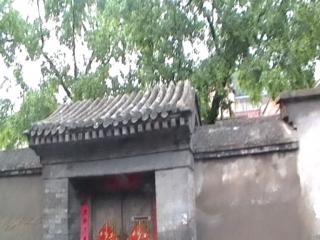
In previous years, the Liulangzhuang villagers relied on the labor of their own hands, tilling the fertile earth, producing many agricultural products which supplied the city dwellers of Beijing. Liulangzhuang has traditionally held the appellation “Capital western rice field” and the paddy rice produced there was specially presented to the imperial family. The hard-working villagers enjoyed good fortune from generation to generation, and lived care-free lives.
After the fact, the villagers were informed that their fields and orchards had been sold, in order to build a golf course. The villagers spontaneously united, and went to the Beijing planning committee, searching for the plan and permit granted for this golf course. A planning committee member answered them, “no plan has been submitted.” As the villagers sought an audience numerous times with the authorities to report this illegal golf course, the construction for the golf course quickly started. The villagers could only watch helplessly as their crops were crushed by bulldozers, as the fruit trees in their orchards were torn out of the ground by excavators. While their hearts were assailed by pain and suffering, they had no one to whom they could relate what was happening.
As a matter of fact, it was the beginning of the destruction of Liulangzhuang village, although perhaps you could call it “constructive destruction.” The village committee, having sold off the fields, now took all the open space in and around the village, and did construction — built them up with multi-story buildings with rooms to rent. Where did all the income from these rented rooms go? The villagers asked, but got no answer.
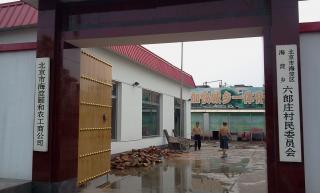
photo 2: The village committee’s magnificent construction splurge culminated in a large entrance gate, with double gold-plated doors, each door affixed with 90 nails (the Tiananmen gate makes do with only 81 nails). It is said this cost over 600,000 yuan.
The open space in the village formerly served as a graceful environment enhancing the lives of the villagers. It also carried the promise of a place in which the future generations could have their own household compounds. But the village committee took all this land over, and when the villagers’ children got married, instead of getting a new house, they were forced to take a portion of the existing family property, or live with their parents. Therefore the villagers built second floors onto their existing dwellings to make more room for their own family.
Since Liulangzhuang is close to the 4th ring and the Zhongguancun High Tech park, and public transportation is very convenient, more and more people came looking for rooms to rent, and the villagers added more floors to their own houses, to make rooms they could rent. The buildings the villagers built were of good condition, and attracted many “northern floaters,” white collar workers who worked in Zhongguancun. The villagers added more stories to the buildings in their compound –now there are quite a few four story buildings. Renting rooms became the principal source of income for the villagers. In a village with 4630 registered permanent residents, there were now 50,000 people, a miniature society with businesses, recreation zone, and residences. The village committee was totally absorbed in making money, they paid no attention to village management. This village with a long history gradually lost every trace of its historical character, and changed into something noisy, filthy, and disorderly.
photo 3: This is village collective land which the village committee took over and built a building on, which it rented out. The profit all went back to the village committee.
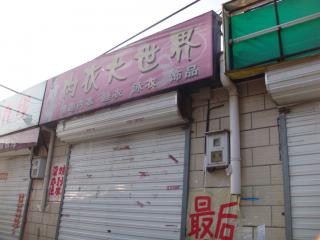
Tangjialing, famous as the village where the “ant tribe” assembled, has now been destroyed. Liulangzhuang, which is in a very similar situation, is now about to be destroyed. No matter that the villagers are still renting rooms to office workers. They now face a grim struggle for the survival of the village.
How big was the power of the village committee? What was its character? These questions were answered by events. 2011-07-17, every villager received a sealed letter from the village committee. It said: “In accordance with the demand of the city and district that the problems of Liulangzhuang, listed as a focal point village, be fixed, the villagers will all be relocated, and the village vacated by the end of this year.” “The plan for vacating the village site and relocating the villagers has already been approved by the village representative assembly.” “Villagers of Liulangzhuang have a great tradition, they consider things in their entirety, with noble character and integrity, the villagers have an excellent character.” “We must bring thought and action together on all levels, carry out the government policy, unify the peoples’ common interests, firmly establish a consciousness of the situation in general and an understanding of responsibility. We should accurately discern the connection between the interests of the state and collective, and those of the individual. We should fully display the essential style and cultured quality of residents of the capital.”
Along with this letter, the stipulations for removal and relocation were distributed, as follows:
The ratio of compensation of area [of living space lost, and living space gained] was 1:1.
If, according to the number of persons in a household, the area gained in compensation amounted to less than 50 square meters per person, the family could increase their living space to reach 50 square meters per person, but only by paying 4500 yuan per square meter. For instance, if there were five family members, and their homestead compound comprised 220 square meters, they could still get replacement housing of 250 square meters. However, to make up the difference of 30 square meters, they would have to pay 4500 yuan per square meter, or 4500 yuan times 30.
If it turns out the area of the replacement housing is less than the original homestead, the village committee would pay a subsidy of 24000 yuan.
If there is a second story, the area of the second story is not eligible to be used in the compensation ratio. Instead, for every square meter the family will receive 800 yuan. A third story and above are considered to be illegal building additions, and for these there is no compensation whatsoever. For example, if the Zhang family had a homestead with garden totaling 200 square meters, and they had added a second floor of 200 square meters, their compensation would be 160,000 yuan($26,135). This amount is not enough to do renovations on their replacement housing, and does not serve as a source of income for the future.
The price of multi-story buildings in the Liulangzhuang area is already 50,000 yuan per square meter, but the price in the area of the replacement housing is only 20,000 yuan. Therefore the villagers sustain a loss in value of 30,000 yuan per square meter. Further, in the original homestead, the villagers have property rights, but when they move they do not have property rights anymore.
After seeing this letter, everyone flew into as rage. Was this not sheer daylight robbery? Many families had built 3,4, as high as 6 story buildings. One family had spent as much as 1million yuan on construction, and they had only just finished the work. The villagers could not endure such great losses. That evening, more than 100 people assembled in the small grove on the eastern end of the village (this was the only remaining empty land), discussing the siutation and venting their dissatisfaction.
The sealed letter said, “The plan for vacating the village site and relocating the villagers has already been approved by the village representative assembly.” Now the villagers wondering , who were these “village representatives”? When did they convene as an assembly? Several people admitting that they had attended a meeting called several days ago by the village committee. At the end, they had been asked to sign something. When they asked what they were signing, the committee head said, “there is no need to trouble about it. If you don’t want to sign, it doesn’t matter.” The villagers had no idea that this “Relocation Proposal” they had signed was so disadvantageous to them. If they had known, they never would have signed it.
According to the “Village Committee Organic Law”in an important matter directly affecting the interests of all villagers, there must be a mass assembly for all the villagers to discuss the matter and what should be done. Even if an assembly of village representatives had been held, such an assembly did not have the authority to decide upon a proposal to demolish the village and relocate all the residents. At present the village committee authority has changed into a hegemony. They skipped the requirement for a mass assembly, and forced the village “representatives” to sell off all the village collective land.
Some villagers said they would go as a group to the Haidian district government, some said they would try to get attention for their case overseas, some said they wanted to get a permit for a demonstration, some said they wanted to get the media to do an expose.
Unsettled, they all thought of different things, but on one thing they agreed: they wanted a unified plan based on the standard detailed in the [2005 initiative]“Construction of a New Socialist Countryside.” They wanted their replacement housing built within the current village site. First, they wanted the village committee to clear away the buildings and businesses they had caused to go up on the village collective land which they had seized for themselves. Good quality replacement housing would be built on that land. Only then the villagers would vacate their homesteads, and move into the new housing. The villagers believed that when the whole village was demolished, if they could retain one third of the total land [for their new residences], then they would be satisfied. The rest of the land could be developed according to the market, and the villagers would enjoy the profits.
The villagers said, they would defend with their lives their homes, which had passed down from generation to generation. They would not allow their beautiful homes to be destroyed by at the hands of the village committee. Therefore, the villagers selected several representatives, and on 07-21[four days after the sealed letter]they went to the Haidian CP committee office with their demand [as stated in previous paragraph] . They also requested that the village committee convoke a mass assembly, in order that the villagers themselves could decide the future of Liulangzhuang. However, this reasonable request was ignored. The villagers have to give way –they are obstructing someone’s political career! The villagers have to give way –they are a hindrance to business development! The villagers said, the Haidian district government wants the favorable “treasure site” of Liulangzhuang for themselves.
On 7-22, the Liulangzhuang village committee distributed a notice stating that all businesses must suspend doing business within three days, or face a fine of 500 yuan per day. On 7-25 the tearing down of buildings would begin, by 9-27, Liulangzhunag would be completely depopulated.
A law enforcement team was formed by members of the police, the urban management officials [chengguan], and village committee members. Every afternoon ten or twenty of them, wearing peaked caps, meandered through the village. A other times, wearing red armbands, they patrolled the village. If they discovered a reporter or media person, they immediately reported them, and prevented them from investigating. If a villager had contact with anyone outside the village, a person from the administration came to have a talk with the villager, uttering threats. The atmosphere in the village became intimidating. For some reason, demolition in the village was set to begin on Army Day, probably to emphasize to the villages that armed force lay behind the government’s authority.
Near the east end of the village there were five buildings which the village committee had rented to non-residents who had come to the Beijing area for a better life. These persons lived in the buildings, and also used them for their own small businesses. These buildings became the first casualties in the demolition process. Among them was one family that had lived in Liulangzhuang for quite a long time. Their building was in a good spot: during the day they did sold things by the village gate. They lived in the building they rented, their children went to the local middle school. They had a good life, they thought they had put down roots in Beijing. They never imagined their level ground would be struck by spring thunder, that Liulangzhung would vanish, and that they would have to search for a new place to live. Like an ant in a hot pan, the husband and wife ran about frantically looking for a new home. There was no comparable place nearby with such a convenient location. They asked the village committee to extend the deadline by a few days, but were refused. On the morning of Army Day (August 1) the husband and wife went out once again to look for a new place to live, and posted on their front door a piece of paper, saying, please give us 3 more days to search for a new house, at the end of that time we will definitely move out.
Their thinking was too naive. They did not imagine, nor for that matter did the villagers imagine, that the “removal” would be conducted without any decency, any pity, any sympathy, only savagery and brutality. The excavator pulverized their roof, pushed over the walls, and crushed everything inside the house to rubble. The husband and wife hurried back upon hearing the news, and turned over the rubble with their hands piece by piece. Their daughter stood and watched from the other side of the street, her face drawn with sadness and fear. The excavator continued its work of tearing down walls. This was the “harmonious” prelude to what would follow.
Since Beijing was in the period of intense summer heat and heavy rains, why did they not give people a few more days to find new lodgings? Why didn’t they wait for people to take their belongings out, before they tore down their houses? Why did they use such rough methods to drive this family out into the street? Too many “whys”, and no one who will answer. This family (described above) now exists in the streets. They were never considered important, no one had any concern for them. These “northern floaters” and migrant laborers are the social group with the lowest income, they have no rights because of the household registry problem. As for their daughter, whatever she once loved, and hated, has now been completely transformed.
Every day the play in which hegemonic power tramples on people’s rights is reenacted. Those in power every day enjoy their accumulated capital, ruthlessly stripping away the property and dignity of those who are too weak to resist. By “killing one to warn one hundred” they effectively cast fear into all the other families that have migrated here and started small businesses, and all of these flee in terror at the first sight of authority…
konjaku: “Li Chaogang said that in order to build the International Garden Expo, Fengtai District had transformed a large garbage dump and landfill on the side of the Yongding River into a garden of 513 hectares, with flowers blooming over three seasons and evergreens for the fourth season. Altogether they will plant 4,000,000 trees and shrubs of all types” (previous post).
Because of the efforts of an activist photographer named Wang Jiuliang, we have a description of the garbage dump referred to here. Between 2008 and 2010, Wang Jiuliang mapped out the garbage dumps around Beijing. To determine their location, he followed garbage dump trucks on his motorbike. He found a number of large scale dumps surrounding the city, which had never reported their existence to the authorities.
http://env.people.com.cn/GB/178688/195678/11993786.html
The garbage dump on the west side of Yongding River: it once was a “lost city”
2010-06-28
Wang Jiuliang
There is a huge garbage dump, stretching across over 3000 meters, in which many types of people manage to subsist, linked together by the interwoven economic functions they perform. This human tragi-comedy plays out close by, in the suburbs of the capital city. This is the site, in 2013, for the International Garden Expo.
1.At its peak, more than a thousand gleaners lived in a densely packed settlement, a large “lost city.”
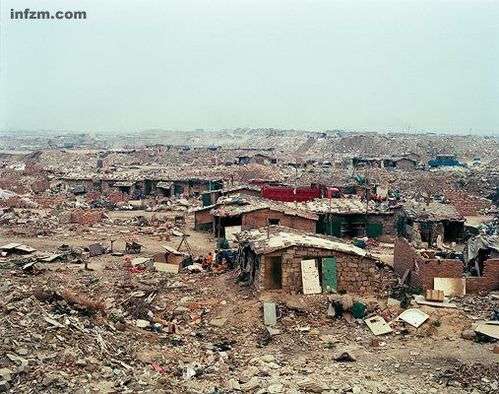
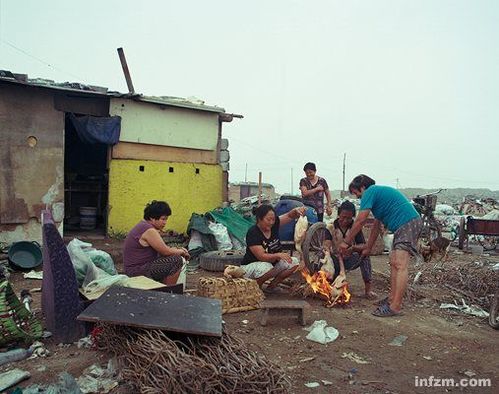
2. Even though living in a garbage dump, it is still necessary to wash one’s hair. The water has to be brought in, and costs 2 yuan a container

3. As the women roast a duck which they raised themselves over a fire, everyone looks forward to dinner
Nanfang Weekly report 2010-06-25.
This garbage dump is situated on the west side of Beijing, on the Yongding river west bank, north of Lugou bridge (the Marco Polo bridge) and south of Yingshan. When I first came here in 2009, on an overcast day, standing in the middle, I could not see, looking out in any direction, to where the dump ended. As far as I could see there was garbage, and the gleaners’ simple and crude shacks. I felt disoriented and confused, as though I had come to a huge lost city.
Beginning in the 90s, from along the whole Yongding waterway a vast amount of sand and gravel was excavated to use as building materials in the city. This left large pits which subsequently were used as landfills for the garbage the city produced. For 10 years there was frenzy of city construction and growth, and a frenzy of dumping garbage here. From nature the city took away resources, and instead of an equal exchange, in which the city would give back something worthwhile to the natural site, it simply filled it in with its waste products.
4.As I stood on the edge looking down at the pit, I felt dizzy. But the gleaners were climbing energetically up and down the steep slope like mountain goats.

At one time, there were more than several thousand gleaners assembled here, peasants who had come from Sichuan, Anhui, Henan, and other places. They built shacks out of materials they gathered from the dump. In winter they gathered wood and built fires to keep warm, in summer they endured being burned by the scorching sun. Because there were no trees here, there was no shade to cool off in. But no matter the weather, every day buzzed with extraordinary activity. An unending stream of large trucks, in the 100s, came to dump their loads. The gleaners in the thousands waded through the cloud of dust covering the sky, rushing hurriedly to grab whatever they could. The women used hooks to grab smaller items, the men, bare to the waist, used sledgehammers to break concrete reinforced with steel bars. The adults had sweat dropping off of them like rain, the children ran about and played in the refuse. Small peddlers on the roadside sold greens and fruits, old women in the shacks lit fires to prepare meals.
5. Every day hundreds of trucks dump garbage into the pit left from extracting sand and gravel. Gleaners scramble down the steep slope looking for anything of value.

6. A girl who has lived in the garbage dump since she was young. She is covered all over with dirt, but the expression in her eyes is pure.

In the midst of the chaos, the rank of the people in the dump is clearly marked out. Holding the dominant position are people from Sichuan. The majority come from Wen’an province [in Hebei], they have regular spots at the top where they glean. Those from Anhui and Henan resemble guerilla fighters, they have to stay below those from Sichuan, and can only glean from their left-overs, therefore they are called “lower down in the hole.” There is a clear boundary between those “lower down in the hole” and those “at the top of the hole.” The Sichuan people own and control the shacks the people live in, those from Anhui and Henan have to rent rooms from them, the “bosses”, at 120 yuan a month.
The Sichuanese further determine what all the people do according to their rank. At the lowest rung are 5th level gleaners. For 100 yuan a month, they are given a contract to glean a designated area of 10 to 20 meters by a 4th level boss. A 4th level boss typically employs 4 or 5 gleaners, and takens 70% of the profit from their work, using this money to pay their “salaries” and, at the same time, to make a contract with the truck drivers to dump at their particular spot. If no trucks were to dump there, there would be no income. Above them are 3rd level bosses, who have control over larger areas in the dump, of several hundred meters. These 3rd level bosses are not directly involved in the work, they are managers of the area under their jurisdiction. They drive sedan cars, dress well, and for the most part sit around all day playing mahjong. The second level bosses have control over the whole dump, they are directly under the big boss, who makes over 10 million yuan a year. The second level bosses, except for the times when they come to collect rents from the third level bosses, almost never appear at the dump. The big boss at the top gets 20 yuan for every truck that comes in to dump a load, which adds up yearly to a large sum.
Except for small number of bosses, those people who live in the lost city of the dump are poverty-stricken. If one of them manages to pick up a large section of a steel reinforcing bar, that is enough cause to be happy for a whole day. However, they are very close in friendship. Many are fellow villagers, or are related, and when something comes up, are always willing to do a favor for each other. For instance, if someone needs to build a home, which in this case means a simple, crude shack, everyone is willing to lend a hand; they don’t ask for the favor to be returned. Naturally, their work is quite dangerous. A woman from Henan was working down in the pit, and from above a rock came rolling down and smashed into her head, blood was pouring out. To be hospitalized would cost over 10,000 yuan, and the money was collected from her fellow villagers, 100 yuan from one, 200 yuan from another. There was an old man from Sichuan who died from being careless and tumbling down the pit. One time in a heavy rain, the slope caved in and buried two young people…
When I came here before I met a child with a serious congenital illness. Some kind-hearted people, when they saw the photos I took and understood the situation, took up a collection, afterwards the child had surgery at the Beijing Police Hospital. Although some take comfort in incidents like this, when all is said and done I am just a bystander. We cannot really enter into the lives of the people at the dump and fully understand them. They do not have high hopes that they will ever live in the city. Their only ambition is to be able to return to their hometown someday with a modest stash of money.
After I published my photos and made this site known to the world, the government immediately banned it. The sights shown above no longer exist. Some residents were forced to move away, others have had to return to their hometowns. I do not really know if my photographs were the impetus for all this to happen, but in my heart I feel uneasy.
At present, the pit is completely filled in, but the garbage remains underneath. The Beijing to Shijiazhuang [capital of Heibei] high speed railway will pass through here, on top of the buried garbage. In 2013 the International Garden Expo will be held here.
Editor Jiang Qi
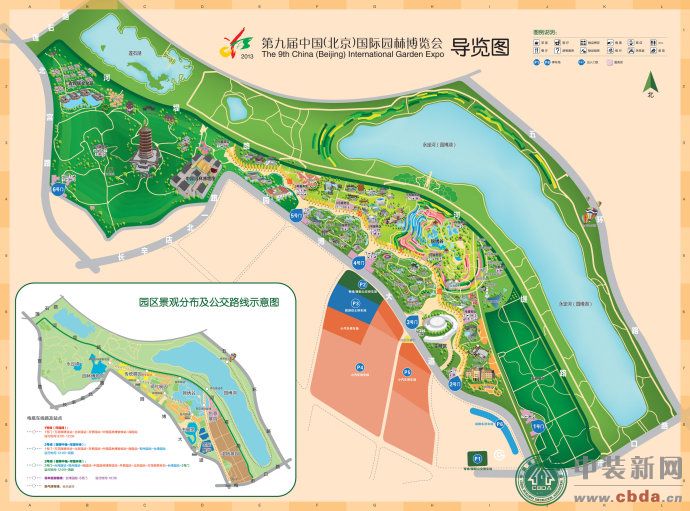
The Garden Expo opened in May 2013. Visitors say it is quite large.(Click on images to see larger size)
Map:
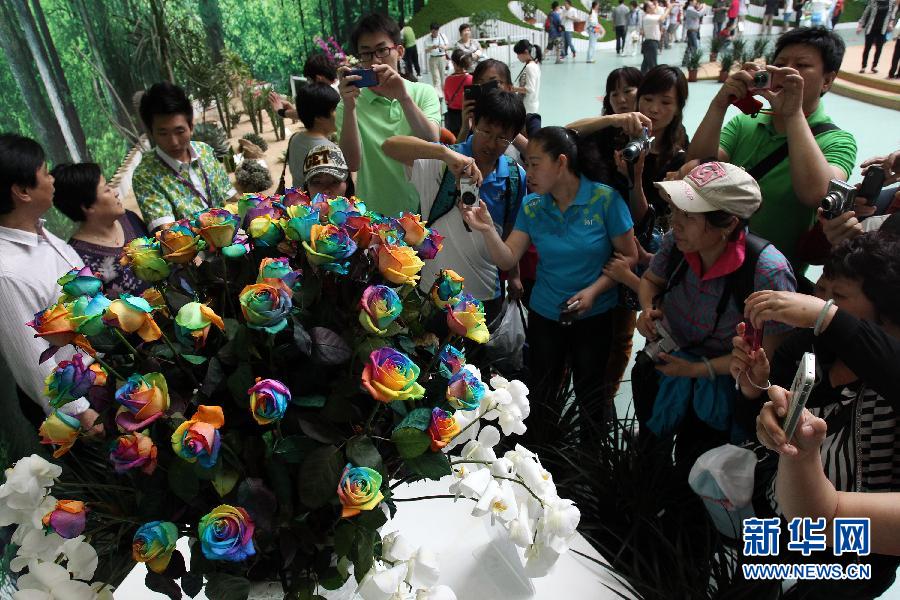
Main exhibit hall with kaleidoscope wall and ceiling:

Yurt and model sheep:
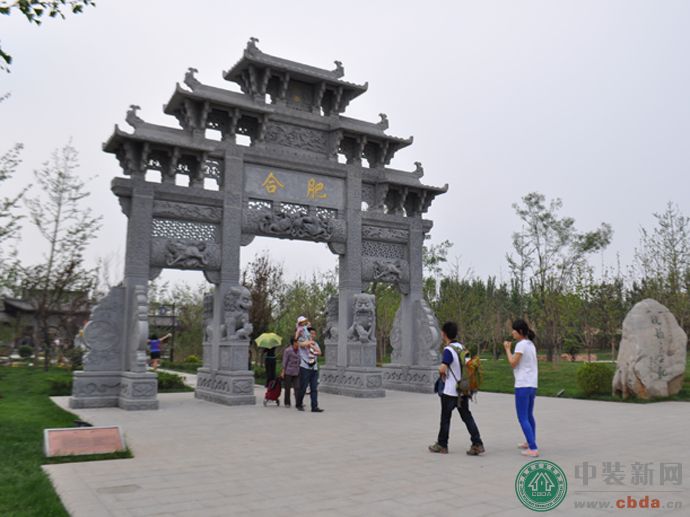
Gateway to Hefei garden area

konjaku: There is a rationale for the park which replaced Tangjialing village (Zongguancun Forest Park, see previous post), it is supposed to serve as a “green lung” for Beijing city. The idea is that large-scale planted areas on the edge of the city will filter out, or “absorb” urban-industrial pollution. The image for the Beijing periphery in the future is one of gleaming high rise complexes, whether residential or commercial, forming “new city districts,” set within a green zone, a new “ecology-based civilization.”. The concept is explained in the following articles (excerpts). As was the case with Tangjialing, this plan has a profound effect on the people who happen to be living in areas slated to become “green lungs.”
The Four Large “Green Lungs” will make an ecological protective screen for the capital
Bao Songya
2013-05-23
http://cppcc.people.com.cn/n/2013/0524/c34948-21608133.html
According to assistant director of Beijing City Parks and Greenery Department Shi Guisheng,as a result of the project initiated by municipal party committee and city government to expand the green areas in the city’s outskirts, in the south they have built Nanhaizi Park [11.65 square kilometers], the southern “green lung.” The Yongding river ecological development zone of five gardens linked together comprises the western green lung. The ongoing expansion of the Olympic park northward makes up the northern lung. The Dongjiao (eastern suburbs) Forest Park, integrated through the Tongzhou, Shunyi, and Chaoyang districts, is becoming the eastern green lung. The development of these four “large green lungs” is beginning to take shape. These areas detailed make up only a small part of what is called for in the final plan. Already at the end of 2012, wooded area in Beijing city amounted to 1,062,000 hectares. The percentage of green zone amounted to 55.5%, the ratio of forested land was 38.6%.
The “four great green lungs” not only has a positive ecological effect, it also works to constrain the hidden dangers of the so-called “spreading the flatbread” expansion of the city in ever wider rings. Instead of undifferentiated sprawl, development consists of discrete “new cities” separated from each other by green zones.
Li Chaogang: building Beijing’s green lung, forge a “grand banquet of gardens”
http://news.xinhuanet.com/politics/2013-03/09/c_114964227.htm
2013-03-09
At the national People’s Congress, Fengtai District Party Secretary Li Chaogang announced that Fengtai would build the 9th annual China (Beijing) International Garden Expo, which will open in the 5th month of this year. In area it will be twice the size of the Summer Palace in Beijing [the Summer Palace is 742.8 acres], forming a “green lung” for the city of Beijing, a sumptuous banquet of gardens.
As the contradiction between economic development and environmental resources becomes more acute with each passing day, Li Chaogang stressed the need to construct an ecology-based civilization along with protection of the environment, to enhance the people’s welfare and leave a bright future for their descendants.
According to Li Chaogang, the counties and outlying districts of Mentougou, Fangshan, Miyun, Huairou, Yanching, etc, comprise an ecological self-restraint zone. They are being made into the city’s “green lung” and “green kidney.” Since the Olympics, Beijing has been energetically pursuing the goal of a “Green Beijing,” devoting 1 million mu (approx 167,000 acres) to forested land, to reach a ratio of coverage of 45.6%. The Yongding River is also being developed as an ecological green zone.
Li Chaogang said that in order to build the International Garden Expo, Fengtai District had transformed a large garbage dump and landfill on the side of the Yongding River into a garden of 513 hectares, with flowers blooming over three seasons and evergreens for the fourth season. Altogether they will plant 4,000,000 trees and shrubs of all types.
“According to the calculations of the environmental protection department, after the garden is built, every year it will absorb 10,000 tons of urban-industrial smoke and dust.”
To build an an ecology-based civilization is not a one-time project, nor can it be accomplished by the government alone. It must involve the effort and cooperation of all of society.
Zhongguancun Forest Park is built, in the first stage comprising 950 mu (158 acres), the former Tangjialing village is transformed into a “green lung”
http://finance.qianlong.com/30055/2013/05/06/2530@8668309.htm
Zhongguancun Forest Park has become a place where relocated residents, and workers from nearby high technology businesses, stroll during their free time, photo Zhang Jiali
Gingko, Chinese pine, goldenrain tree…all sorts of trees dot the winding dark gravel garden path. The former site of Tangjialing village has changed into the Zhongguancun Forest Park. Starting in 2010, 1153 village household compounds were torn down. 2012-03,the first stage of constructing the park was begun. Now the first stage is complete, and the second stage, involving another 110 acres, is under construction.
Walking in the completed section of the park, dark green and light green tints brush against one’s face. However, what really inspired this reporter’s curiosity was that the land was not all flat, but there were many slopes and hillsides of different heights, planted with many varieties of tall and flowering trees.
City planning research specialist Han Bingyue told this reporter, the park was designed as a forest which closely simulates nature, an integration of tall trees and low shrubs in a complete phyto-community.
Compared to the usual type of planted forest, a “simulated nature forest” has more abundant plant life, with a more stable ecosystem, which means the cost of maintaining and conserving it is lower. For instance, in choosing what to plant, the Chinese pine, locust tree, mountain apricot, willow, goldenrain tree, etc, are all native to the Beijing area. They only need a minimum of care to do well here. In addition, in the park they have planted nectariferous plants, plants that produce berries or nuts, to attract small animals. Within a year, many small birds have built nests, and rabbits and squirrels have been seen bounding about in the wooded areas.
Using discarded soil sediments, in the park they have planned and built a topography that is like a natural environment. There are sunny slopes, shady slopes, low-lying areas, gentle hills. These different terrains support different plants. When it rains, the water flows from the slopes to the lower areas.
Two low lying areas on the east and west side have become rain collection sites planted with flowers and grasses. During the rainy season the water collects in these areas, dispensing with the need and expense to build pipelines to draw away excess water. The collected water can be used to irrigate the plants and trees in the park.
The total area will be 850 acres (5100 mu), 3500 mu are slated to be built next year. Many residents who live nearby come and stroll there. “The park is some 500 meters from our replacement housing, it takes about 20 minutes to walk there. I never expected that in my old age I would be able to live in such a nice environment!” 74 year old Tangjialing villager Zhou Dianying happily told this reporter. Many employees from nearby Zhongguancun Software Industrial Park also come here daily to relax.
Zhongguancun Forest park is an important focal point of greenification in Haidian district, setting an example for the rest of the nation.
A moment in time: Tangjialing before turning into a “Forest park”
2012-02-21
http://news.china.com.cn/txt/2012-02/21/content_24689538.htm
photos and essay by Ye Hongtao 叶洪涛
2012-02-21 The other day I heard the news that the village of Tangjialing, once famous throughout the entire country as the place where the “ant tribe” assembled, had now been completely demolished. It was going to be reconstructed as a park, with the name “Zhongguancun Forest Park,” to open sometime this spring. On 2-19 this reporter when to look at the site.
The vast majority of the buildings have been torn down
The village was rectangular in shape, with three main streets running north/south. At one time there were over 50,000 people living in it. Demolition was formally begun 2010-06.
The village is now no longer recognizable. Standing here, it is hard to imagine it was once a lively and bustling place. At the village entrance, where there once was the “romantic commuter bus-stop,” nothing is left standing but the village sign. Looking around, almost all the buildings have been pulled down, nothing is left but brick fragments and rubble. The few buildings that are left are empty. From the distance, one can see right through them, making them seem desolate.
There are 22 families who have not moved out. Their water supply has been cut off for half a year now.
Amid the flattened area, there are still some one-story houses standing. This reporter went to talk with a young couple living in one of the houses. They said they were natives of the area, Because they could not come to an agreement on a compensation amount, they had not left. After the village is turned into a “forest park” they do not know where they will go. Starting in 2010-08, they and the other 22 families have bit by bit had their water cut off. They have to go to the village brigade bathroom some distance away, and fill large water bottles –it is tedious. Though they still have electricity, their t.v. and internet are cut off. The village brigade put up a blockade on their street, making it difficult to go out or come back in. It also makes it dangerous for the elementary school children who are still going to school at the nearby elementary school.
The young couple live in a fairly typical one story house with compound. According to the village brigade compensation standard, if they once consented to move, they would receive an 82 square meter new residence. They consider this insufficient. They said they would move if the compensation was set to the national standard, not the village brigade standard. Then they would receive a new residence of sufficient size and some money to renovate.
Soon afterwards this reporter met an old man whose house has already been torn down. He and his family were living in a rental nearby and waiting to move into their new residence, probably in the 5th month of this year When asked why he consented to move, he said he had no choice, there was no other solution.
While walking around the ruins of the village, this reporter came upon a young couple who had come there on purpose to have a barbecue. They said they were natives who had grown up here from childhood, had both gone to the elementary school next to the village. Now they lived elsewhere, but because it was the weekend they came back here to relax, barbecue, and recall the flavors of the past.
There was also an older man flying a kite. The man said he had no particular connection to Tangjialing, he was simply taking advantage of the empty space to fly his kite.
Once this area becomes a forest park, more and more people may come to fly kites, but how many will remember what happened here, what used to be here? It is like the kite the older man is flying –something that flies very high, goes off very far, then suddenly the string snaps, and one can never recover it. (Ye Hongtao)
1.The sign at the entrance of Tangjialing. (Click on photos for original size)

2. This is one of the few remaining buildings near the village entrance. The wall was whitewashed and painted with a slogan: “ we all with one mind will build together a new home”
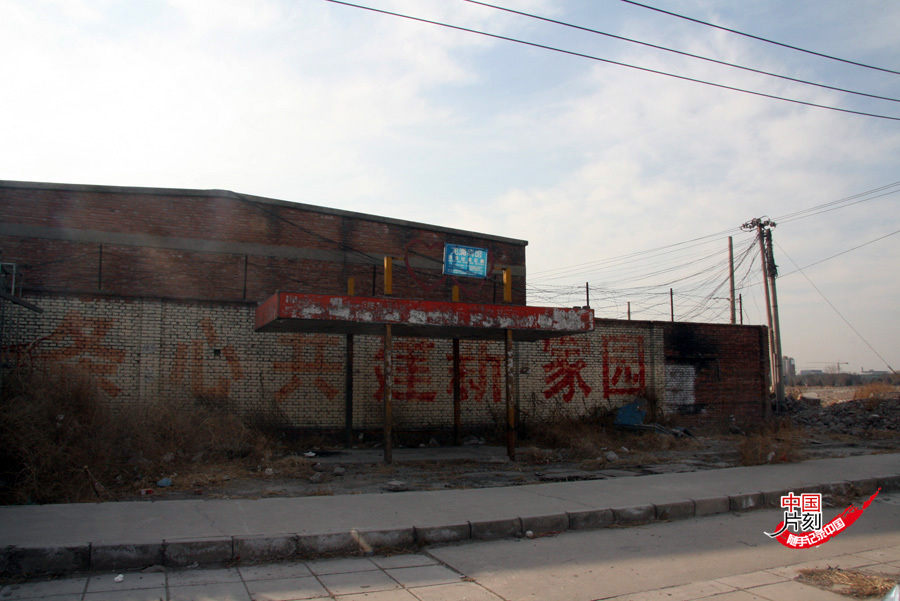
3. Most of the buildings have been torn down. All that is left is smashed tile and brick

4. This is one of the few buildings that has not been completely demolished. From the sign outside, it appears to have been an internet café. See https://konjaku.wordpress.com/2013/04/08/tangjialing-voices/ Now it is nothing but a memory.

5. A Tanjialing public bathroom, not yet completely demolished.

6. A compound inside which some people are still living, having refused to vacate. This includes the young couple mentioned above.

7. Tangjialing Elementary School. The school is still operating. According to the young couple this reporter interviewed, for the students, transportation is inconvenient, and they have to pass through an unsafe area.
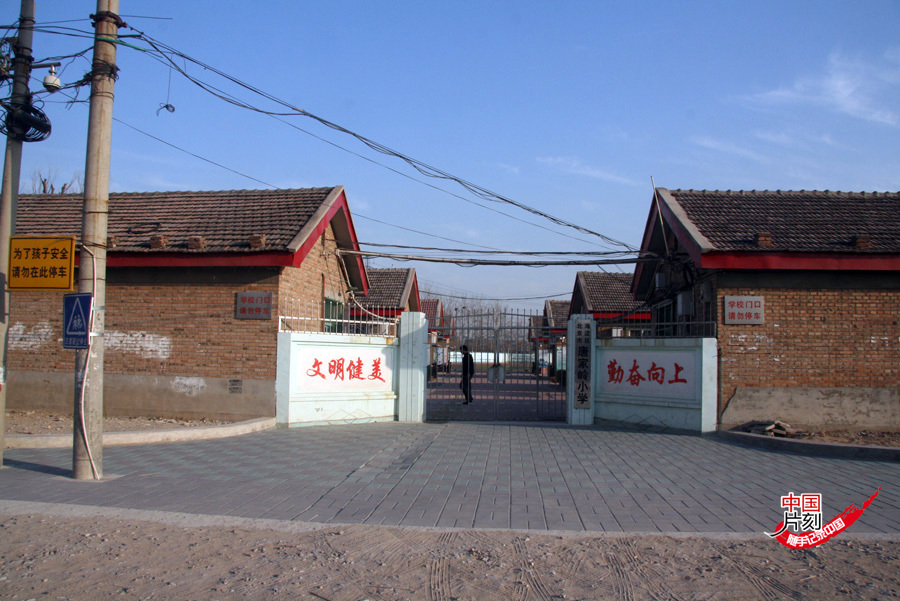
8. This is a road intersection where the village brigade piled up stones and dirt to make it impassible.

9. This is the cart that those resisters who still live here use to haul water.

10. A banner with the slogan: “ Waving hands in farewell, we temporarily take leave of Tangjialing. We will meet again in our new home, and have familiar chats together.”
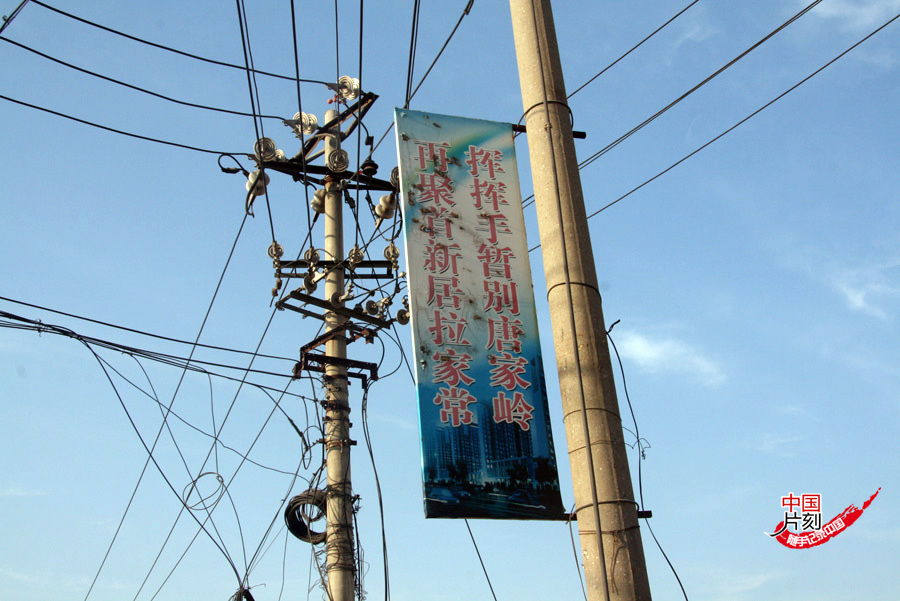
11. The man who came to fly a kite, because of all the empty space.


