Spring Rush 2013
konjaku: Examining the spring rush, when migrant workers and members of the floating population return home en masse for the New Year holiday, is one way to comprehend the vastness of the population shift and the inability of social services to keep up with it. In previous years there was discussion, and promises from the railway, that at some point there would be enough trains running to accommodate the passengers, who up to now have suffered from the “insufficiency of transport capacity.”
Previous posts on the spring rush:
https://konjaku.wordpress.com/2012/03/27/spring-rush-part-2-5/
https://konjaku.wordpress.com/2012/05/07/spring-rush-part-2-2011/
https://konjaku.wordpress.com/2012/05/07/inside-tickets/
https://konjaku.wordpress.com/2012/05/07/spring-rush-part-4-2011/
https://konjaku.wordpress.com/2012/05/07/spring-rush-part-5-2011-summary/
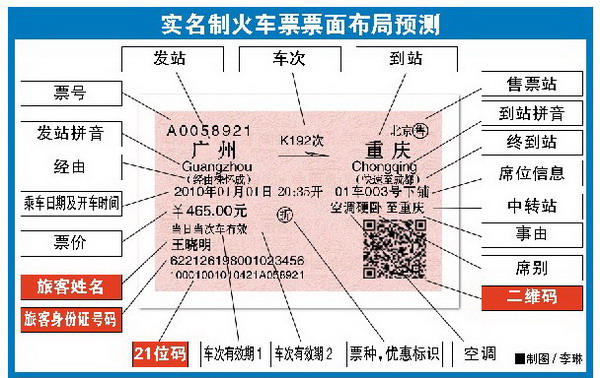
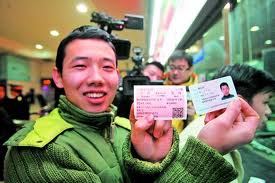
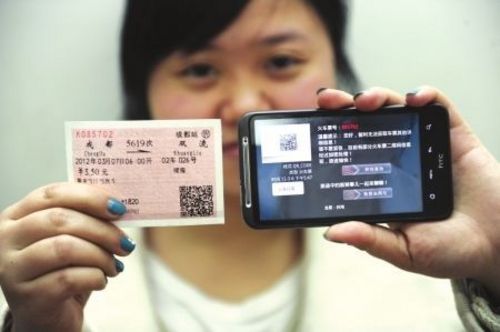
Because it is hard to get a ticket, there are ticket scalpers, who promise to get a ticket for you. In 2010 the railways initiated an “imprinted-name ticket system” in an attempt to do away with scalpers. Now a passenger needed a proof of identity to buy a ticket, and received a ticket with their name and identification number printed on the face. In theory, such tickets could not be transferred to other people and resold. This system in practice created a new set of demands and expectations.
In 2013 the promise to eventually provide enough transport capacity seems replaced by a resignation that it is unlikely to ever happen. On the other hand, the railways have introduced measures that ought to make things easier for passengers. They lengthened the period of advance ticket sales, and reduced the service charge for returning tickets. It is also easier to order tickets on the internet. The consequences of these changes are detailed below.
The service charge for returned tickets drops from 20% to 5%, leading to travelers buying many tickets in advance at the “lower rate”
2013-01-31
http://finance.people.com.cn/money/n/2013/0131/c218900-20385186.html
Reporter: Liu Xiaoxu
As is often said about the spring rush, “a single ticket is hard to seek,” so why are there suddenly many passengers with tickets in hand going back to return them? Yesterday, this reporter went to the Guangzhou railway station, and found many people returning tickets. Each one had a different reason, the stories they told were of many kinds.
At the returning ticket window there was a long line, at the selling ticket window few people. The second day of spring rush, the large Guangzhou railway stations are processing each day over 8500 ticket returns. Guangzhou Railway Station is processing over 4000 returns, 30% more than on normal days. The majority are standing room only tickets for long distance destinations to the north. Most of those returning tickets are young people. At an advanced date they rushed to grab tickets at the “low rate.” Because the time of their vacation was not yet determined, they bought a lot of tickets [for different days], and the ones they don’t need they are returning.
Yesterday at Guangzhou railway station there were almost 20 return ticket windows, and 10 or more people in line at each one. the same scene at Guangzhou East station. The people in these lines sighed, “now returning tickets is harder than buying tickets.”
There are two reasons why so many people are running to return tickets: because the service charge to return has been lowered, and because the period for advance ticket sales was extended 20 days. Since the railway ministry lowered the service charge down to 5% in 2011, in some instances the cost to return could be as little as 2 yuan. For the cost of returning one ticket, one could now return four. This made it possible for more of the “ticket hoarding tribe” to buy any number as spares, to reserve for possible later use.
Guangzhou railway group says, passengers who have not yet bought tickets can seize the opportunity. Yesterday at 6 PM, this reporter found there was still small amounts of tickets available on north bound train lines.
The media reports that rush to return railway tickets stems from indeterminate vacation times and snapping up lower rate tickets in advance
http://finance.people.com.cn/money/n/2013/0131/c218900-20385186.html
2013-01-31 source Jinghua Times
As this paper reported (reporter Liu Xiaoxu), there is an unceasing flood to return railway tickets during Spring Rush, a time when tickets are usually hard to get. In the Beijing area some 10,000 tickets are being returned on average every day. As this reporter discovered, because of the “low rate,” that is, the reduced service charge for ticket returns, travelers are buying tickets for multiple dates before their vacation time is settled, and returning the tickets they don’t need.
Yesterday morning, at the temporary ticket office [set up for spring rush] on the station west side, there were 10 windows for returning tickets open, and about 300 people in line to return.
A Ms Liu said, before spring rush she purchased online three sets of two tickets: one soft berth ticket from Beijing to Shenyang north station, then one from Shenyang north station to Harbin. She purchased three sets to be sure she would be able to return home on at least one of the dates chosen. After she purchased her first set of tickets, she decided she wasn’t happy with them. It meant changing trains once, then taking a commuter bus for several hours, arriving at her destination after midnight. Therefore she continued to search for tickets on the web and buy. Two days ago, she finally chose the most convenient tickets. Yesterday she returned one set, she was back today to return the other pair.
A passenger named Ms Huang said she and fellow villagers, using the internet, managed to purchase 4 tickets without seats on the L93 from Beijing to Huangchuan in Henan. In previous years she stood in line to buy hard seat tickets, but felt it would be utterly futile this year, because of the spread of internet and phone advance sales. Having these tickets, Ms Huang was now assured that she would be able to go home, but since the trip is almost 13 hours long, with tickets in hand she began looking for something better.
Several days ago, Mrs Huang discovered during a 40 minute conversation with the ticket office over the phone, that there were still hard seat tickets available on a certain non-express train(1907) that ended its run at Huangchuan [instead of going further to Nanchang, its regular route]. She bought four tickets on that train, and now she wanted to return the standing room only tickets she had previously purchased.
Passenger Ms Wang is going to Ji’ning in Shandong. Previously she ordered hard seat tickets for the date of 2-05 on the net for the 2071 train, a journey of 10 hours. But, five days ago, she found ut that she would be able to go home sooner than she thought. Also, going by the 2071 train takes a long time. Therefore, using the net, without any difficulty she was able to buy a ticket on the high speed rail train going from Beijing to Qufu for today (1-31). “Since I’m leaving early, I can return the tickets I previously bought.”
This reporter spent an hour and a half at the station interviewing more than 20 people. For almost all, the reason for return is that they bought tickets in advance before knowing the exact dates of their vacation schedule. Once they found out, they purchased more convenient tickets and wished to return the older ones.
A specialist comments
China Engineering College Professor Wang Mengshu believes the basic cause for the wave of return tickets, lies in the fact that the period of spring rush is very short, the volume of travellers in great, and tickets are scarce. Restrictions on ordering tickets by phone or via the internet have eased, and returning tickets does not cost as much. However, this “wave” of returns is not that unusual, “it happened before, it just wasn’t as obvious.”
Wang Mengshu thinks the timing of the spring holiday is irrational — it should be lengthened. Then we wouldn’t have this mad rush to buy too few tickets, leading to people buying many different tickets and returning them, which is hard for the railways to deal with. The railway supply volume is sufficient to meet demand in ordinary times, for instance, to serve the 220,000 persons every day going from Beijing to Shanghai. It is only during Spring Rush that it is overwhelmed. It is probably not possible to enlarge the passenger volume just during this period.
————————–
Name imprinted tickets, if lost, cannot be returned –leading to challenges –the rush to return tickets intensifies
2013-02-03 source Jinghua Times
http://news.xinhuanet.com/politics/2013-02/03/c_124315467.htm
As this paper reported yesterday, as many as 10,000 railway tickets are being returned daily, by people who purchased a batch of tickets in advance, the so-called “ticket hoarding tribe.” But because of the volume of tickets held by the tribe, returning them is becoming increasingly troublesome. They want to return tickets they no longer need, but they find that unexpectedly they have lost them. What is true for the ticket hoarding tribe is true for all other travelers. Those who have lost their name-imprinted tickets can only get a refund if they buy the same ticket over again.
Mr Kang, in Beijing as a temporary worker, originally planned to return to Hunan on 2-03, therefore he bought a berth ticket in the T61 to Hunan Lengshuijiang east station. But then he found out he was needed longer at his job. This time, he bought a berth ticket for 2-06. He wanted to return his 2-03 ticket, but as he was going to Beijing station to do so he lost it. “Because I bought it as a name-imprinted ticket, giving my full name and identification number, with all the information in hand, they should be able to provide me with a replacement ticket which I can then go and return. ” Mr Kang didn’t mind paying a service charge, since it wouldn’t be too much.
However, the station worker stated that if one loses a name-imprinted ticket, one must first buy a new ticket, and use that to ride the train. Once the trip is completed, the person, bearing proof, including the second ticket purchased, will only then be able to return the [first] ticket for refund. In other words, only if Mr Kang rode on the T61 train, on the date and route he originally chose, would he be able to get a copy of his [original] ticket to return.
“Before the name-imprinted ticket system, if you lost a ticket, you just forgot about it, that was it. But with the name-imprinted ticket it is like taking a plane –if you misplace your boarding pass, they can just print a new one.” Mr Kang cannot comprehend why the railways are making this stipulation.
Actually, this procedure for replacing a lost ticket was put into effect a little over a year ago. Before this, if you lost an imprinted name ticket you were unable to do anything to get a replacement. In the past, this led to heated disputes.
The stipulations to replace a lost ticket are: if a passenger buys a name imprinted ticket and then loses it, they must appear at the ticket buying window not later than 20 minutes before the deadline for entering the train platform for the journey as printed on the ticket face. At the window they must go through the procedure of reporting a lost ticket, showing their proof of identity, and giving the date of trip and destination. The passenger must buy a new ticket with the same details as the original, with the same coach and seat number. When the new ticket is purchased, the original ticket will be cancelled and be no longer valid. After that, the passenger must board the train using the new ticket, and inform the railway staff in the train of the situation. Before arriving at the destination, the train conductor will verify that the passenger has indeed used the new ticket to ride in the assigned seat, and write out a voucher which the passenger can use as proof to replace the value of the lost ticket. Within 24 hours after disembarking, carrying the voucher, new [just used] ticket and proof of identity, the passenger can go to the returns window and get a refund for the original ticket.
This procedure of having to buy a new ticket before getting a refund causes problems.
Different viewpoints:
A person in the railway ministry who did not wish to give his name said, this is to prevent one person from buying many tickets, since there is no restriction on buying tickets for different dates and times. “This is only to prevent scalpers holding one proof of identity from buying many tickets. As for the ticket hoarding tribe, who buy a number of tickets and only want to use the one that is most convenient to them, this impedes our functioning. These people try and return tickets just before they depart, when it is too late, and the train they bought the original ticket for has already run. They are just wasting precious transport capacity.”
This person believes that since the name-imprinted ticket system is already in place, with a few refinements to the system, returning a ticket could be made quite easy. As far as the technology is concerned, it would not be difficult. However, the ticket system as it currently exists is just fine –rather, it is more urgent to restrain the habits of the ticket hoarding tribe, who expect to be able to return multiple tickets.
There are many passengers like Mr Kang, who end up buying two or more railway tickets before they travel. The spring rush this year involves two new phenomena: the “ticket hoarding tribe,” which came into being because this year one can buy tickets 20 days in advance, and the “return tickets tide,” in which this same group returns all the excess tickets they bought up in a panic and now no longer need. The root cause of this is, as in all previous years, the lack of transport capacity. There are not enough tickets to meet demand, and passengers must resort to these behaviors because they can not count on smoothly and easily getting a ticket. That the cost of returning a ticket was decreased, only fanned the flames. As someone said, “If you buy more than one ticket, going and coming here and there, somehow it is easy to lose one. And the one you lose just happens to be the one you want to return.” Here is Mr Kang’s situation in a nutshell. “If I have to spend the same amount again in order to refund the lost ticket, then the whole idea of the refund no longer makes any sense,” said Mr Kang.
A lawyer’s perspective
Lawyer Yin Fuqiang strongly believes that a lost ticket should be refunded. He believes that the ticket is just the form in which the contract between the passenger and the railway is expressed. If the ticket is lost, that does not nullify the money which has already been paid to cement the contract. Since the railway has already instituted the name-imprinted ticket system, with a database containing the purchaser’s information [identity and purchase details], the railway should have no problem directly replacing or refunding a lost ticket.
An industry spokesperson has said that the current method, in which the traveller who lost the ticket is required to buy a new ticket and travel according to the details of the original purchase, is to prevent someone else from picking up the ticket and using it without authorization. But, since the current name imprinted ticket system involves a rigorous check and verification of the traveller’s identity when they enter the station, this sort of case must be very rare to non-existent.
The media has previously reported that the railway telephone ticket ordering system has set up a blacklist, to take away the ability to buy tickets from those individuals who have ordered tickets multiple times. After this story came out, the railway denied that there was such a blacklist. Netizens believe there is a real possibility it does exist.
Some suggestions
Some passengers believe that the system for returning tickets could be more elastic. Those who bought multiple tickets could be made subject to an increased service charge, 20% the value of the ticket. This would cause people to think twice before buying multiple tickets.
Some passengers believe people should only be able to buy one ticket with one identity card. This is restrictive, but would only be a special measure to meet the demands of this unique time period of the spring rush.
This reporter: Han Xu
Name-imprinted tickets cannot be returned or refunded if involving a different location
http://news.huochepiao.com/2013-2/20132620302025.htm
If you can buy a name-imprinted railway ticket throughout the country, how is it you cannot return one anywhere in the country? Many travellers cannot understand the reason for this, and again the name-imprinted ticket system is called into question. Voices are calling for the railways to go a step further in refining and improving the system.
Yesterday, this reporter went to the Beijing Station return ticket windows, and every window was overcrowded. Besides the “ticket hoarding tribe” seeking a refund for their many superfluous tickets, there were a few travelers who had in their hands tickets which they had not bought in Beijing, and they were finding they were unable to get a refund for them.
Mr Zhang was having this difficulty. His native place was Guangzhou. This year the advance sales started earlier, and it happened that on that first day, he was in Shenyang on business. In Shenyang, “I couldn’t get non-stop tickets, so I bought tickets from Beijing to Zhengzhou, then from Zhengzhou to Guangzhou.” As the New Year holiday approached, Mr Zhang was ready to travel using the tickets he had purchased.
But then, his plans changed, and Mr Zhang had to stay in Beijing over the holiday. He no longer needed the tickets, but “customer service says there is a problem with refunding these tickets. They say, the Beijing –Zhengzhou ticket can be returned, because it starts from Beijing, but for the Zhengzhou –Guangzhou ticket, I can only return it if I go to the station the ticket starts from [Zhengzhou] or the station listed on the ticket as the place of sale [Shenyang].” Mr Zhang felt helpless, holding a 300 yuan ticket, he worried.
In regards to this, this reporter called the telephone ordering line and asked, If I want to return a ticket for refund, but the departing station on the ticket is not Beijing, and if I did not purchase the ticket in Beijing, I can’t return it? Why is it I can buy a name imprinted ticket anywhere in the country, but can’t return it?
“The fact that you can buy a ticket anywhere in the country does not mean you can return it anywhere!” was the answer of the railway staff member.
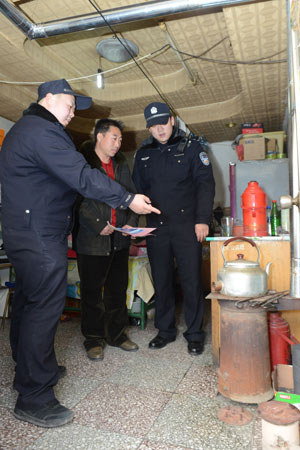
Strengthening the implementation of standards for Beijing coal burning heaters –the sales of those which do not measure up to standards must be halted
http://news.xinhuanet.com/city/2012-10/30/c_123890893.htm
2012-10-30
Iron sheet heaters having the “three nots” stealthily appear on the market
As the cold season step by step advances, store managers begin stocking their stores, and soon take advantage of the occasion to put inferior heaters on the market
Industry and Commerce law enforcement officers have been inspecting the markets, and discovered 400 incidents of persons involved in moving inferior heaters. There is no lack of iron sheet heaters, “three nots” heaters [not having a trademark, factory name or address], and even “life-snuffing heaters.” The law enforcement officiers demand that store managers halt the sale of these heaters, and refund the money to purchasers. In accordance with the law there is a procedure in place for the officers to inspect stores and seize problematic merchandise to be used as evidence against the sellers.
The Commerce Ministry is laying stress on inspecting the quality of the heaters being sold. The store managers must check the heaters upon delivery. The Yanqing branch office discovered coal fired hot water heaters without proper labels and seals of approval as required. Store managers did not press producers for the inspection reports. In Beijing there are still stores selling simple and crude heaters which do not meet the required standards.
Commerce Ministry law enforcement officers require that store managers request reports from the producers showing that the heaters have been tested and meet the standards. If any heater is withdrawn from the market, they must immediately stop selling it.
The Changping district branch office discovered and then sealed shut a warehouse with over a hundred heaters made of overly thin iron sheets, which were about to go on the market. These were inferior quality heaters made from old metal paint cans. These extremely crude products had no labels giving information on the factory which produced them. The authorities are currently trying to trace where they came from.
Whether heaters meet the standards or not is based upon the Beijing city 2008 notice: “Safety requirements for coal burning heaters.”
“If the flue is not high enough or wide enough, it is easy for soot to accumulate in the chimneys of these type of heaters. In a single day the chimney can get stopped up, leading to carbon monoxide poisoning. In addition, the metal plate under these heaters is not large enough nor thick enough.” The Beijing city light commerce quality inspection station assistant head Li Chuanhe continued, “this type of heater does not meet the required standards, especially when it does not come with a chimney, but, because of the low price, there are people who buy and use them. But before you use it, keep in mind that this is a life-snuffing heater.” Those stores caught selling this type of heater, and those middlemen who supply them to the stores, will be taken to court and punished by having to pay a fine.
The Ministry of Reconstruction and Commerce reminds people that when they buy a heater, 1) go to a standard store, by no means buy one from a street-corner travelling merchant. 2) ask the store manager to see the heater’s inspection report, and read it carefully. 3) make sure the heater has the requisite safety warning and seals 4) to the best of one’s ability, do not buy a simple and cheap heater. 5) Set up the heater strictly according to instructions and check it periodically.
—————————————–
Yesterday a netizen posted on the “Leave a message to the leadership” message-board the following, addressed to the Beijing municipal party committee secretary Guo Jinlong.
http://leaders.people.com.cn/n/2013/0105/c58278-20093137.html
To Beijing municipal party committee secretary Guo Jinlong.
A netizen’s message: we need rented rooms to be safe
I and my girlfriend came to Beijing to be temporary workers. Through an intermediary we rented a newly refurbished room in a house in Haidian district Shuangqing Road number 14. On 12-09 I and my girlfriend succumbed to carbon monoxide poisoning while using the bathroom and taking a bath. Fortunately we were discovered in time, and were rushed to the hospital for emergency treatment. Now who can compensate us for the high medical bill? The house is rented through an intermediary to five parties.Neither the intermediary nor the landlord are taking any responsibility. The doctor suggested we be hospitalized for treatment, and pay for this and the emergency treatment by taking a loan out on a credit card, but we just don’t have enough money to stay in the hospital. After two days, we had to leave the hospital and return home. In this kind of situation, why is there no supervisory agency that deals with matters like this? The state is responsible for the citizens’ safety and security. When this kind of incident occurs, why is it that there is no regulatory agency that takes this seriously? If this is the result we get from spending money to rent a room, can Beijing be called safe? We originally did not think of addressing our problem to the leadership like this, but there is no appropriate government department we can make our appeal to. As for engaging an attorney and filing a suit, that costs money. We need help as soon as possible to resolve our problem. Since this incident, I am drowsy all the time, unable to stay alert. The doctor says this is an aftereffect and requires treatment. It is now 2013 –who will keep citizens safe –the state, the government, the law? (2013-01-04)
konjaku: in the previous post, one of Wang Zelin’s major duties was making rounds to check whether or not houses and rooms were adequately ventilated during the winter months, “on winter days [he] went from house to house dredging out the ventilation lines.” “If it was a cold winter day, when everyone is lighting fires in their coal stoves, he would have long since been out on patrol, going door to door.” It also said that he helped a certain Mr Gong, “ every winter he brought him a new coal stove.” It seems that these stoves, or room heaters, are fairly simple metal drums, produced in factories when winter begins, and disposed of when the cold season is over. Wang Zelin apparently must constantly check on the users of these heaters, because they fail to fully anticipate the possibility of carbon monoxide poisoning.
This post follows up on the problem of coal stoves. It turns out that an examination of this problem yields another perspective on the lives of migrant workers, who seem to be the principal users of inadequately ventilated coal stoves.
2012-12-19
So far in Beijing this year there have been 8 incidents of carbon monoxide poisoning
http://www.ce.cn/xwzx/gnsz/gdxw/201212/19/t20121219_23956814.shtml
Along with several precipitous drops in temperature, in our city there has been a succession of cases of carbon monoxide poisoning. Since the season of using heating stoves began, there have been eight such accidents. Five of these cases, or 63%, involving persons who warmed themselves by burning coal, without using a heating stove [for instance, burning coal in a metal bucket or brazier]. The other three cases involved a ventilation pipe on the stove that either had a crook in it, or had become blocked up. Of those who died in these accidents, the majority were members of the floating population, amounting to 90 %. Looking at the places where the accidents occurred, none of the rooms involved had wind scoops installed to provide adequate ventilation.
The weather gets more and more cold in stages, as the frequent occurrence of strong winds cause sudden temperature drops. In this situation, using any unsafe method to warm oneself when a proper heater is not available leads to serious accidents. The city office to prevent carbon monoxide poisoning has already issued a notice, requesting more dissemination of safety information and more preventive work, to prevent further accidents.
The city office hopes that people will pay attention to the following: 1) heighten your awareness of the situation as you warm yourself and stay on guard, do not simply think of trusting to luck.
2) use a coal heater that has been made according to standards, do not use a charcoal brazier or a metal bucket, etc., for which one is unable to install some sort of chimney to funnel away the fumes. 3) daily check the flue and periodically clean out the coal ash and accumulated carbon deposits to make sure there is an unimpeded air flow. 4) use a wind scoop or other ventilation system to make sure air circulates in the room. 5) listen to weather reports on the radio. In times of rain, snow, atmospheric low pressure, dense fog or high winds, exercise especial caution, and enhance ventilation inside the room where the heater is. 6) constantly inspect the heater chimney to make it is not bent or broken. If you find it is bent out of shape or leaking, seal up the holes or, if necessary, replace it.
In the 2009-2010 winter, in our city there were 70 incidents of carbon monoxide poisoning, resulting in 87 deaths.
In the 2010-2011 winter season, fatal accidents when down to 60 incidents, resulting in 74 deaths.
In the 2011-2012 winter season, there were 26 incidents, resulting in 38 deaths.
Reporters Zhang Lei, contributor, Wang Xin
konjaku: Raising awareness of carbon monoxide poisoning in Dashengzhuang. This photo montage is from the website of a company which produces a sensor device that can detect the presence of carbon monoxide in the air. If detected, the device automatically transmits a message to the police station, including the address in question.Bottom left is an example of burning coal in a metal bucket. (Click on photos for original size)

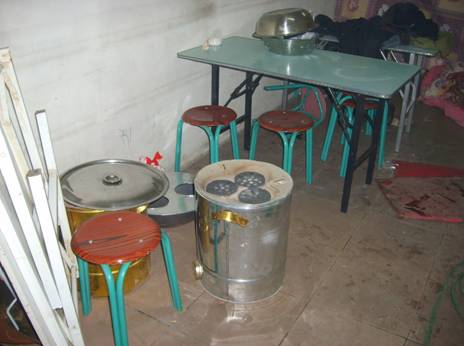
konjaku: examples of coal heaters found in Dashengzhuang or the vicinity. The first has had its chimney removed.


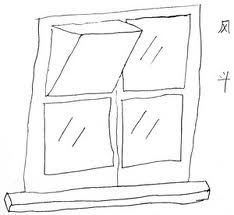
For safety, it is very important to use a wind scoop. The wind scoop should be at least 17 cm wide, 30 cm long and 35 cm high, in a trapezoidal shape.


Here is a typical case, 2007-02, two migrant workers residing temporarily in a one story house in Haidian district used a simple coal heater to warm themselves without a wind scoop for ventilation. Both of them died of carbon monoxide poisoning.
konjaku: an excerpt from an article, in which the author goes in search of memorable examples of diligent “common people” who work to uphold or improve society. The section translated here profiles the floating population manager of Dashengzhuang, Wang Zelin. This adds a bit more to a portrait of Dashengzhuang, a village which is a symbol of community transformation management, but also surviving through an interim stage: no longer a traditional village, but not yet fully integrated into the modern, urban ideal of the city either. Perhaps the restlessness of this interim stage is represented in Wang Zelin, depicted here as busy morning to night with “trivial matters, ” as though he is bearing many of the burdens of the current state of affairs.
While going from place to place, being moved by common people, their devotion to their work and life –2012-11-27 Author: Ma Ruoning
http://finance.qianlong.com/30055/2012/11/27/2530@8345347.htm
My next stop was in Dashengzhuang, where I was to meet Wang Zelin, the official in charge of management of the floating population and rentals. On a previous trip I had met a handicapped man, a Mr Gong. When I had asked then about the official who handled these matters, Mr Gong volunteered that Wang Zelin had made it his duty to help him for many years. When Wang Zelin heard that Mr Gong had trouble getting around, every winter he brought him a new coal stove, helped him fix his car, and many other small things, too many to mention. Though Mr Gong was not a friend or a relative, he worried about whether Mr Gong’s children had new clothes or not. What Mr Gong said, in his simple, unadorned way of speaking, depicted a magnificent person. I found out that Wang Zelin on winter days went from house to house dredging out the ventilation lines, on summer days he went from door to door transacting temporary resident permits. His truthfulness, respect for work, and passion moved me deeply. How could I not find out more about him?
During the several days I followed Wang Zelin around, I found his daily schedule to be very regular and systematic. Every day he gets up at 6 and does some physical exercise. He says his job is full of small details, and morning exercise is a good way to reduce stress. Right now the weather is still not bad (November). If it was a cold winter day, when everyone is lighting fires in their coal stoves, he would have long since been out on patrol, going door to door.
As a dyed in the wool Dashengzhuang person, Wang Zelin has been affected by all the changes to the village. With community transformation management there was formed a public security squad, and a floating population mangement squad. Inside the village a large screen has been installed that broadcasts news and notices. Trained sanitation workers come every day and clean the village. Members of the floating population must register to go in and out of the village. Speaking of this, Wang Zelin took from his cupboard a number of thick books, which comprised the files and dossiers he had to keep. Every page was loaded down with minute details. It had the layout of every factory and workshop, and a description of every member of every family with their names and ages. Wang Zelin knew all these details like the palm of his hand. While we were talking, there were constantly people coming in to transact some bureaucratic procedure or to inquire about registering. Wang Zelin with the utmost care questioned these people (members of the floating population) and managed to acquire the fundamental information of their circumstances. In spite of the fact that these persons were only there for a few minutes, their information and requests were deeply imprinted in his memory. He said that he had this ability, from being the class monitor at college. His class was large, and his fellow students came from all different places. Therefore he committed them all firmly to memory, leaving no one and nothing out.
Wang Zelin is always humble, simple, and plain. He is not accustomed to praise, and said he is unworthy of it. But do our lives not come together precisely through these small and mundane acts performed by people such as him? In our immediate vicinity, there are so many Wang Zelins who play an important role, who do common and ordinary jobs which are yet irreplacable. Their respect for work makes the village run steadily and keeps the social fabric harmonious.
During the time I spent with Wang Zelin, he was always doing something, shuttling back and forth in the village, with no time to even get himself a drink of water. A great many people today think of going somewhere away from home to look for work. It puzzled me that this person was willing to remain in his village, every day making his rounds through the village multiple times, taking care of all sorts of trivial and minor matters. Not only does he not make very much money for this, but at times he has to do things that will likely offend the neighborhood. Wang Zelin said, “Some of my job is not hard, but it is not easy to do well. The most important thing is to keep in mind whether or not something is a good fit for everyone, whether it is part of my duty or not. There are many additional tasks the people have not requested, which I still carry out. The village has grown large, for the sake of the village folks I have to try some things. The intent is that they become happy.”
Wang Zelin’s workday ends at 10 at night or later, because there are factory workers who work the night shift and don’t come back to the village until late. As the floating population manager, Wang Zelin has to accommodate them.
konjaku: Following up on Dashengzhuang village. Dashengzhuang was the first village to become a “sealed village” with a police checkpoint at the entrance, surrounded by an enclosing wall. (See https://konjaku.wordpress.com/2012/05/30/beijing-unification-of-urban-and-rural-2-migrant-workers-and-sealed-villages/). The idea of “sealed villages” in 2010 was soon replaced by a new plan, “community transformation management.” As an article by Zhang Yanling in Caixin pointed out, limiting access to villages was not an attempt to preserve the existing village atructure from being overrun by outside forces, but rather a preliminary step to tearing down the village and moving the villagers into multi-story residential complexes, as part of a comprehensive plan to urbanize the periphery of Beijing (https://konjaku.wordpress.com/2012/06/04/beijing-unification-of-urban-and-rural-4-sealed-villages-as-a-first-step-in-remaking-beijings-urbanrural-periphery/).
In 2012, two years after Dashengzhuang was acknowledged as the first village to implement community transformation management, it is still intact. That is, it is still a village undergoing community transformation management, rather than something being absorbed into the urban fabric and disappearing.
What is the “cultural blueprint” of such a village? Some pieces of a description:
Dashengzhuang village in Daxing district: a cultural blueprint of an “advanced public security” village 2012-11-07, Source: Jinghua Times
http://beijing.jinghua.cn/c/201211/07/n3807140.shtml

At present, Dashengzhuang village has 342 permanent residents in 167 households, and members of the floating population number 2142 in a ratio of 1:7. The village area is about 100 acres. There are four sections, the residential section where the villagers live, the cultural recreation area, the industrial open economic zone, and the agricultural autonomous region. Dashengzhuang village has had conferred upon it several honorary titles, “ Daxing district environmentally conscious building development advanced village” and “comprehensive public order advanced village.”
Dashengzhuang was the first natural village in Beijing to implement community transformation management. 10 years ago, streams of people were coming in and out, there were many petty thefts and altercations. In 2006, Dashenzhuang village built an enclosing wall, and in 2010 a 120 square meter administrative center, combining the police office, floating population services and rental management office, fulfilling the human resources goal to have “three service centers under one roof.”
Modelled after city management plans, the village requires residents entering the village to show a pass, and for all others to register. According to the village Party Secretary Li Wujiang, since community transformation management began there have been zero criminal cases.
Li Wujiang said the residential area of the village is divided into 10 community management units. Each unit covers some 20 households, with one person in a position of responsibility over the unit. There is a dossier on every household.
Whenever any resident moves out of Dashengzhuang, they must first go to community management service center and give notice. In this way, the village committee keeps track of the whereabouts and movement of every person in the village, manifesting the idea, “use the residence to manage the person.”
In recent years, the area around Dashengzhuang has been undergoing development, and increasingly, industries are moving into the village. The village committee, after seeking the consent of the villagers, has made an arrangement in which a business entering the village is given village collective land, and in exchange the villagers are given shares in the business, and draw bonuses when the business has profits.
The village committee is planning and regulating the village industrial structure, to develop a cultural and creative industrial zone involving multimedia: animation, movies and television.
Our village head.
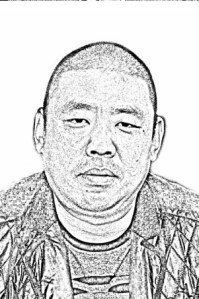
Li Wujiang has been the villager party branch secretary for eight years.
Jinghua Times: what do you think was important in developing community management?
First, one must lower the rate of public security incidents. We built the enclosing wall, set up an entrance gate, and implemented regular patrols. In 2010, under the guidance and assistance of Xihongmen town, we studied community formation and started an experiment with community transformation management. That’s how we became the number one natural village in Beijing city instituting community management.
http://news.163.com/12/1025/09/8ELBV04N00014AED.html
2012-10-25
Wang Wanghua has been director of the village women’s federation since 2006. She has helped many out of work young people to find employment, and arranged to pay tuition to the small children of destitute families to go to kindergarden.
One winter day in 2009 a woman gave birth in the village public bathroom. The area around the bathroom was crowded with villagers who had stopped to see what was happening. Wang Wanghua happened to be passing by, and after finding out what was going on, she calmly dialed 120 (for an ambulance). Surmising that giving birth in the bone chilling cold must cause suffering, before the ambulance came Wang Wanghua ran to the nearest house to borrow bedding, and she wrapped up the mother and infant. Thanks to her intervention, the mother lived. She had given birth to twins, but unfortunately only one survived.
The truth behind the dispute concerning sealed villages –a Beijing village undergoing community transformation management
http://news.sohu.com/20110102/n278639285.shtml

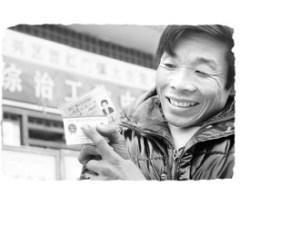
2011-01-02 Source Legal Daily
While public opinion is noisily disputing sealed villages, the Dashengzhuang villagers themselves are calm
While in the media there was impassioned criticism, with some going so far as to say the sealed village resembled a prison, this reporter found that the majority of the villagers were quite calm.
Initially though, villagers were apprehensive. Renting rooms to the floating population was the basis of their income. When they had an empty room, they posted a notice on the gate. If the village was sealed, people would not be able to pass by and see the notice. What they did not anticipate, is that because of the improvement in the environment and public security within the village, many people hurried there searching for rooms to rent. “In the past at this time of year, many tenants gave up their rooms because they didn’t want to continue paying rent while they were home for the spring festival. But this year, many people paid in advance to keep their rooms. They were afraid that when they came back from the holiday they wouldn’t be able to find anything.”
Of course, the villagers and migrant workers do have objections to some aspects of life in the sealed village. It is just that compared to the feverish debate in the outside world, their objections are more moderate. Previously they condemned the inconvenience a sealed village caused to visiting relatives. But at present they no longer condemn: they know that village community management is not to rule over people, but ti serve them.
In facing the public’s resistance to community transformation management, on the one hand those responsible try to educate further, and on the other hand to notice what can be improved and try to make it better. For instance, in Dashengzhuang the original plan was to make the village main gate the only entry to the village at night, through the checkpoint. The other entrances would be open from 6 in the morning till 9 at night. But the shoe repair person near one of those gates, Gong Jiaying said, “ Closing the gate that early will have an effect on business.” The village committee assented to his opinion, and extended the gate closing hour till 10.
Hao Chengbao, the party branch secretary of Dianshang village in Changping district, said he believed the only real meaning of community transformation management was to prepare the villages to merge into the city. Before 2000, his village was out and out rural countryside. After Beijing city began to build the district of Tiantongyuan in Dongxiaokou town, his village completely changed. No one any longer cultivated land, all their income is from renting rooms to migrants. “In 10 years this rural area became part of the urban rural transition boundary, who knows how much longer before it is part of the city? In tandem with community management, probably a new village will be built in the form of a concentrated residential district. The villagers current residences will be demolished and they will move into residential towers. The village site will be an ecological park, the remaining land will be auctioned off and become the new residential district…”
“Villagers will resemble city dwellers, they will have jobs like city dwellers, their salaries will not be lower than city dwellers. But if in their life style they are still like villagers, sloppy and disorganized, I’m afraid it won’t work, it will take more time for them to advance, don’t you think?”
Editorial afterword:
Although community transformation management may make a good start, it won’t necessarily reach a successful completion without meticulous effort, and gaining the trust and consensus of the rural peasants.
It is the people –the peasants — who will make the final judgement as to whether this project of urbanization benefits them or not, and it is only through their wisdom that the project operations can be perfected. If all the people follow with interest our government’s project of community transformation management, especially the synthesis of all the different items of the plan; if they do not merely nitpick and criticize, but become the agents that mastermind the plan –only then will our project come to fruition with a good result.
konjaku: as we have seen, for the government a strong underlying motivation in the urbanization project is that it is able to acquire large sums of money by converting village collective land to state land, and selling off this converted land (the village site with all buildings demolished) to developers. For villages such as Beiwu and Dawangjing, the issue has been how much of this largess will be turned back over to the villagers, as capital to help the village collective create some sort of functioning economic entity to replace the lost land. In Dashengzhuang this transformation has not yet taken place. However, the village collective seems to be borrowing a part of the strategy, by directly giving businesses village land in exchange for shares of possible profits.
Apparently the ratio of migrant workers to residents in the village is still 7:1, as in 2010. It is unlikely the migrant workers will get any portion of these shares held by the village collective. For the moment, the villagers are benefitting both from the “tile economy” of renting rooms to migrants, and possible shares in businesses moving in. Yet they are more in the position of being passive recipients of benefits from others which could alter at any time and leave them with nothing, rather than active economic agents with the confidence that they are producing goods the society needs.
A party branch secretary believes that the villagers lifestyle is inherently sloppy and disorganized, and wonders if they make the transition to urban residents. But an editorial voice at the end of the article says the whole urbanization project can only succeed if the people take it over and use their wisdom to bring it to completion. Neither of these positions grant the villagers much possibility of self-determination.
konjaku: this article provides an overview of the process of urbanization, advocating a more generous level of compensation to displaced villagers, and emphasizing the importance of giving the villagers a role in the whole process of urban transformation. (Of course, villagers are given no chance to opt out of the urbanization project). I have left out most of the descriptions of Beiwu and Dawangjing, as this repeats what I posted in earlier articles. I have also not translated “five steps for improvement” at the end of the article.
A transformation is occurring in the process of requisitioning village land in those villages undergoing urbanization
2012-09-12
Source: Economic Reference Report
http://www.ciudsrc.com/new_chengshihualv/guandian/2012-09-12/36418.html
“Requisitioning land and demolishing houses is the hardest thing under heaven!” –that has been the common view of many cadres this reporter has met. To find out about the systems of “exchanging property rights,” “collective shares” “rights identical to land” [different methods for having the villagers of demolished villages give up property rights in land in exchange for shareholder income], this reporter travelled to many villages in Jiangsu, Hainan, and Beijing. In exploring these new methods of “ filial repaying the of villagers” as part of the urbanization and industrialization process, this reporter has seen villagers go from being afraid of having their land requisitioned, to willing and positive participants in the new system. Step by step, what is emerging is a new setup, a managed socialist market economy, in which government authority and people’s rights do not invade each other, and in which clear boundaries exist between administrative control and the activities of the market.
The three contradictions
Yan Zhiyao, the department head of the National Agricultural Land Resources Protection Bureau, said that since the period of reform and opening to the outside world, the plans for requisitioning land and demolishing have been large, the pace rapid, as an important support for industrialization and urbanization. In this accelerated drive, three clear problems (contradictions) have emerged, having a negative effect on the development of the economy and society.
First, in a number of areas the plan for redevelopment makes the standard for compensation amounts too low, the procedure for replacement housing overly simplified, and communication channels with those to be displaced not smooth. Therefore the persons displaced in the plan, in the end fail to materialize a productive lifestyle corresponding to the high paced development. They may even become poor.
Second, in recent years, in the wake of rising land prices, the appeals of displaced villagers for higher compensation amounts and better replacement housing have become more intense. In some places, the amount paid out in compensation has been “heavenly.” In one case, a villager received as much as 100 million yuan. This has thrown the real estate market into disorder. Not only does it make requisitioning land more difficult, but the net costs to the government rise, leading to a deformation in the economy as a whole.
Third, the incidents of requisitioning land attract more attention, becoming hotspots on internet sites, intensifying the possibility of conflict.
The latent danger to society from this process of requisitioning land becomes more and more evident.
The Suqiong model: property rights transferred
This reporter went to Shihong county, Shangtang, Shiji and Kunshan city Huaqiao town in Jiangsu province to investigate. These three all have a “city center” where they built concentrated residential districts for displaced peasants to live, possessing both commercial and residential property rights, replacing the old structures. When the “property rights exchange” was completed, the value of the housing created for the peasants was 2 or 3 times greater than before. “The peasants were willing to move, since they were offered the possibility of living in a two story house in the town center, worth 400,000 or 500,000 yuan ($80,244), for which they could get a mortgage loan.” Shiji villager Ping Xiliang said, from his village the majority of households moved into the concentrated residential district. Those who did not want to move, were not forced.
In this system of “property rights transfer” what is subject to the transfer is the peasants’ homestead with garden. In Shangtang, and Shiji, the government did not completely take over the land on which these homesteads had stood. After the buildings were raised and the ground flattened, the government lent it back to the displaced villagers to be used for agriculture. The villagers held it in a cooperative, and their rights became shareholder rights. In Huaqiao, they are exploring the idea of changing the requisitioned land to commercial property, to broaden the villagers sources of income.
Hainan, Lingshui county is nationally recognized as a poor county. Lian township Dadun village is a poor village, 1/3 of the villagers rely on fishing for an income, 2/3 on agriculture. In 1993 the county government, with the consent of the villagers, took over 32,000 acres to develop an international tourism site. The compensation was 3200 yuan per acre. When divided among the villagers, it was only 650 yuan per person. But in the end, the development never happened. Dadun villagers had lost their land and had no possibility of employment.
In 2010, Lingshui county introduced a new plan, for a new tourist area and a high tech industrial park. This plan called for using the land already requisitioned, and adding an additional 18,648 acres. This time the plan included proposals for demolition compensation, resettlement, manufacture, employment assistance, etc., satisfying the villagers. A number of villagers told this reporter that after the land was demolished, the county government helped them set up a village joint stock company. Every villager possessed shares, and through these will get a share of profits from the development of the property.
By 2011, the profit generated from the shares was 20,000 yuan. The village joint stock company started a concrete mixing facility, and a brickyard that produced energy-saving “environmental” bricks. Now the yearly profit was 35,000,000 yuan. The village also plans to have the government give it some “left-over land” on which to build a five star restaurant. At the same time, they plan to build themselves retail property to rent, and apartment houses, from which they expect altogether in rentals another 30,000,000 yuan.
The Yuechuan model.
Explaining the difficult problem of transforming the “urban village” –a problem facing any number of cities
Yuechuan is the largest urban village in Sanya city (also in Hainan). In 2001 Sanya city requisitioned village land to build a sports center, but because the compensation amounts were fixed too low, the process of requisitioning the land was stopped several times. It took until 2008 before all the land was turned over. This requisitioning process can be compared to “the eight year war of resistance.”
2007, according to “the government leads, the people participate, share in the same land, the same value, the same rights, all share and gain together,” the government put forward a new model for requisitioning the land, and in one stroke transformed the process and overcame the difficulties. Now 2201 villagers are all shareholders in the village joint stock company, they all bought old age insurance, and at the end of the year received dividend payments. Every shareholders fixed assets are estimated at 70,0000 yuan. Their 2012 dividend payment per person was 20,000 yuan, each household thus got around 80,000 yuan ($12,795).
An important element in the “Yuechuan model” is allowing the villagers to be in control of the whole demolition and removal process. The government only gives guidance, supervision, and publicity to coordinate the operation. The village shareholding company signs a contract with the township government regarding the demolition and replacement housing. The government puts the compensation money and the funds for the demolition in a “package” and provides it to the village stock company. Any surplus left over goes directly to the joint stock company. The village company got 190,000,000 yuan ($30,507,166) in order to move away 140 households, and turn over 32.6 acres to the government. Starting in 1994, the government made a number of attempts to clear this same patch of land through forcible demolition, but never got what they wanted. This time, in acquiring the responsibility to complete the task, the villagers themselves accomplished in 54 days what the government could not do in 11 years: they completed demolished the “urban village” without conflict, and happily moved into new quarters.
Next, according to publicly released documents, of the profit the government received upon selling the land, they set aside 20% to use in building the public infrastructure necessary for the project. The remaining 80% they returned directly to the villagers, above and beyond the set compensation amounts they had already paid. This total was 11,200,000 yuan ($1,790,511), 350 times the compensation amount.
Third, the government gave the villagers back left-over land not used in the development, 21 acres, and encouraged them to develop commercial enterprises on it, in order to have a stable income. On this patch of land the villagers put up buildings which they rented out as a restaurant and a market, collecting rentals from these businesses.
The Beiwu model
At the beginning of 2009 the Beiwu rural urban unification pilot project began. “From beginning to end the villagers had control of the process,” the village committee head Guo Chunli told this reporter. He can’t remember how many meetings they had, but everyone got to state their opinions on the project. The plan went through 19 draft revisions. Every item of the moving and compensation payment amounts and schedule were clearly stipulated. The Beiwu village collective economic organization retains rights over the former village collective land, and are in charge of its development. According to their calculated property rights large or small, the villages became shareholders in the economic organization.
The Beiwu village Party League Secretary Zhang Quan said that the Beiwu village replacement housing is equal in quality to commercial market priced housing, That means if any surplus units are put on the market, the Beiwu villagers will get a good price for them. Aside from the Beiwu housing development, over 666 acres has been set aside for a green zone, and 54 acres are earmarked for development by the village collective. There are four parcels of land being developed. The first is becoming a Lexus dealership. The second is a 20,000 square meter apartment building to rent to foreigners, because the foreigner population is comparatively large in this area. On the third they are building an eco-garden dining hall [a restaurant set in a large building with glass walls or ceiling, with displays of living plants, trees, waterfalls, etc]. On the fourth, a 70,000 square meter top class restaurant.
These plans take into consideration the problem of employment opportunities for the villagers. Zhang Quan estimates that if these projects are all completed as planned, 800 to 1000 new jobs will be created. Beijing University law professor Wang Xixin said, the government gave the Beiwu project special treatment. They did not auction off the land, but instead gave it special status as “national land for commercial use,” to be directly developed by the villagers.
The Dawangjing village plan improved on the Beiwu model, by giving the villagers access to all the forms of social security and financial safeguards available to urban residents. In addition, the villagers were given 50,000 square meters of commercial ground floor space to develop.
After Beiwu and Dawangjing, Beijing pushed forward with a plan to transform 50 “focal point” villages located on the city outskirts. Part of this experiment is that the village collectives will themselves be in charge of building market priced housing for rental income.
As for capital, the items listed in the redevelopment plan and the fund requirements must match. The city will give priority to those planned developments that have collateral, a risk reserve fund in place, an improved credit policy, or a guarantee of necessary funds.
The policy concerning social security to be offered to displaced villagers is in the process of being reformed. Previously, for the villagers, having their plot of land was a substitute not having the social security granted to urban residents. Now, the villagers with a rural household registry are transforming into urban residents, and they still have, as the village collective, rights of use over the portion of former village land slated to them. Thus, they are still owners of some part of the land, and can enjoy profits from it. This goes further than simply “exchanging land for social security.”
When property rights are quantified as shares of stocks, or capital, the former villagers enter into city life with their own reserve of funds. For the village collective to have its own space to develop, to find a role to fill in the high end industries that are going up in the city periphery, maintaining green zone areas and renting commercial property, is a big shift from relying on the “tile economy” [renting rooms to migrant workers]. As for the floating population, when there are surplus units in the residences built for displaced villagers, there is a systemized plan to offer these as rentals to migrant workers through the respective village collectives.
konjaku: in Jiangsu, the policy seems to be to move villagers or peasants out of their villages and into “town centers,” more concentrated urban districts, even when there is not an immediate need for the land on which the villages once stood. In the Hainan sites, there are ambitious plans to build high end industrial parks, tourist attractions, or a “sports center” to replace impoverished villages.
We also get details about development in Beiwu: a Lexus dealership, probably because this is an area with many car dealers. A high end restaurant, and an eco-garden dining hall. Below are some photos of what eco-garden halls look like.

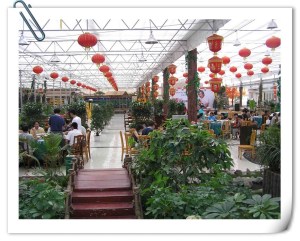
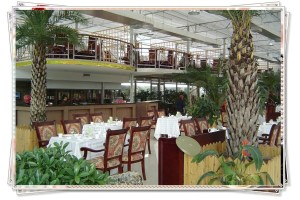
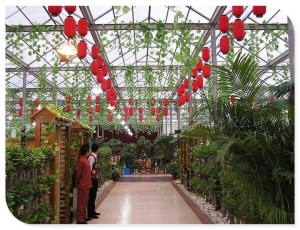
http://www.ciudsrc.com/new_xinwen/yaowen/2012-10-12/37324.html
2012-10-12
Across the whole country 1200 households live in slums — difficulties of requisitioning land, demolishing areas and moving residents are very great

Changsha 2009

Changsha 2009
Xinjing news (reporter Jiang Yanjin) reported yesterday that up to the present, construction projects to replace slum districts have effected more than 1000 houses, but there are still more than 1200 households in slums. Further, looking at the existing cases of urban renewal, the replacement housing in these projects has often been lacking in quality.
A person of responsibility in the Residential Building Section said slum districts were historical remnants of past eras in which there were insufficient resources. Now they express the “two structural dimensions” of the current city [the modern, bright, and new versus the old, shabby and decrepit]. It is necessary to accelerate the pace of their transformation. In the first stage, from 2006 to the end of 2011, 1000 houses were remade. In 2012 so far, it has been more than 300. Apparently in remaking slum areas there is a “lower limit” for replacement housing, which consists of 45 square meters or above [the size of a one bedroom apartment].
The task is formidable. There are many “villages within cities” remaining, old and shabby, cramped and unsafe. An outstanding problem is the high cost of tearing them down and replacing them with new buildings, a cost difficult to estimate in advance. This means there are in some cases insufficient funds for the replacement housing, resulting in a loss of quality. Henceforth the government will provide displaced slum dwellers with completely equipped buildings that meet a higher cultural standard and are structurally sound.
konjaku: moving away from Beijing for the moment to some perspectives on demolition and land reform in general:
How is it that cases of violence associated with demolitions continue to rise?
http://www.ciudsrc.com/new_xinwen/pinglun/2012-09-26/36937.html
2012-09-26
Liaoning province Panjin city. In a dispute, a policeman opened fire with a gun, resulting in the death of a villager, Wang Shujie. Four days passed. At the end of four days, the Panjin government and the media respectively released their findings concerning the incident. On the government’s side, the local prosecutor’s office stated, “The policeman felt his life was in danger.” The policemen was carrying out his regular duties properly, use of the firearm was in accord with the legal stipulations. The media’s account was that at that place no agreement had been reached with the villagers over a compensation amount for demolishing their houses. A forcible demolition was going on illegally, in the absence of a court judgement. This was the conclusion of the media.
The statement from the prosecutors office was lacking in details, which led to a rise in public opinion challenging the conclusion. The conflict arose where? How many people were involved in it? Why did the police show up at the place of dispute? When they got there, what did they do ? Having received these two different opinions it was unavoidable that we would want to pursue the truth of the matter in detail. Without further pursuing the facts, the basis for determining which side made wrong judgements is weak. The report of the investigation was quickly and sloppily put together, exhausting to read. It constantly emphasizes that the government acted rationally and the other side was the source of the conflict. We have seen this deceptiveness often in recent years. It is necessary to call all these reports into question.
That the police should be extremely careful about firing a gun, is common knowledge. The main question is whether in this case something made it unavoidable. According to the investigation, the police went to mediate the dispute, they were not a party in the dispute. How then did it change to become a conflict between the police and the villagers? In what manner did the police conduct their mediation? These are questions that need to be answered.
Forcible demolition was the cause of the incident. This point needs to be made clear: even when it is a lawful demolition, still proceeding by force is not legal. 2011-06, in the formally implemented “Peoples Republic of China Provisional Regulations on Levying Land, Demolishing and Moving Residents, and Paying Compensation” it expressly stipulates that if the the resettlement details and compensation amount for people forced to move has not yet been fully determined through consultation with the parties involved, forcible demolition is not allowed. If a forcible demolition is to be enforced, it must happen through a court of law. If no representative or representation from the court appears at the scene of demolition, that demolition is illegal. In that case, why did the police not act to prevent a forcible demolition which was clearly illegal? Why did the police shoot persons who were resisting an illegal act?
Those who demolish do not hold back from using force to achieve their goal, and at present more and more of those subject to demolition use force in response. Blood spilled over demolitions is happening more frequently. Do we have the courage to squarely face and solve this problem? It is worth noting that last year, in this same Panjin city, an auxilliary police recruit and a demolition operation employee were wounded by being hacked and cut by protestors. It is no coincidence that what turns one way also turns the other. All of this is due to problems inherent in the real estate market.
Deriving income from land finance has since long become a way of life for local governments [by requisitioning village collective land and selling it on the market]. The local government that does not demolish loses its means of subsistence. It is like a wild horse that bolts, dragging its victims behind it without looking back. It is this formidable force that makes stopping forcible demolitions impossible. Only by paying attention to the underlying reality can we hope to transform the current situation.
konjaku: demolition of Guojia village, which began in 2011-01-13, seems to have reached an ending 2012-04-08. It appears some villagers held out for another year, frustrating the township government.This is unfortunately an example of what might happen when there is no Dawangjing “miracle.”
Beijing –several men surround a woman and beat her for half an hour –then forcibly demolish her home 2012-04-08
http://news.sina.com.cn/s/2012-04-08/022924235836.shtml
Fieldwork reporter Huai Ruogu
Yesterday morning, Chaoyang district Xiaohongmen township Guojia village, a number of men, whose identity was unknown, suddenly broke into two houses of villagers. In each house was a women, whom the men dragged out of each one’s respective house, beating them with fists and kicking them. Soon afterwards the houses were forcibly torn down. Eyewitness recount that even though the victims pleaded, the men surrounded and continued to beat them for half an hour.
According to the villager Mr Sun, at eight in the morning one excavator, one forklift, as well as 40 or 50 men, entered the village. Four well-built men broke into Mrs Sun’s house and dragged her outside. Not long afterwards, there was a loud rumbling sound, and Mrs Sun’s house was pushed over by the excavator.
According to Mrs Sun, at the time she was in her kitchen cutting spring onions, when a number of men burst in, and demanded she move out immediately. “If I leave, where will I go to live? This house is my life!” she refused. When they heard this, the men began kicking and beating her, and pulled her outside her gate.
Yesterday at noon, the eastern part of Guojia, 10,000 square meters which used to be houses was completely cleared. Two excavators were arranging the piles of bricks. The house of Mrs Sun had been razed to the ground. A Mrs Zhang met with the same experience. Mrs Zhang said, at around 8, several burly men burst into her home, and demanded she move. Meeting resistance, “they suddenly began to hit me on the head, kicked me in the stomach. Her house was subsequently demolished at around the same time.
Mrs Sun saw Mrs Zhang thrown to the ground by the men. “Although she was in pain and pleaded with them, they did not stop beating her until almost half an hour had passed. This gang did not listen to us as we tried to get them to stop. They just hurled insults at the villagers who tried to mediate.” Mrs Sun said the police soon after hurried to the scene, and the members of the gang ran off in all directions. Mrs Zhang is receiving treatment at the hospital.
Yesterday at noon, Mrs Sun went to the Dongfang hospital emergency room to be examined. Mrs Zhang was there too, lying on a bed groaning. At present both are being treated, their lives are not in danger. Guojia is in the last stage of demolition. Previously there were 68 houses in the village. Now that Mrs Sun’s and Mrs Zhang’s house are gone, there are only three houses not yet demolished.
This reporter repeatedly called the township office to ask about this incident. The person who answered the phone said he would report the matter to his superiors and have an answer this evening. It is now 9 o’clock, and still no response from them. The Xiaohongmen police have started an investigation.
konjaku: now we turn, somewhat at random, to the village of Guojia in Xiaohongmen. It provides a useful comparison to Beiwu and Dawangjing, because, unlike those two, this village does not play a key part in the large scale urban renewal plan. Perhaps it could have been left alone, but, as photos show, it was gradually being hemmed in by larger development projects. With land values in the area rising, it appears the township government sought to make profits by selling off the village land, which meant they had to forcibly evict the villagers and demolish their homes. The villagers were well aware of the rights and protections afforded them by the central government. The Xiaohongmen township local government, on its part, is increasingly dependent on land sales to generate funds (including, no doubt, the money for salaries of its cadres, police, and other officials), since the national government has eliminated the fees and taxes it used to rely on. In the account that follows, written from the villagers point of view, we see a village activist, Wu Lihong, attempting to plead the village case to some authority in the central government, while the township government officials block her from leaving her home. The situation is nicely summarized: “ When a wind from the CP Central Committee blows over the territory under jurisdiction of the township, the leaves on the trees do not move at all!”
The case of Guojia also represents the unintended consequences of urban renewal. The large-scale attempt to “fix” certain designated villages, the listed up villages, spills over to other areas in unforeseen ways that don’t fit the ideals of the plan. One can make an argument that the Beiwu and Dawangjing villagers were well compensated, enough to help them become full-fledged urban residents. But since the Xiaohongmen township government lacked the generosity and, more particularly, the deep pockets of Beijing city, the deal it offered Guojia villagers was much less sufficient. The villagers had no reason to acquiesce quietly, feeling caught in a downward spiral. Those whose job it was to make them leave felt that their own livelihoods were at stake. Both sides felt oppressed by pressures over which they had no control.
As commentators have pointed out, while Dawangjing is meant to be an example to be followed in the future, not only in Beijing but all over the country, it is probably impossible to carry out. Localities lack the financial resources to attempt to guarantee a secure future to every village resident whose homestead they demolish.
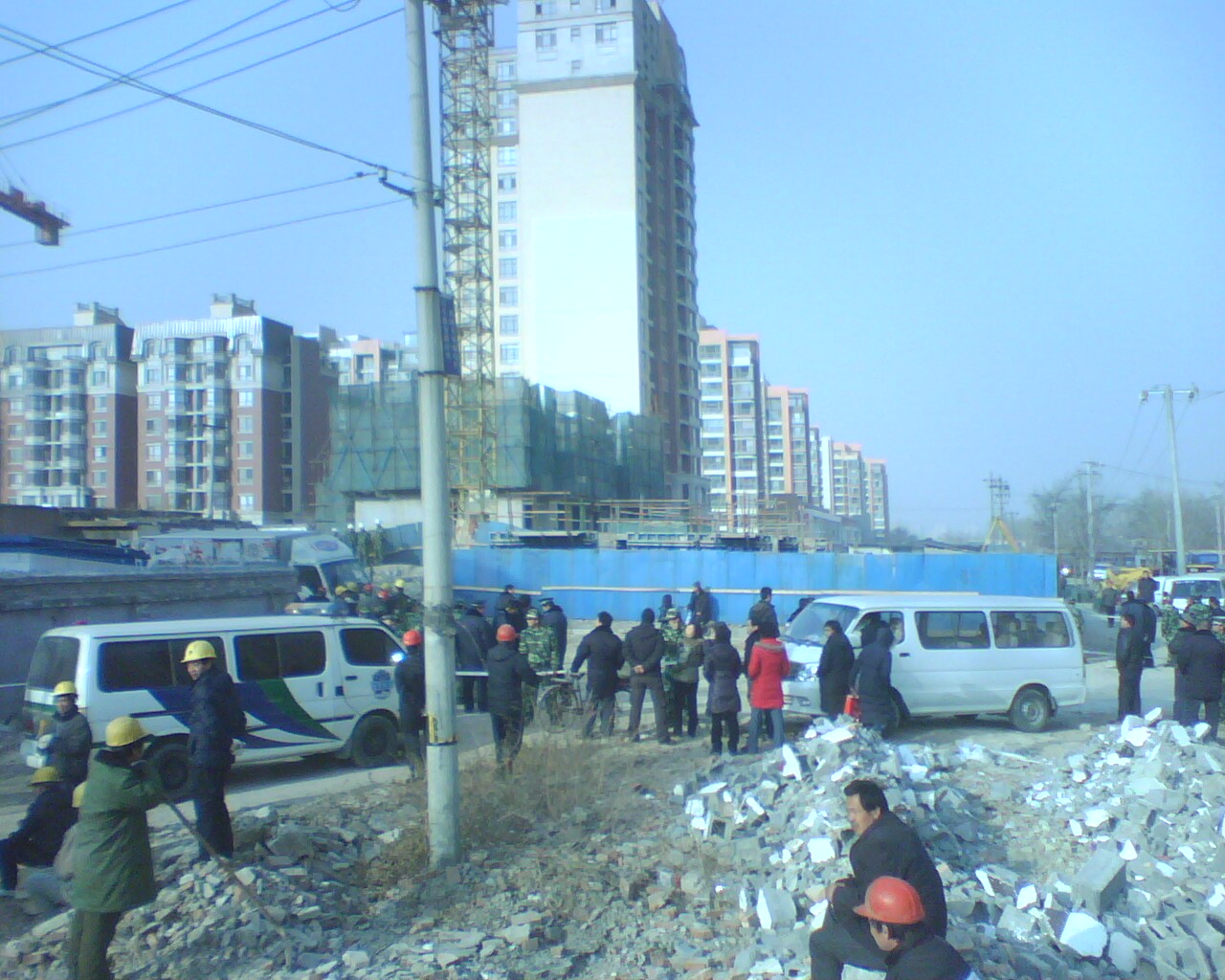
2011-01-13
http://boxun.com/news/gb/china/2011/01/201101131106.shtml
Beijing city Chaoyang district Xiaohongmen township Longzhaoshu village is one of the 50 listed up villages [targeted for urban renewal]. There are five natural villages in the township. Besides Longzhaoshu, there are Nanshuangqigan, Shaojiao, Songjialou, and Guojia villages, with a population of some 4000 people, an area of 3600 hectares. In 2011 Guojia villagers were very much afraid that the land which was their livelihood was being sold off, stolen from them, and forcibly occupied by others. Already 500 hectares was taken by a block of hardware and building materials stores [200 stores in all], 400 hectares by a home furnishings mall, 600 hectares by an Automobile Parts City.[these are street blocks or squares, with lines of stores on both sides] The Beijing Jiayide real estate company illegally developed 800 hectares of village land[probably a luxury housing complex].The Beijing Number 2 Intermediate People’s Court forcibly occupied 50 hectares for its court building.
The income from turning over these plots of collective village land went directly into the township and village administrations, which are both corrupt, leaving the villagers without even the most rudimentary protections to maintain their livelihood. As commodity prices continue to spike upwards, the villagers are bit by bit heading into a difficult situation.
http://biweekly.hrichina.org/article/1138 (Human Rights in China website. They have an English page at http://www.hrichina.org/)
2011-01-18, the 15th day of the 12th lunar month, the end of the year, although the Xiaohongmen villagers were in a state of nervous apprehension, guarding their homes from sudden demolition, still, as in any year, they were busy with their New Years purchases. On this day, the weather was quite frigid. Villager Li Baohua was on guard. His wife went out to do her New Years shopping, leaving him along in the house (no family dared to go out all together and lock the gate). Suddenly he heard a knock, and a voice at the gate. Three policemen from the Xiaohongmen sub-station stood outside. In a loud voice they said, You must go with us to the station.
Li Baohua was frightened, his heart skipped a beat. From the other side of the gate he asked, What’s the matter? The policeman said, Just come. At the station you’ll find out.
Li Baohua was taken to the station, and shut up in an interrogation room, no one told him why. After a long time, the door opened, and a policeman came in with a person involved with the demolition. The policeman said to Li Baohua, Please come here and sign the demolition agreement. If you don’t sign, we will detain you here, and demolish your house anyway. When you get out, you’ll have nothing.
Li Baohua was determined not to sign. He said, I haven’t broken any law, for what reason do you detain me? The policeman answered, Whether you violated the law or not is not for you to say. We are the enforcers of the law. We say you broke the law, that is the reason you are here. The person carrying out the demolition said, If you don’t sign you will stay here, and your whole family will worry about you. So sign right away and go home right away. In no time at all you will move to a new home and celebrate the New Year there.
Shut up in the station day and night, Li Baohua’s resolve gradually weakened. He had to sit in the room all night, his eyes fixed on the wall. On the morning of the 19th , under the eye of the police supervisor, he affixed his name to the document. The police and the demolition person sent him home under an escort. The truck that would move his family to their new home was already parked in front of his gate.
The process of “helping” him move was like watching defenselessly as his belongings are plundered. Li Baohua fell limply to the ground and began to cry. Whoever moves from their residence, wants a number of days to get ready, wants to receive best wishes from others regarding their new life. Who could imagine a move like this? The police and the demolition workers “helped” to the end. and only when they had taken Li Baohua to his new residence in a multi-story building on the edge of the 5th ring, did he regain his freedom.
In the northern part of China, the 23rd of the 12th lunar month is the “little year”, every house is decorated with lanterns and colored streamers. This day is considered the beginning of New Years celebrations. 2011-01-29 was the 26th of the lunar month, however on this day Xiaohongmen met with a surprise attack. Three houses in Guojia village were destroyed.
Among there were the house of Han Bingkui. He was alone inside in the house at the time. Four large men forced their way inside, and pulled him outside his gate. Then the other “movers” rushed inside, and in the blink of an eye the refrigerator, color t.v., cabinets, bed, and kitchen implements, were piled in a truck. Han Bingkui was kidnapped and detained in a room by the demolition people, and not allowed to go outside. In two other houses there was no one at home, so the demolition workers avoided the effort of packing the people’s belongings in a truck, and just threw them on the ground. Right away they were all sold as scrap to junk dealers.
These photos record the “helpers” at the demolition. At the scene, those wearing camouflage clothing, firemen’s uniforms, soldiers uniforms, those several tens of people, they have steel helmets on their heads, in their hands they hold clubs. Full of energy, they stride forward with big steps. There are others wearing the green overcoats of the military, standing by the houses. Several police cars are also parked there.
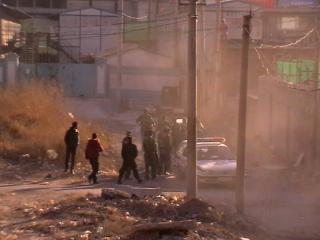
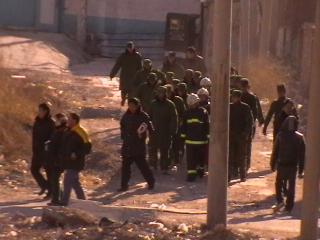


In previous times, [during the War of Resistance against Japan, 1937-45]when this was something the Japanese foreign devils did, we called it an invasion, for them to be driven from China. When this was something bandits did, we called it plundering, to rid ourselves of them. Now, today, this is something the CP committee, the government leaders, Public Security, the city management is doing, what do we call it?
Han Binglian’s wife said, No one was at our house, the gate was locked. I had gone back to Hebei to take care of my ailing mother who was in the hospital. We hadn’t signed an agreement, they just demolished our house. I didn’t know about it until a villager phoned me. We were robbed of all our things, they were all taken away, I don’t know where.
Another villager, Wei Changfu said, When our house was forcibly demolished, people say they saw them sell all of our belongings as scrap. Our house had an area of 196 square meters. It was old, it had been passed down for generations in our family. Most of the villagers have been threatened by the gangs and forced to sign. If one house is forcibly demolished, it scares the next ten houses. In this way they try and scare everyone.
There is a photo of Han Binglian and his wife standing in front of the ruins of their house. In the background there is a high quality residential tower, soaring above them.The contrast is like heaven and hell. Of their house nothing is left, with little effort the ground will be cleared entirely, and a mansion for the wealthy will be built. The money from selling their land went straight into the pockets of the township head, the township magistrate.
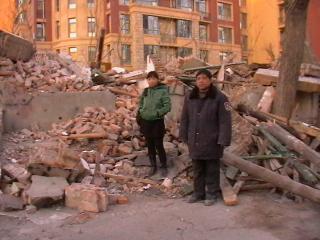
Han Bing lian said, his house and compound had an area of 147 square meters. They gave them 1) two 2 bedroom residences on the edge of the 5th ring, without a certificate of property rights. 2) compensation of 6080 yuan for every square meter. At present the going market price in Xiaohongmen for real estate is over 26,000 yuan per square meter, or four times higher.
The demolition group made each household sign their agreement in secret. For each household the compensation amount is not the same. What is the same is that after signing they all had to write a pledge, stating that they were moving voluntarily. This is as if Yang Bailao in “The White-haired girl” sold his daughter, and then pledged this was a voluntary act!
Wu Lihong’s house has long since been changed into a construction site, busy day and night with heavy construction machines making a such a din it is impossible to sleep. (Large scale construction trucks are not allowed to enter Beijing city during the day). For three years Wu Lihong wrote over a hundred written appeals to the government, but the situation just got worse and worse, and she was never able to achieve a settlement.
On 2011-02-23 at 8 in the morning, Wu Lihong’s dog began barking like crazy at the roof. Wu Lihong went out her gate to look, and the arm of a construction site crane was turning over her roof, dangling a bundle of steel pipes, about to unload them at the entrance to her house. Wu Lihong called 110 (the police emergency number). The police came, but did not get out of their car, saying, The house is undergoing regular construction, we have no cause to intervene. Wu Lihong said, They by this dangerous method of working threaten my house and the safety of those in it. If you don’t intervene, I myself will. Wu Lihong then stood under the arm of the crane, and prevented them from releasing their bundle.
The police took the side of supporting the construction. Several burly men rushed forward, and dragged Wu Lihong away. Wu Lihong got up, and stood again in her original position. At that time the crane’s arm was only several meters above the ground. Wu Lihong stood firm, under the crane arm, she was determined to die if necessary. The large men did not dare drag her away. It is possible they were scared of being hit by the crane’s bundle. The crane arm continued to descend, until it hung right above Wu Lihong’s head. This was recorded by a netizen who had rushed to the scene (photo below). The netizen said he was so scared, his hands were trembling and he could hardly hold the camera.

Everyone began to come out and surrounded the police to watch. They all started talking at the same time, asking the police questions. Finally the police got out of their car. They called to the construction workers and took them to one side to talk. No one knows what they said, but the crane arm swung back inside the construction site, which was enclosed by a wall, and the construction workers left. From what people heard, it seemed like the police had been the ones telling the construction workers what to do all along. Wu Lihong filed a complant for administrative redress at Chaoyang District Court, that the police were not carrying out their duty to protect public safety, but lost the suit.
2011-02-25 Wu Lihong and her grandfather went out for a stroll early in the morning, and found 2 mountains of dirt blocking the road. The mounds were two meters high, completely blocking the road. Looking closely, they were made up of building fragments. Too bad they weren’t made of dirt, then they could have used them to plant trees, or vegetables.
The CP Central Committee and the State Council have expressly directed, it is not permitted to cut off the water supply, or the electricity. It is forbidden to block a road, or pile up trash. But in the end, the township CP committee hoodwinks the public. When a wind from the CP Central Committee blows over the territory under jurisdiction of the township, the leaves on the trees do not move at all!
2011-02-28.Wu Lihong was about to go out of her gate, when her way was blocked by the township public security director Zhang Wei, accompanied by three young men. He said to her, The township CP committee had decided, that for several days you will not leave your house. Wu Lihong said, I am not a party member, how can the CP committee have control over me? Zhang Wei answered, The CP committee is the highest authority. It administers over everything, how can it not administer over you? Because of the upcoming meeting of the“joint assembly”(the National People’s Congress and the Chinese People’s Political Consultative Congress) it was decided not to permit you to go out, we are afraid you will submit a protest to the higher authorities. Wu Lihong said, What you are doing is illegal, so you know that? Zhang Wei replied, What I know is that I am in authority –what I say, you must do. Wu Lihong pushed her way through, and when Zhang Wei saw that he couldn’t stop her, he hurriedly phoned and asked for instructions. He then said to Wu Lihong, if you leave home, I have no choice but to take you in my car. The car was an old and shabby white minivan, with a piece of paper taped on one window, “Security Vehicle” –a local government car. Wu Lihong was forced to get in, and was taken away.
2011-03-05. It was the opening of the National People’s Congress. Wu Lihong and fellow activists had an appointment to consult concerning their case. At 7:50 in the morning when Wu Lihong was leaving home, members of the village committee Wang Daming and Zhang Botao followed her, saying, If you intend to petition the higher authorities, you will not be allowed to leave here.
Wu Lihong of course did not agree. She said, I am going to walk by myself. I’m not going to ride in your car. She said this as she was walking, but the two followed and made her ride in their car. The car started off and when it was near Fangzhuang qiaonan, they suddenly said, We got a phone call, the higher-ups said you can’t go out, we have no choice but to make you go back home. Immediately they turned the car around. At once Wu Lihong dialed 110 [the equivalent of 911], to inform the police, and said to them her personal liberty was being forcibly restricted by members of the village committee. Shortly after that, taking advantage of the fact that the car had stopped at a red light, she suddenly got out of the car.
The Fangzhuang qiaonan area is under the jurisdiction of the Tiejiangying police sub-station. Pretty soon, officers with badge numbers 041242 and 042055 arrived. These two policemen stood on the roadside and listened to Wu Lihong tell her story, while the village committee members stood, not far off but not too near, and watched.
Wu Lihong had just finished explaining her situation, when a police car with flashing lights and siren came speeding up. With a screech the driver slammed on the brakes. Several policemen jumped out of the car and approached.One of them was the police chief of Xiaohongmen, Wang Yuan, with patrolman Han Qiang. They wasted no time. Like a hawk grabbing a small bird in its talons, they dragged Wu Lihong to their car, and left, with the siren screaming. The policemen from the Tiejiangying police sub-station just stared, dumbfounded.
Within the next 20 or 30 minutes, eight or nine of Wu Lihong’s friends were driven to the Xiaohongmen station in police cars, (they were all considered to be “under guard for life or death”). They were uneasy, afraid Wu Lihong had sustained some injury. Wu Lihong was shut in a large room in the east side of the station behind bars. She realized her friends had come there, and she shouted out to them. As a result, the police chief Wang Yuan dragged her to a room further away. His breath smelled of liquor, he had taken off his coat and hat, he used filthy language and swore. Right at 11 a.m. Wu Lihong heard a welcome hubbub of voices from her supporters, “Wu Lihong, time to go home and eat lunch.”
Before this hubbub of voices had died away, there was the sound of cursing. Patrolman Han Qiang unexpectedly began pushing and kicking Wu Lihong’s supporters to drive them out of the station. In the courtyard, Ye Jinghuan asked him, Why are you being violent? As a policeman, don’t you ensure public security? (Han Qiang was dressed in sports clothes). Han Qiang grabbed Ye Jinghuan by the collar of her coat and threw her to the ground. He screamed at her, “You piece of shit thief! What are you doing?” The other friends began yelling. Hearing the voice, some other policemen outside came in to see, and Han Qiang turned around and left. Wu Lihong was shut in the station for 6 hours. She was allowed to go home at 3 in the afternoon.
From that day on, patrolman Han Qiang personally stood guard outside Wu Lihong’s house. On the morning of 3-09, Han Qiang saw Wu Lihong leaving her house, and he said to her, Today the central authorities are having an assembly. I cannot allow you to leave Xiaohongmen township, the territory under my jurisdiction. You have two choices: either stay at home, or you will go to the police station. Wu Lihong said, You cannot restrict my freedom. Han Qiang said, I can, I can restrict your freedom, I know I can. If you go out of Xiaohongmen township, that would wreck my livelihood (lit.,”smash my ricebowl”). Why do you want to make me lose my job? The way of the world today is irrational, and this demolition and removal policy is another example of that irrationality. You have seven or eight people who read your blog on the internet, aren’t they fanning you on? The one who is going to smash and trample on them, is me. There are many situations of non-compliance with the law, and today it is your turn. Fighting for your rights against demolition is your affair, but the higher authorities are making it such that your affair has become my affair too. You cannot ruin my livelihood! You smash my ricebowl, I’m betting my life against yours!
Wu Lihong was forced to stay within the boundary of Xiaohongmen township, only going out to buy vegetables, until the Joint Assembly (of the National People’s Congress and the Chinese People’s Political Consultative Congress) ended on 3-16. Only then did she regain her freedom. She filed an accusation with the Chaoyang district court claiming “unlawful restriction of personal liberty” When the defendants brought forth their proof, Wu Lihong for the first time understood that she had been targeted by the Xiaohongmen township CP committee as a security risk, because of “dissatisfaction with the government” and “resistance to demolition.”
During the period of the National Joint Assembly, those who had undergone forcible demolition, Han Qifang, Han Binglian and others, were made to stay in the Lehong Guesthouse, which the CP committee uses as a lock-up under non-regular circumstances. The committee hired some 20 unemployed persons, who divided into three shifts, watched over the ”guests,” not allowing them to leave the guesthouse until the Assembly was over. To safeguard stability how much money do they have to lay out? Spending money in this way is an abuse, which brings no tangible benefit to the people.
Xiaohongmen township took over all the land to use it for a commercial development, but they did not have legal certificates to demolish. Therefore Wu Lihong and others sued six times in Chaoyang District Court, and each time it was rejected, on this basis: the villagers by themselves are not recognized legal entities.
Wu Lihong and those villagers who have already lost their houses continue to petition the higher authorities. They each go to the “departments concerned” and ask, Where has the money gone which the Xiaohongmen township CP committee got for selling the land? Where is the money from selling the villager’s homesteads? Why is the Xiaohongmen township CP committee hoodwinking the public?
2011-07-26 Beijing

Wu Lihong 吴丽红 2011-09-12

