konjaku: The demolished Dawangjing village is reconstituted symbolically as the 500 year old pagoda tree, preserving all its memories. In historical times Dawangjing was a gateway to the capital, as a traveler’s rest stop one day away. Now, as an “international gateway,” what is most important is that the new business center, or CBD, will be only minutes from the Beijing Capital International Airport, obviating the need for international business travelers to even go the city center.
2012-05-31
http://www.bjnews.com.cn/feature/2012/05/31/202112.html
The Dawangjing village site is bustling with heavy machinery in the throes of construction. The small village, which according to legend had its name bestowed by the Qianlong Emperor when he passed through it, has now receded into history. Becoming the new gateway to the capital, as the next Central Business District, with the most well-known real estate developers vying with each other for a piece of the action –this is what Dawangjing villagers now gossip about in their hours of leisure.
Bearing the dream of Beijing to become a world city, and undertaking the mission to be the economic center of the next world economy, Dawangjing now strives to be as an international headquarters of high technology, information, energy sources, and automobile production enterprises. With a carefully thought out arrangement of parks, an efficient road network, and with the strong backing of many of the world’s top 500 companies, a world class business district is being built post-haste.
A distinctive landmark –Dawangjing’s “Douxiu” Tower
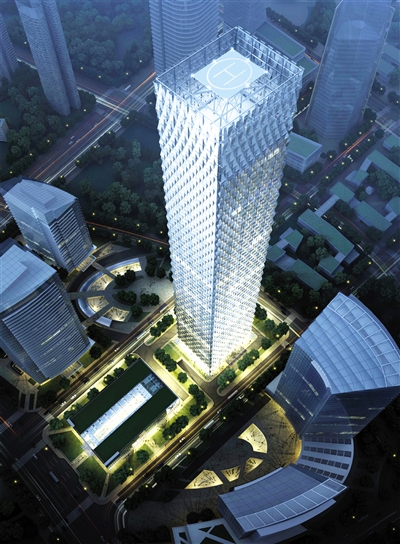
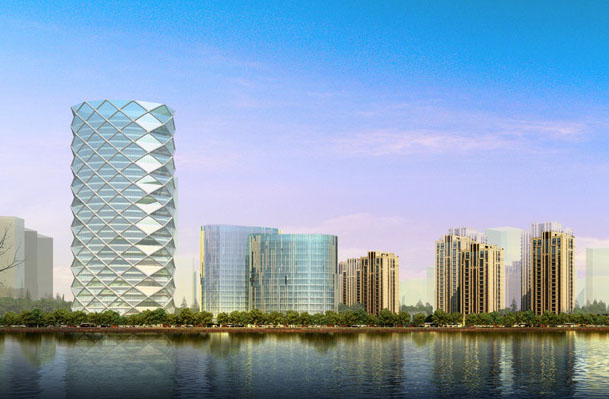
This 260 meter tower rises from the center of the project being constructed by the Greenland Group (Shanghai-based real estate development corporation). From the outside, the building surface has a “woven” appearance
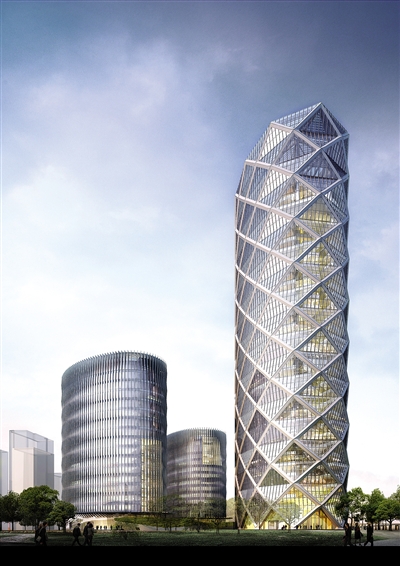
Poly Real Estate Group will build three office buildings at the Dawangjing site. The tallest building will have the appearance from the outside of the traditional form of a Chinese traditional folding paper lantern.
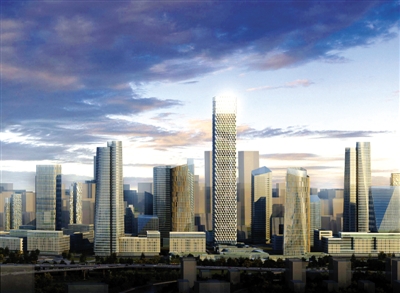
Within two or three years,Dawangjing will welcome these buildings of landmark status, fully completed
Pattern derived from folded paper lanterns, surface that suggests weaving, outlines forming curves –world famous designers have planned these buildings, combining classicism, grace, and movement. This forest of buildings, vying with each other to be the most beautiful, will make up the Dawangjing business district.
As demanded in the 12th five year plan, Beijing must exert itself to build a “world city.” In marching toward this dream of “world city,” having an internationalized business district is essential, and Dawangjing presented a favorable opportunity. The Greenland Group and the Poly Group (real estate developers) are in charge of building top class office buildings. They have invited world famous designers to create distinctive buildings for this gateway to the national capitol.
The Greenland Group is in charge of building seven buildings. Two buildings will be a headquarters for Posco Steel, four buildings will be office buildings, and one will be a commercial building. One of the office buildings will be 260 meters high, the tallest in the capital gateway development.
A Greenland Group employee said they had specially invited the designer responsible for the Durj Khalifa (world’s tallest building in Dubai) to design the outer structure of this office tower. The designer assimilated a treasure of Chinese culture –picture weaving in silk, and has given it a new meaning by ingeniously creating a surface with a knit or woven pattern. The whole gives an impression of being fine and smoothly detailed, deep and hidden in character, graceful and restrained.
konjaku: the designer, unnamed here, is the firm of Skidmore, Owings, and Merrill. The “supertall building” in the project will be 55 stories high–http://www.som.com/content.cfm/beijing_greenland_dawangjing_tower
Poly Group will build three buildings, one 153 meters tall. The exterior will create a new appearance and meaning for a traditional Chinese form, the folding paper lantern.
The responsibility for designing Wangjing SOHO has been shouldered by the world famous architect Zaha Hadid. This will be a coordinated assemblage of three high rise buildings. the highest one will be 200 meters. The three buildings will have a unique curved form. Fashionable and with a futuristic quality, from every angle they will be trendsetting; graceful and beautiful.
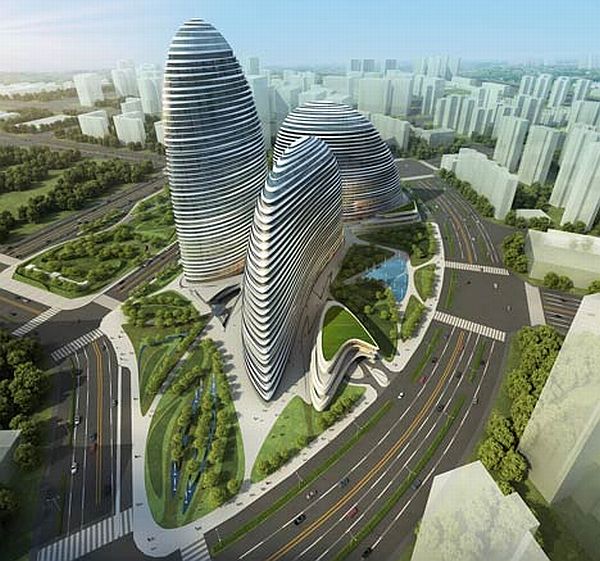
Wangjing SOHO, Zaha Hadid
http://www.zaha-hadid.com/architecture/wangjing-soho/
It has been reported that two buildings in the Greenland Group project will be completed first, by the end of 2013. Two or three years from now, all the buildings of the master plan one after another will appear on the stage, and the new international business district will be completed.
Dawangjing “awakens,” forging the second CBD (central business district)
In the onward industrialization of the city, in which something new appears daily, what place can be left behind? Today, walking on the ground of what used to be Dawangjing, it is impossible to find any traces of anything referred to in this passage from Shen Kuo in the Song dynasty in his “Brush Talks from a Dream Book,” “Fifty li northeast from the capitol is the Wangjing mound.” This scenary has been replaced by countless cranes and derricks putting up high rise buildings. Dawangking village is turning into something totally new.
The 500 year old pagoda tree has borne witness
At present there are few visitors to Dawangjing Park. Once the development project by the Poly Group is completed, with residential and office buildings adjacent to the park, it will probably be lively and bustling. Today inside the park there is a group of sanitary workers, former Dawangjing villagers, who have selected the job of cultivating their native place. Following their guidance, we came upon the 500 year old pagoda tree. It was in the process of receiving a thorough physical exam by a group of workers. This old tree is today just as it was of old, a tree that “outshines all others.” Although this more than 30 meter high tree has a trunk that is hollow and filled in with cement, and on both sides is propped up with supports, it is still towering and majestic, with birds calling high up in its canopy. A group of old people enjoying the coolness under the tree is like a scene from the village of old.
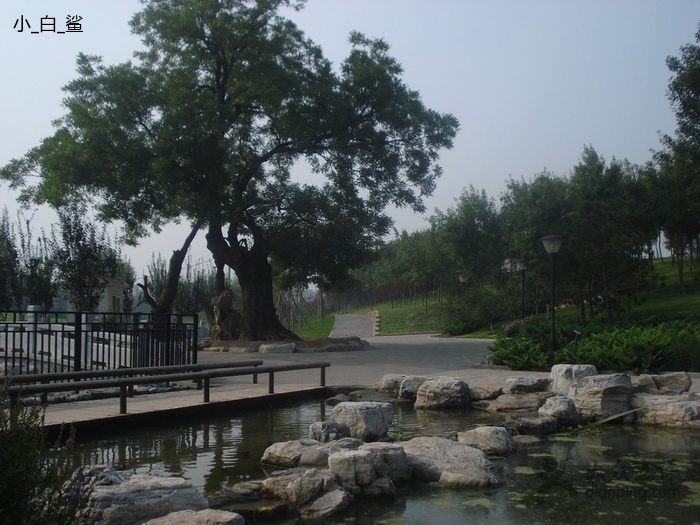
the Dawangjing village old tree, now in the park
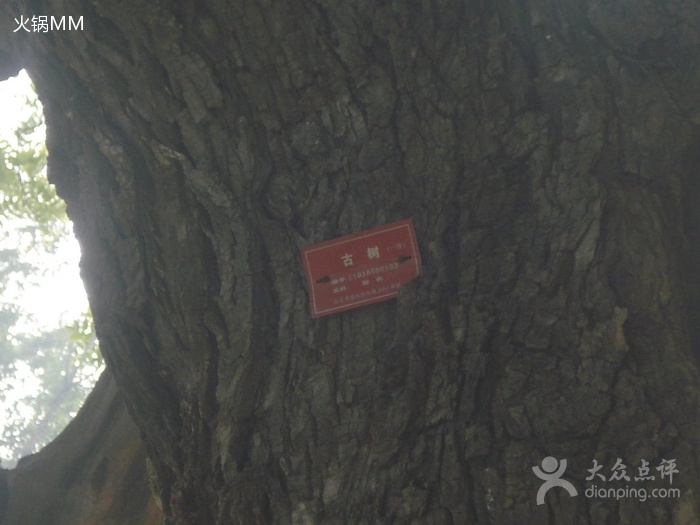
“old tree”
10 years ago a person of Beijing would have said, Dwangjing is on the outskirts of the city. But the villagers have been constantly readjusting their lives as the city developed and expanded. The villagers used to grow vegetables, and every day would brave the dense urban roads to bring their produce to the morning market. Their greens would end up on the city dining tables.
Starting in 1996, the neighboring village of Xiaowangjing, just across a wall, was gradually transformed into Wangjing New City. By 2008, real estate values in the area had shot up several times, but Dawangjing still existed on the boundary of the urban and rural. In 2009 the plan for the “second CBD” was issued, and only then did Dawangjing become part of Beijing city proper.
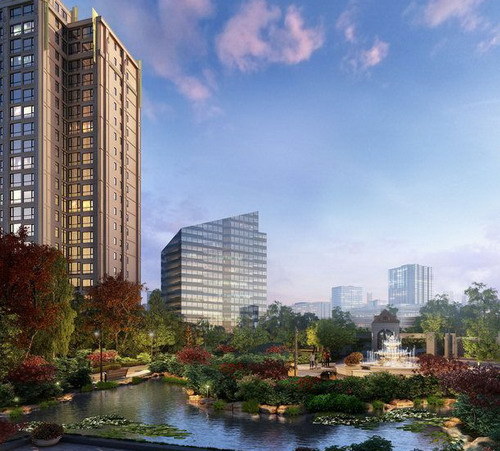
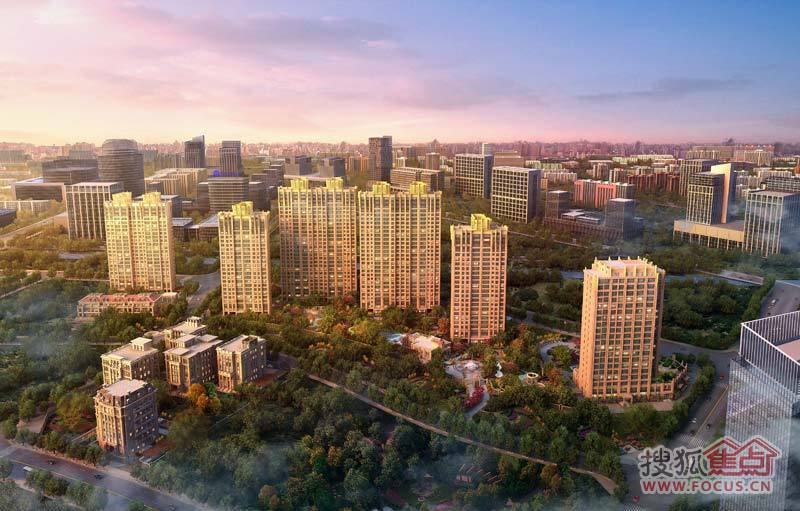
“Thirty years ago, all this was rice paddy. Mr Li pointed to the construction site. ”Before on the low ground we had rice paddies, on the higher ground we planted soybeans. Whatever we planted, it grew. Mr Li is 82 years old. His family lived in Dawangjing for five generations. The land he was pointing to is where the Yuanyang Wanhe Gongguan development was being built. This is the Dawangjing Number One Parcel, which became well-known not only in Wangjing but even in Beijing, because in 2010 the Yuanyang real estate group snatched it for 4,080,000,000 yuan ($651,188,193). Mr Li said, “I thought if I lived long enough, I would see something really new. However, now that I have lived more than eighty years, in the end I can no longer recognize Dawangjing at all.” These days when the weather is fine, Mr Li walks out of his building and sits at the perimeter of the Yuanyang Wanhe Gongguan development, chatting with the security guards. (Below, three renderings of the Yuanyang Wanhe Gongguan development).
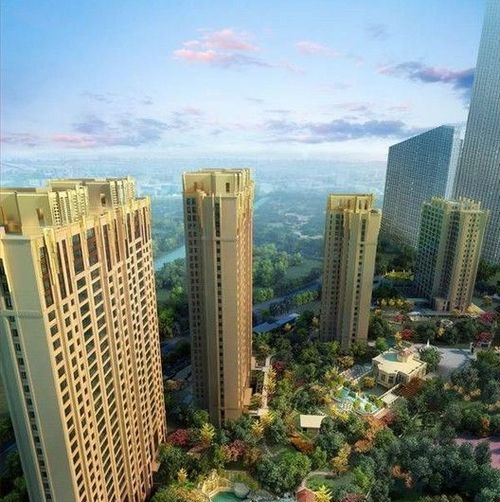
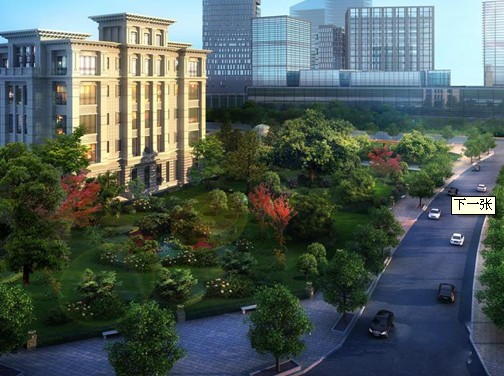
After the “miracle” demolition of the village without any protests, in 2010 the media put out many stories about the villagers showing off their newly acquired wealth, buying cars and other luxury items. When the Dawangjing villagers think back on those days, all kinds of feelings arise. A Mrs Chen said, “At that time I received over 2 million yuan. I bought handbags, wristwatches, and so on. I saw other people buying, so I felt I had to do it too. Now I think it was quite childish.” In order for her daughter to go to a better school, Mrs Chen at present was in the process of selling her residence in Wangjing and moving to Haidian. “ I can buy a secondhand apartment, or rent something One thing is for sure, I’ll never buy any more luxury items. I want to plan for my daughter’s future.”
The year of the demolition, there were some villagers who, having been parted from the village, now decided to look for work, but could not find any. Perhaps they were unwilling to take a new job, and became instead “wealthy and honorable idlers.” For a time the media competed to bring us such stories as “driving a BMW as an illegal taxi.” But after two years had passed, the idlers began to get busy again. Li Xiaoxuan is the family’s youngest daughter. Back then, after she graduated high school, she whiled away her days at home. Now she runs a nail salon in the vicinity of Sanyuan Bridge. “At the time we bought several residences, and thought we would make enough income to live on by renting. But as time passed. I realized it was better to have some kind of work.” in 2011, she and a few elder sisters from the village put their money in together and invested in this nail salon. “At the time, we didn’t think it would really earn more than small change.” But Xiaoxuan says it makes a profit of over 10,000 yuan a month. She is thinking of making it her career.
Dawangjing is in a strategic position, on a major thoroughfare from the Beijing Capital Airport. From the airport to Dawangjing, is the same as the distance between Beijing and the world. Gathered at Dawangjing, in landmark buildings designed by world famous designers, will be many of the world’s top 500 companies, causing Dawangjing to be Beijing’s most international business district. As a gateway to the capital, it will be incomparably superior to Beijing’s traditional central business district.
The old Beijing CBD, while large in scale, has no room for new tenants, it is all crowded and pushed into the east third ring, and, having outgrown its site, there are problems with the functioning of communications, distribution, and the environment. The new Dawangjing district plan has taken on all the strong points of the old CBD, while managing to avoid the problems.
In the last 10 years, Wangjing has gone from being primarily a residential district, to one in which many of the world 500 companies have headquarters. 65% of Beijing’s high income population live here, one third of them are foreigners. Already in Wangjing Siemons, Motorola, Sony, Ericsson, Matsushita, Mercedes Benz, BMW, and LG Corporation have branches. The new Dawanjing business district will take on and continue this open, multi-faceted, international business ambience. With many business headquarters and elite employees gathered here, Wangjing is the most international residential district in Asia.
One matter of concern is that the in the second CBD plan, 75% of the development is devoted to business. Residential properties seem scarce. However, already the top selling Poly Central Park, an improved residential development, is there, benefiting from its proximity to the green ecosystem of Dawangjing park. Other residential projects are in the works, and Dawangjing will before long have a cluster of mansions and elite residences.(Below, Poly Group Central Park)
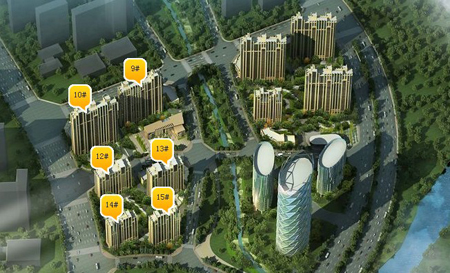
“Central Park” is the numbered buildings. Adjacent is the Yuanyang development. Lower right is the Poly Group office complex.
High Value Real Estate makes Relocated Households into Millionaires, those relocated some years ago now seek a second compensation payment
http://money.163.com/10/0325/16/62KQ1EAC00252G50.html
Source: Wangyi Caijing
As real estate prices climb ever upward, a certain number of people who have their homes demolished, dream of becoming suddenly rich.
At the beginning of this year, in Beijing Chaoyang District, in Laiguangying town, three natural villages were completely demolished and the residents relocated. A thousand or more residents became millionaires, even some worth tens of millions. Those nearby who were relocated in 2003 for much less money lost their mental balance, and demanded a second compensation payment.
Zhang Shifu originally was from Laiguangying town(Chaoyang District, Beijing), Hongjunying village. In 2003 his home was demolished, and he relocated to a better residence. However, at that time every household received several 100,000 yuan in compensation. After buying a new residence there was not much left over. Then, at the beginning of this year, three nearby villages were razed, and the villagers bought new houses, cars, and every one became a millionaire.
Zhang Shifu said these three villages were Baifen, Beiyuan, and Xiaoliu, all located in Laiguangying town. On the eve of the Spring Festival these three villages were razed, Compensation was in accord with the rise in land prices and high real estate values in the area. Zhang Shifu said, taking a one story house of 250 square meters as an example, compared to 2003, the compensation was 1,800,000 yuan more. Those residents were still able to buy replacement housing at a price of 4500 yuan per square meter, which they owned with “lesser property rights” (ownership recognized by the town government but not the state).
Of these thousand residents, the majority received 2 to 3 million yuan. Some more wealthy and influential families got as much as 10 million. Even the poorest had 1 million yuan left over after buying a new house and a car. A number of villagers confirmed to Wangyi Caijing news net that in Beiyuan village a certain household named Liu of 5 members, bought altogether three replacement residential units, and still had 5 million yuan left over. In Xiaoliu village one household, the Liangs, received 8 million yuan, and another household named Li received 10 million.
In 2003, the standard value of commercial housing was 6000 yuan per square meter. in 2010, it had already reached 21,000 yuan per square meter. Beijing villagers, who had been sitting on their land and waiting for the highest offer, suddenly felt themselves to be “land kings.” This was not the first “fairy tale” of becoming wealthy through demolition and relocation. At the beginning of 2010, in the big rush to redo old villages in Shenzhen, ten households received 100 million and 400 households received 10 million.
With such a big difference in the amounts of compensation, those who received relatively lower amounts on compensation in 2003 lost their mental balance, and like ” a crying child seeking the breast” they went to the relevant authorities to give them a second compensation.
On 3-24 at 4 in the afternoon, at the entrance to Chaolai Luse Jiayuan (Morning Comes Green Homeland) Residential Community [new housing development of multi-story buildings in a greenbelt], some ten or more illegal taxis are lined up. The drivers have an abundance of free time, and sit at a table by the side of the road playing cards. These drivers are all residents of the Community. They are all former villagers relocated here in 2003 from Hongjunying and other villages in Laiguangying town. One 73 year old driver, Mr Yan said for his household of four people, each person received 135,0000 yuan. Adding up all of everyone’s compensation payments, it came to less than one million yuan. With this money they had to buy two apartments in a building in this development, where real estate is valued at 3000 yuan per square meter. After that, they had about 400,000 yuan left over. Now, he lives in one apartment, and his son’s household lives in the other. Since the move a grandson was born, and he worries where his grandson will live in the future.
Zhang Shifu, also relocated in 2003, told this reporter that at that time three villages consisting of 3000 households were relocated, more than 10,000 people altogether. What is difficult to accept is that at the time his village accepted the government’s appeal to relocate, but those villages that were unwilling and resisted ended up getting more the longer they held out. In 2008, when Beihuqu village in this town was demolished, compensation policy had become much more liberal. Instead of being based on the number of people, it was now calculated by the total area of the residence. For every square meter the household received 6000 yuan, and bought replacement housing at 5950 yuan per square meter. A Mr Liu of Beihuqu village said, their village in 2006 was about to be demolished, but the villagers united and held out, but in the end they could not prevail and the village was demolished in 2008. But compared to the three villages relocated recently, they still took a big loss.
As for the demand of those relocated in the past, the town government could perhaps give some a cash payment,or perhaps treat the petitioners as though they had been relocated recently, and allow them to purchase a residence for 4500 yuan per square meter [as “lesser property rights]. On some of these properties the market price is now 15,000 yuan per square meter.
A Laiguangying town official explained, the reason for the disparity in compensation amounts was because the demolition and relocation process in these two cases was of a different character. In 2003, the villagers were relocated as part of the creation of a greenbelt, whereas in the more recent case, the villages were affected as part of a policy to set aside land for development. Because the character was different, the policy determining compensation amounts was different.
When this analysis was told to Mr Yan, who relocated in 2003, he said, even though the area they were relocated out of is supposed to be a greenbelt, at present it is now actually covered over with one of the most high priced housing developments in Laiguangying town, the “40 degrees Latitude” project. The other large open space remaining there has already been earmarked for development.
The Laiguangying town government said that in regard to the requests for a second compensation, they will respond with a settlement plan in the near future.
A certain person in the real estate industry said, it is the dream of many Beijing residents to own their own home. But, amid the torrent of fanciful stories about becoming wealthy through relocation, peoples’ hopes only get bigger. Those without home ownership envy those who have it; those who have a home envy those more wealthy. As land prices steadily climb, those in the midst of the demolition and relocation process strive to become wealthy overnight –this is the dream of many people.
Reporter Ren Guanjin

40 degrees latitude housing development
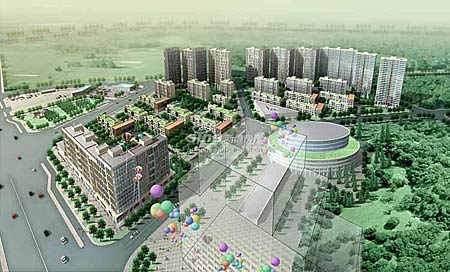
40 degree latitude rendering
朝阳区来广营乡 Chaoyang District, Laiguangying town
红军营村 Hongjunying village
白坟 Baifen
北苑 Beiyuan
小刘 Xiaoliu
北湖渠村 Beihuqu village
朝来绿色家园 Chaolai Luse Jiayuan
北纬40度 40 degrees Latitude
konjaku: a glowingly positive view of leaving the village behind, since the content was provided by the local party committee. Other sources contest the statement that the Xiaohongmen residents were “well-compensated.”
Chaoyang district: Xiaohongmen residents after receiving lavish compensation have a fortunate life
2010-05-07
Source: Beijing Economic News Network
http://www.cctw.cn/dfxxlb/bjxxlb/t20100507_1481187.htm
The peasants new village of multi-storied complexes standing close together, a few steps from a community green area –this scene tells the story of the transformation of Xiaohongmen under the urban and rural unification plan. Elderly persons strolled in the courtyard, children run and jumped about, Among these happy smiling faces one could see the brand new life of those who had been well compensated for the demolition of their old residences. The old dirt roads and small buildings have been exchanged for roads of asphalt and high residential towers. Parting from a life of tilling the land, the peasants can experience personally the fruits of urban culture. They sigh with amazement at the good outcome, so different from the past.
Xiaohongmen is in the southeast of Beijing, in the fourth ring, part of the area that falls under the urban and rural unification plan.Because a large number of members of the floating population live there, the town environment faced many pressures. The town and village councils invested a lot of money in fixing the water, electricity, sewage, and repairing the roads, but in the end they weren’t able to fundamentally transform the backward conditions of the environment. At the end of 2006, in coordination with the Beijing city plan and the construction of the green zone, Xiaohongmen began the demolition and relocating process. The dirty environment, the old and shabby buildings, were replaced by high residential towers –the peasants’ long cherished dream.
Mrs Wu — to go to the bathroom, she no longer has to walk down the road
2009 was a big year for Mrs Wu –she moved into her new home, the Hongbo complex c-block number three, and married off a daughter. Of her life before, she said, “We were in the wholesale business. Every day I got up early and went to bed late, rushing about in all sorts of weather. I and my husband had to be very competitive, always worried someone would get the advantage on us. The object of all our struggles was to live in a high tower, just like the city dwellers.” Recalling her dream of a better life, Mrs Wu sighed with emotion.” We did not know when our neighborhood would be demolished, but we always looked forward to that moment. When the time came, we did not hesitate but signed the agreement to relocate right away.”
Last year they spent their last winter in their one story house. They couldn’t help feeling a bit sad about parting from their home of several decades. But they kept themselves busy as on other days, and their state of mind was calm. They knew they would soon be moving into a new building with two apartments. One apartment they would live in, the other they would rent, one would be where they lived, and the other would be their livelihood. “Keeping in mind that we now had a secure livelihood, we did not worry.” Smiling, she said, “I told my husband, the two of us can now take a little rest.”
Their apartment is well-lit and spacious, cozy and comfortable. Even on this day of gloomy weather the inside is warm and pleasant. From the balcony one looks down on pleasing scenery. Mrs Wu said, “When I look, my mind is at ease, and my heart disease does not bother me.”
In their previous one story house, she had to seal the house shut when the wind blew, which left it pitch dark inside. When the weather was cold, she lit a fire, but the temperature never rose above 7 degrees. Going to the bathroom was even more inconvenient, as they had to go outside and walk a certain distance. Now they have heat. Without having to light a fire, they could keep the room temperature above 10 degrees. They can turn on a faucet and hot water will come out. It is much easier to take a bath or prepare food. At the end of last year, the district installed electric meters, and for every household, a card operated circuit box to switch power on and off. This resolved the problems residents were having with temporary outages. Since then “the district has not had a single power outage.”
Auntie Chen
On winter nights we no longer have to get up to put on more clothes and put more wood on the fire
2007-01. Auntie Chen takes pride in the fact that she was the first person to sign a contract to move. “To demolish and relocate to something better, that was the trend, and I grabbed on to it.” At that time, many peasants had a wait and see attitude. They felt hopeful –then worried — happy about moving into the residential towers, but worried about having additonal expenses. That which was most difficult for them was parting with their native land. “Everyone said they didn’t want to move, they wanted to go back and look at their old house, but now, they admire us for being the first to move! It is not so easy to make such a change to a better life when when is already old.”
Speaking of her former life in the village, Auntie Chen said, pounding her hip with her hand, ”I was troubled by lumbago, and my husband’s health wasn’t good either. I had to carry him on my back. At night we were woken up by the cold inside the house. We had to get up, put on more clothes, and put more wood on the fire.Once a strong wind blew the snow in, and we had to spread pitch on the walls to waterproof them and carried out the snow. Afterwards we rented a coal -burner at 120 yuan a month, and managed to endure the winter by burning altogether three loads of coal. I was old, this was hard for me.”
Now, Auntie Chen’s two rooms are neat and tidy. Never again will the wind penetrate or the rain leak in. She will not have to put on coal late at night, or worry about running to the public lavatory. Freed from these inconveniences, she has learned how to enjoy life, growing flowers on her balcony. Sitting on her sofa, she watches t.v. and does embroidery, enjoying the afternoon sunshine.
The environment can transform people. The urbanization of Xiaohongmen has already transformed the appearance of the village, improving quality of life for the villagers. Even more important, it has spurred the transformation of the villagers mode of life and their way of thinking. The demolishing and relocating was pulling open the curtain of the first act. The Xiaohongmen residents’ dream of the beautiful city will continue to emerge on the stage.
(Contributing content to this article: the Chaoyang Party district working committee)
小红门 Xiaohongmen
konjaku: this is a follow-up to the article in the previous post.The aim of these articles is to dissuade readers from thinking that sudden wealth could happen to them, or to envy “instant millionaires.” However, in the process of making the argument, there are some cogent criticisms made of the whole demolition and renewal process.
Millionaries wealthy on paper –the relocated rich lead to fears of social disharmony
2010-08-22
Source: Jinyang net–Yangcheng Evening Paper (Guangzhou)
http://news.sohu.com/20100822/n274383428.shtml
Last week , there was a newspaper article which was widely reprinted. In Tianhe district, villages in Xintang city were demolished, and over 2000 people became millionaires through the compensation they received. Among these was one villager, who had just one three story old building of about 60 square meters.According to the “one demolished, one supplied” rule of compensation, in which the surface area of each floor is added together to arrive at the amount for compensation, he had 190 square meters total. After relocation he was still able to buy an additional 60 square meters of land at a fixed price of 3500 yuan per square meter, for a total of 260. His son, who lived apart from him on another property, had some 380 square meters of land. Together, father and son had over 600 square meters. The going price for commercial property in that vicinity was 12,000 yuan per square meter. Even calculating at 10,000 yuan per square meters, both households had become millionaires.
As previously disseminated through the media, in Liede village in Zhujiang new city, there is a story propagated of instant millionaires due to demolishing and relocating. The going market price for land there was 20,000 yuan per square meter. There were some households with 2000 or more square meters, and some multi-family households with a much as 4000 square meters. It was not rare for people in that village to have over 1000 square meters of land.
In Panyu county Shilou town Yousantiao village, in the process of building the Asian Games Village, 583 village households were transformed into millionaires overnight.
A case in Shenzhen caused people to cluck their tongues in surprise. According to reports, in the rebuilding of Futian District Gangsha village, most of the villagers selected the option to acquire a replacement home as their compensation. The replacement home for one family was 6000 square meters, and in that area the going price for real estate property was 30,000 yuan per square meter! There were ten families whose net worth approached a total value of 100 million yuan.
Om 8-20 the People’s net published the editorial, “Exaggerating to an excessive degree –the illusion of sudden wealth because of demolition and relocating ( http://www.hb.xinhuanet.com/fangchan/2010-08/20/content_20681522.htm). This editorial states that if there are some cases of sudden wealth, they only occur in large cities [with a large resource base]. Rather, it is more likely that the citizen’s property rights are difficult to safeguard in the process of demolition and relocation, leading to them being more worse off than before. It concludes that much of what is true and untrue about this phenomenon of suddenly wealth remains to be clarified through discussion. Those who become millionaires are only millionaires in terms of the calculated value of real estate property they have acquired as their replacement housing.
As has been reported, if a person wants to convert this to cash, they have to sell their real estate (the residence they relocated to). In order for the real estate to become a disposable commodity on the real estate market, the land must be made to change its status, from ownership in the village collective (in perpetuity) to state owned land. Then selling off their property means losing the original status of the land and the capacity of that land to continue to be a resource for the owners. In Liede village, an absolute majority of the villagers were unwilling to change their real estate to state owned land.
As has also been reported, when villages existing in an already urbanized area are demolished, it causes the prices of newly developed housing in the area to soar.
As the Daily Financial News stated bluntly: “Be on guard against high real estate prices.”
Reporter: Na Lantuo
Editor: Mei Zhimin
————–
Note: the “one demolished, one supplied” rule in which the surface area of each floor is added together, applies to buildings under three stories. There is a different calculation for buildings of four stories or above.
Exaggerating the phenomenon of sudden wealth through relocation leads to illusion
Source:People’s net (Renmin wang)
http://www.hb.xinhuanet.com/fangchan/2010-08/20/content_20681522.htm
When Xintang village within Guangzhou city was demolished and the inhabitants relocated, the village families all became millionaires. At most, one family received 5000 square meters of land, appraised at 50,000,000 yuan. According to estimates, the total net cost of reconstruction reached 46.55 billion yuan, over the limit set by the government. (2010-8-19: Guangzhou Daily)
These days, when demolition by force is usually accompanied by low compensation, the idea of relying on demolition to become suddenly wealthy, perhaps inspires many who are going to be relocated with the belief that they will achieve “compensation according to their rights.” Despite the fact that compensation amounts are supposed to be linked to market prices, and despite the fact that there are constant appeals to safeguard the private property of citizens, the reality is that it is an unbalanced game that does not favor those who are being relocated. Becoming wealthy through demolition and relocation is highly unlikely.Even if one occasionally hears scattered stories of such a thing occurring, it is very rare. In the demolition process the citizen’s private property does not enjoy adequate safeguards, and often they are poorer than before.
These fairy tales of sudden wealth rose up during the demolition and renewal of old villages in Shenzhen, and continued with tales about Xintang village in Guangzhou. There some two thousand villagers all “had their ship come in” and became millionaires, breaking all previous records. Even if true, this is not going to happen to everyone. Further, the media and public opinion in retellings exaggerated the facts, and turned the truth about compensation rights into a carnival act. The Xintang incident was interpreted as ” a victory for the common people,” beginning a trend of similar interpretations. This kindled the resolve of any number of households resisting eminent domain(“nailhouse owners”,dingzihu 釘子戶; i.e., homeowners who refuse to relocate to make way for a development project).), to hold on to their stubborn dreams.
Indeed, if the high prices paid in the Xintang precedent prove anything, it is that high priced compensation is “bad implementation but not bad money.” The key is this: can the process of becoming wealthy through demolition and relocation be reproduced indefinitely?
What is true and false about the phenomenon remains a topic for discussion. Villagers may receive in compensation “a smaller area of land, worth much more money.” This looks like a pretty good deal, but what they receive is still lower than the market value. In regard to Shenzhen Dachong village, the standard of 11,000 yuan for every square foot is still on the low side, in this “era of 20,000 yuan.” Also, because the villagers get real estate property as compensation, on paper they are millionaires, but if they want to convert their compensation into cash, they have to give up their just acquired residence, and no one can say that is not a heavy burden. Then, they probably want to buy a new home, but to do this they must spend a huge amount of money. Besides, villagers who have long ago stopped cultivating their land and “become city dwellers,” are still not enjoying the real benefits that accrue to urban residents, such as social security, as well as certain rights and advantages in living conditions. The effect of all of these conditions is difficult to measure, and difficult to remedy. As a Xinhua report on 6-5 stated, many relocated households which receive a large amount in compensation, cannot resist “impulse spending,” and return to a state of poverty. It is not easy to truly measure the gains and losses in this process.
The phenomenon of sudden wealth through relocation would be difficult to clone. There are the strong, there are the weak, and the amount of compensation is entirely based on what the government decides. As developers know, the amount of compensation is linked to the “overlord’s price”( state-controlled) and not the market price. The property rights of the common people are like a fish on the chopping block, with those in power holding the knife. Since there is no discussion of how to reach a level of social equality, how can there be a discussion of prices according to the principles of justice? In this environment, when people hear about becoming suddenly wealthy through relocation, they prick up their ears and pay attention.When we consider that Shenzhen and Guangzhou are quite rich in material resources compared to the rest of the country, we should regard this as something that seems precious, precisely because it is so rare.
Exaggerating sudden wealth is to fall prey to an illusion. One cannot expect it, but rather should stand firm to obtain what is appropriate. It is of vital importance that we try to bring the process of compensation more in line with market prices.
Editor: Zhang Jing.
konjaku: in this article we meet Huang Yao, a Dawangjing villager who used his compensation money to buy a sports car, which he planned to use as an illegal (unregistered) taxi. There was, at least temporarily, a population of relocated persons with nice apartments, plenty of money, but nothing to do.
A Social Crisis –The “Relocated Rich” Squander their Money and try to Conceal their Poverty
2010-06-06
http://www.wolai.com/news/2010-06-06/50610/1/
Source: Liaowang(Outlook) News Weekly
Acquiring sudden wealth through having one’s house demolished and receiving compensation, overturns the traditional way of attaining riches. If the government does not energetically give effective guidance to the peasants, they will impulsively spend all their money, and return to a state of poverty.
When this reporter met Zhang Jianha on 5-28, he had just moved into the new residence he received from the demolishing and relocating process. He had recently bought a Volkswagen Passat sedan, and was planning to take his family on a trip by airplane to Yunnan. “It seemed as if in the course of on night, everything changed and I suddenly did not have to worry about money. He said excitedly, ” When I received the compensation fund of several million yuan for the demolition of my old house, my first thought was that, though money itself is only a number, this would now allow me to live with dignity.”
Zhang Jianha is a peasant from Daxing district (Beijing city) Huangcun town. Because of demolishing and relocating, he and the residents of his whole village went through tremendous changes. The villagers turned into townspeople, and then became rich.
In recent years, with the rapid acceleration of urbanization, there are many peasants like Zhang Jianha in villages within the city, who have received either a huge compensation fee or a residential property from the government when their homes were demolished because of development, and ascended to the ranks of the wealthy.
Because they attained wealth so rapidly and easily, transforming their traditional lifestyle and seriously affecting their ingrained value system, a small minority have turned either to a life of idleness, or spend their days competing with each other over who can be the most extravagant.
“Although they are the relocated wealthy, they have not yet transformed into real urban dwellers. ” Director of Social Studies at Beijing’s College of Petroleum Engineering Li Xianfeng told this reporter. How to guide the peasants to use their compensation funds rationally, how to help them merge into urban life and become true urban dwellers –this is an important problem the government needs to solve.
On 5-18, when this reporter went to Daxing district (Beijing city) Huangcun town to the newly built residential neighborhood replacing the demolished homes, he saw a number of brand new luxury cars parked there.
Mr Zhang, who had just moved in, told this reporter because of the demolition he had received some 2 million yuan in compensation. At most people received 8 million.
With such large sums, many people began to plan how they would spend their money. A Mr Wang said, “I thought I would buy a good car. The standard price of the car I wanted was 200,000 yuan. I requested they lower the price to 150,000, and they reduced it.”
Some people did not buy a new car just to show off. On 5-19, this reporter was in Chaoyang district at the west entrance gate of Dawangjing village, and interviewed Huang Yao, driver of an illegal taxi who was waiting for customers. Huang Yao said his village was demolished last year, and he received a new residence and compensation of about 4 million yuan. With no more land, he was unable to just stay idle, so he bought a fast sports car to use as an illegal taxi. However, with gas prices rising, expenses incurred in driving the car increase daily, and business is not good.
“Even though my car is fast, having such a car is not really suitable for an illegal taxi. People look at this powerful car, and don’t dare get in. They look at me as though I am crazy.” Now he faces a dilemma. If he sells the car, it can only be for a depreciated value, and he’ll lose as much as 100,000 yuan. If he doesn’t sell it, it will continue to be a money guzzler.
According to the research of this newspaper, the “relocated rich” lack a rational plan as to how to manage their future. Some are tricked into participating in fraudulent schemes, and lose all their compensation money. In other cases family members get into a conflict over the distribution of the compensation money, even to the point of the disputing parties ending up in court. In some households the underage members of the “relocated rich” household have their heads turned by the sudden influx of money. They spend extravagantly, and lose interest in school and studying.
Academy of Sciences Sociology professor Zhao Chunyan explained that the “relocated rich” is not a phenomenon limited to Beijing. In other cities with an urbanization process including Shanghai, Guangzhou, and Shenzhen, this same problem begs for serious attention. “If a person uses his or her own knowledge and skills to realize his or her goal to become wealthy, that is one thing. But when someone who depended on tilling the land becomes wealthy overnight, this overturns the traditional meaning of wealth and the social value system. When those who have had little experience with money suddenly become wealthy, it is only natural that they are completely at a loss as to what to do. They have no technical skills other than experience in tilling the land, and the possibility that they will use up the money and return to poverty is extremely high. With no land, they will become a burden on society, and have a negative impact on social stability.”
We can draw lessons from the past. From 2003 to 2006, in order to build the Beijing Capital international Airport, 6 villages in Shunyi district were demolished (Longshan, Tahe, Taoshan, Pingjiaying, etc). The peasants of these villages, after they acquired their compensation fund, squandered it without any idea of how to use it, and returned to poverty.
After Demolishing and Relocating, There Needs to be a Follow-up Procedure
The Deputy Director of the Daxing District Social Construction office Shang Jiangang spoke bluntly: ” the ‘relocated rich’ may show off or compete with each other over who can be the most extravagant, but the fault lies with the government for not inculcating them with the proper guidance on how to organize their finances.” Most important is the lack of follow up after they have been relocated. One proposal is to give out the compensation money in stages, rather than in one lump sum. The government should introduce the principles, “be a producer first, then a consumer. Ensure you have a regular income, then spend accordingly.” Shang Jiangang said, ” The peasants have moved up in the world, but their mentality hasn’t changed. How about transforming their way of thinking to understand that they still have responsibilities to bear for the rest of their lives? Also, if the government adjusts their compensation over time to keep pace with inflation, this will win their trust. The pressure on the government to undertake these things is great.”
On 4-10, a special teacher was invited to the Daxing district Beizangcun town Women and Children Community Center, to give a series of lectures to over 200 women assembled there on “The Science of Household Financial Management.” The Daxing District Communist Party District Committee Secretary Zhang Deguang said the party had initiated a program, starting one year ago, to ensure that peasants who had lost their land would smoothly make the transition to urban residents. ” When peasants enter the world ruled by the market, they are exposed to greater risks, and the net cost to start a business is high. We cannot afford to stand by and let them fail, when they attempt something.”
At present, in Daxing district there is a subsidy for specialized vocational training, and a one-time award grant given to employers who hire from the labor force in this district. There is also a special fund of 50 million yuan, to use to accelerate employment. The Daxing district also has an effort to collectively organize property assets and to bring these under unified management, in the transition from collectively owned land to land put on the market. In this process, in accord with the new reforms, the peasants who have lost their collectively owned village land become shareholders in the new development, guaranteeing that over the long term they will have a share in the profits. Zhang Deguang said that allowing the peasants to manage their own wealth is the cornerstone to long term social stability and prosperity.
konjaku: these articles interviewing Dawangjing villagers, giving “their side of the story” may have the aim of inducing sympathy for the villagers, to counteract a general impulse of envy and resentment against their sudden wealth. In any case, what they reveal is that the villagers may have previously been in a polluted environment lacking sufficient infrastructure, but they were self-sustaining economic agents, within a community which they enjoyed, and they felt themselves to be part of a history, the history of Dawangjing, which contributed to their identity as persons. After the move, they appreciate being in a better environment, but they are also quite conscious of what they have lost. After an initial burst of “dizziness” in which they spent money at times unwisely, they are concerned with being dependent on forces beyond their control into the future. At least when they added rooms to their houses to rent, they were acting upon a need and generating their own income. Now they live in temporary luxury and wait for others — the township government, the business development forces — to decide things for them.
Dawangjing –the joys and pains of moving out
2011-02-12
The Beijing News
http://www.bjnews.com.cn/news/2011/02/12/103514.html
The first day of the lunar New Year, Li Yan (not her real name) with her husband and son came to her parents house to celebrate the New Year. On the walls paper cut-outs were put up, sausages were hanging on the terrace, on a small table were several boxes if Yuxi brand cigarettes and fruit juices –everything was prepared.
Although it looks as though life is good, Li Yan thinks otherwise. “At present I do not go back and look at our old piece of land, it just makes me angry.”
Li Yan’s family received 2 million yuan in compensation. In order to place their son in a somewhat better upper middle school, they did not move into the designated replacement housing, but using one million yuan of their compensation fund, they bought a 90 square meter residence priced on the market in Wangjing. Since Li Yan’s husband loves cars, he indulged himself in spending 400, 000 yuan on an Audi A6.
Although they live in a multi-story building and drive a nice car, Li Yan has a new worry, “At the time it would have been better to move into the designated housing and use our money to buy our son his own residence. Now we no longer have enough money to buy any other residence. We spending the New Year’s holiday burning money. We’ve run through a large fortune.”
“Living in a tall building, it is not lively and bustling like the village was. Li Yan says her former neighbor lives in the building opposite, but in one year they haven’t managed to meet. She sighed. She wants to celebrate New Years by taking a walk, stopping in at the house of relations and friends, but now after the village demolition everyone has money, and you cannot get together without giving a present. To save face you have no choice but to give gifts of money, at the least 5 or 600 yuan at each house.
Li Yan cherishes the memory of her former life in the village. Then, when there was a holiday, they could just take their son and travel somewhere. In the village they could work in the labor pool, doing odd jobs, going in when they wanted to, which gave them several hundred yuan a month in income. On top of that they had the income from renting rooms. therefore they were sure to make over 2000 yuan a month. Nowadays, every penny they spend is drawn from their savings.
Today Dawangjing village has already become a flat parcel of cleared ground. According to the plan, it will change into a business development surpassing anything Wangjing has yet seen.
Li Yan remembers Dawangjing village as being dirty and messy, piled with garbage. There was no place you even wanted to step as you walked. Inside the buildings it was perpetually damp. “Demolishing the village, is not just about becoming suddenly wealthy, There are good points and bad points about it.” The benefit for Li Yan is that her living environment is better now. The bad thing is that although they have a compensation fund, every day its overall value decreases as commodity prices soar. There is the building fund, costs to maintain the car, residential district fees, a fee to park the car –it all adds up.
“Peasants have a bitter life, without ever having enough money to count. All of the sudden they get a huge sum of money, they become dizzy.” Li Yan thought buying a 200,000 yuan car was good enough, but her husband went out and came back with an Audi instead. Audis, BMWs–these are cars seldom seen in the village before. “Driving an Audi, a Guangzhou Honda, is truly something. But before, everything we earned we worked for, now we just go through the day resting on our laurels.”
Before, Li Yan had considered how to better her son’s livelihood, and on their one story house built two additional rooms. One was for her son to live in, one was to rent, giving them extra income. After the demolition, their total living space went from 168 square meters to 90 square meters. She and her husband decided that when they became old, they would move to an old people’s home, leaving the residence for their son’s use.
The villagers have now all changed status from agricultural to non-rural workers. Before New Years, Li Yan underwent on the job training to become a sanitary worker. She received a training certificate and has been assigned a slot. Her salary will be 1000 yuan a month, together husband and wife will make 2000 yuan. “At 40 I can take early retirement and receive 90% of my salary, but I have two years to go.” Li Yan is worried that she may not get used to a regular job. Before, as part of the village labor pool, she could go to work or not go as she chose. Now if she has to go to work everyday on a rigid schedule, she won’t have the same time to care for her family.
After New Years, the job she put down that she wanted was as a sanitary worker in Wangjing Park. Inside the park is the several hundred year old pagoda tree of Dawangjing village. “After all is said and done, seeing the tree is like seeing an old friend. If it wasn’t for Dawangjing village, we wouldn’t have what we have now.”
Reporter: Tian Beibei
2012-06-05 Dawangjing villagers move into their new housing in Jingwang Jiayuan
Source Xinjingbao (The Beijing News) 2012-06-08
Reporter Li Fei
http://news.163.com/12/0608/02/83ENNSDK00014AED_all.html
2012-06-01 early in the morning Jingwang Jiayuan resident, 66 year old Wang Jiasheng, prepares to go out, gathering flutes, clappers, and suona (a wind instrument). He is going to Wangjing Park, site of the former Dawangjing village.
Wang Jiasheng is a locally born and bred Dawangjing villager, In the 5th month of last year, he moved here to Jingwang Jiayuan, the designated housing for Dawangjing villagers, and with his neighbors formed a “people’s orchestra.” Every time he goes there, he takes a long and careful look at the old pagoda tree of the village. Dawangjing village has disappeared, only this tree, several hundred years old, remains.

Dawangjing village old tree
During the time he lived in the village, Wang Jiasheng depended on renting rooms to migrant workers. He had a house and compound of some 300 square meters, with 16 rooms lined up from front to back along all four sides. He and his two daughters and family, 8 people altogether, lived in 10 rooms. The other 6 rooms they rented out, for 300 yuan a month per room. This was the main income for him and his wife.
Last year on 05-09, Jingwang Jiayuan opened. Three days later, Wang Jiasheng moved into his new house there. What made him happy was that in the building he moved into were all his neighbors from Dawangjing.
After the village demolition, Wang Jiasheng received five residences in Jingwang Jiayuan, one for him, one for each of his two daughters. This left two residences which he could rent for five or six thousand yuan a month. They are 78 square meters with bathroom attached.
Wang Jiasheng’s house and compound was of medium size. Nevertheless, he was eligible for 4 million yuan as the compensation fund. According to the formula, “for each person 50 square meters, at 4500 yuan per square meter,” with eight people in his family he was eligible for five residences, and besides that another million yuan in compensation. The money was distributed in advance, before he and his family moved. Before Wang Jiasheng said, “even though life in the village was tough, because we had land we had security. Giving up the land was like giving one’s life.” Now he decided, “Even though we have no land, we have the possibility of employment, we have social security, shareholders’ rights. Equal to all of these is our residences. Money gets spent, or might depreciate in value, therefore we need those residences!”
Wang Aige is a social worker on the neighborhood committee. She said, at the time villagers received their compensation funds, they were quite restless and unsettled. They bought luxury cars, etc. But once they moved, this sense of restlessness dissipated. Some went back to their old jobs, some found temporary work, and all began to live more practically.
Everyday someone asked Wang Aige to act as a matchmaker. “There were young men, young women, who just wanted to find someone from the village whose house had been demolished, because that person would have a car, a residence, a large bank account. In one fell swoop they had gotten everything.”
Wang Jiasheng sighed with emotion. At the time when he was choosing son-in-laws for his daughters, the popular saying was, “Shunyi daughters look toward Chaoyang, Chaoyang daughters look toward the city walls, first choice is a military man, second a cadre, third a worker, but never marry an old peasant.” At that time Dawangjing villagers qualified as “old peasants.” Now, after he has moved, Wang Jiasheng can find for himself the Beijing residents sense of honor and pride.
Kang Jie feels a different type of emotion. In the two years of demolition and moving, close to 30 old people have died. Some because it was difficult to leave their native place, some because of the disputes that arose with their sons and daughters, “ They had a lot of money, but it did not turn out well.”
The villagers have the five types of social insurance, but social security expenses thus far have been coming from the money the government made requisitioning the village land, the same fund being used to resettle the villagers. In the long term, the Dawangjing villagers need to development business enterprises that become self-sustaining, in order to have an on-going flow of capital that will pay out the costs of their social insurance.
Wang Jiasheng said, “The reason our people’s orchestra likes to play in Wangjing Park, is not only because for all of us this is our old homeland, which we cannot do without. It is also because in the near future this will be the Dawangjing business zone, with 50,000 square meters of bottom floor properties. This the village will develop, and we, as shareholders, will be able to draw dividends.”
Although their quality of life has caught up with city dwellers, Wang Jiasheng still wonders, “when the compensation fund is completely spent, what will our children do?” He pins his hopes in the on-going reform of the collective economy system, in which, for the villagers, property rights (their village land) is transformed into shareholder rights (the business developments run by the village collective).
The next year after the village demolition, one parcel of Dawangjing village land, area #1, was auctioned off at 27,500 yuan per square meter, a kingly price. Wang Jiasheng believes that this is a sign of a stable, steady income in the future.
The Cuigezhuangxiang director of property rights Cui Quisheng said, at present the process of dividing the collective property rights of the village into individual sections is underway. First, it is necessary to examine and calculate the total property held by the village. Then, starting from the 1950s on, the amount of collective labor contributed by each member of the village community will be calculated. The amount of shares will be according to the number of years of labor contributed. Dawangjing village has already formed a shareholders cooperative, and is proceeding with these calculations.As for how much money the villagers will receive as dividends, this will be determined by how well the business developments do.
According to National Political Administration College professor Zhu Lijia, the urban rural unification pilot project in Dawangjing epitomizes something happening across the whole country. Other developed nations have gone through this stage. Among them there have been more than a few failures, evidence of which is the appearance of slums.
In comparison to other places in which demolitions by force have frequently been resorted to, Dawangjing is off to a good start. The demolition was done with the agreement of the villagers, and though they lost their land they have new residences, employment, and social security. He said, however, that whether the villagers have the strength to successfully develop their business ventures, whether they can adjust to operating in a market economy and have the ability to overcome the risks involved, whether they can truly transform from villagers to city residents, still remains to be seen.

konjaku: The photo above is meant to represent Dawangjing in its former crowded, shabby state.


Dawangjing during the demolition process. These two photos above are by Fan Xiaoba 樊小八. (click on photos for original size)

Jingwang Jiayuan –the replacement housing for Dawangjing villagers (above).
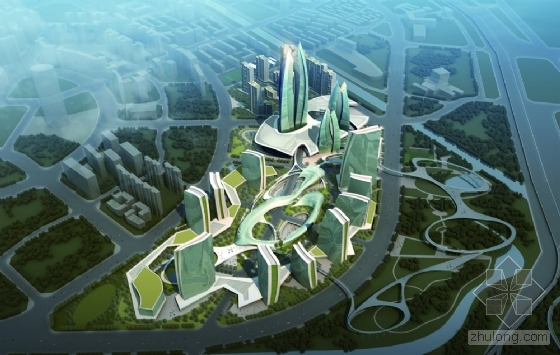

Two renderings of the development which will be built on Dawangjing village land, described here:
Beijing Dawangjing will build a 260 meter tall landmark building
2012-06-04
http://news.dichan.sina.com.cn/2012/06/05/504325.html
This reporter learned that the site of Dawangjing village, which formerly consisted of old and shabby low slung buildings and compounds, will change into a financial, business, and research and development hub, called “Gateway to the Capital First Business District.” In the future, the Dawangjing business district will be linked to the Zhongguan Village National Independent Creative Development District, and the businesses that headquarter here will receive overlapping privileges and benefits from the nation, Beijing City, and Chaoyang district.
During the period of the 12th 5 year plan (2011-2015), a 97.47 hectare site will be used to build high end office buildings, public housing, and residences, set off by a 260 meter tall landmark building. The Dawangjing International Science and Technology Business Development Zone will be adjacent to the Zhongguan Village Electronic Science and Technology Park. The Airport Expressway is just to the East, and the Zone is 15 minutes from the airport. Therefore it is called the “Gateway to the Capital.”
At present one third of the Wangjing population consists of long term foreign residents. 65% are persons of a high level of knowledge and recipients of high salaries. This new development zone will become the next Beijing CBD (Central Business District).

a rendering of the 260 meter tall building, to be finished in 2013

2012-05-28. Symposium announcing plans for the “Dawangjing International Technological and Business Innovation District.”
The life of Dawangjing villagers after becoming wealthy overnight
2010-05-19
http://news.xinhuanet.com/politics/2010-05/19/c_12116632.htm
The Assistant village party branch secretary said, when the villagers received their compensation funds [amounting to 1 million yuan or more, up to 10 million], very few of them had businesses to invest the money in. Therefore the vast majority bought additional residences, cars, or stocks.
The hottest topic of conversation was about the real estate values of residences
Villager Chen Xingquan’s family received six 2-bedroom residences in the designated replacement housing, Jingwang Jiayuan. Chen’s daughter-in-law said fortunately they chose to receive the residences, instead of taking the cash option. This year the price of residences in the area soared, and their six residential units are now worth double.
Those Dawangjing villagers who did take the option of increased cash in order to buy their own residence, and bought something right away, have done all right. They got in at the opportune moment, right before prices shot upward. Wang Lianzhong said, in nearby “Beiwu 40 Latitude” (residential development) and in Ganlancheng (“Oliver City,” another residential development) one saw many villagers buying properties. Pretty much everything in the area was bought up.
The villagers boldly spent their millions on properties, as though playing a game. Especially after the Wangjing 2010 first auction, buying flared up, and prices soared. Wang Lianzhong last year bought a residence at 10,900 yuan per square meter, and at present it has gone up to 20, 500. If he sold it now, his profit would be over 1 million yuan. Chen Xingquan’s in one stroke bought four residences, If he sold today, his profit would be 4 million.
However, other villagers did not fare so well. Those who waited for several months after receiving their compensation fund discovered that no matter how much money they had, it was not keeping pace with the speed with which real estate prices were going up. Now they are overcome with extreme regret [that they did not buy at the right moment].
Chen Xingquan said that his family had places to live, and that was something to depend on. They would not sell at this time.
Buying automobiles:
In one year, Dawangjing villagers bought 600 cars. There were some who said mockingly that every home had an Audi. Villagers said their standard for a good car was a Guangzhou Honda at 300,000 yuan. Anything lower than 150,000 yuan they would be embarrassed to buy. The most expensive car bought was a BMW X6 at over 1 million yuan.
Villager Wang Qiyan said that from 5th and 6th month of last year, an auto dealership in Dongxinzhuang started special promotions and sales aimed at Dawangjing villagers. It made a special reception room, with pictures on the wall of the village demolition, propaganda posters telling of the villagers’ new life in the future, stating that these new consumers will want to upgrade and update. A sales assistant was posted there, and if any customer was from Dawangjing, they were immediately ushered into this special reception room.
In the future the villages will change to urban workers, and receive assistance at getting jobs. But some mocked that there were families who previously had nothing, and now these had Audis. Wang Qiyan said this was an exaggeration, but it is possible some of these families now had a Guangzhou Honda.
Stocks
Villagers also used their compensation money to buy equity funds, but most of these suffered losses. Wang Lianzhong said, previously the villagers had all been small-scale individual farmers, who made money “eating tile” (renting to migrants). They did not have experience in managing money.
Once they received their compensation money, over 60% invested in equity funds. “During the demolition period, bank employees were on the scene, touting equity funds, treasury bonds, helping villagers fill out the application paperwork. Some invested 200,000, some as much as 1,000,000 yuan. ” At that time the stock market was at 3100 to 3300 points. Now it has dropped to 2056. Wang Lianzhong said, the bank fanned up enthusiasm, but the money is now stuck in funds that remain mired in values below the purchase price.
Buying goods
Wang Qiyan said, Previously I always looked at the price of things I was going to buy, Now I don’t even look at the price, whatever I like, I get it. When I go to the supermarket, whether it is everyday items or electric appliances, I just buy it.
With all this money the question was, how to spend it.
Wang Qiyan said these days, when villagers gather at a wedding or a funeral. the talk is all about what they have bought. Where before they spent a hundred, now they spend over a thousand on whatever they want. Many villagers now travel, and when they return, they gossip about where they went. Wang Qiyan has never ridden a train, but now she is preparing for his first trip abroad.
81 year old Liu Jingxing received some 4 million yuan in compensation money. One part she gave to her three daughters, one part as financial help to her relatives in her hometown, and the remainder for her old age. If she needed a new air-conditioner, she just got one. Her greatest expense is from gifts and courtesies to others. Previously Liu Jingxing didn’t dare attend social events, because she felt it was too much of a burden. But this year she has spent several tens of thousands yuan. Whenever one of the grandsons of the main family branch married, she gave a red envelope with five or six hundred yuan. When she met them again, another gift of 200 yuan.
Liu Jingxing previously did not dare go anywhere far from home, even to visit her daughter in Guilin. For one thing, she didn’t have the money, and for another, she couldn’t find anyone to look after her cherished two pet dogs. But now that she has money, everything is easy. They all go by airplane, she pays three thousand yuan to carry the dogs in storage. She doesn’t have to worry now that she can bring her dogs with her.
The oldest tree in the village, an old pagoda tree, has been kept and moved to a different place. This tree was a witness to several hundred years of Dawangjing village history. Wang Lianzhong said, this tree helps the villagers remember the village of Dawangjing.
Over the last year, Liu Jingxing has gradually become accustomed to living in a tall multi-story building. He said when he first moved here it was truly hard. For everything he needed money –the building maintenance fee, public sanitation fee, just for a spot to park your bicycle you needed to pay money. Then things were always disappearing. One time he parked his pedicab downstairs, and went up to get something, and when he came back, the bike-chain was gone.
His fellow villagers also had worries. After moving into a tall building, for some old people whose health was not good there were inconveniences. Some didn’t know how to read, and didn’t understand signs. When they went out they got lost, mistaking one place for another. Even the up and down in the elevator was confusing. Liu Jingxing said, although they were wealthy, the feeling of happiness never arrived.
The most difficult thing was not having friends, people to talk to, anywhere nearby. Liu Jingxing said, now when he goes for a walk, and sees someone from the village, even if before it wasn’t someone he used to talk to, now he feels a special connection, and happily talks about all sorts of trivial family matters. He sighed and said, one’s native place is hard to part from.
Reporters Li Liqiang, Ma Li.

