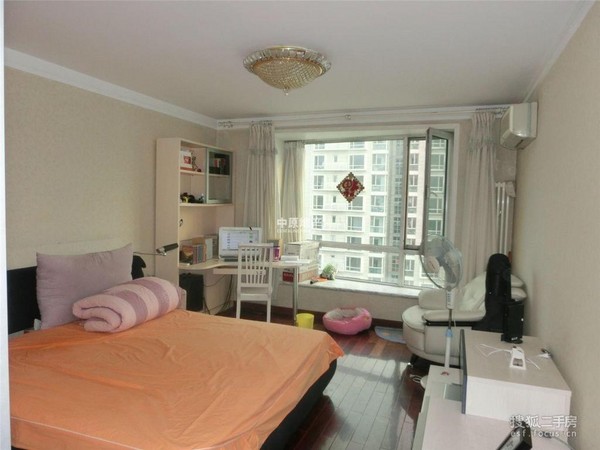
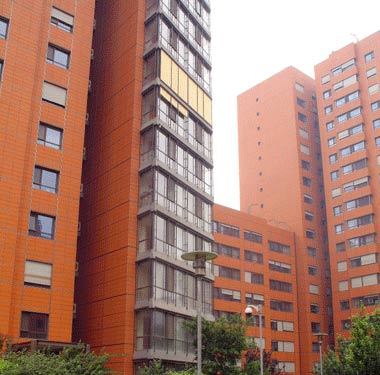
konjaku: continuing from previous post. Looking at each of the residential complexes in the Zhongguancun #3 Primary School zone, this information comes from real estate listings. All the residential units offered are previously owned. As the photos of interiors show, except for Wancheng Huafu, these are not luxury apartments, but because they are “school zone residences,” prices are quite high. First on this list, Fengniao Shequ (literally, “Hummingbird Community”) is the largest of the complexes, with 1200 residential units in all.
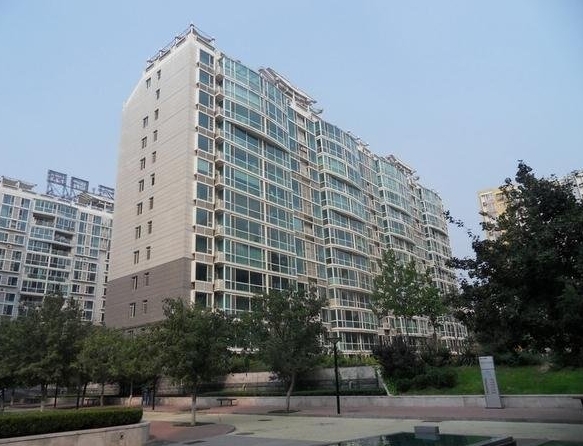
蜂鸟社区 Fengniao Shequ
completed 2004, 3 nine story buildings, 1 fourteen story building, 1 nineteen story building, 1 three story commercial building.
1200 units.
2014-04 one bedroom, 3,900,000 yuan, $638,858.
201407: two bedroom, 80 square meters, 5800000 yuan $940,792


康桥水郡 Kangqiao Shuijun,
completed 2004, 10 buildings, 500 units
2014-07: 4 bedroom, 197 square meters,13500000 yuan, $2,190,130
2014-07: 1 bedroom, 50 square meters, 4000000 yuan $648,927


光大水墨风景 Guangda Shuimo Fengjing
completed 2004, 524 units
2014-07: 2 bedroom, 9500000 yuan, $1,541,200
2014-07: 3 bedroom, 12600000 yuan $2,044,120


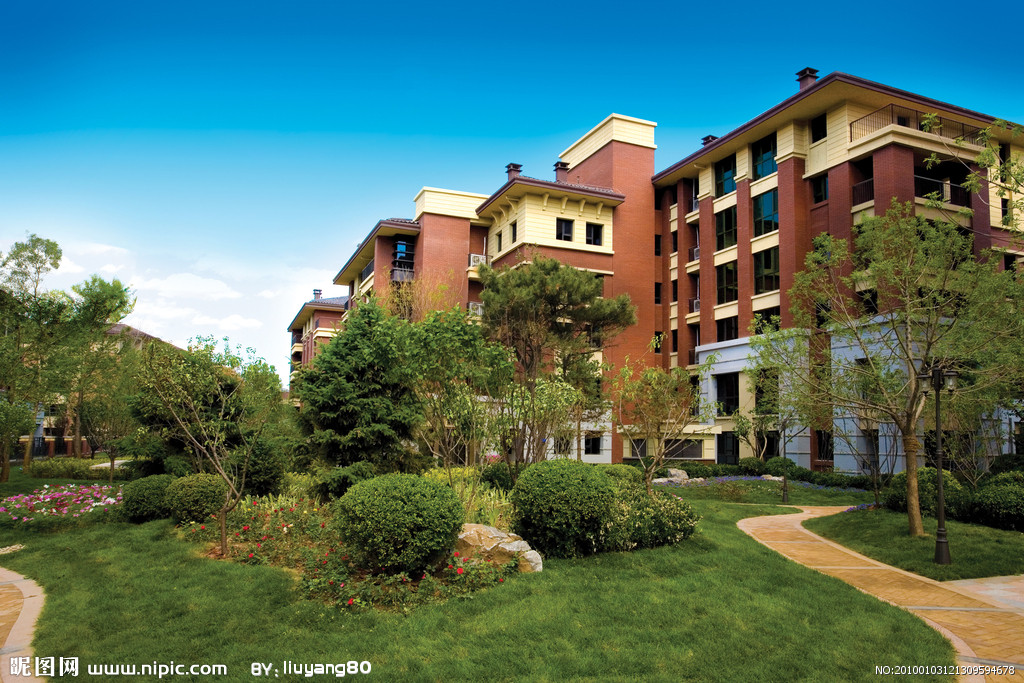
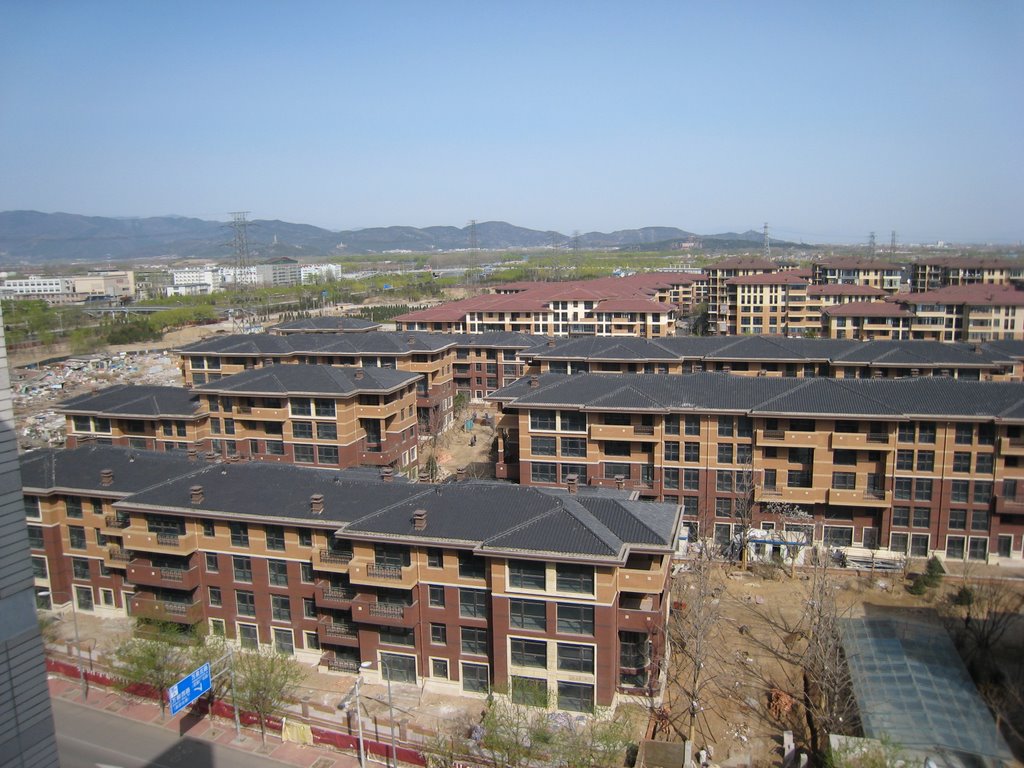
万城华府 Wancheng Huafu
2004,690 units. English name: “Vanland Mansions”
4 bedroom, 295 square meters, 27800000 yuan, $4,508,490

怡水园 Yishuiyuan
completed 2003, 4 buildings, 15 stories, 308 units
3 bedroom 186 sq m 11880000 yuan $1,926,650

碧水云天Bishui Yuntian
2004, 1440 units
3 bedroom,145 square meters, 11500000 yuan, $1,865,020
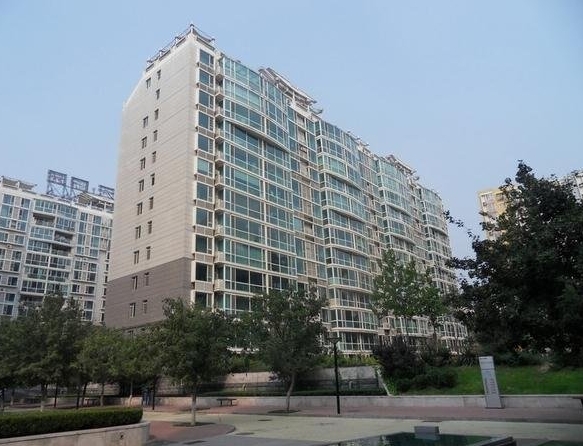
konjaku: in looking at the demolition of Liulangzhuang and the effect of that event on the surrounding area, a new topic appeared: the relation of priority elementary schools and residential complexes within the admissions zone of the priority school. The demolition of villages clears the way for the new, more affluent urban society, in which a major preoccupation is getting into the right elementary school. According to the rule, “every child does not have to take an entrance exam, and can attend a nearby school,” even elite priority schools must take children from the surrounding area, according to the zone drawn up by the Education Commission. As has been widely covered in the media, these so-called “school zone residences” are quite expensive compared to similar buildings not within the zone.
“All these residential complexes in Wanliu –Kangqiao Shuijun, Shuimo Fengjing, Fengshang Guoji, Bishui Yuntian, Wancheng Huafu– along with those still under construction, have a special characteristic: the residents can register in a Beijing priority school, the Zhongguancun Number 3 Elementary School. Prices for these school district residential buildings have reached the same level as in Hong Kong. They may go for 100,000 yuan per square meter.
Zhongguancun #3 Elementary School started building its new campus 2013-04, and it is scheduled to be completed next year. At the appointed time, the Number 3 elementary school and the Zhongguancun middle school will move to the new campus. And the C land parcel is just to the west of this new campus.”
https://konjaku.wordpress.com/2014/06/11/the-wanliu-c-land-parcel-and-the-priority-school/
Following up on that topic, here is the 2013 notice of admissions for Zhongguancun #3 Elementary School. This notice only covers the Wanliu area. The school zone also includes other parts of Zhongguancun, which are not included here. For Wanliu, instead of referring to streets, blocks, or numbered subdivisions, this notice simply lists nine large residential complexes as falling inside the school zone for compulsory admission.

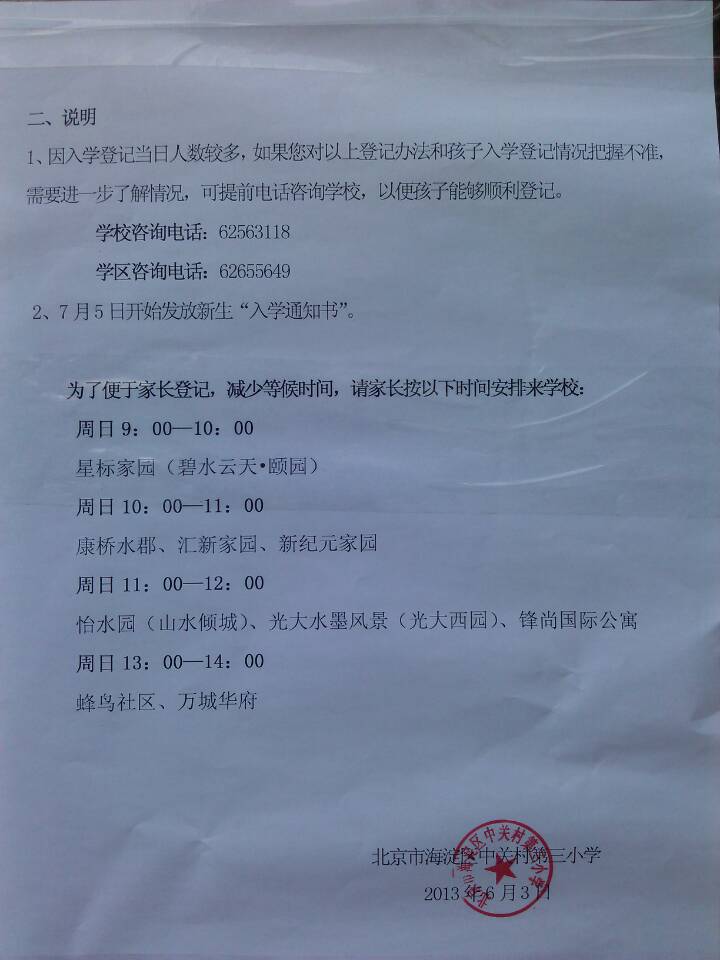
School Admissions Notice
According to the regulations of the Haidian District Education Commission, to ensure the right of children who has reached the appropriate age to receive a public (compulsory) education, the 2013 registration for first graders to enter school is about to begin, the relevant details are as stated below:
Registration:
Time: 06-16 (Sunday), 9:00-14:00
Wanliu campus of Zhongguancun #3 Elementary School
Area of compulsory education service:
Huixin Jiayuan 汇新家园
Xinjiyuan Jiayuan 新纪元家园
Fengshang Guoji Gongyu 锋尚国际公寓
Fengniao Shequ 蜂鸟社区
Kangqiao Shuijun 康桥水郡
Guangda Shuimo fengjing 光大水墨风景
Wancheng Huafu 万城华府
Yishuiyuan 怡水园
Bishui Yuntian (Xingbiao Jiayuan) 碧水云天(星标家园)
Registration procedure:
On the basis of the rule that every child does not have to take an entrance exam, and can go to a nearby school, the legal guardians of students who are 6 years old (born before 2007-08-31) and Haidian district registered permanent residents, shall appear at the aforementioned time and place, with the family household registry and a proof of residential address, to complete the registration.
Since on the day of registration it will be crowded, those who have questions about the process should call in advance to clarify matters.
On 07-05, the new student acceptance list will be released
In order to make it easier for household heads to register, and to reduce the waiting period, we ask that household heads please come according to the following schedule:
Sunday
9-10 Bishui Yuntian
10-11 Kangqiao Shuijun, Huixin Jiayuan, Xinjiyuan Jiayuan
11-12 Yishuiyuan, Guangda Shuimo Fengjing, Fengshang Guoji Gongyu
1-2 Fengniao Shequ, Wancheng Huafu
Beijing City Haidian district Zhongguancun #3 Elementary School
konjaku: looking at each of these residential complexes in turn, the following information comes from real estate listings. All the residential units offered are previously owned. As the photos of interiors show, except for Wancheng Huafu, these are not luxury apartments, but because they are “school zone residences,” prices are quite high.
Huixin jiayuan 汇新家园
completed 2001, 700 units.
2014-03: 1 bedroom, 61.12 square meters 4400000 yuan, $713,505.
2014-07: advertised as “the lowest price in the Zhongguancun #3 School zone,” 2 bedroom, 106 square meters, 6700000 yuan, $1,086,470,

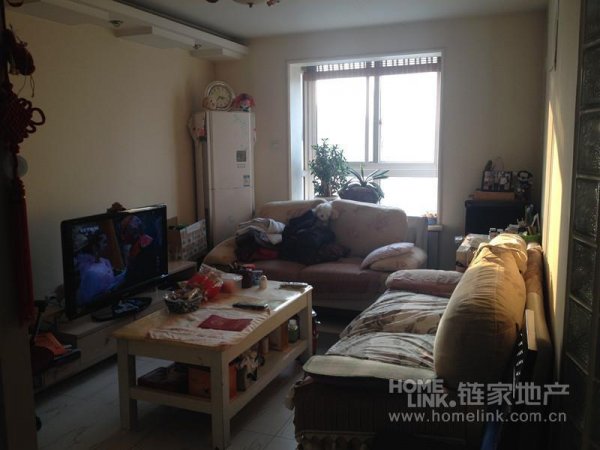

新纪元家园 Xinjiyuan jiayuan, completed 2002, 7 buildings, 555 units.
2014-04: 3 bedroom, 183.22 square meters,15800000 yuan, $2,563,260

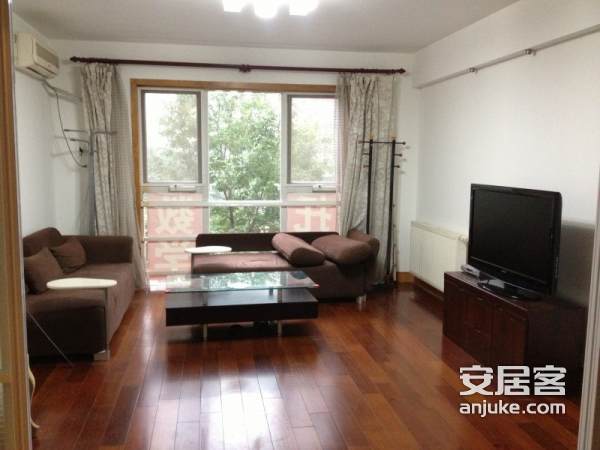
锋尚国际公寓 Fengshang guoji gongyu,
built 2002, 688 units, 18 buildings.
2014-04: 3 bedroom, 10800000 yuan, $1,752,100

konjaku: continued in next post
konjaku: continuing the topic of jointly sponsored students and priority schools. The jointly sponsored mechanism is to be abolished, as of 2014-04-18.
Beijing: the transition from pre-school to elementary, from elementary to middle school, announces a new policy –they will abolish jointly sponsored students, put a stop to memo students
http://learning.sohu.com/20140418/n398468850.shtml
The Beijing Education Commission spokesperson Li Yi at news conference on 04-18 announced that Beijing would begin the process of abolishing jointly sponsored students. The unrestrained growth over the last few decades of jointly sponsored students has aroused intense public attention. Are there secrets to “jointly sponsored students” that people do not know? Who exactly are those who receive the fare of this sumptuous “floating banquet?” Please read on…
Spokesperson Li Yi said that recently there have been postings on the net claiming that people are offering for sale spots on school admittance lists. He said the Education Commission is investigating the sources of these stories, including complaints that people have phoned in to their hotline. He asks that parents not listen to and believe rumors, and be fooled by false information.
Li Yi said the Education Commission has set up a new school admissions system, that registers all eligible students and collects information on them. Every step is subject to inspection and control, and if there were any mistakes or abnormalities they would be discovered in a timely fashion. It is not possible that persons could sell admission vacancies. Nor does the system allow persons to register in more than one zone –they can only register one time, at the place they actually live. The Commission will announce all the details of the registration system in the near future.
Li Yi announced that Beijing would begin the process of abolishing jointly sponsored students, therefore it will be impossible for a school to admit a student outside of the quota.
What is a jointly sponsored student?
The departments of the central ministries and commissions, and large scale state enterprises make sponsoring arrangements (‘jointly sponsor’ connections) with prestigious schools. The prestigious schools supply a quota of openings for students, and the sponsoring institutions exchange these for various types of benefits. Generally speaking, the schools that participate in these arrangements are Beijing’s top elementary and middle schools. For instance, the Ministry of Foreign Affairs began a relationship with the Beijing #2 Middle School in 1997. This is a demonstration [priority]school, the best middle school in Dongcheng. On the third month of this year, British soccer superstar David Beckham visited this school. In 2007, the (then) Foreign Affairs Minister Li Zhaoxing hosted a “Joint Sponsor Cup” ping pong match between the Ministry and the school, “thanking the #2 Middle School for its many years of settling the matter of school admissions for the children of Foreign Ministry staff.”

#2 Middle School gate
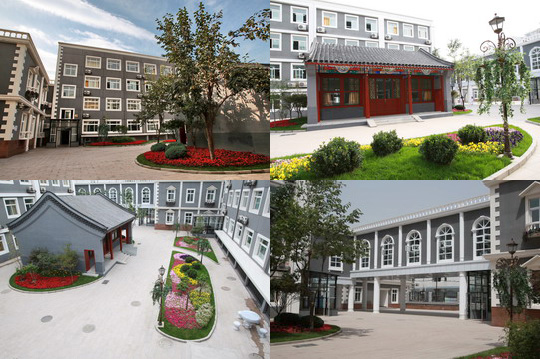
#2 Middle School campus

Beckham at #2 Middle School
According to data from the #2 Middle School, in the ten years up to 2007, graduates who were children of foreign ministry staff numbered over 1000. During these same years the material and financial resources of the Foreign Ministry have given the school a lot of support to enhance their programs.
The Foreign Ministry also has ties to another prestigious school, the Shijia Lane Elementary School. This school is widely recognized as a prestigious school with many sponsorship ties. Besides the Foreign Ministry, there is Central Petroleum, Central Petrochemicals, the Foreign Services Investment Company (FESCO), and many others.
Sponsorships are not limited to central government agencies and state monopoly companies. As specialists have said, it is very difficult to get a clear understanding of the total picture. Although the emphasis is on the larger state agencies, there are many others. For instance, an insider has revealed that sponsors of #4 Middle School are Beijing University Hospital, and the General Staff Headquarters. Experimental #2 Elementary School has Xinhua News Agency and China Bank as sponsors, Huangchenggen Elementary School has Beijing University Hospital, and the People’s Liberation Army Publishing House.
konjaku: Li Zhaoxing was Foreign Minister from 2003 to 2007. Before that, he was Ambassador to the United States, from 1998 to 2003.
Uncovering the secrets behind jointly sponsored students going from elementary to junior middle school
2012-08-30
http://edu.sina.com.cn/zxx/2012-08-30/1600353869.shtml
Ninth month, the new school year is about to start, 12 year old Wang Hao (alias) was getting ready to go to his new school, a city level demonstration school [demonstration school is a euphemism for priority school]
Unlike the majority of children his age, he did not have to suffer the humiliation of the Math Olympiad, nor was he dragged around by a parent to take entrance exams at prestigious schools. His transition to middle school was unusually tranquil.
The reason Wang Hao had this good fortune, was that his father’s company could rely on the so-called jointly sponsored policy. The government departments and state run enterprises, to satisfy their employees and staff in regard to their children give them financial or material support, setting up a “jointly sponsored” connection with notable schools. Along with the financial support, their children do not need to take entrance exams to get in.
In Beijing, for the past 20 years, the jointly sponsored trend has been getting worse and worse. Every year more people, through secret channels, get their children into the longed for schools that everyone looks up to.
The jointly sponsored schools furnish degrees to their students, the jointly sponsoring companies furnish convenience, and the jointly sponsored students are the product of this benefit swap.
In order for his son Wang Hao to enter a favorable school, the father Wang Zhenan (alias) began his preparations two years before.
Wang Zhen’an, a little past 40 this year, after graduating from college was allotted to a top-listed [assets over 1 million yuan] state run company, and after 10 years in various places in the company, he became the section chief of one business office. His unit is in Xicheng district close to Yuetan, in the neighborhood of Chang’an Road where the central ministries and commissions are concentrated.
Two years ago, he heard that his company had jointly sponsored schools, and he went to the trade union cadre to ask about it. The trade union head cadre told him that their company jointly sponsored four schools in the vicinity. Two of these were priority schools, and the other two were demonstration schools. The quota of jointly sponsored students for each school was not the same. The cadre recommended that Wang Zhen’an get to understand the situation of each school in advance, along with his child’s aspiration to take the entrance exam, and prepare accordingly.
“You know the education quality of Xixheng district. There are four prestigious schools here, moistened with the rain of benefits from our company.” Wang Zhen’an smiled.
At the beginning of last year, he began preparations in earnest. He gathered information through different channels about the schools, and sought the advice of fellow workers who had previously sent their children to these schools, and after going back and forth over what he learned, he decided, “the jointly sponsored schools are not that easy.”
A female co-worker had the experience of being shut out of the company affiliated jointly sponsored schools. After filling out and submitting the required forms, some time passed. She suddenly got a call from a school staff member, telling her to bring her child on Sunday to the company meeting room, to attend a meeting explaining about the school.
On Sunday she came to the meeting room, only to find out that instead of explanations they were holding an exam. The school sent specialized teachers to administer a printed test, a surprise exam testing the children’s academic progress.
“We were not prepared, the exam questions were difficult, my child did not feel he was able to do his best,” she said. In the end, the exam results were not made public. However, she did not have to wait long before she got a phone call from the company trade union cadre, saying her child did not pass the exam. “At that time, I was crazed with anxiety. It was the end of June, my chid had finished the school term and where he would go in the fall was not yet settled.” Afterwards she used other connections to get her child into a priority junior middle school in another district.
To avoid a recurrence of this “tragedy,” Wang Zhen’an sought out the vice-principal of the school that he was most interested in, thinking that he would ask him whether there would be a surprise exam or not this year. “It turned out that our company had jointly sponsored the school for many years, therefore the vice-principal received me very politely. In the end, he couldn’t tell me whether they would test or not, but he asked about my present situation in the company, what position I was in, and he filed a registration for me.
This year second month, the company trade union cadre formally gave him the applications for school entrance exams. Because he was a mid-level manager, and he was also a reserve cadre [cadres recruited by the Party for potential leadership positions], Wang Zhen’an was given preferential treatment. He was allowed to fill out forms for two schools. “There is actually a stipulation that each company person can only apply to one school (for the entrance exam), but they let me apply for two,” Wang Zhen’an said with satisfaction.
After applying, Wang Zhen’an began what seemed like an endless wait. Many times he thought about calling up the trade union cadre for news, but he kept himself in check, knowing that this sort of thing could not be rushed. At the end of June, he finally had a visit from the trade union cadre informing him that his first choice, the demonstration school, would accept Wang Hao, if he paid the jointly sponsored fee of 30,000 yuan(4,866 dollars).
“Once I paid the money, I felt as if a heavy weight had fallen off my chest.”Wang Zhen’an said with deep feeling. The trade union cadre told him, the reason it had gone so smoothly, was connected to the fact that before this there was a period of two years during which the company had not recruited new college graduates. At that time there were less young employees marrying and having children, therefore the peak of employees with children that were now ready for elementary school had passed. For this reason, this year Wang Hao faced few competitors for the available spots.
Without a doubt Wang Hao was fortunate. He is about to begin at the city level demonstration school. This year the school had 7000 applicants, only admitting 400. It is no exaggeration to say this was like using a powerful force to push past and cross a bridge of a single plank.
“His company is a major joint sponsor. The children of those in powerful government or state related offices are not required to take entrance exams or anything like that. They have a 100% guarantee of making the quota, this is called a ‘small sponsorship,’” a person in the know said. This is open to those in the General office of the Communist party, General office of the state council, ministries and commissions under the State Council, the four headquarters of the people’s liberation army, along with the monopoly companies of state run enterprises, like china oil, China petrochemicals, etc., or those of great social clout, or those with big purses. They have relationships with jointly sponsored schools, which take every one of their children, unrestricted by any quota.
The schools which participate in joint sponsorship are Beijing’s best elementary and middle schools. A person in the know divulged that, at present, these include the Beijing Experimental #2 Elementary, Zhongguancun #3 Elementary, Yumin Elementary, Fuxue Elementary School, the People’s University affiliated Middle School, #4, #2, #8 middle schools, Normal University affiliated middle school, Experimental middle school etc.
Of course, these schools use the money they receive from joint sponsorships to enhance their facilities and give their teachers better material benefits. For instance, a nationally well known middle school in the Haidian district every summer conducts a training session for teachers, and another one for school principals, the participants coming from all over the country, numbering 500-600 people. The reason this site was chosen, is the a company which jointly sponsors the school pays for everything.
Many education specialists believe this kind of arrangement is beneficial for schools in general. The jointly sponsored student is just a product of mutual benefit: financial support from one side leading to a degree given by respected school on the other side.
A floating banquet
“When I was on the Education Commission, “jointly sponsored” did exist, but these days it has become a frenzy, I feel over the last few years it has gotten worse and worse,” said Li Jiandong (alias). During the 90s he was a deputy director of a certain Education Commission in a Beijing district, and he experienced the whole process of development of “jointly sponsored” from isolated cases into a system. According to him, already in the 80s there were a few “memo students.” Important leaders wrote memos to the directors of priority schools, requesting special consideration for a few students. “These cases were not that many, just a few very high up leaders writing memos for their grandsons or granddaughters,” Li Jiandong recalled. These were the third generation children of the leadership cadres, they were called the “grandchildren class.”
Later, the leadership cadres’ memo children changed to their secretary’s children, the “grandchildren class” changed to the “secretaries’s class.” Then again, as various government departments developed joint sponsorship connections with schools, the “secretaries’s class” expanded to the “government employee’s class.” The arrangement now extended to the children of all government employees, but in particular to children of mid-level cadres. After the 90s ended, joint sponsorship was systematized, but the word “joint sponsorship” [or “jointly sponsored”] did not appear for another ten years, according to Li Jiandong.
According to a person in the know, joint sponsorship has become so ubiquitous, that it has moved from government agencies to every type of company, including foreign companies, real estate, small and medium size businesses, and even to the local tax office, police sub-station and fire station near the school.
So each year how many students enter priority schools under joint sponsorship? Neither Beijing city or the Education Commission keep any statistics, but the personal estimate of education commission vice-provost Wen Feng, based on inquiring at various schools, is 10% of the student population.
In a report by the 21st Century Education Institute entitled, “ How do we bring into control the fever of getting into select junior middle schools in Beijing?” we find this admission, “Taking Beijing #8 middle school as an example, the percentage of jointly sponsored students is 17%. In 2011 the school admitted 10 classes, with 40 in each class, for a total of 400. Among those, the number of jointly sponsored students was 70. This year more than 400 jointly sponsored students will take the admissions exam, and the school will admit only those who perform well on the exam.”
The Beijing city policy for admission to junior middle school consists of three types: a computerized lottery, reserving places for excellent students based on their performances in tests and competitions, and joint sponsorship. Li Jiandong believes that former two are every year getting smaller, while joint sponsorship is expanding.
Wen Feng knows of a household head who held office in a residential district, but had a relative who was a mid-level cadre in the central government. The household head paid his relative to write in the name of his child in the roster of jointly sponsored students. For this he paid the relative a sum of money, which is called the “seat-seizing cost.” On the list of jointly sponsored students of some priority schools, many of the names on the list are actually those who got in by the “seat-seizing cost.” Those in state enterprises and the central government sometimes offer places on these lists as gifts to their clients or officials they have a connection with, as a type of public relations.
Since 2010, the Beijing city education commission has demanded that each district strictly regulate the number of sponsoring institutions and the number of jointly sponsored students, that it certify the institutions, oversee the student rosters, and restrain the “false sponsorships.” But in actual practice, “not only do the institutions trade sponsorships, but the schools also fabricate them,” said an insider. This is because jointly sponsored students are not restricted by academic record, registered permanent residency, or school zone, and the schools can freely choose whichever ones they want to admit.
“The basket of joint sponsorships is very wide and flexible, you can put anything you want into it,” said Wen Feng. It exists as a kind of floating privilege, which people in the social stratum of Wang Zhen’an can avail themselves of, and get admission to the grand banquet of a top-class education.
However, these days Wang Zhen’an has another worry. He has heard the school his son Wang Hao will attend, divides incoming students into several differing classes. There is the experimental class, the regular class, and the jointly sponsored class. After asking all around, he heard that the experimental class is the one with the best teacher, and he wants his son to go to that class.
共建生 jointly sponsored students
奥数 Math Olympiad
“牛校” prestigious schools, schools in demand for their track record in training students to succeed at exams
西城区 Xicheng district
工会负责人 trade union cadre
小升初 from elementary to junior middle school
小共建 “small sponsorship”
北京实验二小 Beijing Experimental #2 Elementary
中关村三小 Zhongguancun #3 Elementary
育民小学 Yumin Elementary
府学小学 Fuxue Elementary School
初中则有人大附 People’s University affiliated Middle School
师大二附中 Normal University affiliated middle school
实验中学 Experimental middle school
流动的“盛宴” floating banquet
条子生 memo students
孙子班 grandchildren class
秘书班 secretaries’s class
公务员(微博)班 government employee’s class
占位费 seat-seizing cost
konjaku: continuing an examination of school district residences and priority schools. This article touches upon “jointly sponsored students” and “memo students,” which will be the subject of upcoming posts.
Beijing: going from pre-school to elementary school, the boundaries of school zones will be made more clear
http://kid.baby.sina.com.cn/2013-07-02/100850386.html
This year some 175,000 children will enter elementary school in Beijing, an increase from last year of 26,400. This situation is expected to continue until 2017. A conservative estimate is that every year 180,000 to 200,000 children will apply to elementary schools.
As households experience the stress of the transition to elementary school, every year the same problem arises, and a parent poses this question: “Since the national rule states ‘without needing an entrance exam, one can enter a nearby school,’ why is it that my child cannot get into the school that is right next to our house gate?” The answer, from an official in the appropriate department is, every year they recalculate and fine-tune the school zones, as new residential buildings spring up, based on the capacity of each school in the upcoming year. Because of all the new housing construction, and the fact that schools have merged in the past, the elementary schools are strained to the limit.
Homelink (real estate service) is managing 1000 “school district residences.” According to their data, in the Chengliu district in 2012 the difference in price between school district residences and non-school district residences was 6.8%. From the beginning of 2013 up to the present, the price difference has jumped to 11.2% and is steadily increasing.
As the media has reported, the residential complex Shangdi Dongli is a “school district residence” for the Shangdi Shiyan [experimental] elementary school, on a straight track on to the Beijing 101 middle school, a priority school. Because of this, at present the unit price in this complex has passed 60,000 yuan per square meter [9,910 USD]. In 1995 one could buy a 58 square meter residence for 60,000 yuan, today it would cost 3,700,000 yuan [611,149 USD].
According to the local peoples’ education committee vice-director Wen Feng, school district residences are concentrated in Dongcheng, Xicheng, and Haidian, as educational resources are concentrated in these three areas. The well-known elementary schools in these districts have too many applicants because of families choosing to buy residences there for the purpose of entering their children into those schools. Besides students that are in the school zone, these schools admit children who have preferential status:“jointly sponsored students”[children of government officials or employees of state run institutions and businesses], and “memo” students [children who enter a school based on a written memo by a person of authority or influence, usually their own parent]. Those schools, in order to lessen the pool of eligible students, make a requirement that the family must have have their household registry is the school district area for at least three years [eliminating those who have moved there only recently]. Well known schools such as Fuxue, Shijia, Beijing Experimental #2, Huang cheng gen, Zhonggu Youyi, Haidian Experimental, Zhongguancin #1 Elementary, etc., all require between three to five years of household registry for a family in their respective school zones. In years when demand is high, they extend the requirement of residency even further.
On 06-25, 2:30 in the afternoon, at the Shunchengjie Number 1 Elementary School, parents are waiting to take home their children. Mrs. Wang has come to pick up her grandchild, a second grader. Their family lives on Xicheng Zhongli lane, which in the plan is zoned for a different elementary school. But because Shunchengjie Number 1 Elementary School students are eligible for a priority junior middle school, they chose this school, which is also nearby, a 10 minute round trip from their house. Because their house straddles two school zones, they were able to make their choice, while paying a school fee.
That was last year. This year [2013] a Xicheng district Education Commission official said, because of the increasing number of students, schools will no longer be able to admit those from families who straddle school zones, or who manage to move between zones. To the best of their ability, schools in Xicheng will not admit any students not within the appropriate school zone. The district will employ an information gathering system to control the lack of order along the school zone boundaries. Many schools are also publishing clear-cut stipulations as to the number of years of residence in a zone necessary to qualify for admission.
幼升小 pre-school to elementary school
免试就近(入学)without needing an entrance exam, one can enter a nearby school
链家地产 Homelink
城六区Chengliu district
学区房 school district residence
上地东里 Shangdi dongli
上地实验(小学) Shangdi Shiyan experimental elementary school
东城 Dongcheng
西城 Xicheng
海淀 Haidian
府学(小学)Fuxue elementary school
史家小学 Shijia elementary school
北京实验二小 Beijing Experimental #2,
黄城根(小学) Huang cheng gen
中古友谊 (小学) Zhonggu Youyi La Escuela Primaria Amistad China-Cuba, (English) China-Cuba Friendship Primary School
海淀实验(小学) Haidian Experimental Elementary
中关村一小 Zhongguancun #1 Elementary
顺城街第一小学 Shunchengjie Number 1 Elementary School
konjaku: I accessed this article while following up on the demolition of Liulangzhuang village. While the “expense” of demolishing Liulangzhuang seems to have repercussions on the surrounding urban fabric, this article led me to other issues I would like to investigate in the next series of posts. What are the effects of “school district residences” and priority schools” in the larger society? (Priority school is my translation for 重点学校, usually translated as “key schools.”) What these are will become clear in the notes following the translation of this article.
For the moment, I shift the focus from displaced villagers to already established urban residents and their struggles: specifically, the attempt to successfully place their children in the best schools. For these families, the transition from pre-school to elementary school is an important milestone. Ultimately, those with better financial resources and influence have advantages in getting into the school of their choice.
Next year in Wanliu there will probably emerge a new “land king,” but overburdened school districts cause people on the periphery to feel dissatisfied
http://house.people.com.cn/n/2013/1116/c164220-23562449.html
Source: Huaxia Times, 2013-11-16
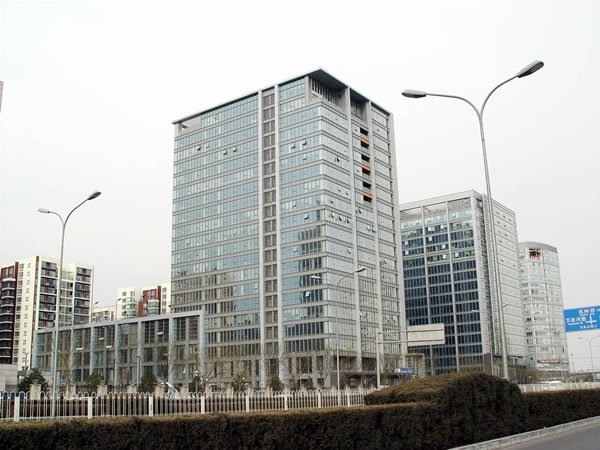

People are jealous of those who have the money to buy a residence in the best school district, starting with elementary school, no matter the price, but who knows that these wealthy purchasers are also putting pressure on school districts?
“School zone residences” are concentrated in the Wanliu area. At present the “C” land parcel on the west side of the Zhongguancun Number 3 elementary school new campus, originally slated to be part of the green zone, has had its destiny changed by a paper plan, and is now transformed into construction of high rise residences.
A number of local residents have expressed their dissatisfaction to this newspaper. Of 1400 households in the nearby Bishuiyuntian residences, 1331 expressed opposition. The reason is that Wanliu already has a high population density. The elementary school grades are overcrowded, there is a lack of kindergardens. If the number of residences increase, “We have to compete with those people to be early birds in getting into the school classes under the quota.” Even so, the opposition of local residents won’t stop the construction.
A reporter of this newspaper inquired by phone as to how the plan changed [from green zone to buildings], asking to see required documents, such as “Solicitation of Opinions on the Project’s Merit,” but no one ever answered the phone, and to this date no Haidian government department has given a response.
One item in the “land king” stakes is the Zhonghe Group’s “Wanliu Academy” [a luxury residential real estate development], which has not yet gone on the market. Perhaps a new land king will emerge in the new year.
A Beijing real estate analyst told this reporter, that land available in Wanliu for development will decrease every year going forward. Already this year, no new parcels have been put on the market. There is one last parcel of land designated for residences, and that parcel will probably make the new land king. The last parcel of such land sold at 4,4200 yuan per square meter. In the future, the anticipated price could go as high as 150,000 yuan per square meter.
From this, we can well imagine what the cost of the C land parcel was. The C parcel, in Haidian district, the south part of Wanliu, is close to the Bagou subway stop [#10 line], near Wancheng Huafu, and is 7000 square meters.
As for why the plan changed to allow the C parcel to be rezoned for residential use, the reason the Haidian district government gives, is that Haidian town had a large outlay of funds that went for the demolition of Liulangzhuang village, and to make up that outlay and fill in the deficit in their accounts, they needed to raise funds by selling the C parcel[to developers].
This reporter investigated the pertinent materials and found that in Liulangzhuang there was a compensation ratio of 1:1, and in addition a one time monetary payment. According to reports, the actual compensation received was over 25,000 yuan per square meter. Because the village site was strictly allocated to becoming a green zone, as part of the overall plan to preserve the environment around the Summer Palace, the Haidian government could not reap any profits from the village land by selling it, therefore they sold the C parcel instead. However, local residents are not buying this explanation. One resident told this reporter that even with the profits from the C parcel land sale, there are still insufficient funds to cover the expenses of the Liulangzhuang relocation.
If the one last parcel of land designated for residences in Wanliu is auctioned off in 2014, even though the scale of construction allowed will not be large, the price for the land will still be sky high. If it reaches 50,000 yuan per square meter, the Haidian government will realize a profit of 1 billion yuan.
Even if the total building size is under 20,000 square meters, still, just as in the case of the “Hummingbird Community” residence project when it was first announced, it will probably meet with strong opposition from nearby residents. “At present in Wanliu there is no place to park cars. If any empty lot is available to become a parking lot, the Haidian government builds a building on it instead.” That is what local residents say.
The same residents say, the population of Wanliu has already reached the saturation point. Traffic, parking, kindergardens etc., are all strained to meet demand, and building another high rise building on the C parcel aggravates the situation further. At this point, the increased population density will bring about a loss of order.
As many as 4000 households in local residence complexes Kangqiao Shuijun, Bishui Yuntian, and Wancheng Huafu have submitted objections. They request the government to revoke changing the C parcel land plan, and to preserve the original plan.
All these residential complexes in Wanliu –Kangqiao Shuijun, Shuimo Fengjing, Fengshang Guoji, Bishui Yuntian, Wancheng Huafu– along with those still under construction, have a special characteristic: the residents can register in a Beijing priority school, the Zhongguancun Number 3 Elementary School. Prices for these school district residential buildings have reached the same level as in Hong Kong. They may go for 100,000 yuan per square meter.
Zhongguancun #3 Elementary School started building its new campus 2013-04, and it is scheduled to be completed next year. At the appointed time, the Number 3 elementary school and the Zhongguancun middle school will move to the new campus. And the C land parcel is just to the west of this new campus.
At present the Number 3 elementary school has 10 sections for every grade, and in each section there are 40 children or more. The school plans next year to take 200 students from inside its zone, and 260 students from outside the zone, as long as those from outside pay a sky-high tuition.
When the C parcel changed to a high density residential community, local residents expressed apprehension, since it falls inside the zone for the Number 3 elementary school. “If the Number 3 school is over-enrolled, the educational quality will suffer.” If they build high rise buildings all around the school, it will have a severe effect on the educational environment.
Editors Deng Yulu, Sun Hongli
Wanliu 万柳
Bishuiyuntian 碧水云天
Zhonghe Group 中赫集团
Wanliu Academy 万柳书院
Hummingbird Community 蜂鸟社区
Kangqiao Shuijun,康桥水郡
Wancheng Huafu万城华府
Shuimo Fengjing,水墨风景
Fengshang Guoji 锋尚国际
land king:
http://www.baike.com/wiki/地王
In the world of public opinion, “land king” is a derogatory term for the process in which a real estate developer beats out all competition by laying down a huge bid to win a desirable parcel of land that has been transferred to state ownership and put up for auction. [“Land king” in practice refers to a plot of land that sold above previous records in the area: there can be a Shanghai land king, a Guangzhou land king, etc.]The government uses the method of inviting bids for land designated for residential use, and when the land ia auctioned off for a sky high price, the net cost of this high price is inevitably passed on in the purchase price of the completed houses or apartments. The government has a monopoly over land, and acts as an oligarch in supplying the market, fostering an irrational competitiveness in those bidders who want the land. Therefore, in regard to the “land king” the public is apprehensive about housing prices repeatedly hitting new highs.
“land kings”:
Source Sankei News(Japan)
http://sankei.jp.msn.com/world/news/130927/chn13092711190003-n1.htm
From the beginning of this month [2013-09] “land kings” have appeared one after another in various localities, becoming the topic of conversation. Why is this phenomenon occurring now?
The well-known economist Ma Guangyuan, a commentator on Central T.V., analyzed it this way in his blog. ‘The recent appearance of land kings arises out of collaboration between regional governments and real estate developers. Local governments are in debt –the combined amount for the entire country is more than 2 billion yuan. To raise funds to pay off their debt, they put large lots of land up for sale. For their part, the developers, by lavishly playing up the drama of the next, newest, land king, create the expectation that one must “buy now, because if you wait, real estate prices will only go higher,” getting people to rush to purchase.
The real estate developers risk everything, all their assets, in a bid to be land king, but it is the ordinary consumer who in the end makes the gamble worthwhile by paying a high price for residential properties. In this feverish atmosphere, there is a danger. As of 2013-09-11, commercial banks in Beijing, Shanghai, Guangzhou and Shenzhen are suspending their residential loan operations. Amid a mood of financial instability, the banks are protecting themselves by withdrawing from what they see as their most risky endeavors. If consumers can no longer get loans to pay the high prices for residences, the land king bubble will burst.
School district residences:
http://www.baike.com/wiki/学区房
School District Residence, as the words imply, is residential property situated near well-known schools. According to the stipulation for compulsory education, every student of the proper age must be admitted to be a school close to where they live, without having to take an exam. On the one hand, the school district residence is a product derived from the real estate market, on the other, a unique phenomenon arising from the conditions of the current educational system. In the face of increasingly fierce competition, households do not wish their child to lose out at the educational starting line, and do not hesitate to spend huge amounts of amount to acquire a residence in the zone of a preferable elementary school. The school district residence is never cheap, and those near desirable schools may be 20% higher in price than comparable properties elsewhere.
Zhongguancun Number 3 elementary school
Zhongguancun Number 3 elementary school was founded in 1981. It is at the very center of the Zhongguancun high tech district, the area with the highest concentration in China of high technology development and human talent. Close to 40% of graduates of the Chinese Academy of Sciences and the Chinese Academy of Engineering work in one of the 39 colleges and universities, or one of the 206 research institutes located here. There are 67 nationally established laboratories, and 55 national engineering centers. This area, particularly favored by nature, imbued with a rich atmosphere of learning, forms a superior environment in which to run a school. Bearing the dense, thick cultural essence of learning, carrying forward the transcendent spirit of accumulated scholastic achievement over time: these are the core motive forces of the school.
In the space of 30 years, this school has developed rapidly through advanced concepts based on reform and innovation. Our highly qualified teachers have pursued the best teaching methods, winning praise from all circles of society, and the trust of families. It now has more students than any other elementary school in Beijing. There are two campuses, one in Zhongguancun, one in Wanliu. The Zhongguancun campus is 8666 square meters, total building space is 16000 square meters. There are 64 classes, 3113 students, with 178 people on the teaching and administrative staff. The Wanliu campus is 16000 square meters, with 19500 square meters of building space, 65 classes, 2921 students, 171 teaching and administrative staff. A new campus, based on the 3.0 design concept [konjaku: unknown], is being built in Wanliu, scheduled to be completed in autumn 2014.
Below is a rendering of the new campus, from the website of the American architectural firm which designed it.
See: http://www.tkwa.com/blog/tkwa-selected-to-design-elementary-school-in-china/

Priority Schools:
konjaku: This is an excerpt from a longer article, omitting the history of priority schools prior to the Cultural Revolution. In summary, the article states that the priority school system was first established in 1962, although from 1952 there were “cadres’ schools” which were its antecedent. During the Cultural Revolution priority schools were abolished, but were started again in 1978, at the instigation of Deng Xiaoping.
http://news.qq.com/zt2011/ghgcd/49.htm
1978, the education bureau reestablished the priority school system.The trial project was to set up a national system of [better] schools organized as a small pyramid, with funds, teachers, students, organizational methods, etc., funneled upward to the priority school. This formation was to be repeated on the national, provincial, township and county levels, forming multiple layers.
The majority of priority schools are in the cities.A 1982 survey found that 70% were in cities, 28% were in county towns, and 2% were in rural areas.
From 1989-1996, the priority middle schools established by the government benefited from increased supplementary funding, for things like athletic fields and sports facilities. In general, a priority middle school’s funding for extra-curricular facilities is nine times that of ordinary schools.
There is a lingering question as to whether priority schools are actually institutions of privilege for the few. There are facts to answer this question in the affirmative. The priority school, besides other funding, requires entering families to pay the “jointly sponsored cost” [entrance fee/tuition for a “public” school]. The amount of financial support paid by the government and business enterprises is not inconsiderable, and in exchange the schools set aside spaces for certain students. For those with power and influence the cost for the school is taken from public funds, the head of the household does not have to put up any money, the school is well taken care of. For example, in 1996, in a junior class of a priority middle school in Fuzhou, 28 students, 56% of the class, were the children of science and technology [county level] cadres or above.
Besides this, from 2003 to 2004 the scholar Yang Dongping and others conducted a survey in Beijing, Suzhou, Ningbo, and 10 other cities, and found that the children of those in the upper social stratum (high and middle rank officials, science and technology personnel) occupied 60% of priority middle schools. For those of the lower social strata, results were exactly the opposite: their children occupied 60% of ordinary, non-priority schools. If one compares the relative proportion of these two groups in society, the opportunity of the upper strata children to enter priority schools is that much greater.
In 2006, the “Compulsory Education Law” prohibited priority schools, but the law had minuscule effect. The law stated clearly that there must not be priority schools, or tracked classes for gifted students. Although the law was clear, and the education administration specifically demanded it to be followed, many localities in their specific operations disguised what they were doing. They set up “example schools,” “experimental schools” “special aptitude classes,” etc. It was all a fraud. Priority schools, or priority classes, were “that which lost its name, but still exists.”
China Youth Foundation Secretary-General Tu Meng revealed in 2006 that according to the Foundation’s survey, more than 60% of students from rural areas do not go on to high school or college after the compulsory education period ends [at completion of middle school], but either do agricultural work in their home area or go to cities to take temporary jobs. Even the very best students from rural areas have little chance of getting into good schools after graduating middle schools. As the high schools in rural areas are inferior, for many getting a temporary job is actually a better option.
Reference: Education in China: Ideal and Reality, by Yang Dongping, Beijing University Press 2006. 《中国教育公平的理想与现实》,杨东平,北京大学出版社,2006年
The priority school system is irrational. It takes education which should be geared to the needs of all citizens, and divides it into ranks and classes. Educational resources are funneled into priority schools, while ordinary schools face severe shortages. This is taking the money of all taxpayers and using it to create an elite education for the few.
konjaku: the site of the demolished Liulangzhuang is supposed to become part of the green zone. Apparently there are still a few hold-outs at the site, and construction of the park to replace the village has not started.
At the Liulangzhuang village site, running tap water has been flowing for two years with no one paying attention–clear fresh water gushing out
http://www.takefoto.cn/viewnews-75295.html
On 05-01, Beijing put into effect the new water pricing system, causing many ordinary citizens to newly experience in a direct way the value of water. As the media reported yesterday, the North China plain is already the world’s largest sinking water table. The area in which the ground is sinking or buckling because of excess water consumption is 8800 square kilometers, twelve times the area of Beijing city.
For the last few days, a number of citizens have phoned the hot line of this newspaper, saying that in the debris of the demolished village Liulangzhuang, clear pure water has been running out of the ground for more than two years, causing people to agonize over it.


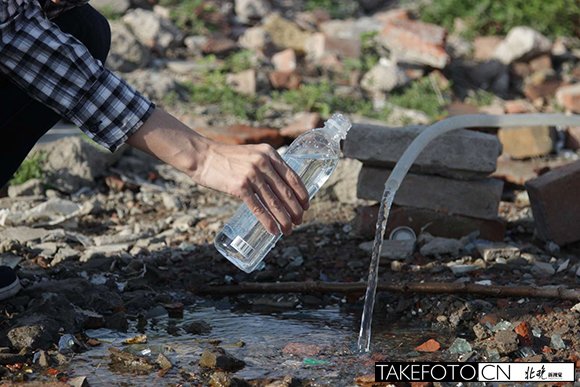
A murmuring stream in the thick grass
Haidian district Liulangzhuang is a village near the Summer Palace. Legend has it that the Empress Dowager Ci Xi stopped off at a teahouse here. According to residents nearby, Liulangzhuang used to be one of the largest villagers around here. At one time there were 50 or 60,000 people living in it, it was a small “city that never sleeps.” In 2011 the process of relocation began, and the residents gradually moved out, leaving behind a heap of rubble. In the midst of this rubble, there were tap water pipes which ruptured and were never repaired. For more than two years a great quantity of clear water has gushed out.
Yesterday afternoon, this reporter went along Haidian Park Road, entering the northern part of the village. Int his area there is no sign of any people, but the ground is filled with debris. and foraging stray dogs. Going west about 500 meters through the piles of rubble, I came upon a small stream. The water was no longer flowing, and its surface was covered with green moss. Even so, going near to a patch of thick grass, I heard the bubbling of water. Where was this sound coming from? I circled around to the other side, and found it emerged from under a slab, at the bottom of a debris pile. Prying up the slab, there was a pile of bricks and sowbugs. Taking away the bricks, I found an iron pipe with a hole in it. The water was coming out of this hole, making the bubbling sound. I filled an empty plastic bottle with this water, it was clear.
A man strolling by said, “this was once the tap water of the village residents, it’s only natural that it is clean water.” He said the water has been flowing for a long time, sometimes birds bathe in it. He said one time he heard birds calling and came to investigate, and to his surprise found a pair of mandarin ducks.
This reporter then headed southeast to the south of the village. Compared to where I had just come from, the situation here was more severe.
In a patch of vacant land, I found two sunken waterlogged areas. One was 10 to 20 meters square. The source of the water was two or three meters away, and looking off in that direction, I saw something like a fountain. Approaching it, I found a white plastic pipe, the thickness of a finger, sticking out of the ground. The water in it was under a lot of pressure, and was pouring out. A public security policeman passing by told this me, “This water is quite clean, I sometimes drink from it.” He said the waterlogged areas were from this source. “In dry Beijing, how else could they be there?”
To the west of the Liulangzhuang Elementary School, I found six more running water spots. Someone had installed pipes to catch the flow, making it easy to use the water. Even so, of the six, only two of these spots had faucets attached to turn off the flow. The rest still ran freely, making a huge waste.
In a pile of rubble 200 meters from the school, there were four running water spots. On these too pipes were installed, making it easy for anyone to use the water. Apparently people used them to wash their cars. “Anyway the water is clear, it doesn’t cost anything, might as well use it to bathe with.” This is what a village resident who had not yet relocated told this reporter. He said those who come here to wash their cars are not former village people, as one might expect, but the drivers of illegal taxis. For the last two or three years, this water has been flowing 24 hours a day. When the village was demolished, the pipes were broken, and no one has done anything about it. Speaking of the new water pricing system, the villager said that no one has come to the demolished village to collect water fees. The villager said, “I feel distressed at what I see, and I have installed faucets to stop the flow where I can, but there are many spots that honestly no one can find the source, and there is nothing that can be done.”
At the spot where the drivers of unlicensed taxis wash their cars, this reporter held out a 600 milliliter plastic bottle into the flow. It filled up in 3 seconds. This amounts to 12 liters of water disappearing every minute, 728 liters a day. 17.28 tons a day. Just from this one leak, calculating from the time Liulangzhuang was demolished in 2011, it comes to 20,000 tons of water. How much is this? Kunming Lake by the Summer Palace has stored in it 2 million tons of water.
Beixin photo net (http://www.takefoto.cn)
How can the “public bus” of urbanization get going by only taking years of residency as the standard?
http://news.xinhuanet.com/comments/2014-03/25/c_119924590.htm
Source: Zhengzhou Evening News, author Mu Xuchong
Although previously large cities like Shanghai and Guangzhou have set up a system of granting residence permits, these do not give access to major social services such as education, medical insurance, and guaranteed housing. The residence permit is not the same as permanent residency, but is just a makeshift device for a transition period. Now many cities have taken the resident permit system as an access point to public services, and as a prerequisite to gaining entrance to the credit system for residency. For many migrants who want to become urban residents, this means crossing over two thresholds, instead of one. They are required to jump over more barriers.
For instance, the “Shanghai residence permit credit method” rule 3 stipulates that only those people with “lawful, stable fixed residences and lawful stable employment” of which the residence permit acts as proof, will be able to enter the credit system, and accumulate additional credits based on their contributions to society.When the credits reach a preset value, the individual can begin to enjoy the benefits of social services.
These stipulations mean that for most people the selection process is harsh. It may not be pleasant to hear, but this is urbanization for the “highly educated, highly salaried.” For example, the two main items of credit for the children of new Dongguaners to enter [public, subsidized]school, is their parents’ academic record and their professional job titles. The contributions of this group [better technical skills, higher income, possession of property, ability to pay taxes] to the city, is considered as payment to allow them access to the city social services. The vast majority of low income workers in industrial and service jobs are blocked from the entrance to urban residency.
It goes without saying, this present urbanization is all about money, it is a “zero expenditure” urbanization [the city wants to get back, from tax revenues and other sources, the amount it spends on increased public services]. This is why those who have become registered permanent residents stands at 37%, and those who have resident permits only is at 53%. Urbanization is very selective about who gets admitted, based on the possibility of repayment. But, looking strictly at the aspect of repayment, what the city does is insufficient. As the city absorbs a vast quantity of migrants, a vast amount of social wealth is engendered, but a portion of this wealth is not set aside and used to create a symmetry between wealth taken in, and that paid out in social services. Instead, the city squanders the wealth in excessive, sprawling development projects, “spreading out the flatbread.”
The big question is who, in the end, is footing the bill for public services? The development committee proposes, “taking those who have residence permits as the vehicle, coupled with those who have lived in the city a fixed number of years, step by step these persons will be urbanized.” From this we can see there is a method of urbanization. On the one hand, they recognize there is a problem with supplying the funds needed and produce a plan to solve this problem. On the other hand, the plan simplifies the situation. By taking the number of years resident in the city as the basic standard, how can they ensure a fair chance for everyone? A top level plan asks, how can we use the dynamic forces already within the city as part of the plan? This is the key.
Although the top level plan (the 12th five year plan) smashes the barriers to registered permanent residency, many more things need to happen. If the volition of the city is used without being forced into a mechanical system, if the social welfare system is made more dynamic, if the restrictions on education are removed, if the market’s “invisible hand” is part of the disposition of subsidies in the plan, then the “public bus” of equitable urbanization will truly be under way.
konjaku: For an explanation of the “new Dongguaners” see
https://konjaku.wordpress.com/2012/03/21/xinguanren-or-the-new-donguanners/
konjaku: “We should mention that the credit to residency system is not a new thing. Shenzhen, Guangzhou, and Shanghai have already launched a pilot programs. In the program Guangzhou launched in 2011, one condition is “paid social security tax in Guangzhou for a period of at least one year” and “having a junior middle school record [grades 7-9, endpoint of compulsory education] or above.” Last year Shenzhen abolished the education requirement.” (previous post).
In the first article, in which the author criticizes Shenzhen for making changes to its credit to residency, we get a glimpse of how the system works. The second article was picked up by many internet media outlets.
Shenzhen’s Credit system to residency comes under fire (Commentary)
http://news.xinhuanet.com/comments/2014-01/07/c_118857791.htm
Shenzhen’s new 2014 credit system to residency policy was announced the other day. It abolishes “high or middle school record” as a credit, and it puts strict limits on the amount of credits earned for volunteer work. Many netizens have complained that the Shenzhen administration is excessively harsh in its requirements. They say it leaves no way open for the vast majority of rural villagers turned migrant workers to get credits, and it gives a green light to wealthier families who received credits just for taxes paid. They asked that the value system in place be open to debate.
The migrants find the “bias toward formal schooling” to be the most egregious. The purpose was to attract people of ability and those with specialized technical skills. In reaction to the criticism, the Shenzhen new policy now makes a big show of “abolishing academic record credits.” However, those migrants who did not go on to middle school but at least had an elementary school record, can no longer get any credit for that.
Next the new policy reduces the credits for volunteer or philanthropic work. This is detrimental to encouraging people to do good works and act in accordance with good social conduct. In the original policy, for every 50 hours of volunteer service one received two credits, not to exceed 10 credits. In the new policy the cut-off is at five credits. Shenzhen, widely known as the city of volunteers, has always put forward the notion that, “if you come here, by volunteering,you will become a Shenzhen person.” Nowadays those who line up to do volunteer work find that it brings them no closer to being “a Shenzhen person.” With their dream made more remote, will they devote themselves to working for free for the social good, as they did before?
Although the credit threshold has been made easier in the new policy, one thing remains the same: those who have paid a quantity of taxes are favored. If a person has paid between 35,000 and 46,000 in taxes, they acquire 30 credits. If they paid between 46,000 and 58,000, they acquire 40 credits. As netizens point out, it seems Shenzhen places a person’s economic value above everything else.
Since in medical benefits, education, etc., public resources are disproportionally allotted to the cities under the two tier urban and rural system, having an urban permanent residency is highly desirable. It is understandable that city governments would set up some sort of winnowing procedure to cope with demand. Since Shenzhen is a leader in establishing a credit to residency process, it should encourage migrant workers to improve themselves and participate in social welfare activities. It should not make unpredictable changes in policy, or go back on its word. It should also not be wholly materialistic, and seek only profit. If the current trend continues, only the well-educated and wealthy will benefit, and the vast majority of migrant workers will be bitterly disappointed.
Shenzhen government employees resell residency credits at a profit, pocketing over 3.5 million
http://www.ciudsrc.com/new_tongchou/chengshiqun/2014-04-20/64881.html
Xinhua net in Shenzhen reported on 4-20 that a city commission for inspecting discipline has revealed that in the Pingshan New District in Shenzhen, the Director of the Human Affairs and Manpower Resources Department He Weicai and employee Nie Xiaoqing are being investigated for a serious violation of the law. They are suspected of taking bribes in return for giving people the needed credits to qualify for residency.
The investigation uncovered that in 2014 their department examined and approved 71 documents submitted for credits (planned birth certificates, school records, tax receipts, etc.) which were fabricated Along with these, 298 documents [presumably not fabricated] were lost.
According to the investigation, in 2013, He Weicai abused his office by setting aside more than 200 credits, which he held in reserve for the Zhang Kuijian gang. He and Nie Xiaoqing colluded with the gang to forge documents for credit applications. They fabricated 300 false residency credit applications, and forged the documents supporting the applications, to avoid detection by department investigations. He Weicai received 2.5 million yuan in kickbacks, and used 1.5 million to buy himself a house. Both men have been handed over to the police for further investigation.
Public Security Ministry: those who want to become residents in especially large cities must pass through a credit system, they must be patient

2014-03-19
http://finance.people.com.cn/n/2014/0319/c1004-24678832.html
Source Renmin net
As Renmin net reported on 03-19 (Qiao Xuefeng, Hao Shuai), the New National Urbanization Plan states that in especially large cities with a population over 5,000,000, the population will be strictly controlled. Does this mean that those workers who left their homes and have lived for a long time in Beijing [19 million], Shanghai[23 million] or Guangzhou[14 million] have no hope of becoming permanent residents? Public Security Vice-Minister Huang Ming responded at a press briefing on 03-19, that they will need to carry out a reform and total revision of the household registry system, and use a credit or qualification system, that an individual can acquire residency status by “going up the ladder,” assembling credits. This system will be carried out transparently, impartially and in an orderly manner. It will go rationally and at an appropriate pace. For those who have the dream of living in a large city, it might be better to settle for a small to middle-sized city. If they choose the large city, they will need a good mental attitude and patience to achieve the qualifications necessary. Once the central government and State Council have heard opinions, examined and approved the registry reform, that will be the time to delve into more detail about how the system will work.
Huang Ming stated that the population is in disequilibrium, with migrants densely gathered in very large cities. For instance in Beijing, from 2000 to 2012, the migrants that have come to the city number 5,170,000, with 430,000 more arriving every year. During the same12 years, in Shanghai 530,000 have arrived each year and in Guangzhou 430,000, in Shenzhen 560,000. The pressure on the resources of these cities is great, and the burden on them must decrease. Therefore it is important to set limits.
Huang Ming indicated that in the especially large cities such as Beijing, Shanghai, etc., setting limits to the population is just one of a series of measures to make the demographic structure of these cities more efficient. Some people will be induced to come to the city, others will be induced to leave, causing the demographic structure to become more scientific and rational. This will ultimately benefit the economic development of these cities.
In especially large cities, “credit system to residency” expected to be swiftly implemented
2014-03-18
http://finance.people.com.cn/n/2014/0318/c1004-24662577.html
Source: The Beijing News (XinJing Bao)

In pushing forward the “credit system to residency” system, we must put impartiality first. We should not only give credits to some just for having an academic record, or to those who have fulfilled certain economic indicators, such as purchasing their own house, or paid significant taxes. The requirements should perhaps not be unalterable, but based on need, as determined by the state of the city’s available resources and public services, and to be adjusted over time.
The New Urbanization plan [released 2014-03-16] not only calls for the loosening of restrictions to obtain permanent residency in small towns, but also in large and medium sized cities. Large to medium sized cities can make the requirement that applicants for permanent residency have paid into the urban social security system for a certain number of years, but they cannot set the limit at more than five years. Especially large cities can regulate and control the pace and scale of granting residency through establishing a credit system in which applicants move up a ladder toward the goal.
In reform of the residency system, the especially large cities face the largest difficulties. Bearing the weight of the every expanding population, they cannot coordinate needs and tasks to reach a higher level of development. Instead traffic jams, air pollution, and a strained housing market make up the “urban disease” under which they suffer. The New Urbanization Plan initiates the “credits to residency system” for the first time on a national scale, to confront head-on the population problem of especially large cities.
We should mention that the credit to residency system is not a new thing. Shenzhen, Guangzhou, and Shanghai have already launched pilot programs. In the program Guangzhou launched in 2011, one condition is “paid social security tax in Guangzhou for a period of at least one year” and “having a junior middle school record [grades 7-9, endpoint of compulsory education] or above.” Last year Shenzhen abolished the education requirement. In addition, if an applicant ever won a prize for some technical ability, acquired a patent for an invention, participated as a volunteer worker in some social service capacity, or even donated blood, these activities all earn credits. Shanghai’s system is stricter in its requirements for an academic record, and in tax payments.
The credit systems of Shenzhen, Guangzhou, and Shanghai are not perfect, and have even led to various types of disputes, but when all is said and done this system allows there to be a tiny opening in the monolithic fortress of permanent registry, letting some migrants float in, and achieve their dream of settling in the city. By today’s standards of reform, the systems of these three cities seem conservative. The New Urbanization plan clearly urges on the credit to residency system, and the especially large cities should draw from the experiences of the past, and quickly bring their own systems into existence.
Of course, it is necessary to be impartial above all. Each applicant is different, let them count each individual’s strong points to realize his or her dreams. The system should adjust and respond to the applicant’s appeal.
The credit system will be a challenge for administrators of the especially large cities. To satisfy the impatient desires of the applicants by deepening reform of the residency system, while at the same time facing up to the limits to the capacity of the city to absorb too many migrants, striking some sort of balance between the two, will require a huge effort.
Bi Ge (media person)

