konjaku: it seems the Beiwu villagers’ right to control their real estate is to some extent subject to district-wide initiatives. As of 2011, the villagers are settled into their new residences (Beiwu Jiayuan). Many, if not most, are living in one unit, and renting out the other unit they received as compensation. Although no longer the “tile economy,” the situation for the villagers has not fundamentally changed. Their principal source of income is still from renting. Instead of renting out crudely constructed one room units built in their household compounds to migrant workers, they are renting their vacant apartments in a residential project to workers of a better class, “industrial workers.” Probably they would prefer the highest rent the market allows, but the district government prefers to “stabilize” their rents and pay them a subsidy if necessary.
http://news.xinhuanet.com/house/2011-01/05/c_12946794.htm
Beiwu village replacement residences –300 units change into public rental housing
2011-01-05
Within the development project of replacement housing for peasants(Beiwu Jiayuan), unoccupied units will be rented out by the government, to help it reach its goal to provide more rental housing in Haidian district.
Yesterday. the Haidian district residential building committee indicated that the initial steps in the Beiwu pilot project to move people into replacement housing had been taken. Today and tomorrow, the government concluded an agreement to rent out the 300 left over residential units, at 2600 to 2700 yuan a month.
The Haidian district this year has changed its policy from “selling housing as the main objective” to “both renting and selling, but with renting as the main objective” in order to raise the proportion of rental housing. This year Haidian district has plans to start up construction on 2 million square meters, and to finish 600,000 square meters of projects.
“But the first priority is to make sure replacement housing is available for the displaced peasants.” A Haidian district Building Commission official said, because most of the residential building projects built this year in Haidian have gone to displaced peasants, there is a shortage of rental units.Therefore they have started a pilot project to use unoccupied replacement housing for rentals. After the peasants have their needs fulfilled, the left over units are usually rented to individuals. This year, Haidian district will use the government rental noticeboard internet platform to offer the the left over units for rent as [subsidized] public housing, targeted to workers employed at high tech companies located within Haidian district.
A Haidian distict Residential Building commission official said, the pilot project aim is to stabilize rental income for the peasants, and also to provide housing at reasonable rates for migrant industrial workers. Last year 10th month, Daxing district started the same type of pilot project.
The Haidian district Residential Building commission official said, their investigation has shown that their current problem is a lack of rentals in the district. Because public housing rents are lower than markets priced housing, this means the villagers who have financial control of the replacement housing units might suffer a loss in income. To prevent this, the Haidian district government is putting up its own funds to create a subsidy.
An official at the Beiwu Jiayuan [Beiwu village replacement housing residential development project] said that taking a 60 square meter residential unit as an example, this would lease at 2600 yuan a month for 3 years, and 2700 yuan for 5 years. The rent would be collected and paid once every half year to the villagers. The rent amount would not be allowed to float during this time period.
It has been reported that there are 1680 replacement housing residential units in Beiwu Jiayuan. There were 775 housing compounds in Beiwu village. This means each family received two or more residential units, one to live in, and one to rent out. Yesterday, the Beiwu village party branch secretary Zhang Quan stated that in the two months since the relocation, some villagers had already rented out their unneeded units to individuals.
The rental website latest data shows that units in Beiwu Jiayuan currently go for between 2400 and 3000 yuan. Reporter , Fu Shasha.
Beiwu Jiayuan photos:


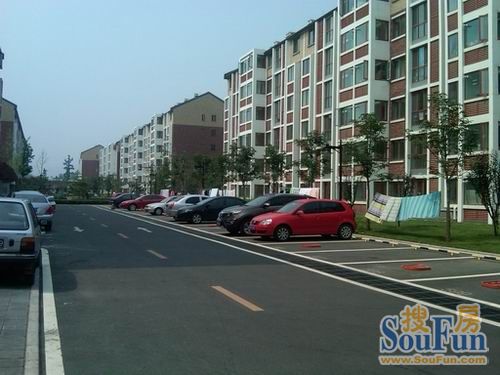
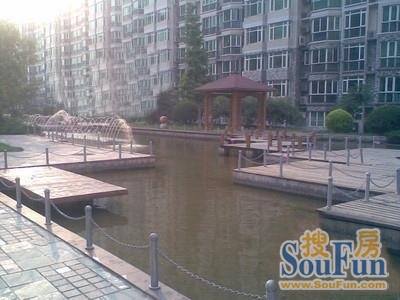
konjaku: a previous post, “Beijing: Unification of the urban and rural 1. Beiwu and Dawangjing” (posted May 2012), described the situation of Beiwu village, chosen as a pilot project in the urban rural unification plan. The whole village would be demolished, with most of its site made into a green zone, with a designated area for commercial development. The village residents would move into a residential complex, and the members of the floating population who rented there would be displaced (in other words, the plan makes no provision for them). To avoid opposition from the residents, the plan stipulated that the process must “ allow the villagers to have a say in the urbanization process, and through control of village collective land, to partake of the gains of urbanization.” That is, “‘We ourselves move out of our homes, we ourselves then build the new buildings, manage, and control the capital fund.’ The villagers through their collectively held land would participate in the urbanization process.”
As much as is possible through available newspaper articles and blogs, I will trace what has and will happen to Beiwu and Beiwu residents, with the aim of seeing how the plan, “the Beiwu model” is carried out.
As we have seen, one issue particular to Beiwu is that there is not much land available for development. The government, by transferring village land to public auction and acquiring the sums paid by developers for the land, usually counts on making a large profit in the village redevelopment process. Without these profits, the government held back from granting Beiwu villagers urban resident status, which would mean having to give out more money to the village, on top of the promised compensation payments and new residences, in social security and health insurance.
This is one point to watch: whether this decision to not grant urban residence status will be amended. Another point of interest is whether the Beiwu village collective will be able to successfully develop the sites under their control, thus directly “partak[ing] of the gains of urbanization.”
In 2009-06-01 in Beiwu village the process of demolition and removal officially began. (A few last hold-outs were forcibly removed 2009-12.) This article describes what is going on almost a year later. The new residence complex is under construction, and the villagers are waiting to move in. They have not received urban residence status, but the town government is in high grade financial shape 一级财政, and local officials expect financial support from there for villagers’ old age and health expenses.
An investigation of the urban rural unification plan pilot project –Beiwu village
The whole village moves to better quarters
Reporters Shen Qiang, Chen Hongren
China Economic Report 2010–3-04
http://www.ceh.com.cn/ceh/ztbd/lhbd/lhrd/60291.shtml
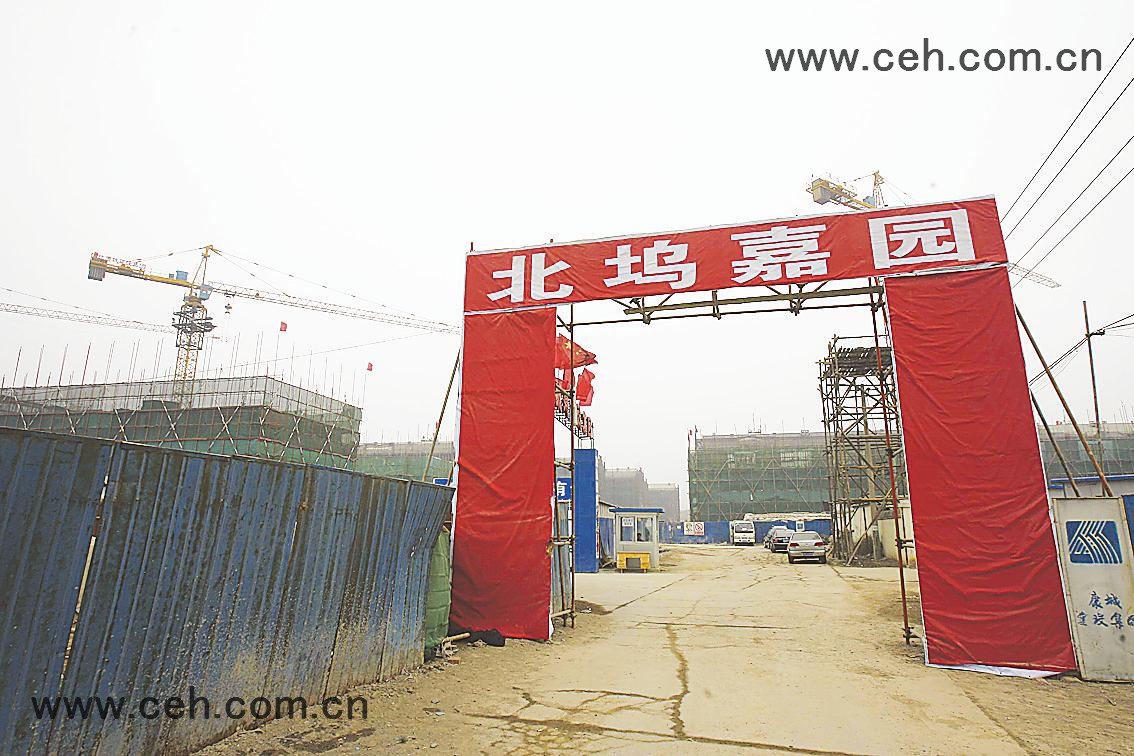
Beiwu Jiayuan construction site, after 2010 Spring Festival

At the ceremony to mark the start of rebuilding Beiwu, villagers express their happiness
2010 Spring Festival, Beiwu villager Wang Pengcheng (pseudonym)’s family is spending the new year in a rented room. After their houses were demolished last year, the more than 3000 villagers were scattered to different places. Though temporarily in “humble quarters,” Wang Pengcheng is not worried. “The new residences will be ready by summer. By the next year’s Spring Festival, I’ll greet the New Year in my own home.” The pilot project of remaking Beiwu village, begun in 2009, is going at a fast clip.
From the “tile economy” to Beiwu Jiayuan (the new residence complex)
If you drive from the Beijing city western fourth ring, taking the Xiangshan exit, then drive west for almost 1 kilometer, you reach a T-intersection. Going west, there is a wide, spacious, straight road going straight to the base of Xiangshan (Fragrant Hill). This is called Minzhuan Road. This is the only way for Beijing people to go from the center of the city to Fragrant Hills[ famous park]. Every day there is an endless line of traffic on this road. During traffic jams the drivers blow their horns and raise dust. Nowadays, along Minzhuan Road on both sides there are row upon row of car dealerships. This is now an major destination for Beijingers who want to buy cars.
At the northwest corner of the T intersection are two small white buildings with a red flag flying in front. These are the headquarters of the Haidian district, Shijiqing town, Yuquan village committee.
If from the T intersection you drive north, there is another road leading to the base of Yuquan mountain, called “Beiwu Village Road.” Since quite some time ago this was designated in the plan as a city green zone, both sides of the road are well planted. Flower gardens and the scenes of a pastoral landscape pass before ones eyes. Before 2009, if you drove this same stretch of road, you would soon come to a great many houses and compounds of peasant households –this would be Beiwu village.
Some 800 meters from the Yuquan village committee buildings, there is a large construction site. On the enclosing wall at the site is large letters is written “Beiwu Jiayuan.” Entering the main gate, one passes across a stretch of vacant land, and the noise from Minzhuan Road gradually fades away. There are several tens of buildings going up here. This reporter saw that the exterior of the smaller six story buildings is almost completely finished –the roofs are done, the tile walls in place.
Accompanying this reporter was the Yuquan assistant party branch secretary Guo Yuming. “Housing in our district is of high quality, no matter what,” he said, with pride. Beijing residents are very fussy about being “up wind and up river,” and this location would make them envious, in the northwest corner of the city, between the 4th and 5th ring. The northern part has Yuquan mountain as a boundary, the west has Fragrant Hill, and to the east, not far, is the Summer Palace. Two years from now, a major road will pass nearby, and there are plans for three more roads, to make traffic conditions more convenient.
The New Year’s holiday had just ended, and the construction workers had not yet returned. The construction site seemed deserted. The construction site supervisor hurried to meet this reporter and introduce the project. Not only was this development ideally located, but the design of the buildings was well thought out. There was an elevator for every pair of residences per floor. This means it is easy to go in and out, especiallty for the old are those with physical handicaps. “There is a lot of housing on the market inside the city which cannot match this.”
“Everyone knows where their new home is in the development, they are just waiting for the key.” Guo Yuming told this reporter the ground breaking ceremony was 2009-03-18, and the plan was to have residents move in to live on May Day (5-1), but because this year winter weather delayed construction, it was delayed till the 7th or 8th month.
This reporter afterwards learned that similar new buildings in the area, because of the superior location, were already going for 20,000 yuan per square meter.
A complicated evacuation campaign
It was still not the 15th of the first month of the lunar year, but the village committee office in Beiwu was strung with red lanterns, giving it a festive atmosphere for the New Year. A person in the office gave this reporter a detailed account of the whole process of moving out the inhabitants. “Now we can finally breathe a small sigh of relief. Up until the Spring Festival, we worked overtime every day, to deal with the issues associated with the evacuation. All kinds of problems came up we had to manage, making us quite unsettled.”Guo Yuming said.
“The Beiwu evacuation involves 775 household compounds, the people to be moved are 3222. The compensation total amount is 5.82 billion, the new housing development Beiwu Jiayuan has a total area of 172560.59 square meters, with 1980 residential suites. After the whole village has moved in, there will be 168 units left over.” The Yuquan village committee secretary Zhang Quan railed off these figures without glancing at his documents. “Every day we discuss these, ponder over all the questions that arise, so these figures are stuck fast in my brain.” He laughed.
Democracy and fairness –these are the watchwords for the evacuation process in Beiwu. When this reporter went to investigate at the Beiwu Jiayuan housing development, he was strongly impressed at their attention to details. The person in charge of construction pointed out a building, how the view from the upper floors is the best, light and spacious. The floors are higher than usual, and could be renovated to add more surface area to the residence. In order to encourage the villagers to move without delay, they have announced that those who moved out first will have their pick of the residential units. In addition, those households which supported the pilot project in this way, will receive in advance a cash award for moving expenses, to the amount of 50,000 yuan.
“As long as there are problems with the demolition and relocation process, it is impossible for people to feel satisfied. It is hard to avoid having at least a few problems. But, honestly, things have gone pretty well, and the evacuation process has been quite smooth,” Guo Yuming said.
—————
Beiwu village has a long history. This was a production area for rice grown for use at the imperial palace, the famous “capital area rice.” A certain old person told this reporter his memory of the rice, which, when steamed, did not need any vegetable or meat dish to accompany it, it had such a sweet taste.
But those days are long gone. The only farming now done is contract gardening in the green belt areas, and a small quantity of cherry orchards. Some villagers work in construction, some in the service trades, and a few in small sized industries. By far the main source of income has been rentals of refurbished rooms to migrant workers. Although the villagers are looking forward to living in their new residences, they are worried as to what they can rely on for income in the future.
——
Summary of last section: Beiwu villagers will not become urban residents. Nor will the economic conditions of Beiwu village undergo any fundamental change. However, the surrounding economy is strong, and the financial administration of Yuquan village and Sijiqing town is in top class financial shape. Therefore Beiwu officials ( Zhang Quan, Guo Yuming) tell the reporter that they expect the villagers to receive generous pension, medical aid, and social security payments as needed, and that they expect they will gradually transform into town residents. Still, the problem of employment opportunities for the villagers after the move remains an urgent problem.
北坞村 Beiwu village
北坞嘉园 Beiwu Jiayuan
香山 Xiangshan Fragrant Hills
闵庄路 Minzhuan road
玉泉村 Yuquan village
konjaku: “In the beginning of the fourth month, this reporter went to villages south of Beijing. He discovered villagers putting up simple and crude buildings in their compounds. These were spare buildings propped up by large quantities of steel pillars and planking. They were put up side by side next to the original buildings in the villagers’ homestead compounds. The tallest were three or four stories. These were being built by teams of construction workers who specialize in this type of work, and can finish them in just a few days. Since this village was about to demolished, the only reason the villagers were rushing to complete these buildings, was to influence the amount of compensation they would receive” (from previous post, Beijing: Unification of Urban and rural 1. Beiwu and Dawangling)
Here are some other examples of this phenomenon.
5 siblings in order to get a higher compensation payment for demolition and relocation, in a building spree build 5 houses in 20 days
Yangzi Evening News 2010-089-12
Summary: in order to get a higher compensation payment in Jiangsu province Jurong city Huangmei town,Yinjia village, 5 siblings in some farmland next to the 122 highway built 5 non-conforming buildings at a frenzied pace in 20 days. The total surface area was 5000 square meters. It was called a marvel, the most amazing non-conforming building spree in the history of Jurong. On the morning of the 10th. a law enforcement team proceeded to forcibly demolish the buildings. Before the quality of construction was extremely poor, in hardly any time at all the building were reduced to a cloud of dust.

————————————————————————
In debt because of wife’s illness, a man builds a non-conforming building to get an increased compensation amount
Source: Legal Evening News
2010-08-11
http://news.sina.com.cn/s/2010-08-11/190820876879.shtml
In the north part of Beijing, in the southern section of the area in which the Changping Future Science and Technology city is going to be built, in Beiqijia city, Lutuan village, house 159 is now a waste pile of broken building materials. Four months ago during a construction accident, seven workers from Fan county in Henan were buried in the sudden collapse of a wall –four died, three were badly injured.

This reporter spent one month investigating the whole story of this accident, in order that something can be learned from the loss of these four lives, and that those who wallow in dreams of sudden wealth through demolition and relocation will open their eyes…
Four the last several years, the prospect of demolition of villages and relocation of the inhabitants has given rise to a peculiar phenomenon –replicated once again in the village of Lutuan. No one could say exactly when, but somehow villagers in Lutuan began to hear the news: in Beijing a certain village was demolished as part of an urban renewal project.Those villagers with a small one story house received millions in compensation, with enough to buy a luxury car. If they lived in a multii-story house, the compensation was more, and they became fantastically wealthy overnight.
As this story spread, it made people restless in mind. Without having a firm idea of how it would come about, they all started to anticipate and wonder when their turn might come at having this good luck to gain something better.
Among those people hoping for something better, was Wang Ruishan.
Wang Ruishan was originally a native of Lutuan. He married into his wife’s family and moved to Shishang village. Ten years ago, he and his wife opened a repair shop, specializing in motorcycles. When asked what was the first thing that came to mind regarding him, the villagers all said he was “honest and decent.”
When they were not working, Wang Ruishan and his wife liked to stand in front of their shop. When they saw a friend or acquaintance they liked to invite those persons into the shop to have a drink and eat dim sum. But in 1999, Wang Ruishan’s wife came down with breast cancer.
“Common people cannot afford to get sick.” Wang Ruishan said that for 10 years, from 1999 until his wife passed away 2009-03-11, their hospital expenses were 5000 yuan every month. Every penny they had saved up they had to spend. Afterwards he had to borrow from relatives and friends, and after 10 years owed more than 400,000 yuan.
Then, when his household really needed money, there was a plan to widen the road at the village entrance.Wang Ruishan’s shop was within the area involved. His shop was razed, and he received several 10,000 yuan in compensation. With his shop gone, he still needed a means of livelihood, and he became a driving instructor.
Since 2002, the income of Lutuan villagers was determined by a three tiered system. Those 60 and above received an old age pension. It starts at 400 yuan a month, gradually increasing to 600 yuan. For those between 40 and 50 years old, in general they depend on what the village committee decides. If they weed within the village, plant cherry trees, or sweep and work in sanitation, they receive 5 or 6 thousand yuan throughout the year, which is enough to keep warmly dressed and well-fed.
As for young people, they usually unable to endure the loneliness of the village, and run to the town as soon as possible to get temporary jobs.
Wang Ruishan’s salary as a driving instructor was a little over 1000 yuan a month, slightly above average for a person of his age, but with expenses for his wife of 5000 yuan a month and more, it was still utterly inadequate. But Wang Ruishan did not complain. He felt his salary was quite fair. The other Lutuan villagers also embraced the idea that there would always be some who had more than one’s household, but also others who had less. Therefore everyone had reason to be content with their lot.
In 2008, he happened to hear by chance that someone who added a second story to their one-story house, received 2 or 3 million yuan in compensation. 2 or 3 million yuan! Wang Ruishan did not even dare to think about such a large amount.
“If I got that much in compensation, I could pay back all the money I owe, and have enough left over to buy a small house for my son when he is married,” he thought to himself.
Most of the other villagers were thinking about buying cars for themselves. “Once you start waiting for the demolition, and the big compensation payments, when you will be able to drive your own car, and play mahjongg for ten dollars a game, then sitting around playing for dimes and pennies becomes boring,” another villager said to Wang Ruishan.
At the end of 2009, the plans for the ChangpingFuture Science and Technology city, had passed through the final stages of deliberation. The southern section involved three villages belonging to Beiqijia town, among them Lutuan village. The villagers began frantically building, and within a month, simplified structures had risen from the ground. However, to stifle the villagers efforts, on 2010-03-05 the Beiqijia town government posted an official notice: “Areas that fall within the plan for the Changping Future Science and Technology city, must suspend all building projects. This applies especially to Qijia, Lingshang, and Lutuan villages.” However, the influence of this notice is hard to determine. Instead, the villagers firmly redoubled their efforts to build faster.
4 die during rebuilding
At the beginning of the year(2010), several outsiders selling colored steel siding came to the village, and made this announcement, “those who want their homes built, pay attention. In four months this entire village will be leveled to the ground. The villagers became flustered and confused, and paying no attention the fact that the weather was cold and the ground frozen, began contacting construction workers.
By this time Wang Ruishan had returned to Lutuan village. When he stood in front of his old home and saw all the trucks going back and forth carrying construction materials, he became stirred up. He said to his son, “If this is our chance to start over and free ourselves from debt, we should take it.”
By this time most of his friends in the village had already engaged workers. Wang Ruishan had few choices. He sought out a temporary tenant, Yan Dilong. He heard from another person that Yan Dilong had many contacts outside the village, and knew many people who could do construction work.
One day in early 2010, Wang Ruishan visited Yan Dilong, and over tea the topic turned to the demolition of the village. Wang Ruishan asked, “If I were to rebuild, how much money would I need?” This was the big question on his mind. Without batting an eyel, Yan Dilong replied, “taking one story as 444 square meters, adding one story of brick, another of colored steel –putting this all together as 800 yuan per square meter, the total budget would be 640,000 yuan.”
Wang Ruishan was not wealthy, but Yan Dilong immediately offered to help Wang Ruishan with the expenses. Together they soon came to an agreement and signed a contract. Yan Dilong would take care of all the money needed for the rebuilding, the 640,000 yuan. After the building was finished, he would receive 70% of the property rights to the second and third floors.
However, what Wang Ruishan did not realize was that Yan Dilong did not actually have the money. He secretly transferred the building project to someone else, two times, and the budget shrank to 340,000 yuan.
2010 -03, construction in Lutuan village was already spreading feverishly. The villagers every day riding their bicycles home had to maneuver like acrobats to dodge the trucks and heaps of construction materials left over beside the houses. “Pushing a cart was not possible, trying to drive a car down those alleys was crazy –it was even possible to end up having one’s wheels planted in wet mortar,” said Li Guangmo.
One day it started. Outsiders came to the village, selling colored steel siding. They came on bicycles, and handed out advertising leaflets. In the morning one group would come and go away again, followed by another group in the afternoon.
As more and more salesmen came, competition became more intense. “At 9 every morning, someone I didn’t know would knock on the door. It would be either a steel siding salesman or a seller of used bricks,” Wang Jun said.
In order to convince the villagers to rebuild right away, the peddlers, after quoting their price, would add, “Your house will soon be demolished, so you had better start right away.” Then they would say, the demolition would be on such and such a month and day.
Putting up colored steel siding only takes a few days, but if it is bricks, it will probably take a month. After comparing prices, most villagers chose to go with the steel siding.
Li Guangmo has spent all his life doing construction work. Squatting down, with an impressive air, he drew a building diagram on the ground with his cigarette lighter, and said, if you are making a budget, one floor composed of colored steel is 50,000 yuan, and if it is with brick it is a bit more, say, 60,000 yuan.
In Lutuan village, most elected to follow this construction model: they lifted off the existing roof, built a second floor of brick, and the third floor of colored steel. Wang Ruishan heard that the compensation [paid for demolition and relocation] was somewhat higher for brick buildings than steel, but using the colored steel was much faster. Still, one could economize on the story built of brick by using old brick. Taking into account that the village demolition was coming soon, in order to avoid any construction delays, Wang Ruishan decided to follow the same plan as the other villagers.
Wang Ruishan’s building project finally ended up in the hands of the small labor contractor Ping Guiqiang. Ping Guiqiang was from Henan. It had already been more than 10 years since he came to Beijing, without a license to undertake construction projects, and he had gotten by doing home building in small villages.
Furthermore, Ping Guiqiang did not have his own construction crew, but relied on whoever he could hire when a job came up. When he got a new job, all he did was make a telephone call to his hometown village, and put together a group of ten or more workers without any difficulty. But these workers had absolutely no training in construction work.
At the beginning of March, as rumors that the village would soon be leveled increased, in order to hurry and finish the job Ping Guiqiang and his crew built a north wall five meters high, without waiting for the concrete and mortar to completely dry. In order to economize, there was no person hired to be in charge of safety on site. If concrete is not allowed to dry it does not achieve the desired strength This can only lead to the collapse of any structure put up at such a pace. The workers had no professional training, therefore they did not know the danger.
On 3-10 at noon, Ping Guiqiang went to the site. “I saw the wall they had built was quite high, and thought this was dangerous, and told them they would not be able to make the other walls in this way. I knew they weren’t following safety measures…
After Ping Guiqiang left to go home, the tragedy took place. As workers tore down the scaffolding next to it, the 5 meter high wall suddenly collapsed, leading to four deaths and three injuries. According to an inspection after the fact by Beijing city investigators, the mortar used to join the older and newer parts of the house had an adhesive rating of 0, crumbling like powder between one’s fingers.
2010-08-05. It is now four months past the date when the colored steel salesmen predicted the village would be demolished. It seems it is not going to occur in the foreseeable future.
At the stone steps at the entrance to the village, two elderly men sit on a bench playing Chinese chess. People stand around watching. No one is in a hurry. But the topic of conversation is still the demolition. At the end of third month (2010-03) a number of persons came to the village and measured the surface area of each house –but after that there has been no further news.
Yet the number of people who talk all the time about the demolition and the amount of compensation they will receive has gradually dwindled. Those who did put up an extra story of colored steel on their houses, eventually could not stand living inside the dark and muggy interior, and have already moved out.
Memories of this accident are already starting to fade, as new disasters have hit the village one after the other. In March Beijing entered the rainy season. The new steel siding cut open the electric wiring, causing short circuits, leading to five or six house fires. A number of houses were in an instant reduced to nothing but ashes, and those families have vacated. After that, the residence space allotted to these family members was not equal. Brothers fought, relatives got in no-holds barred conflicts, especially as the demolition and resulting compensation funds for replacement housing had not yet materialized. Family members now pass each other on the street as though they were strangers.
2010-07, this reporter visited the village committee to inquire on the situation. The village cadre who was present evaded this reporter’s questions. Afterwards this reporter went to Beiqijia town government office, and encountered the same attitude.
As for compound 159, the ruins have been left as they are. No one has even come to cart away the old bricks. In far off Henan, the family members of the dead still grieve. Those injured have returned there to convalesce, but it is unknown if they will be able to work again.
Wang Ruishan’s three children paid compensation to the victims, managing to scrape together 100,000 yuan. “My daughter registered to be married but we couldn’t afford the reception…” he said sadly.
Writing/fieldwork Hu Xiangyi Reporter Sun Zhihui

Rendering of the Changping Future Science and Technology city
昌平未来科技城 Changping Future Science and Technology city
北七家镇 Beiqijia town
鲁疃村 Lutuan village
齐家村 Qijia village
岭上村 Lingshang village
konjaku: In discussing urban villages, commentators often say these contain within them the “contradiction” between rural life and urban life, as two separate worlds. These two “dimensions” have been forced together, in part by the outward expansion of the city, but also by the value placed on urbanizing China as a whole, and the policies that have ensued from that determination. Here is a small example of the contradiction.
In many photos of Zhongtan village (before it ceased to exist in 2011-12), one sees in the immediate background, the new residential complexes of high rises, the future in contrast to which Zhongtan village, in its “messy” form, is an impediment. (Click on photos for larger size).
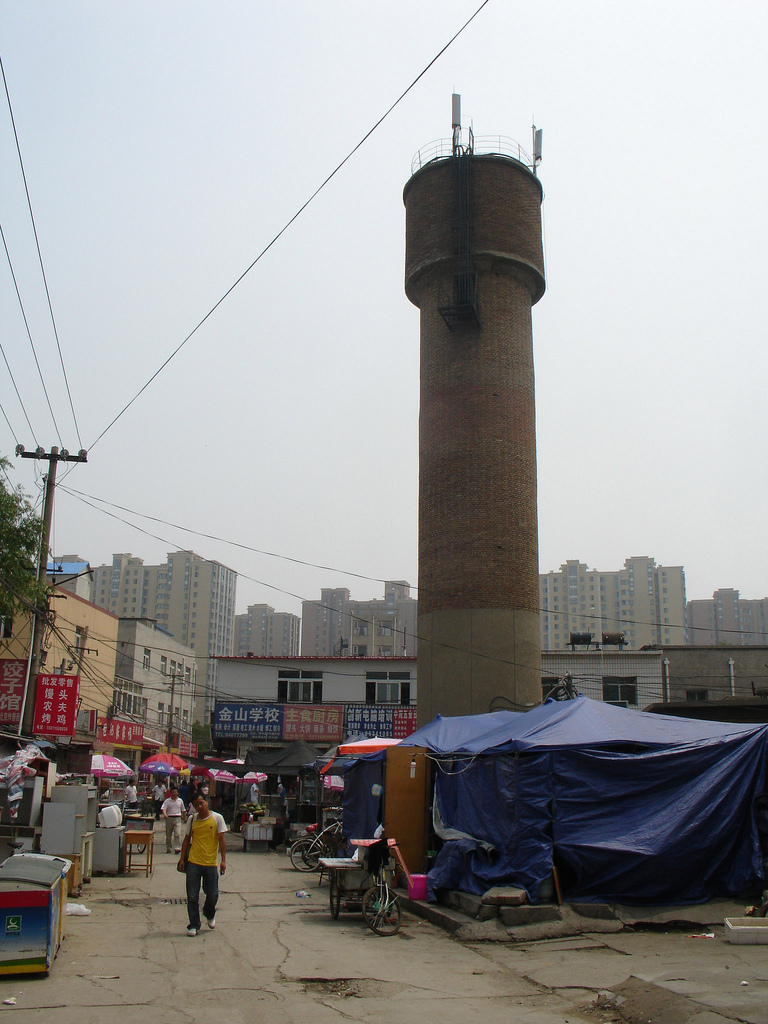
photo Gregory Bugel, 2009
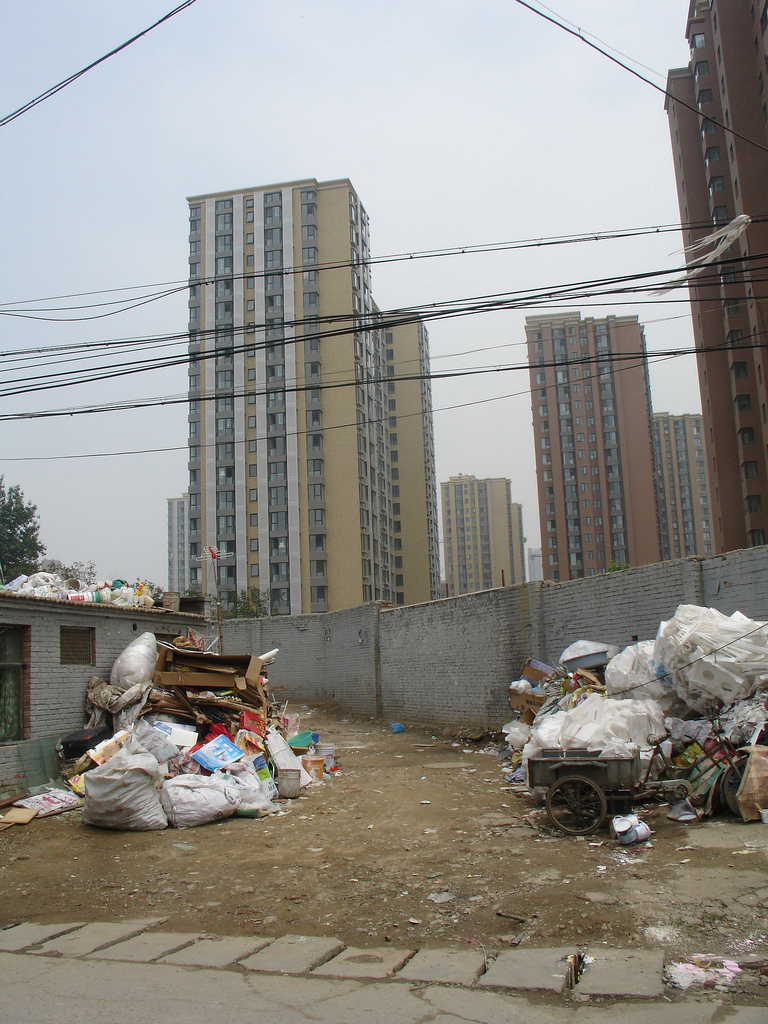
photo Gregory Bugel, 2009
In the future, Zhongtan residents will move into residential complexes similar to these. But what do they, former “peasants,” do in the meantime?
Here is a notice posted outside a Tiantongyuan residential complex, adjacent to Zhongtan village.

photo Gregory Bugel, 2009
Notice
For a long time now, in the empty land in front of the Tiantongyuan Xiyi district number 46 building, some loiterers have cultivated the vacant lots, stealing for their own use water which is for irrigating the green zone. 1, This has a severe impact on maintaining a good district environment 2, the water belongs to the project developers, stealing the irrigation water violates their rights. The effect on the business owners is severe, and it further causes a certain amount of distress to the building management company. The project developers have requested that we, the building management company, increase our efforts to manage this area, and to extract compensation for damages from the thieves based on the amount of water they have stolen.
Shuntiantong Building Management Company 2009-06-29
konjaku: The urban and rural unification plan states that the area between residential and commercial developments will be a green zone, or a greenbelt. The Zhongtan village site will in future become a greenbelt. In the implementation of this plan, the villagers have become “loiterers” 闲杂人员 with nothing to do.
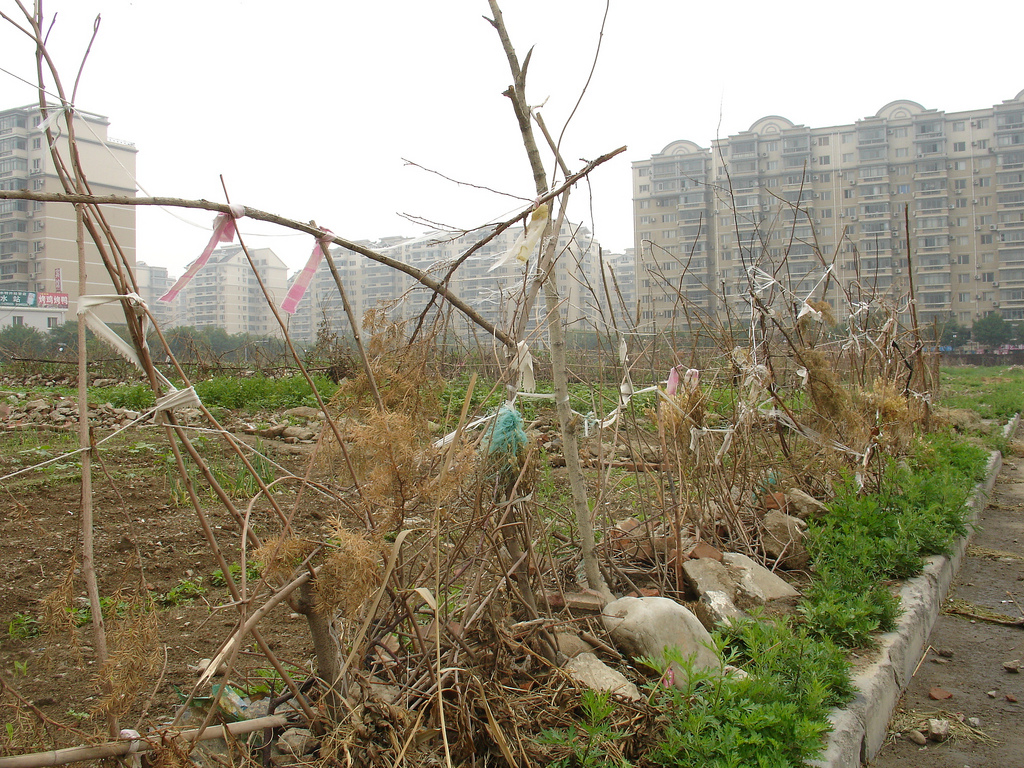
“Urban farm.” Gregory Bugel, 2009
An approved use of water at Tiangtongyuan Xiyi district number 46 Building (a fountain):

konjaku: from a blog
http://www.ttyva.org/read.php?tid-107076.html
A few days ago I got a call from a friend who lives in Zhongtan village, saying her house was about to be demolished. She had signed the contract, and asked if I wanted to take a look and see if I could use any of her old furniture? When I went there, in passing I snapped these photos.
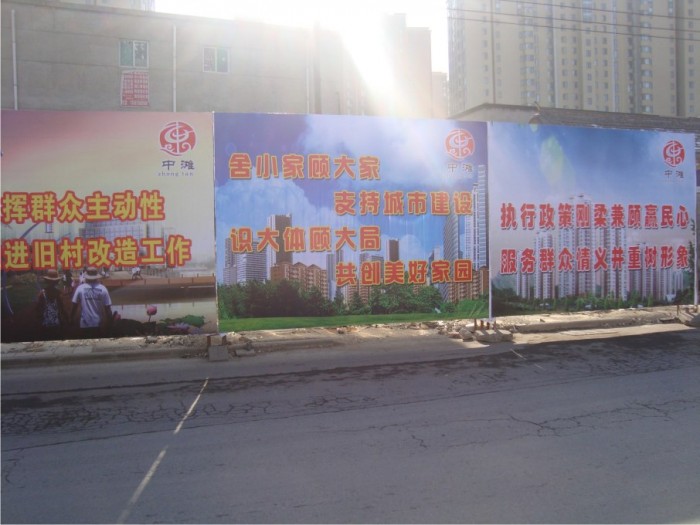
The exterior of the village had already been sealed off. On both sides of the road these large posters are set up. A loudspeaker was blasting at extremely high volume without ceasing. I couldn’t tell what was being said, but the high decibel sound was very irritating.
Poster slogans
Left: Led on by the initiative of the masses
the work of remaking the old village
Middle: giving up small houses to wish for large houses
we support the building initiative
knowing that the overall goal
is to create beautiful homes and gardens

in front of the Village Committee headquarters
As long as you have signed a contract, the move to another residence is free of charge

A building already torn down. My friend’s building is much like this.

According to the method of determining compensation, in my friends residence there were four people, they can buy three apartment suites, each 280 square meters of market priced housing, and still have 1,300,000 yuan left over, in cash.
konjaku: the previous post stated (2012-06-07) that ground was broken to build the replacement housing for residents of four villages in the Changping district. One of these was Zhongtan village.
Zhongtan village was previously described this way during its “era of prosperity” in 2010 (Community Management Transformation in Changping):
“Zhongtan village is located on the Number 5 subway line near the Tiantongyuan stop, to the east of Tiantongyuan Xiyi district, in the vicinity of the Dongxiaokou town office. The Zhongtan village Party Branch Secretary said, with sealed management they could reduce the number of illegal motorbikes, and manage the floating population more effectively.
Yesterday at 6 in the evening, at the peak of the after-work rush, the roads in the village were filled to overflowing with people, and illegal motorbikes wending their way. By the side of the road were many small vendors. It was as buzzing with excitement as a country market. Garbage thrown down by the residents was everywhere.
The Zhongtan village Party Branch Secretary said, the original villagers in Zhongtan number a little over 1000, and those who have come from elsewhere to rent and have registered as temporary residents number over 30,000. Those who have not registered are about 10,000. This makes a total of 40 times more migrants than villagers.
One villager said, around here the principal income comes from renting rooms. Inside the village area on any space possible, a building has been built with rooms let to tenants.”
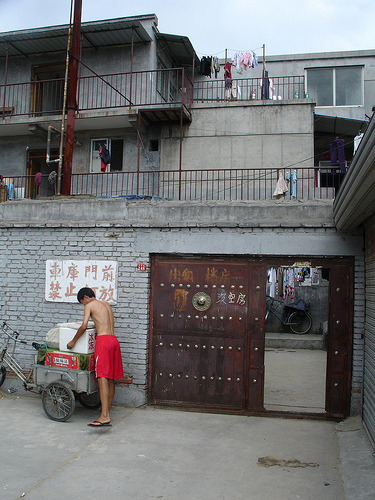
photo Gregory Bugel, 2009
Below: Zhongtan photos by by Guohuadong92 (Click on photos for larger size)
http://tieba.baidu.com/p/1160025557
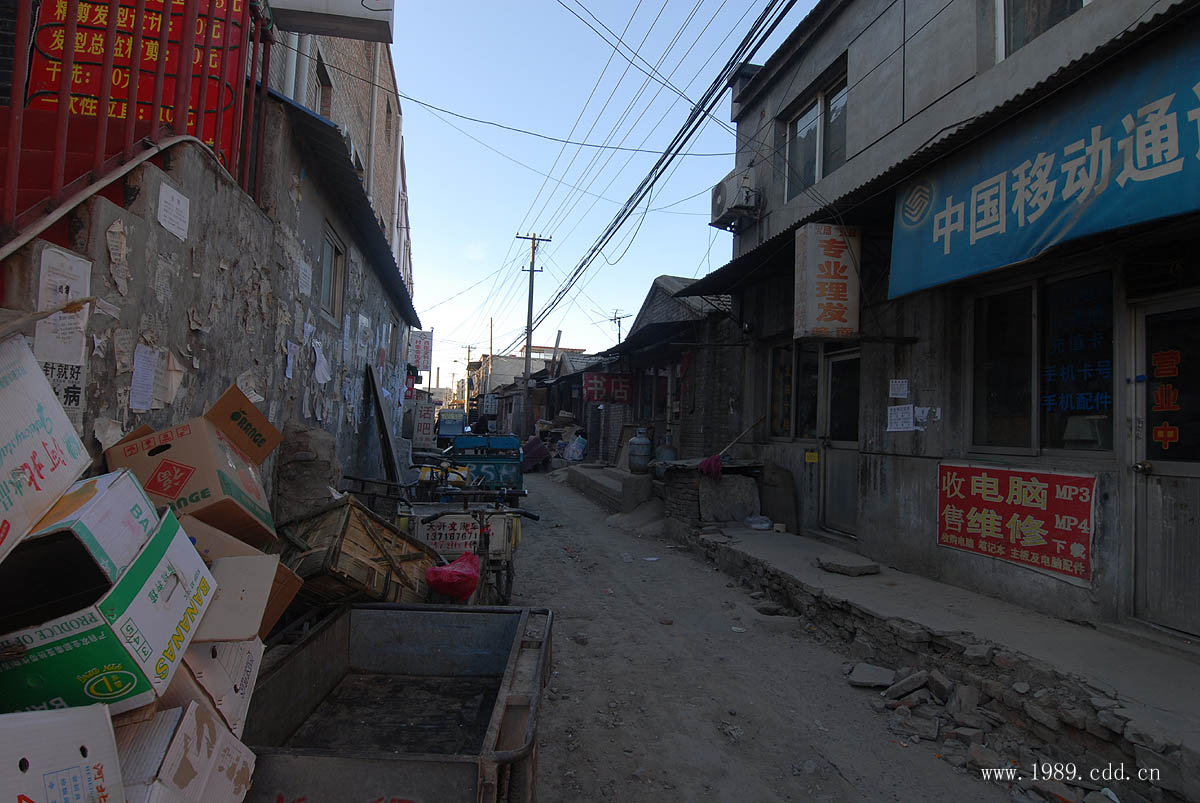

In 2011 12th month Zhongtan village began to be demolished.
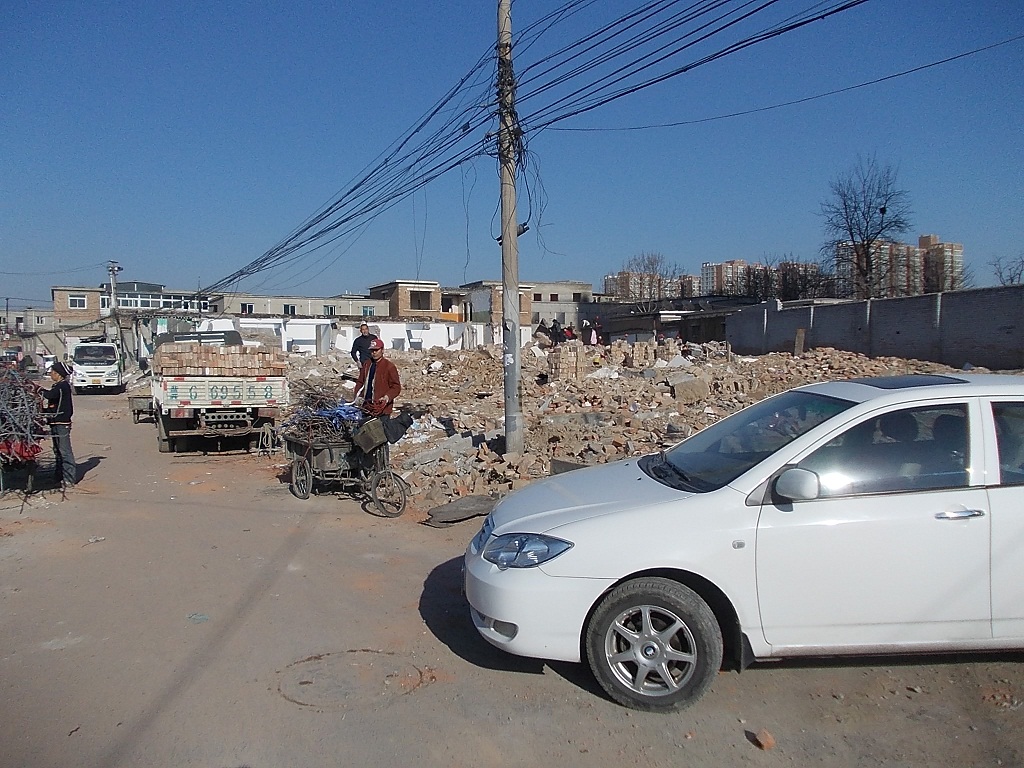
Although the terms offered seem to be quite generous, in keeping with Beijing city’s recent policy direction to avoid civil strife by offering higher compensation amounts than in the past and giving the villagers some say over future development of the site, some Zhongtan villagers were still apprehensive. The following is from a blog.
From a “Zhongtan village representative”
Three questions to those who have already signed contracts
Urged on by the promise of a small profit, some villagers have already signed contracts. In regards to what you might need to be concerned about in the future, let me raise three problems. Please consider these calmly.
1. In the agreement and contract you have signed to have your home demolished, there is the problem of the other party in the contract. That other party is the village committee. The village committee is not a top tier government agency, but rather an organization made up of village people [without much power]. If the market value of the residence you receive in compensation plummets, if new business developments overseen by the village committee are not fully invested in, if the replacement residence buildings are built incompetently, to who will you go to get an explanation? Who can you lodge a complaint with if the agreement is violated?
2. Having promised you a small profit, can they really deliver? If the demolition and moving group say there is a profit coming from tearing down your house, it can only be from these two ways: 1, they fabricate the surface area [of your building, to increase the compensation payment], 2. they promise to pay more per room. But can they really do it? Fabricating the surface area is an illegal act, if someone reports it to the authorities you won’t get anything, If they are going to pay more per room, how can the demolition group make with you a legally binding agreement? It is unlikely you will get it in writing.
3. Can you determine what the replacement housing will be? What type of house it will be, how many stories? What has the the demolition and moving group given you as a pledge or guarantee concerning the replacement housing? When will you be able to move in? If what you get is unlike what other people receive, to whom will you go for redress?
As the demolition began, it seems some people were still hold-outs. The village committee used a loudspeaker on them.
From a blog:
Every day from 8 in the morning to 8 in the evening a high-powered loudspeaker is broadcasting. The decibel level is 90db on average, it sounds loud even inside a room with the windows closed. This causes immeasurable injury to the over 10,000 residents living in this area! It is hard for us to rest normally, and especially hard for old people and children. This is a new type of violence enforcing the demolition and removal. Residents in this area have complained many times, but with no result. The village committee says the responsibility lies with the town government, the town government sends us back to the village committee. There is no reason for this high volume sound except to persecute the common people! This goes against the principal aim of the Central Committee, which is to serve the people. This goes against Prime Minister Wen’s call for a “civilized demolition and relocation process.”
We need to defend our dignity! We need to be given back our normal life! Everyone, please pay attention to this matter. Strongly oppose this use of loudspeakers to harass the people.
konjaku: 90 db is the level at which sustained exposure causes hearing loss
konjaku: in 2011-07-21, as the previous post (Children of the floating population) indicates, Lu village in Changping district Dongxiaokou town was about to be demolished. This post follows up on Lu village a year later. It has apparently been demolished, and the village residents have moved elsewhere temporarily, waiting for their replacement housing to be built. It seems to have taken a year to start building –this may be due to the complications that might arise when grouping four villages together. It is significant that the villagers will gain the rights of urban residents. As for how, in this case, “the villagers’ profits [will be] enjoyed by the villagers,” this probably deserves further scrutiny.
Changping district Dongxiaokou town, villagers of four villages will all be relocated to upgraded residences
Xinhuanet Beijing 2012-06- 07
http://www.bj.xinhuanet.com/bjpd_sdzx/2012-06/07/content_25358784.htm
http://www.bjcpn.com/article_view/?news_id=80670
This year four villages in Changping district Dongxiaokou town underwent urban renovation. Yesterday, (2012-06-06), the laying of the foundation ceremony was held to commence work on the replacement housing for the villagers of four villages.
The village environment was dirty and disorderly, the facilities were outmoded and obsolete, the inverted population phenomenon was severe, there were many lurking dangers to public order…Squarely confronting the problem, the city government of Dongxiaokou town entered Zhongtan village, He village, and Maliandian village into the 50 listed up villages that were focal points for renovation. Using the model “take three and add three” they added Lu village, Dan village, and Dongxiaokou village to be rebuilt, as part of a group demolition and renewal.
The village committee and the town government exercised proper leadership, and in conformity with the guidelines to give the villagers a principal role, “villagers affairs are run by the villagers, managed by the villagers, the villagers’ profits are enjoyed by the villagers.” Also, “in accordance with the town plan as a whole, the villagers will move to new residences in groups, the village will become a green zone, the land put aside for later use.”
The project of compensating villagers with replacement housing for four villages — Zhongtan village, He village, Lu village, and Dongxiaokou village– involved 1109 separately owned plots of land. The plan is that villagers of He village, Lu village, and Dongxiaokou village will move to a combined parcel of land “A,” while Zhongtan villagers will move to parcel “B.” Up to now, of those with household compounds or non-residential properties in the four villages, 1065 have signed contracts agreeing to demolition and removal to new residences (or other compensation), comprising 95%. of the total.
On hearing that the foundation had been laid for the new residential project. Lu villager Cao Liqiang could not contain his elation. Since moving out of his old house, he passed by Lu village every morning on his way to work in the city, and each time he can not help stopping at the site of where he once lived, getting out of his car and looking around. “Before too long, we will be able to move back here, in spacious, bright, new houses!”
The new residences will be moderate high rises with elevators, with individual residence suites of 140 square meters, 120 square meters, 90 square meters, and 70 square meters. Built with them will be a kindergarden, elementary and middle school, parking lots, stores, a cultural center, and other public service facilities. The villagers will change from rural to urban, and enjoy the same old age care and medical benefits as city and town residents. They need have no fear of future calamity.
Reporter Wei Yan’nuo
农转非 change from rural to urban
贺村 He village
芦村 Lu village
单村 Dan village
东小口村 Dongxiaokou village
马连店 Maliandan village
Problem of second generation offspring of migrant workers lacking a sense of belonging –unjust treatment leads to them committing crimes
Author: not given. Source: Legal Daily
2011-07-21
http://www.ciudsrc.com/new_tongchou/chengzhen/2011-07-21/16247.html
Jingwel School is in Changping district Dongxiaokou town Lu village, is specially set up to serve both the children of village residents and the children of migrant workers in the area. As it is now summer vacation, the school grounds are quiet. There are only a few children sent here by their parents to keep them out of internet cafes, doing homework supervised by a teacher.
“This year after New Year’s, notices were posted saying demolition of the village and removal of the residents would start, and the school would be torn down very soon. Therefore many students left with their families to ‘migrate’ somewhere else,” one of the teachers told this reporter.
Lu Village is composed of closely connected buildings, making up roughly the shape of a T. During its “period of prosperity,” on some 200 hectares of land there were 600 original residents and 7000 migrant workers. Many of these were groups of temporary laborers who had come from Chaoyang district and Haidian district. Because their rentals there were demolished, they moved out here.
For a few short years a large number of persons from elsewhere gushed into Lu Village, creating a real challenge to its infrastructure. Assistant Secretary Gao Caimao said that previously the village had one well, one transformer, and one garbage truck, but now the need for all of these has expanded 10 times.
One year ago, to improve services and public security Lu Village became one of the 44 villages in Changping, initiating the trial phase of community transformation management. “We constructed a steel gate at the entrance and gave both the village residents and migrant workers passes.” Since the village was currently in the midst of preparations to be demolished, the staff of the village committee was extremely busy, but they did manage to tell this reporter, “After implementing community transformation management, the public security situation became much better.”
Chinese Academy of Social Sciences Research Fellow Mo Jihong believes that better results would come from something less intrusive than sealing the village. The government should instead provide various types of social aid, to enable the floating population contingent to have a more stable environment to live in.
China Law and Politics University professor Ma Huaide said that in managing the floating population, the problem of the second generation children cannot be ignored.
“The children of these peasant laborers are born and grow up in the city. They cannot return to the rural countryside, as it is completely unfamiliar to them. But they have not been fully absorbed into the city either.They have difficulty subsisting in the narrow space between urban and rural environments, or within the greater isolation of the city.”
“These children live an entirely mobile life. They go wherever their parents find work.” As the teacher at Jingwei School said, these children are only able to attend Jingwei school as long as his or her parents are in Lu Village, but typically the parents move on to another temporary job, and the child has to move too.
Ma Huaide believes that because of the education problem, the children of the floating problem do not receive equal treatment, and lack a sense of belonging in urban society. Without a sense of belonging, some even go so far as to choose to engage in criminal activities. In some cities, the greater proportion of criminal cases involve members of the floating population. “If members of the floating population received protections and safeguards equal to urban residents, they would develop a sense of belonging. The importance of this cannot be underestimated. They need to be provided with better housing, better employment opportunities, and better access to medical care. In our country in recent years the total amount of income taken in by the government has steadily risen. In some areas, the rate of increase of government income surpasses the rise of the GDP. These funds should be used to build a fairer and more equitable society. ” Ma Huide said.
东小口镇 Dongxiaokou town
芦村 Lu village
莫纪宏 Mo Jihong
马怀德 Ma Huide
konjaku: This is something of a sequel, one year later, to a previous post, “Community Transformation Management in Changping.” There it said (2010-07-29), “Yesterday, this reporter found out from the Changping district government, that implementation would be carried out in 100 villages in the district. The first to begin a pilot program, starting in August, will be the 44 villages with an inverted population in Dongxiaokou town, Beiqijia town, Huilongguan town, and Shahe town.” The Lu Village referred to here in Dongxiaokou town must be one of those villages.
Zhang Yanling wrote “… the purpose of “sealed management” is not just to assist public security, or to relieve pressure on the environment, etc.The hidden cause behind sealed management, which most people do not know, is to prepare for the forthcoming urban transformation and dismantling of villages such as Laosanyu according to the urbanization plan.”
This Lu village in Changping district is another example.After a year of “community transformation management,” the village is about to be demolished. The village committee is so busy with preparations to demolish the village, that they barely have time to answer the reporter’s question as to whether community transformation management was successful or not.
In the same article, Zhang Yanling wrote, “In fact, as Beijing urbanization expands from the 2nd ring to the 6th ring, the floating population is driven outward, away from the very urbanized areas they have had a hand in building. The most recent tenants in Laosanyu, have just rolled up their traveling bags and arrived from Hongfangzhi, a place just slightly closer to the center of the city….With the upcoming “urban transformation” members of the floating population will be pushed further and further out.” That article was about Daxing district, this article shows the same is true in Changping. The members of the floating population in Lu village are recent arrivals from Haidian and Chaoyang, closer to the center, who arrive in a new place, live there for a time, and are about to be driven further outward.
konjaku: the villages on the periphery of Beijing, including the “inverted population villages,” “the listed up villages,” and the villages undergoing community transformation management, can all be classified in a broader sense as urban villages, 城中村 “villages within the city.” This village exists somewhere between the rural and agricultural past on the verge of disappearing, and the spread of urban development which has already encroached into its perimeters.The inhabitants must live with uncertainty as to whether the village will demolished in the near future to make way for a new development. The urban village has all the attributes disliked by those whose task is to develop the city of the future, but as this editorial points out, urban villages serve a purpose.
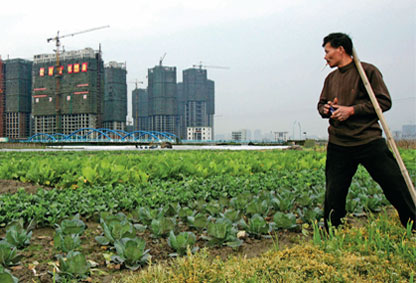
Photo: Caixin media, China Reform Magazine, 2010-06-01
The process of urbanization requires urban villages
2011-01-06
Source: Nanfang net
http://view.news.qq.com/a/20110106/000044.htm
Author: Shi Weigang 傅蔚冈
Urban villages are a special entity unique to China. Depending on the person, they are viewed in different lights. To the original inhabitants, it is the homeland where their ancestors lived out their lives –and of course also for them a valuable economic resource. To migrant laborers the urban village is their safe harbor in the big city, but only to the extent that it offers them convenient transportation and inexpensive housing. In the eyes of real estate developers, the urban village is a place rich in valuable resources ripe for development, In the eyes of the government, it is a scar on the city fabric, a place that shelters for evil people, and one in which illegal practices flourish. Certainly, compared to the rows and rows of high buildings in their vicinity, the urban villages lack a comprehensive plan and management. The immediate environment is dirty, streams of people mix confusedly, public security is chaotic, infrastructure is lacking.
For the government, to remake the urban village is not a matter of expending its financial resources to invest money in a project. Rather, it is a way to make money — by conscripting the land which originally belongs to the peasant collective and turning it into land belonging to the state. This land is transferred into the marketplace through the device of a “public auction” yielding huge sums of money. The government gets its money from the land sale, the developers get the land on which to build, the original residents get a one time opportunity to “get rich overnight” [through the compensation they receive]. However, problems often arise in this rush to profit –that is why we often hear in the media of residents who have money but no work, and incidents of the removal of people by violence in order to demolish their homes.
It is fairly unique for the government to be in the business of remaking urban villages into high-rise housing developments. In other countries with a system of private property, the government has no right to take over private property, nor can it make huge sums of money by conscripting land. However, urban villages also fulfill a vital function, in offering lodging and a resting place for the low-income urban population. This fact is not properly appreciated by most people. For all sorts of reasons, the city which Chinese people wish to see is one of neatly arranged tall buildings, spotless and clean residential neighborhoods, and a never ending flow of heavy traffic. Very few people can see the connection between the dirty and messy urban village and the city system as a whole. Therefore, when there is a dispute with the process of remaking the urban village, what we tend to focus on is whether the amount of compensation to the residents is fair or not. It never occurs to us to call into question whether the wholesale remaking of the urban village is justified.

Photo: Zhouyi Bo
In the city it is impossible for everyone to be part of the high income group. Unfortunately, those with different incomes live in different districts of the city, in which the living environment may suffer compared to others. If we admit this, then we can face squarely the reality of the urban village. To those people who believe the urban village is harmful to the overall appearance of the city, I have this question: once we have remade the urban village, where do those original inhabitants go to settle down again? To those residents who own buildings in the village, the answer is simple — they receive a market value compensation for their property, which they can use to buy a new residence. But for those migrant workers who were renting, they have to search once again for low cost housing. Because public services in cities are limited to those who have their household registration in that city, migrant workers, even though they live and work in the city, do not make enough for the available housing, nor is it easy for them to rent publicly subsidized housing, which goes first to city residents. Since costs of residences is so high, they are forced to the outskirts of the city. I’m afraid there is really no other option for them but to live in another urban village.
At the same time, the city residents receive no end of benefits from the urban village. Even if they detest the messiness of the urban villages, the net cost of services provided by the laborers who live in them is low. When these urban villages are remade and the laborers are gone, will not the residents’ net cost for all kind of services rise substantially? For city residents, for migrants workers, benefits fall on both sides. As many scholars have said, including Qin Hui in a loud voice, China might have to build slums in the cities, in order that migrant workers can have permanent homes. Be that as it may, for the time being China does not have the financial means to provide good public services for migrant workers. Until then, the urban village functions as a kind of way-station for the several hundred million migrant workers, and uncountable numbers of peasants, who from this starting point will gradually transition into urban life. The urban village as it exists now is not perfect, but it is the starting point of a new life emerging in the city.
konjaku: After the initial trial of “sealed management” met with resistance in June and July 2010, the project was not halted, but instead steadily expanded in the kinder, gentler form of “community transformation management.” The most recent announcement was that in Tongzhou (a district in Beijing just inside the 6th ring road) 150 administrative villages would implement community transformation management.(2012-03-28, http://www.bj.xinhuanet.com/bjpd_bjzq/2012-03/28/content_24969269.htm).
Articles evaluating the progress of community transformation management after one year state that going in and out of the village is as simple as swiping a smart ID card at the entrance checkpoint. They state crime has fallen to zero, and use phrases such as “neat and tidy” clean and clear” “orderly and shipshape” to describe the villages. They say there are now dance floors, basketball courts, and other cultural and recreational facilities. Also, there is a government service center which will process all the official documents and procedures the villagers might need, making their lives more convenient.
These articles do not tell us if the non-conforming buildings in the village have been torn down, or if the villagers are still renting rooms to migrant workers or not. If not, how are they making an income to live on? Nor does it tell us if calling the villages”urban communities” means that the villagers will legally become urban residents, and have the same rights to health insurance and social security. (For the importance of these questions, see the earlier post, “Beijing: Unification of urban and rural 1. Beiwu and Dawangjing“).As for the migrant workers, the articles tell us that all rentals are managed through the “Floating Population Service Center,” and more social services are being made available for them. We do not find out how easy it is for newly arrived migrant workers to enter the “sealed” village to rent, or if these services are for a gradually dwindling group of tenants who were there before community transformation management started. If these questions are not addressed, we cannot tell if the villages will continue to exist as viable communities, or if they are in an interval of suspended animation preparatory to being demolished.
The following article goes so far as to assert there is an internal dimension to community transformation management. The key concept is “keeping standards”(lit. 标准化 standardization). This is brought about through such things as painting storefronts the same colors, using the same style of script for store signs, and people following certain codes of behavior.
The ideal is to be a “town planned development,” a group of modern multi-storied residential complexes set in a park or green zone. Dashengzhuang is twice described as being “like that” “resembling that,” but it is not that, at least not yet.
Small villages on the outskirts change form, becoming urban communities
Source: The People’s Daily 2011-12-30 (Translated excerpts)
http://www.wenming.cn/xj_pd/dqlx/yw/201112/t20111230_444900.shtml
This reporter went to Daxing Xihongmen town Dashengzhuang village, where the urban and rural unification is taking place. There he saw: the sentry box, the checkpoint, clean and tidy streets, storefronts in the same style, a park, flower gardens, fitness equipment of all kinds, a reading room, board game room, a culture center. and much more. To handle ones affairs one doesn’t have to leave the village, if you walk 10 minutes you come to the public service office. “This is the result of the village putting into practice community transformation management,” said the village party branch secretary Li Wujiang.
Xihongmen town is within the urban rural unification plan. Its head is in the fourth ring, its feet touch the sixth ring, its waist is in the fifth ring, the Jingkai expressway runs through it. Dashengzhuang village is to the east of the expressway –original residents number only 300, but its migrant worker population is 2000.
One year after community transformation management was begun, Dashengzhuang village is neat and tidy, without any trash. The villagers sleep without fear of theft, there are no bars on the windows. Previously, the constant traffic of cars from outside entering the village brought hidden dangers, but no more.
Maintaining standards:
Not only externally and in outward appearance, but having standards arise internally, this “networking” is what causes community transformation management to be thoroughly carried out.
If you mention “community transformation management” most people think of enclosing walls and sentry boxes, but the transformation Dashengzhuang village has undergone is far, far more than this.
If you walk 400 meters down the long main street of Dashengzhuang, you discover the small storefronts on both sides are all white with red trim, the signs all use Song typeface, they are tidy, orderly, standard. Not far from the village east gate is a chain supermarket. The proprietor Mr Wang said, originally the stores along the road were of different types and appearances, some store signs were bigger, others small, it was chaotic. In front of the stores garbage was often piled up, everything was dirty. Last year the village repaired the road, and redid all the stores to have the same appearance and meet the same standard. After one year, it emerges before ones eyes in this form.
To “make standard” has not only an external, but an internal form. Inside Dashengzhuang village they have set rules “stores must keep things sanitary , they must not spill out onto the road, what they sell must be not irregular.” Li Wujiang said, nowadays the villagers can have confidence in the food they buy inside the village. They have established a villagers dining hall. The person who operates it must have a health license and other permits. It is a real benefit when the villagers can have confidence in the food and raw ingredients they purchase inside the village.
The villagers homes are neat and tidy.The walls of the courtyards are all the same ash-grey. The doors are painted, around the entrance way there is greenery. Inside the compounds there is open space, in which there are benches, fitness equipment, solar powered lights. It looks like it could be a scene in a planned town development.
The community management service center takes care of villagers’ health needs, rentals, family planning, altogether 37 services under one roof. The village committee registers, keeps files, and manages all rentals. This year the 45 year old Gong Jiaying came from Shandong, and has rented in Dashengzhuang for one year. “The village management is orderly and safe –it is like being in a town planned development.”
Reporters, Zhu Jingruo, Wang Mingbai, Yu Ronghua
城市小区 town planned development

