konjaku: “The [Tongzhou education commission] official said, this is the overall trend Beijing is following. They want the low-end masses and the [wholesale] markets to be driven out of Beijing.” (2014-05-30, previous post). Keeping the children of non-permanent residents from being admitted to public schools may indeed be part of larger strategy to get the “low-end population” to leave.
In 2013-12, as the following article shows, officials were starting to discuss keeping low-end industries and businesses from further entering into Beijing. By 2014, this had hardened into a policy of driving out the wholesale markets as a way of making those who depend on those markets to follow after them.
—————-
People’s Congress Representatives: Beijing’s low-end masses are too many, even breathable air is in short supply
Representatives propose prohibiting low-end industries from entering Beijing, Vice-Mayor Chen Gang says they must readjust the development concept
http://www.wenxuecity.com/news/2013/12/19/2876773_print.html
http://epaper.bjnews.com.cn/html/2013-12/20/content_485451.htm?div=-1
People’s Congress representative Li Qijun said, in Beijing the large-scale city urban disease is very severe, the ecosystem is strained to the limit. Therefore Beijing should relieve the population density, raise the threshold for low end industries, and prohibit any more from entering Beijing. Beijing vice-mayor Chen Gang said, some low-end service and manufacturing industries attract large quantities of people to come to Beijing for work, causing even the breathable air to be be in short supply, extravagantly used up.
Representative Li Qijun said, Beijing should draft a detailed account of the negative aspects of certain industries, and prohibit those low-end industries from entering Beijing. At the same time, they need to apply standards to small barber shops, small refuse collecting businesses, underground apartments, simply constructed homes, and group rentals. The government must take the initiative to enhance quality and control, in other words, they must use market forces to manage the population.
Representative Wang Weiping said that relieving the population problem in the center city is a difficult problem.In Dongcheng, there is the Tianyi [heaven’s will]small goods market, but there are 44 more markets just like it. In Xicheng district there are 90 such markets, with a population of 20,000. In these market areas in the central districts, there is the low-end population that has come to work, but which does not match well with the functioning of the center of one of the world’s major metrapolises. Many residents report that the contrast is too stark.
Tianyi market photos:
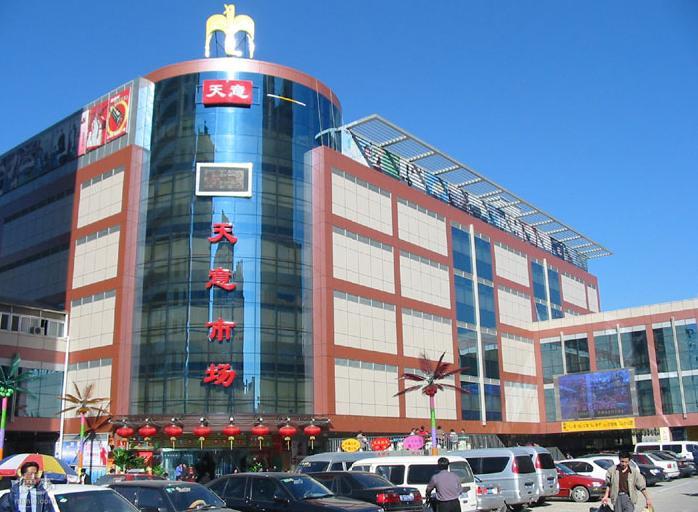
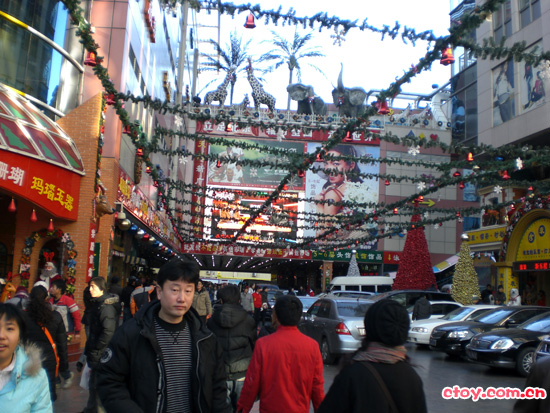


“With great difficulty, to relieve population congestion, the Dongcheng and Xicheng district governments managed to move out some 10,000 registered permanent residents, but 20,000 of the low-end working population flooded in instead. In the market areas there is an average of 6 people in every stall.” Wang Weiping said several times fires had broken out in the rear of the Tianyi market, and fire trucks are unable to get in. Whenever people live close together with commodities, in the form of stores or factories, there is increased danger of fires, and also public security problems.
Beijing deputy mayor Chen Gang said, Beijing’s current stage of development is full of contradictions, it requires more meticulous management. Underlying the various contradictions is the pressure of the population on environment and resources. The intensity and rapidity of development in Beijing, the intensity and rapidity of urbanization, is unparalleled in the world. London, at the point of its most rapid expansion, increased by 70,000 people a year, New York by 100,000, Tokyo by 200,000. But Beijing adds 60 to 700,000 a year. If this rate of increase continues, in less than 10 years, there will be enough people for a whole new Beijing. Why do so many come here? The low-end service and manufacturing jobs draw people here.
“Suddenly we have become aware that everything is in short supply, even air to breathe. Urban life has overnight become difficult.” Chen Gang believes that the concept of development has to be readjusted. Instead of increasing speed to reach GDP targets, the government should go back to its starting point and pause for restructuring, to transform from low to high-end industries. This is an important move to break open the stalemate of population versus the available resources and environmental capacity.
konjaku: a rebuttal to the article above
Zheng Xinye: Beijing driving away the low-end population does harm rather than good
A policy to regulate and control the low-end population not only does nothing to alleviate Beijings urban disease, but instead causes endless problems for city development
Caixin reporter Lan Fan, 2014-02-17
http://m.special.caixin.com/m/2014-02-17/100639285.html
In 2013, Beijing’s population total had reached 21,150,000. 8 million of these were non-permanent residents,a population composed of “people from another place.”
Confronting the excessive over-population and scarcity of resources, Beijing city has put forth a new round of policies aimed at regulating the population. Beijing’s lofty approach is to “use industry types to control population.” The government hopes to drive out of the city the low-end industries: such as clothing, building materials, and the wholesale markets of cheap dry goods.By doing this they hope to also drive out the low-end masses who work in and are attached to these industries, and who concentrate in certain areas.
It has always been the low income laborers who have borne the brunt of population control efforts in Beijing. Unable to become permanent residents, they have been excludedall this time from the public benefits system. When urban villages, or villages on the city periphery have been cleaned up or demolished, they have been the ones driven out, to a further edge of the periphery, or even underground.
Renmin University professor Zheng Xinye, in a visit from this reporter, pointed out that it is not the low-end population which is the cause of the scarcity of resources, nor or they the cause of over-crowding. Driving out the low-end population will not cure Beijing’s urban disease. Just what kind of effect to these policies have on city development?
Caixin: This time Beijing is turning to economical methods in its population control efforts,under the idea that expelling low-end industries will necessarily drive out the low-end population that depends upon them for its livelihood. Is this idea correct or not?
Zheng Xinye: to relocate the low-end industries by administrative fiat, is actually to destroy the economic structure of the city.
The low end industries exist where they are because they are filling a demand. If Beijing drives out the clothing markets, and the building materials market, the high-end industries will not be able to fill the vacancy and meet the demand, because the profit margins in these industries is quite low. If Beijing forcibly eliminates the supply of low-end products, it is the average, ordinary person who relies on these products who will suffer. Their lives will become much less convenient.
Caixin: but the officials believe that, if the needs of urban residents can be elevated to a higher level, the suppliers can also be raised to a more advanced level. If you tear down the vegetable market, you can replace it with a supermarket.If you move away the clothing wholesale markets clustered near the Beijing Zoo, you can replace these with Taobao [online shopping website similar to Amazon or eBay, http://www.taobao.com/market/global/index_new.php%5D
Zheng Xinye: if you relocate the clothing and small goods wholesale markets outside the city, their place can partially be filled by electronic shopping. But when things are bought on the net who delivers them by express delivery, are these not members of the “low-end population?” Riding electric motor scooters to deliver goods, isn’t this likely to create more pollution and over-crowding? Instead of several young women riding the subway together to the Beijing zoo exit to buy clothes, now each will purchase their items online. Then each of those items will have to be separately wrapped and packaged, and delivered by a different person to a different home address. The use of energy and wear and tear involved in the circulation of materials and traffic, will therefore not decrease because the wholesale markets have been moved, it may even increase. This will simply be replacing one form of “low-end” with another form of “low-end.”
Let us say you tear down the vegetable market, expecting residents to now go shopping at a nearby supermarket. But at the supermarket prices are higher, it is further away. As the supermarket fulfills the demand of shoppers, demand itself expands. However, in the end this is nothing more than replacing one individual entrepreneur in the vegetable market [one member of the low-end population] with one employee [another member of the low-end population] inside the expanded supermarket.
Policies that attack the so-called low-end, cause a chain reaction that often does damage to the goals of other policies. For instance, if you tidy up the bicycle repair shops that spill out onto the sidewalks and streets, a typical example of a low-end industry, then where do bicycle riders go to get their bikes fixed? If they can’t fix their bikes, they are forced to drive cars or squeeze onto public transportation, which conflicts with the government’s need to reduce air pollution, and reduce street motor vehicle traffic.
Caixin: Repelling the low-end labor force will definitely improve city management and lower net costs. In the end will this idea help the city go up to a higher level, or will it inhibit its vitality?
Zheng Xinye: Driving out the lower-end population will create an unholy mess! It will completely break apart the employment structure, which is based on the division of labor in society, of each person getting to work at the task at which they most excel. The city is a concentrated realization of the social distribution of labor on a large scale, improving the efficacy of society as a whole. If you drive out the low-end people, then the so-called “high-end” people will have to spend a lot of time doing tasks they do not excel at.
Regarding the competitive power of Beijing, in terms of the whole nation, and in terms of the whole world, the most important factor comes down to one thing: culture. Here we have the most outstanding professors, doctors, athletes, reporters, and artists. If we smash the employment structure, we make these professors and artists spend much of their time at sweeping and sanitation, preparing their own meals. Those who are the backbone of the competitive power of Beijing, will have less time for their own work. Medical treatment, research, art works, literature, education, will all suffer. The city’s economy will wither, its vitality will disappear.
Of course, the so-called high-end people will continue to need the services of the low-end population, and the city will be unable to do without them. But the process of hiring workers from outside will raise costs. Employers will find themselves having to pay workers higher salaries. With the rise of net costs, competitiveness will diminish.
Going a step further, Beijing’s competitive edge has an influence on the whole nation. If medical treatment, education, media, athletics, and art all suffer a loss of productivity, this will effect both industries and consumers in other regions of the country.
Reporter’s conclusion: in the city demand for goods and services operates on different levels, for each level there is an appropriate work force. Even if Beijing seeks to enhance itself with high-end industries, those in these high-end industries will still need services from the low-end labor force, and the low-end laborers will also have needs that are satisfied by low-end industries [such as wholesale clothing marts]. Forcibly driving out the low-end industries and low-end population, will artificially raise city operating costs, and in the end it will lose competitive power.
konjaku: “On 04-18-2014, the Beijing Education Commission released their compulsory education school admissions document for 2014, which required that non-permanent residents produce the “five proofs.” …What is new this year, is that the Education Commission empowered each district to “integrate its practice and establish and implement its own detailed regulations.”
After this, each district added its own strict stipulations on top of the five proofs. For example, Dongcheng district requires that both parents both live and work in the district, Fengtai requires that at least one of the parents works in the district, Haidian requires that both parents have temporary resident permits that were transacted before 2014-03-01, Changping requires that both parents hold a temporary residence permit issued before 2013-12-31, which is still current. In addition, they have added a new condition to the five proofs, requiring proof that applicants have made social security payments. For instance, Tongzhou requires both parents to have made social security payments inside the district from 2013-01 to 2014-03, amounting to at least 12 months of payments. Chaoyang also requires both parents to have paid social security. It is this one stipulation that is making it impossible for many non-permanent resident children to complete the verification process.”
As the above shows, Tongzhou has set up perhaps the most stringent conditions, by requiring social security payments from both parents inside the district. Why inside the district? Previously I thought that the reason to ask for payments “inside the district” (even social security payments)was that these functioned as a local tax. If the district was going to spend more money for schools or school construction, it wanted something in return. However, after reading the following article, it seems as though the purpose of the requirement is simply to mandate something which no one can fulfill, thereby driving non-permanent resident children back to their hometowns.
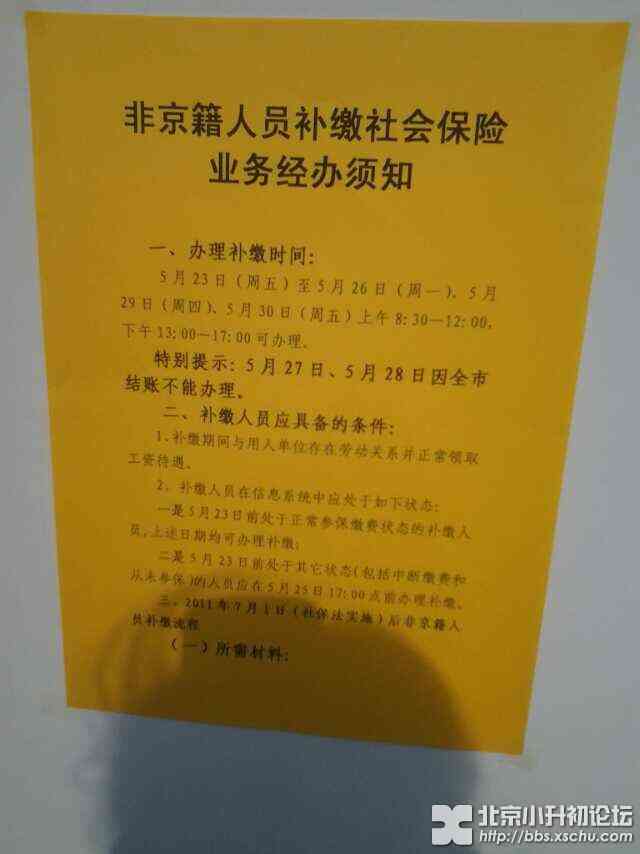

Beijing quietly raises the school admissions threshold to non-permanent residents
2014-05-20, Caixin net
Reporter (trainee) Zhao Han
http://china.caixin.com/2014-05-20/100679826.html
This year Tongzhou, on top of the five proofs required of non-permanent residents to send their children to first grade, added the further requirement of social security payments, which, they clearly state, must be paid “within our district.” The majority of non-permanent residents who live in Tongzhou actually work in other districts, and make their social security payments there [in the districts where they work]. 05-31, which is the last day to register for primary school, is fast approaching, and many Tongzhou non-permanent resident families find the school gates shut against them.
The five proofs do not seem that difficult to obtain, but some household heads who engage in the business of collecting scrap and waste products, and other low-end laboring jobs, said that getting the proof of employment in Beijing is difficult. Tongzhou’s more strict and detailed regulations this year are not only aimed at the low end labor force. Even those who have been paying social security for ten years, and have even gone so far as to buy a house in Tongzhou are suffering.
On 05-19, of the 200 or more household heads who gathered at the city complaint’s office, the majority had already collected the five proofs, but were unable to solve their school admissions problem.
Mr Zhang, a representative of the complainants, said that in 1996 he came from Chengde (in Hebei) to go to college. After he graduated he went right to work, and at present he manages an advertising company. His child was born in Beijing in 2008, and has grown up in Beijing ever since. Mr Zhang said, “Since last year we have been following the Education Commission website with close attention, and preparing our five proofs. We felt were on the right track, and our children would have no problem getting into primary school.”
The surprise attack came on 04-30, when Mr Zhang looked at the Tongzhou page on the website and saw the required standards. The first one that caught him up was, “Show proof of employment within our district.” The applicant had to provide the master copy, as well as a photocopy of an employment contract with an employer in “our district.” Also social security payments between 2013-01 and 2014-03, comprising 12 months in all.
A Mr Sun, a native of Shandong, stayed in Beijing after he and his wife graduated from college. He said, this “in our district” requirement is extremely irrational. As everyone knows, Tongzhou is a “bed town.” The majority of people there work outside the district, but choose to live in Tongzhou because rents are cheap. The Tongzhou resident who pays social security in Tongzhou [instead of where they work] is extremely rare.
The Tongzhou notice of standards says the applicant must have made social security payments between 2013-01 and 2014-03. A household head, Ms Li, said that as it happened she was in the process of changing jobs at that time, and did not pay social security for 12 months. Even though she had paid social security continuously for over 10 years before that, this did not fit within the strict requirement written into the standard, therefore she could not use that in her five proofs.
Controlling the urban population, driving away the “low-end group.”
The heads of household, one after another, guessed that Tongzhou was going one step beyond Beijing city proper in strictly controlling the urban population. Mr Sun said, certain household heads blocked the way of a Tongzhou education commission official and demanded an explanation. The official said, this is the overall trend Beijing is following. They want the low-end masses and the markets [densely packed neighborhoods of stalls] to be driven out of Beijing. Tongzhou has limited resources, and these are all being taken over by people who have come from elsewhere.
This reporter found out, that from 05-15, household heads have been presenting complaint letters, visiting the Education Commission and government offices. Mr Sun said the answer they got was, “We will not receive you, we will not explain, we will not have a conversation about this.”
Peking University Education Finance Research institute fellow Song Yingquan said, for several years, the admissions threshold for students from other places has been made to rise. The districts, taking population control as their objective, have stripped away the fundamental rights of children to attend school. This is short-sighted, it is incorrect. In the long-term, the whole nation and society will have to pay for this shortsightedness.
This reporter has not been able to connect to a Tongzhou Education Commission person for a comment.
Mr Zhang (张) told this reporter, “all of our relatives have moved to Beijing. The national government is in the process of solving the problem of children left behind in hometowns [by giving migrant families urban permanent residency which includes school admissions rights], but Tongzhou’s new policy is creating new left-behind children.”
Many households said, they are firmly determined not to take their children back to their hometowns. However, if they remain in Beijing, the 5 proofs as newly defined will bar their children from school. The majority of these[200] household heads have already asked for 6 days off from work. Mr Sun said, “How can we think of working? Isn’t it for the sake of our child that we work? These last several days, when I see my child at home, I feel especially unhappy.”
On 05-19, the Beijing city complaints office received the representative of the household heads. The office suggested that the household heads first go to the Tongzhou Education Commission complaints office to report their problem, then to the Tongzhou district government to review their case, and after that go to the Beijing city education commission to review their case, and finally they should come back to the Beijing city government office to review their case. The household heads said they were afraid that if they went through this entire process, the 05-31 deadline to sign up for school rosters would already have past.
Editor: Ren Bo, lay-out editor Wang Yong
Beijing non-permanent resident mothers return to their hometown, for their children to attend school
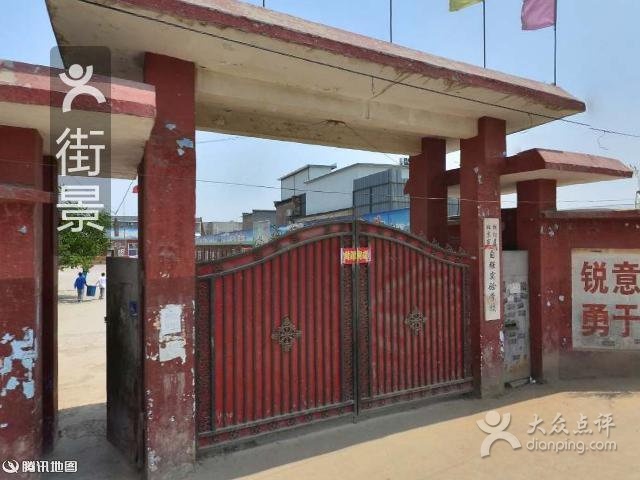
Ziqiang School gate
konjaku: some non-permanent residents delay getting the temporary residence permit because they see it as a way the local government extracts money from them, without giving them in return any of the benefits permanent residents get in medical care and school admissions. Applying for a temporary residence permit makes them “visible” to the local government, which then makes them liable for other local fees, even though higher levels of government have forbidden this practice. The perspective of the local government is that it is providing services –trash collection, police protection, etc. –for an increasingly large group of people who do not contribute to funding these services through local taxes.
The national government has announced it will spend a huge amount of money annually over the next 20 years to turn non-permanent residents into permanent residents with all the privileges of an urban hukou (registered permanent residence). It believes that turning the migrant population from agrarian areas into full fledged urban residents is a critical step in China’s modernization. Therefore on the one hand it wants to free them from onerous fees, but on the other, if it is going to pay for increased social services for them, it also wants to set certain conditions and obligations in return.
But for the local government, the immediate issue is: how will we pay the salaries of our cadres, if the majority of people in a residential district do not pay local taxes? The meaning of social security payments, or “social insurance” as it is sometimes translated (shebao 社保, short for shehui baoxian社会保险) lies somewhere between the aspirations of the national government and the financial straits of local government, overlapping and contradicting ripples of influence on the lives of families who have moved to the cities. For these people, social security is like paying for the promise of something in the future, which in practice can be revoked at any time. However, those who did not have the foresight, or the means, to pay social security, starting in the indefinite past, find that this is now used against them as a barrier to the services they most need, and may delay or alter their transition to permanent residency.
———
Beijing non-permanent resident mother resigns job to return to her hometown in order for her son to attend school, in the class of 54 the majority are also returning students
http://news.ifeng.com/a/20140714/41148815_0.shtml
Original title: Struggle of non-permanent resident children to defend their education rights
Source Caijing, author Wu Shan
On 07-09, Zhang Ailing boarded the train with her child to go back to her home –Shanxi province, Datongtian county-town. This was the first time in more than 10 years, since arriving in Beijing, that her family had been separated, with her husband remaining behind in the city. This was the result of several months of struggle, in which, having failed to knock open the heavy gate protecting Beijing public middle schools, Zhang Ailing had no choice but to resign from her job, and return to her hometown. There, in a rented room, she became a full time “school mother,” (a mother who attends to the daily needs of her child attending school) while her husband remained in Beijing to continue to manage a car repair business.
Before the summer vacation started, Zhang Ailing’s son was a sixth grade student at a non-public school in the Chaoyang district. According to the school zone they were in, her child after graduating 6th grade should have moved on to Naizifang Middle School. But because of the new school registration management stipulations in Beijing this year regarding “entering primary school” and “entering middle school,” the school district put out a new requirement that non-permanent residents must have paid social security. Before the middle school sign-up time Zhang Ailing travelled back to her hometown once, to get help in filling in all the information needed to complete the school registration procedures. However, because they had not paid social security, they were unable to get a temporary attendance permit to attend Naizifang Middle School.[ Non-permanent residents attend school by obtaining temporary school attendance permits, the 在京借读证明] She found out hers was not a special case, “In my child’s class there are 54 students, the majority are those who have gone through the same thing already, and returned home.”
Starting in the 5th month, in Tongzhou, Chaoyang, Haidian, etc., non-permanent resident families have been scurrying around frantically trying to place their children in schools. On 05-19, close to 200 Tongzhou non-permanent resident family heads went to the Beijing city government complaints office, requesting a unified plan for their children to attend primary school.
On 06-16, more than 120 non-permanent residents of Cuigezhuangxiang and Shibailidianxiang villages in Chaoyang, went to the district Education Commission office to struggle for school admissions rights, and for a time this became a clash with police.
On 06-18, more than 60 non-permanent residents of Haidian district Shijiqingxiang village presented a petition to the district Education Commission expressing their unhappiness with the fact that their children had been assigned to a private primary school, the Bejing Shangli Foreign Language School.
On 06-21, Zhang Ailing along with some 300 others, took their children and went to the Beijing city government complants office to present a petition. Their children held small cards saying “Children want to go to school” and the adults chanted that slogan, although some mothers broke down and wept. The same afternoon, an Education Commission official granted an interview to 18 household heads, each acting as representative of one of 18 villages or towns in Chaoyang. However, that same evening, these representatives all received warnings from certain parties.
There are other household heads who are in the same predicament as Zhang Ailing. They sent their child to a private primary school which lacked academic credentials. Now, when it was time for junior middle school, they needed to complete the Network forms and receive a School Registration Number for their child, and submit their documents to be examined and verified.
One month prior, the parents of 9 third year junior middle school students filed suit in court against the Beijing Examination Board, because their children were not allowed to take the upper middle school entrance exam due to household registration problems. On 06-12, the Haidian district court began hearing the case, and on 07-11 the judgement was issued –they lost the case.
In the Tongzhou district 5 non-permanent resident parents of primary school age children filed suit against the Tongzhou and Beijing Education Commissions. The court refused to take the case, and their suit was rejected. Other groups in Chaoyang were considering filing suits.
At least on the surface, the struggle over a “defense of education rights” broke out because of the vacillation and opaqueness in the process of forming the policy. On a deeper level, it is the lack of ordered arrangement between the existing education resources and the management system in charge of them, as well as the prevailing mode of thought calling for strict control in all things regarding the floating population, that is the underlying cause of the intensifying contradictions.
On 04-18, the Beijing Education Commission released their compulsory education school admissions document for 2014, which required that non-permanent residents produce the “five proofs.” (1:proof of current employment in Beijing,2:proof of domicile within Beijing, 3: the permanent-residence booklet for the whole family, 4:the temporary residence permit, and 5: proof that at the registered permanent residence [the hometown of the migrant family] there is no guardian who can support the child’s schooling at that location.) This was not new. The Education Commission has been requiring the five proofs since 2012. What is new this year, is that the Education Commission empowered each district to “integrate its practice and establish and implement its own detailed regulations.”
After this, each district added its own strict stipulations on top of the five proofs. For example, Dongcheng district requires that both parents both live and work in the district, Fengtai requires that at least one of the parents works in the district, Haidian requires that both parents have temporary resident permits that were transacted before 2014-03-01, Changping requires that both parents hold a temporary residence permit issued before 2013-12-31, which is still current. In addition, they have added a new condition to the five proofs, requiring proof that applicants have made social security payments. For instance, Tongzhou requires both parents to have made social security payments inside the district from 2013-01 to 2014-03, amounting to at least 12 months of payments. Chaoyang also requires both parents to have paid social security. It is this one stipulation that is making it impossible for many non-permanent resident children to complete the verification process.
“The 5th and 6th month of 2014 was for all non-permanent resident families a black period of humiliation and anger.” This appeared in the written complaint of Cuigezhuangxiang household heads, titled, “Our road is where?” After waiting for what seemed like forever for a response, the Cuigezhuangxiang government on 06-13 answered, stating that 25 family applications had been verified, while 13 others needed to undergo a second round of examination. Considering that 500 families had applied, this seemed a completely inadequate response.
On 05-26, in response to their challenge, the Beijing city Education Commission responded to the Cuigezhuangxiang household heads saying, “the city has no authority to intervene in the particular rules and regulations formulated and implemented by the districts,. Because primary education is a district matter, the city does not directly manage any primary school. In school admissions, we can only give guidelines, but the district shoulders the responsibility.” Zhang Ailing and the other household heads were puzzled, finding this difficult to accept. The school admissions policy was unclear and vacillating. On 05-05, the Chaoyang district initial sign-up day for school admissions, there had not been any mention of the social security requirement. It was only several days later, when families returned to hand in their “five proofs,” that they were told both parents had to have made social security payments inside the district.
On 05-09, the Chaoyang Education Commission, in response to the parents’ report of the situation, had the Cuigezhuangxiang village office announce that the social security restriction would be relaxed. “But then on 06-13, the village government informed us that we should have paid for a half year of social security prior to 05-25 –why didn’t they tell us this earlier?” A household head did not understand.
Then, on 05-26 and 05-27, the village government announced that 69 applicants in two categories had been verified and and added to the roster. The household heads could come in and receive the Temporary School Attendance Certificate. However, what happened next was dramatic: on the 27th, those who went in the morning got their Certificates, but those who went in the afternoon were told, “Issuing of Temporary School Attendance Certificates has been suspended.” One household head who returned empty handed said, “a village government staff member said there was a mistake with their records.”
Faced with increasing strong challenges, on 05-29 the Beijing Education Commission announced that those non-permanent resident families who could not assemble the “five proofs” could not attend Beijing schools, and they could not get a school registration number. They had to take their child back to the place where they had their registered permanent residence. The school in that place was required by law to admit them, and was responsible for issuing them a [national] school registration number. In other words, they left it up to the government administrations in the areas the migrants came from, to solve their school registration problem.
As for criticisms concerning the policy, they responded publicly, that some district’s requirements concerning the social security payments and temporary residence permits were not reasonable. As to whether there was a remedy or not, the city had not yet gotten involved. This was too little, too late.
Just when the non-permanent resident household heads were in a terrible fix, it got worse. Chaoyang gave notice to19 schools for temporary workers, with 10,000 students, to “reorganize and reform” in a week, or face closure. “They call it reorganize and reform, but in reality they just want to ban the schools,” said Han Haixue, the principal of the Ziqiang [self-improvement] Experimental School, one of the targeted schools. The household heads with children in these schools in Cuigezhuangxiang village and Gaobeidianxiang all received telephone notifications from the village committee and the neighborhood committee. “They said to us, those schools are unable to function. They wanted us to go to the school and take a voucher, and then transfer our children back to the school in our hometown,” one mother said. In 2011, Chaoyang, Daxing and Haidian in Beijing banned some 20 of these schools and shut them down, leaving 60 remaining in all of Beijing. These are schools which have not been examined or approved. 19 out of 60 of these schools are in Chaoyang, and it is these 19 which are the subject of the current action.
[For the 2011 ban, see http://www.chinadaily.com.cn/opinion/2011-08/19/content_13150732.htm%5D
The Ziqiang [self-improvement] Experimental School was one of those shut down, and the students were divided. Some were diverted to a nearby public school, others to another temporary workers school. At a different Ziqiang branch campus there was no place to send the students when it shut down, and they were held back. “The object of the reorganize and reform order this year is not to divert students to other schools, but to send them back to where they came from,” said Han Haixue. Han Haixue said he heard directly from the mouth of a law enforcement officer on the Education Commission, “This is the leaders’ idea, part of the larger trend to coalesce and implement management of the floating population –you are expected to cooperate.” Shi Heng, who had two daughters in the Ziqiang [self-improvement] Experimental School, felt deeply worried. “I want to transfer to a public school, but because we, a peasant household with twin daughters, do not have social security, they will not take us. If we send our children back home to Handan city in Hebei, my parents are too old to look after them. Do they really want to force us to go back to our home village?” Shi Heng and her husband have been in Beijing for 10 years, working at building construction sites.

Ziqiang School with volunteer workers

Hongxiang’school board chair Huang Bing said, “A Chaoyang Education Commission staff member advised us to send our students back to their hometowns to obtain their school registration number there. Then they could come back and attend our school on a temporary basis.” But many principals of temporary worker schools said their students ran into difficulties.
According to the measure set up 2013-09-01, the 200 million middle school and primary students will all receive a school registration number for life, which will be recorded in a nation-wide database. Every student will need this number to take high school entrance exams. Beijing has set up the webpage which is the point of entry into the database, and all families with children of the appropriate age are required to register. Non-public schools [such as most schools for children of temporary workers], which have not been examined and approved by the Education Commission, are not in the database. Therefore students who attend these schools cannot enter their information in the database and receive a school registration number. This means they are not eligible to take senior middle school or high school exams.
Starting in the third month of this year, parents, students, and the principals of Temporary Worker Schools have repeatedly gone to the Ministry of Education, the city and district Education Commissions in Chaoyang, Daxing, Haidian, Changping and Tongzhou, requesting that the registered permanent residence locations and the Beijing schools link together to give the approximately 70,000 non-permanent residence students currently residing in these Beijing districts the ability to get a school registration number.
On 05-19, the Ministry of Education issued a printed notice, requiring all localities to “ admit to school all those who have make appropriate arrangements and returned to their native place, to enter into the database those who have returned and who do not yet have a school registration number. These students who have returned to their native place, must under no circumstances be omitted from the database and refused admittance to a school.”
Shi Heng has many times gone back and forth to his hometown of Handan to process his children’s school registration. “This is where their school registration is, so this is where they should attend school –that is the answer they give me.” The mother of Deng Xinran, a student attending Hongxiang School, has gone back to Chongqing to seek advice at the school where her permanent residence is. “They say, ‘You need to have your school registration number here, so once every year your child must come back for examinations.’” Obviously, the Ministry of Education document does nothing to resolve the real difficulties that non-permanent resident families are facing.
This year 22,000 non-permanent resident students will take the senior middle school entrance exam. On 06-24, Jingjing (alias) walked into the high school entrance exam hall at the Chaoyang branch campus of the People’s University Affiliated Middle School. However she had a different Examinee Certificate from her permanent resident schoolmates. Her examinee type was, “Beijing non-resident without qualifications for exam.” This meant she participated as one who takes the exam “at a place other than one’s residence.”
Beginning in 2010, Beijing has set up a provisional school registration status for students like Jingjing, administered by the district or county. But last year, with the establishment of the new national database, the provisional registration was abolished. Under the unification into one national database, all those non-permanent resident middle or high school students who had a provisional status granted by their locality, had this status removed, and they themselves were excluded from the database. They can no longer do as they did before. When they are third year high school students they must return to their hometown to take the university entrance exam. As for Jingjing, even if she passes the exam, she will not be able to go to a Beijing high school. she can only go back to her hometown and enter the high school there, if in the future she wants to take the university entrance exam.
Jingjing’s parents came back from abroad 16 years ago, and have lived in Beijing for many years. Her father said, “We have struggled in Beijing all this time, we never expected that our child when she reached high school would be forced to return to our hometown. There are family members there, but we have separated from them for a long time.” Last year in the 12th month the school held a meeting for families to explain the Education Commission’s notification. “At that time they told us we didn’t need to worry about the permanent or non-permanent residence problem. Then this year on 04-02 there was another notice, saying that ordinary high school students who were non-permanent residences could not take the university entrance exam. Three times we petitioned the Education Commission, each time the answer was the same –return to your hometown.”
On 05-18, Jingjing’s father along with 8 others filed a lawsuit against the Beijing Examination Branch. The Examination Branch explained itself in the court hearing as follows: For an individual pursuing an education beyond the compulsory stage [which ends at 3 years of middle school] it is the responsibility of the government at the permanent residence locality to manage this education process.When Beijing is the non-permanent residence, the Beijing Examination Branch can only offer additional places at the high school entrance exam [not university entrance exams for high school students], that is where our duty ends. Every level of the government has its own responsibilities, at present, according to the educational system and legal statues, the permanent residence locality takes the main role in providing education. The plaintiff lawyers responded, “at present there is no law or government stipulation stating that responsibility for education lies with the permanent residence locality.” In the course of the hearing, the plantiff added the Beijing Education Commission as a defendant in the case. On 07-11, the Haidian court rejected the plantiff’s [the eight household heads] request for a trial, and the household heads said they would appeal to a higher court.
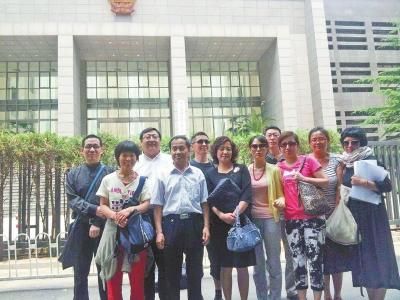
paintiffs in front of the Haidian district court
This year 160,600 primary school students registered in the national database in Beijing. Of these, one third were non-permanent residents. Taking previous years into consideration, the overall amount has actually reached 50%, and is predicted to steadily increase. According to Sang Jinlong, associate dean at the Beijing Education Research Institute, in a ten year span starting in 2001, the permanent resident population of primary students increased four times in size, to a total of 324,000 individuals. The non-permanent resident population increased ten times in size, to 93,000.
A Chaoyang Education Commission staff member said, this year they will enroll 14,000 new permanent resident primary school students. They are still checking the qualifications of the non-permanent residents, but they are preparing places for 31,000 students. Last year the district’s primary schools had already reached a critical point, with a total of 21,000 students.
In Haidian there are 20,000 primary school graduates, but entering students number 27,000. They have more than 7000 students that they have no places for. Next year the situation will only be worse.
Changping has 5317 graduates this year, but entering students total 14,500. Of these, permanent residents students are 8328. In all, there are 9000 students they cannot place.
As we can see from these statistics, the Beijing school system is having trouble keeping up. But Beijing Education Commission Director Xian Lianping in a press conference, was optimistic. Beijing had transformed the way it ran schools, built new schools, added an appropriate amount of teachers, and, he was confident, had enough places to fit demand. Starting in 2012 Beijing city set in motion a plan to build more schools over the next three years. However, as the president of the Beijing Association for Education of Floating Population Children Rong Benyao said, “Overall they have enough school spaces to fill demand, but these are not equally distributed.” In the 3rd, 4th, 5th ring, and in the urban-rural unification area on the periphery of the city, spaces are few. In the outer suburb areas beyond the 5th and 6th rings, places set aside are many. Because a great many of the floating population is concentrated in the former area, they find themselves faced with a deficiency.
konjaku: if families well-off enough to buy a residence in the suburbs are finding school resources strained, this is also a problem for those families who have moved to Beijing to find employment, but whose registered permanent residence (hukou) is in their hometown.
In Beijing, going from kindergarden to first grade now has an additional hurdle to jump: for non-permanent residents, it changes from five proofs to ten proofs
2014-06-30
Source: Duozhi net, author: Wang Yujia
http://www.duozhi.com/industry/20140630/1620.shtml
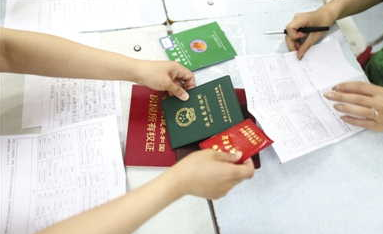
In some districts of Beijing, the “stakes have been raised” on applying to first grade. The head of household was originally required to furnish five proofs, now it is ten proofs. After these have been examined and verified, the children are further required to enter a lottery, and those who do not win in drawing lots are not admitted to school.
Beijing city policy requires that for non-permanent residents, the parent must provide five proofs: proof of current employment in Beijing, proof of domicile within Beijing, the permanent-residence booklet for the whole family, the temporary residence permit, and proof that at the registered permanent residence [the hometown of the migrant family] there is no guardian who can support the child’s schooling at that location.
But this year many districts, for instance, Changyang, Daxing, Tongzhou, etc., have implemented more detailed regulations, and added many more conditions. A head of household in Changyang told this newspaper that in addition to the five proofs, they must also show that both the father and mother of the child have paid social security, that they have paid the rental tax, they must show their rental contract, they must show proof that their temporary residence permit has not expired, and if they have a business, they must show all relevant certificates and permits.
If all these proofs are transacted successfully, the child is still not yet capable of securing a spot in a Beijing primary school.
Taking Tongzhou as an example, on 6-15, Tongzhou Yunhe Primary School suddenly informed non-permanent resident families that even those who had all their documents verified, still would not be given a school interview, and that the Tonhzhou Educational Testing Center would be in charge of managing their school admissions. It said there were still places at other schools in the area, such as the Shijia School Tongzhou branch campus.
A Yunhe Primary School representative told the media that, “the Education Commission allotted us 360 places for entering students, at present our spots are all filled. From the inforation we have received, we understand that non-permanent residents will be subject to a lottery, which will determine which school they go to.” However, the staff member was vague on the details of how the lottery would work, or how many families would be chosen. The same staff member said, according to this year’s Tongzhou district Education Commission policy regarding entering first grade, the families of non-permanent resident children must take the initiative to contact schools themselves, “there is not one consistent explanation across different school zones.”
Beijing this year tightens its school admissions policy for non-permanent residents
2014-05-06
Source: Beijing Evening News
http://edu.people.com.cn/n/2014/0506/c1053-24978512.html
On 05-01, the Beijing Education Commission activated the Compulsory Education School Admissions Service Portal. Every year the head of household of a child that has turned six, can enroll by filing out basic information in a form on this webpage, yjrx.bjedu.cn. The Education Commission stresses that this year those who do not fill out their information on this page will not be admitted to a school. This policy item also applies to non-permanent residents, including those who plan to go to a non-governmental school(a school organized locally, not a public school). This reporter has discovered that a certain number of families of non-permanent resident children, especially those going to a non-governmental school, or a school set up for the children of temporary workers, have little awareness of this process of filling in information. They also do not know, due to the fact that the school registration network is now organized nationally, that if they do not fill out their information, they will not only not be allowed to attend school in Beijing, they will also not be able to attend a school in another province.
This year in Beijing, there will be 17,6000 students entering primary school, an increase of 10,000 compared to last year. The data shows that in 2011, of 95,000 new primary school students, already 47% were made of children of non-permanent residents. This year the percent of junior middle school graduates who are non-permanent residents is 33.4%. This indicates that the majority who start their education in the city eventually opt to go back to their hometown to complete their studies.
Requirements for non-permanent residents will be tougher than ever this year, going beyond the “five proofs.”. In Xicheng District, for a child to fulfill the requirements, they must show that both mother and father reside in Xicheng, both mother and father are employed in Beijing, that both mother and father have temporary residence permits in Xicheng. In other words, if only one parent has any one of these things but not the other, the child’s information will not be considered as verified.
In Dongcheng District, both parents “must work in Dongcheng, both must live in Dongcheng, both must have temporary resident permits in Dongcheng.” In other words, they are required not only to live in Dongcheng, but even to be employed there.
A person on the inside warns non-permanent residents, they should quickly ascertain whether or not they fulfill the requirements of the district they live in. If they do not, they should quickly return to their hometown and transact the school admissions process there. If they harbor the notion of just trusting to luck, if they do not record their information and fill out the school registration form on the website, and stealthily look for a non-governmental school to attend on a temporary basis, then at a later date, when they try and transfer to the school in their hometown, they will not be admitted.
School Registry Information National Network

As mentioned above, starting last year, the Ministry of Education has established a “National Primary School Student School Registration Information Management System.” Every one of the 200 million primary students will be given a school registration number which will not change during their lifetimes. The purpose of this system is to ensure that school registration information is completely factual, that the basic information on each student and their school situation is recorded in a timely fashion. It is also to guarantee that all the data is updated periodically, and that statistics extracted from the data are accurate. It is meant to prevent the situation in which student leave one school without notification, and go to another school without registering and therefore slip out of the database. There will be “one person, one number” accompanying the individual for his or her entire life.
This system started in the first month of this year. If a student transfers to another school, the head of household must provide the student’s name, identity card, and the student’s school registration number, which is unique to that one individual. It is especially important to note that without first getting a school registration number by filling out the form in the national system, in the future the student will not be able to transfer to another school, and make it difficult to take entrance exams for a higher school. Reporter Li Li.
konjaku: The Changyang requirement that parents have paid social security, is an attempt to ensure that these persons have paid a “local tax,” that is, social security payments to a Changyang government office. If the children are going to have the advantage of attending public school in Changyang, the parents are supposed to pay taxes, of some kind or another, in Changyang.
The lottery system is essentially a way of forcing one parent, most likely the mother, to return to her registered permanent residence and enroll her child in school there.
konjaku: although speculation, it seems likely that when the Beijing Vanke real estate company proposed to use its capital to construct branch campuses of elite Beijing schools in “far-off” Fangshan adjacent to its new residential communities, the local Education Commission was willing to promise, vaguely, that Vanke clients would get special access to the schools (see previous post). However, these elite schools are also public schools, funded at least in part by taxation. As the fall academic session approached, it became harder for the Education Commission to justify admission privileges for one residential project, to a school that was public. If Vanke had opted to open private schools exclusively for its residents instead, these schools would not brought the same advance acclaim as the famous public schools. And, Vanke would have to ask its residents to pay tuition, a difficult appeal to families who felt they had already been asked to pay for the construction of the campuses in higher home prices.
This problem of reconciling the interests of new residents in real estate projects on the Beijing periphery with the larger public good, that is, equitable access to social services, is one that must be occurring in many different places. Here is a similar example, in Tongzhou, on the southeast edge of Beijing, again involving school access, “education real estate.” In this case it appears that the government built the branch campus, and the real estate developers indulged in wishful thinking.
Beijing: 6000 buyers appeal to Jinyu jiaye (Gem Real Estate)
http://paper.people.com.cn/gjjrb/html/2010-07/14/content_568775.htm
The hope of the famous school has disappeared– the “healthy living model project” designation has been an annoyance
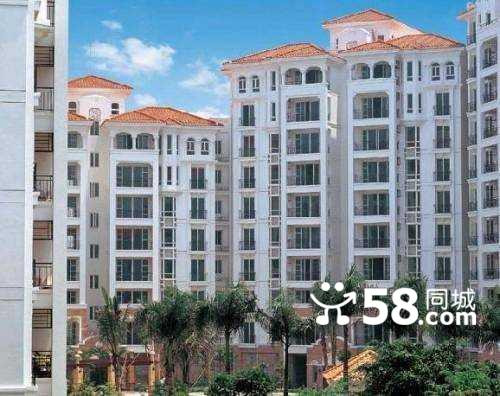
Jinyu 7090 community

Jinyu 7090
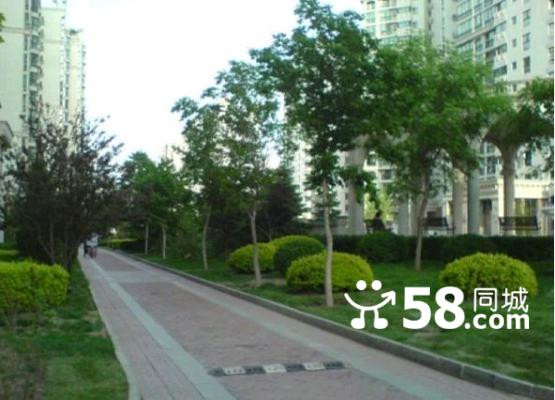
Jinyu 7090
A representative of the buyers in the Jinyu 7090 community has told International Finance News, that the developer (Jinyu jiaye) solemnly promised at the time of sale that that purchasers in the Jinyu 7090 community would be able to attend the famous Shijia Primary School Tongzhou Branch campus. They further promised that the Jinyu 7090 community would be a nation-wide healthy living model project. But in less than a year the school they hoped for disappeared, and the so-called “nation-wide healthy living model project” has only made things inconvenient for them.
A Ms Li said that her decision to buy in the Jinyu 7090 community was based on the publicity materials promise of access to Shijia Primary School. The Tongzhou Branch campus has a good reputation, and is just across the road from Jinyu 7090 community. In Beijing, if there is a famous school in the vicinity, this has a clear effect on housing prices. According to the statistics put together by some buyers, of the 1400 purchasers of residences, 70% had decided to buy in this out-of-the-way location, with inconvenient traffic, because of the Shijia Primary School.
The buyers quickly discovered, though the campus was at their doorstep, the school refused to take their children. The reason the school gave was that the developer of the Jinyu 7090 community had not completely paid the education tax to the Tongzhou Education Commission. The residents had no choice but to send their children to a primary school is a village some distance away.
At the same time, many residents reported to this paper that the “healthy living model project” designation was annoying.
A Ms Wang said, in order to qualify for the “healthy living model project” the developer put in solar powered street lights. But many of these street lights were erected under trees put in to greenify the area, and at night the light they gave off was too dim. The developer had to dig up the areas beside the roads all over again and put in regular electric lights.
What bothered the residents more was the issue of parking spaces. The developer promised the residential community 800 parking spaces. They even promised a two floor underground parking garage, up to international standards. This was supposed to be one of the shining points of their application to receive the healthy living model project designation. But the residents say it has never been built. At present, the total of parking spaces over the whole areas is less than 400.
The developer promised a 1000 square meter kindergarden, but although it was completely built, no one has been able to use it yet. They promised a complete set of stores and shopping choices, but up to now all there is is one small supermarket. They promised a clinic, recreational and entertainment facilities, and so far, zero. Ms Li grumbled, if I need to buy vegetables, I need to go 10 or 20 kilometers to the farmer’s market, and the farmer’s market is once a week.
This reporter has repeatedly tried to contact the Jinyu 7090 community general manager, but up to now there has been no answer.
Hesheng Binjiang Dijing has duped its residents: the famous school it promised has disappeared.
http://finance.sina.com.cn/consume/puguangtai/20130726/114516254067.shtml
Source: Beijing Evening News (Beijing Wanbao) 2013-07-26
Recently a reader informed this newspaper, that the Tongzhou large real estate project Hesheng Binjiang Dijing has asserted that “Shijia Hutong School heads its list of educational resources.” But in the purchase agrement it clearly states that “this project is not within the school zone of Shijia Hutong School, and the school will not accept students from it.” How did this come about?
The developer says that it has never once stated that it is in the zone of the Shijia Hutong School Tongzhou branch campus.. Children of its residents can go to the nearby Yuqiao Primary School. But this reporter verified with the Tongzhou Education Commission, Yuqiao Primary School is already strained to capacity, and the possibility that it will take students from Hesheng Binjiang Dijing is extremely small.
Starting in 2012-05, several websites stated that Hesheng Binjiang Dijing was in the Shijia Hutong School zone, and that it enjoyed unrivaled access to the school. By coincidence, around this time Hesheng Binjiang Dijing adjusted its price, up 3000 to 5000 yuan per square foot from the previous year. Then they added a 2000 yuan per square meter extra room furnishing fee. In the end, the price went up to 23000 per square meter.

Hesheng Binjiang Dijing

Hesheng Binjiang Dijing
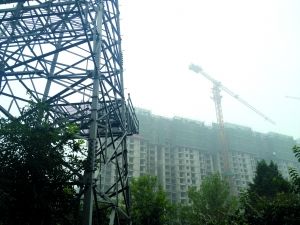
Hesheng Binjiang Dijing
Around the same time the price went up, the purchasers found out that Hesheng Binjiang Dijing did not belong to the school zone of the Shijia Hutong School Tongzhou branch campus.
A Hesheng Binjiang Dijing purchaser showed this reporter her purchase agreement. It clearly states that Hesheng Binjiang Dijing is not within the school recruiting zone of Shijia Hutong School, and asked the purchaser to acknowledge receipt of this information. A Hesheng Binjiang Dijing spokesman told this reporter, “As to which real estate project falls within the school zone, that is for the Education Commission to decide. So, don’t ask me, ask them.”
A Tongzhou Education Commission staff member in charge of determining school zone boundaries told this reporter that bringing the branch campus to Tongzhou was being carried out by the Tongzhou Education Commission in coordination with the Education Commission that oversees the original campus. It is really not something the real estate developer decides. If the developer uses expressions like “we drew in the branch campus,” or “ we forged [the agreement]” or “it happened with our support,” they really don’t have a leg to stand on. He said unequivocally, “In bringing the Shijia Hutong School branch campus to Tongzhou, we had absolutely no communications with Hesheng Binjiang Dijing, so don’t say it happened because of their lead.”
This reporter looked at the original plans of Hesheng Binjiang Dijing, and discovered that, aside from a kindergarden, there were no plans for a primary or middle school. In building a project of more than 400,000 square meters, with over 2800 residential units, what did they expect their purchasers to do about the school problem?
A project staff member told this reporter, “we already made arrangements with the nearby Yuqiao Primary School to have the children of our residents attend there.” But he was unable to show any proof of this. The sales office said they had not heard any such thing. “If it were true, we would have advertised it to the purchasers, since school district residences are in high demand.” A Tongzhou Education Commission member said, “Yuqiao School already has a school zone comprising 20 residential communities, it is very unlikely it can take students from another large real estate development. Educational resources in Tongzhou are in short supply. Each year we allocate as best we can, but we can’t make promises in advance.”
“A complete set of high grade educational resources” “Encircled by 15 year’s worth of famous schools”these phrases are on the maps and posters on the wall in the Hesheng Binjiang Dijing sales office. The official “project introduction” says, “drawing a line around our project, inside it is the Honghuanglan [red yellow blue] bilingual kindergarden, and outside it, but close by, is the renowned Shijia Primary School with one hundred years of history. Lantian [Blue Sky] bilingual kindergarden, Yunqiao Primary School, Luhe Middle School, Shidai Middle School, Yunhe Middle School, Sanqiao Middle School, and Sanqiao Middle School. This altogether makes 15 year educational system in one place, making this a community imbued with a rich educational ambience.”

Does Hesheng Binjiang Dijing have a connection to these schools? A salesman said, “We only inform our clients that these schools are in the vicinity, but we definitely do not promise them that their children will be admitted. We have not made any agreement with any primary or middle school. In 2014 we will have just finished building, only then will we work out formally what neighborhood district we are in, and only then will know our school zone. Right now, our buildings are not yet finished, how can we know our school zone?”
A lawyer’s perspective
At present it is not resolved, in the future it will be a rights issue
What is notable is that, a supplement included in the purchasing agreement states, “That which the seller puts in advertisements, publicity materials, and statements associated with the scale model in the sales office, are all without exception an invitation to make a contract.”
According to a lawyer in the Beijing Zhongyun office, that which is defined as “contract invitation” as things the seller says to induce the buyer, are thus set aside as not a legally binding part of the contract. It is quite difficult to win a lawsuit based on what is promised in the “contract invitation.” The purchasers must urge and follow up with the developer to resolve the education problem with all due speed, otherwise they will have difficulty placing their children in schools, and getting their rights will be doubly difficult to achieve in the future.
Shijia Primary School Tongzhou Branch Campus Student Admissions Brochure
2014-03-31
http://news.51sxue.com/detail/id_40964.html
What is the Shijia Primary School Tongzhou branch? It is a district priority, public school, opened 2009-09-01.

Tongzhou Branch Campus

In 2013 will admit 320 new students, in 8 classes. The school has the capacity for 1,920 students in 48 classes. At present there are 18 classes with 650 students. There are cadres, 51 teachers, 45 of which are full time.
The median age of the teachers is 34. Of those, 23 have graduated from college and pursued further training (69% of the total), 10 have completed a three year college (31% of the total).
The school has residence buildings, with the capacity to board 600 students, attached dining halls and bath facilities. The dining facilities can feed 1000 people at the same time. There is a multi-media classroom, an information technology classroom, a computer reading room, a library, a television studio, an audio-visual presentation room, a science lab, a vitrine display room, a fine arts classroom, a calligraphy classroom, a music room, a dance studio room. There is also a psychologist’s consulting room, crafts, ceramics, in all 28 speciality classrooms. There is an indoor swimming pool, a gym, and a broadcast hall.
The school’s special features: for the students to enjoy education. If we encourage our student’s good points, these will multiply, if we refrain from criticizing our student’s shortcomings, these will gradually decrease. Our goal is happy and healthy students, enjoying their studies. From enjoyment arises method, techniques, the art of doing things. The method is all in a glance, a smile, a motion. To enjoy being with others is to learn generosity, to comprehend, to make discoveries, to reach a boundary.
The curriculum encourages the students to be multi-faceted, multi-dimensional. Special activities include the “small reporters club” ( comprising reporters, editors, tv anchors, camera operators), enchanting shadow plays, block printing, an intro to information technology, fitness, singing work songs, skip rope, embroidery, etc.The students can freely choose what interests them.
Parent’s review: previously we believed that the educational method and course contents had some relation to the original Shijia School, but at the school opening ceremony we found out that they had just borrowed the name, education and teaching matters are all set up in Tongzhou. The teachers seem qualified, as far as it goes, but in the end they are not that great, at least if the kindergarden teacher we had last year is any indication. This teacher lacked method, and did everything in a slapdash way. Perhaps someone else has encountered better teachers there, I can only speak from my experience.
konjaku: the following is a description of the original Shijia Primary School.
The Shijia primary school 史家小学 was founded in 1939. In 2010 it had 74 classes, a staff of 248, including 7 star teachers, and 18 senior teachers, 94 Party members. In 1979, this school took the lead in outfitting classrooms with computers. By 1999 every classroom had LCD overhead projectors and digital scanners. For every 100 square meters of classroom space there is a multimedia room. They installed an in-school network, allowing the students to send and receive e-mail, and make their own homepages. Internet is also set up in every classroom. The school has its own closed-circuit tv station, the “Red scarf of the young pioneers station.” The school makes tv programs to extend the development of moral education, and this station has been specially recognized for encouraging people of talent to contribute their abilities. Beijing city assesses this school as distinguished by the work of the Young Pioneers. The school campus has limited space,but the school has managed to design facilities for physical education: they have a playground of synthetic resin on the roof, and a 1200 square meter gymnasium, built underground, with pool tables, ping pong, a dance space, a swimming pool, and a gym.
konjaku: under the topic of “education real estate” we saw that Jin Mao Palace, a high-end residential project in Chaoyang, arranged to build a branch campus of the prestigious Beijing #2 Experimental Primary School on its site, for the use of its residents.
In Yanjiao, a rapidly developing city just outside Beijing with cheaper real estate prices, the large-scale Shou’er Tiancheng project is building a multi-school campus to supply a full twelve years of schooling for its residents. They may not offer the services of a famous, already established, school, but they do score points for having a comprehensive education plan.
https://konjaku.wordpress.com/2014/09/12/education-real-estate-12-years-guaranteed/
Both these efforts offer prospective buyers the guarantee of a school in an area in which educational resources are strained. They also attempt to take advantage of the Ministry of Education directive that every child may go a “nearby school.”
Large real estate companies are beginning to see themselves as doing more than putting commodity housing on the market. They offer schools (educational services), hospitals (medical services), ferris wheels, restaurant and shopping complexes (lifestyle and entertainment services). They put up office buildings and research and development facilities, holding out the hope to residents that they will be able to arrange to live and work in the same location, finding all their needs met in the new “micro-city.” In positioning themselves to offer all these services, they define themselves as “city operators.”
https://konjaku.wordpress.com/2014/12/11/real-estate-developers-transform-into-city-operators/
The question arises: how will these powerful and influential city operators interact with local government and the public to achieve their particular aims? The following story is a test case of the kind of problems that can arise.
Vanke, the largest real estate developer in China, in collaboration with Zhongliang, another large developer, built a new residential community for 7000 residents in the Fangshan District, southwest of Beijing. Fangshan is relatively undeveloped, and Vanke promised prospective residents schools and a hospital. It contracted to build branch campuses of two very prestigious schools in Fangshan: the Beijing Primary School, and the Beijing #4 High School. The Beijing Primary School is the only primary school that is simply named “Beijing Primary School,” not Beijing Experimental School, or Beijing #2 Primary School, etc., as the first school established by the Beijing Municipal Party Committee after the founding of the People’s Republic in 1949.
Vanke Changyang penninsula curtails their “complete set” –200 demonstrators brave the cold wind
http://house.qq.com/a/20111212/000228.htm
2011-12-12
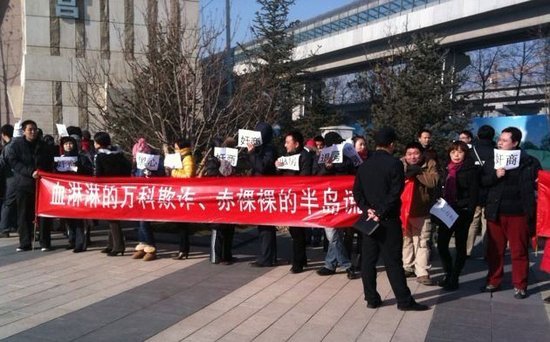
On 2011-12-10, over 200 Changyang penninsula buyers held out horizontal banners and delivered wreaths, standing in the cold wind to protest Vanke’s decision to shrink the complete set of services planned for Changyang penninsula. Namely, the planned Tertiary First Grade Comprehensive Hospital was changed to be a hospital offering only specialized services, not a comprehensive hospital; and the quota of students for Beijing #4 High School (Sizhong School) is only for a six year period.
Apparently the majority of buyers were given the understanding at the time of the sale that Vanke promised a complete set of facilities including a school, a hospital, and a kindergarden. Most of the buyers are first time purchasers who definitely need the kind of services a young family raising children requires. They think of Beijing #4 High School as a famous school with an international reputation, and for many of them admissions to this school was a major selling point.
The Vanke deputy-chief Xiao Jin said in an interview with this reporter, that Vanke Changyang Penninsula had been prepared to offer residents the services of a Tertiary First Class Comprehensive Hospital, but the original plan for a full service hospital was scrapped and replaced by an orthopedic hospital instead.[A Tertiary Hospital refers to a large hospital of 500 beds or more, serving a city area or above. “First grade” is the top of three specified grades for hospitals.] Several days later, Vanke announced the 6 year limit for the student quota going to Beijing #4 High School, namely, from 2014-2020, but said the limit might be renegotiated before it expires. In any case, the promise that Changyang Penninsula would be a “school district residence,” with one student per household having access to Beijing #4 High School, had turned out to be an illusion.
Protesters said that in accordance with the market Vanke was lowering prices on residences at Changyang Penninsula, and taking back promises made at an earlier stage, amounting to false advertisement.
Background:
The Zhongliang Vanke Changyang penninsula project [a collaboration between Vanke and Zhongliang, in English COFCO, one of China’s largest state-owned companies] is located in Fangshan district Changyang town, near high-speed roads leading toward central Beijing, but without facilities such as schools and hospitals.
As late as the fall of this year, at real estate fairs, Vanke promotional literature was still stating, “a light rail transportation system, a complete educational system from kindergarden through middle school, a Tertiary First Class Comprehensive Hospital, to manifest your lifelong dream.”
http://news.xinhuanet.com/house/2011-12/07/c_122387994.htm
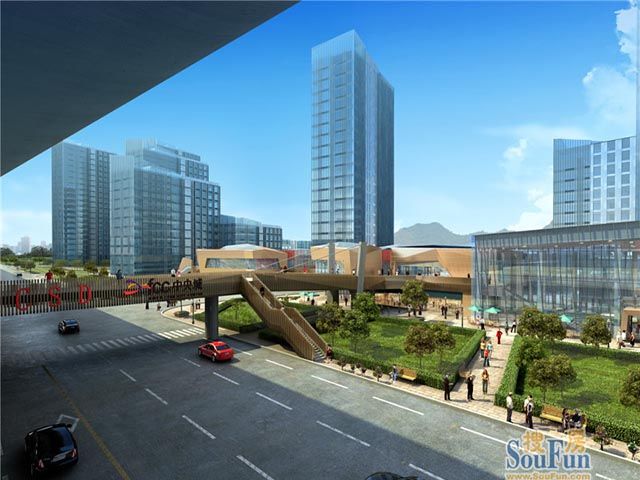
Changyang Penninsula
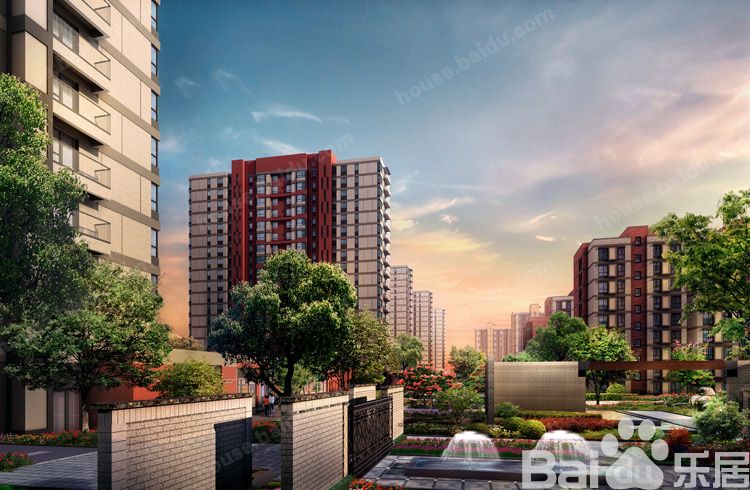
Changyang Penninsula
Changyang Penninsula

Changyang Penninsula
However, more recently a Vanke spokesman has stated: “Current understanding is that the use of the southeast corner of the Number 2 [land] parcel, next door to the Beijing #4 Fangshan campus, is subject to negotiations by 301 [People’s Liberation Army General Hospital] and the Peking University 3rd Hospital to build an orthopedic hospital. The Tertiary First Grade Comprehensive Hospital called for in the original plan shall not be.”
This “shall not be”refers to the hospital the developer previously promised buyers as a recommendation to purchase in the Changyang Penninsula community. This reporter looked at the map of the revised district plan, and found that the change to an orthopedic hospital had indeed been made.
If you want to go to a comprehensive hospital, we can only wait for the new Police Commander’s Hospital to be built,” said a Changyang Penninsula service center staff member. The Fangshan district Liangxiang Hospital is a comprehensive national Secondary First Grade hospital, but it is 8.5 kilometers away, by bus it takes about 50 minutes to get there [A Secondary Hospital serves a “medium sized” area, has 100 beds or more, smaller than a Tertiary Hospital].
The developer previously stated that buyers would have access to city-level well-known schools such as the Beijing #4 High School, Beijing Primary School, Beijing #4 Kindergarden and the Honghuanglan [red-yellow-blue] kindergarden, even to the point of putting this catch-phrase in their promotional materials: “if you buy in Changyang Penninsula, your child will go to Beijing #4 High School.” Many buyers were influenced in their purchase by the high renown Beijing #4 High School enjoys.
This year on 11-25, Vanke Changyang Penninsula concluded a contract with the Beijing #4 High School, a “one residential unit –one student” quota. The Beijing #4 High School Fangshan campus agrees to admit one student to the school for each Changyang Penninsula residence (“residence” defined by a fixed number of rooms). On the weekend, Vanke held a special conference to explain the school admissions policy, and divulged that the contract came with a fixed period of validity, between 2014 to 2020. “After six years, the decision whether to renew or not will be based on whether there are changes to the education and real estate policy on a national level.”
Upon hearing this, the group of those who had purchased residences in Changyang Penninsula hit the roof. “In six years, my child will still not have graduated from primary school, and now you are saying the promised upper middle school is just a mirage?” “We don’t have a child yet, so we’ll miss the chance. Vanke has really let us down.” Most of the buyers in Changyang Penninsula were born after the 80s, for the majority their children will not be old enough in six years for upper middle school. What kind of explanation did the developer have for this state of affairs?
A Vanke sales representative responded, Vanke has made a contract with Beijing #4 High School fir six years, each year investing 2.7 million yuan. It is not clear whether after six years they will renew the contract or not. If the contract is not renewed, the students will be given the opportunity to take the school entrance exam, and based on the results the school authorities may offer them priority, but they cannot guarantee 100 percent of the Changyang Penninsula students will enter.”
The present author through investigation has discovered cases such as this are not limited to Changyang. Buyers in the Yuanyang Yifang at the time of sale were promised the Fangcaodi Primary School and kindergarden, but in the end this promise disappeared.
Yuanyang Yifang is in the Chaoyang district, [Beijing]. Originally Yuanyang promised buyers they would be able to admit their children to a branch of the Fangcaodi Primary School to be built at the site. This was not written into the contract, but many people made a decision to purchase based on the developers’ publicity. But before two months had past, the promise burst like a bubble. “It was clearly written in the advertisements that the development would build branches of two international kindergardens, one priority primary school, and one priority middle school. Of these, the primary and middle school came to nothing, and the kindergardens are still a mirage.” Yesterday a Ms Tian came to this newspaper, bringing copies of the publicity materials of the developer and recordings of phone conversations with salespeople. “When I was going to buy, the salesperson told me that Yuanying would be able to bring in a Fangcaodi Primary School campus, because Yuangying had a long association with the school.”
As more and more buyers discovered, a Fangcaodi Primary School campus was not being built at Yuanyang Yifang, because the new campus was being built at the Yuanyang Xinyue [another Yuanyang real estate development in Chaoyang]. Although Yuanyang Xinyue was not far away from Yuanyang Yifang, the purchase price between the two was different, and the developer made very clear, with a special announcement, that the campus would not be shared between the two.
This author, upon looking around at the promotional announcements put out by Yuanyang Yifang, found that they still have an advertisement out stating “in all the real estate projects in Beijing east, only we enjoy the favors of Fangcaodi Primary School.”
Actually, in 2009 Yuanyang Yifang signed a three year contract with Fangcaodi Primary School, agreeing that every year Yuanyang Yifang would select and send some 30 or more students to attend Fangcaodi. This September the last batch of students started school there. “At present it is not certain whether the contract will be renewed, or whether an arrangement can be made with another school. At this point, our residents had better handle school admissions for their children themselves.” This from a Yuanyang Yifang customer service representative.
Yuanyang Yifang 远洋一方
Yuanyang Xinyue 远洋新悦
Fangcaodi Primary School 芳草地小学
note: Fangshan Campus
Opened in 2014, the Fangshan Campus is the newest campus of Beijing No.4 High School. It is located in Fangshan, a satellite town outside of central Beijing. Buildings and facilities in this campus are totally environmental friendly. Similar to the Shunyi Campus, Fangshan Campus is only considered as an affiliated school to BHSF although its administration is totally under the Main Campus.
Zhongliang Vanke Changyang Penninsula experiences a rights [weiquan] demonstration — buyers in the residential community demand school admissions priority
2013-05-29
http://finance.qq.com/a/20130529/007568.htm
Last weekend, some 200 ZhongliangVanke Changyang Penninsula residents staged a demonstration outside the project sales office, demanding that Vanke give back to them the right of preferential admission to Beijing Primary School.
The problem started this way: It seems that Beijing Primary School was designated for ZhongliangVanke Changyang Penninsula as forming a complete set of services, but recently the Fangshan Education Commission in a sealed document listed many residential communities in the vicinity whose children were eligible for Beijing Primary, without giving Changyang Penninsula any priority rights. In response to this, Vanke corporation stated they fully understood the buyers’ anxiety, and that if the time came that the children of the Changyang Penninsula residents were not admitted to the school, they would take responsibility.
Why were they demonstrating? A spokesperson for the demonstrators, Ms Wang, said that the Fangshan Educational Committee had issued a school district opinion, in which it listed a number of residential communities in the area eligible for the Beijing Primary School Fangshan branch, including Changyang Penninsula. The problem is, as Ms Wang describes it, “The current school zone of the Changyang Branch of Beijing Primary School now comprises 14,000 households. Most of those who purchase properties from Vanke did so because of Vanke’s reputation as a big provider of education. If they do not get school admission preference, the school admissions process will be a total washout for them. The Vanke purchasers in Changyang Penninsula consider that a part of the price they paid for their residence includes money for school construction, and now it seems if they will end up without a school for their children to attend.”
Ms Wang stated emphatically that at the time Vanke started sales in Changyang Penninsula, it publicly announced that buyers would be given the right of school admissions priority. At that same time, the Fangshan Government website said, in answer to a question posed by one of the Changyang Penninsula buyers, “Since the plan calls for providing a complete set of school places, school admissions priority should be given to the residents as a service. The children of the community residents should enjoy the right of attending school, they have a preferential right.” However “at present the Education Department does not acknowledge this, therefore we are having this demonstration[weiquan], only hoping that the developer [Vanke] will make good their written promises [in publicity materials],” Ms Wang said.
In the Changyang Penninsula publicly released documents this reporter found the following: “within the one million square meter western Beijing education area, we have already succeeded in drawing to our area the Honghuanglan Kindergarden, the Beijing City #4 Kindergarden, and the Beijing Primary School, and with the help of the Fangshan Education Board are drawing in other Beijing schools.”
Vanke in response states that it understands the residents concerns, and they will be able to take care of the matter
So, will the Changyang Penninsula residents get school admission preferences or not? This reporter, pretending to be the purchaser of a property, called the sales office to ask. The salesman who took the call answered that purchasers will have access to a complete set of educational resources, but “some details still need to be ironed out with the Education Commission. When progress is made I can give you a call back.”
After that this reporter got in touch with Vanke Customer Services Center. Head Inspector Wang at the Center responded that he was aware of the demonstration. He said, “ there are school admissions rights, and they are limited to those inside the Changyang Penninsula residential community.” But he did not spell out how all the details and problems related to the issue would be resolved.
Vanke issued a statement saying they will take responsibility, but they have not offered a concrete solution. A lawyer in the Beijing Haodong office weighed in as to whether the residents have school priority rights or not. Zhang Chunjie said, that although school admission priority rights may be written in the Vanke publicity announcements, it is not written in the purchase contract agreement, unless the purchaser demanded it be added as a supplemental clause. “In reality, the developer (Vanke) cannot completely guarantee school admissions, because this is a matter determined by the school itself and the Ministry of Education plan, neither of which Vanke has any say in. Therefore Vanke can only say it will try its best to coordinate matters.”
Fangshan Changyang purchasers fall into a school zone dispute–their ”priority admissions” gets spread thin
http://news.xinhuanet.com/house/bj/2013-06-21/c_124890338.htm

Beijing Primary School Branch Campus
The Beijing Primary School Changyang branch campus buildings are being constructed, to open in time for the beginning of the school year. Meanwhile, a conflict brewing between residents in Vanke Changyang Penninsula, and other real estate communities in the vicinity, such as China Railway Construction Corporation Changyang International City, grows steadily worse.
New Beijing News reporter, Li Dong

Ad on wall during Changyang Penninsula construction naming Beijing Primary School and Beiing #4 High School as part of a 15 year education plan for residents
On 6-15, Beijing Primary School Changyang branch became accepting applications for new students for its first year of operation. In Changyang, there are eleven residential communities within its school zone.
The same day, several hundred Vanke Changyang Penninsula residents held a protest at the Changyang Penninsula sales office, shouting slogans about the unfairness of the school zone, and that their promised right of priority school admissions had been weakened. This was the third large protest since the school district issued its guidelines on 05-22.
“We had to pay one third more than other real estate communities in the area, because we were paying for access to Bejing Primary School and the Beijing #4 High School branch campuses.” Vanke Changyang Penninsula resident Mr Wu became more agitated as he continued his story. “Vanke rights of priority admissions was a stipulation we agreed on.”
But, a resident of Changyang International City wrote into a forum, “The plan for a Beijing Primary School branch campus is not just for any one residential community, it is for all of them.Educational facilities is a public service, as far as posible it needs to be fair and impartial.”
According to this reporters investigation, the school admissions priority rights is based on a written agreement between the Fangshan Education Commission, Beijing Primary School, and the Vanke real estate company, which was concluded in 2010, but never made public.
“We repeatedly applied to the government to release the agreement, and filed demands to get a copy of it, but without success,” said Ms Wu. She said they hoped the government would release the document and carry out its provisions. It has been leaked that one of the clauses of the document does give Changyang Penninsula residents priority admission rights to Beijing Primary School.
Beginning in the 3rd month of this year, Changyang International City residents have held demonstrations, demanding that the [Beijing school district reform of 2012] stipulation “of being able to go to a nearby school” be carried out in their case. This has caused Changyang Penninsula residents to become nervous. The Beijing Primary campus will have four classes of entering first graders, so there is a limit on how many spots are available. Changyang Penninsula has 8000 households. Without “admission priority rights” their chances of getting in are quite attenuated. Both sides began holding protests to urge forward their own interests.
On 05-22, the Fangshan Education Commission issued its determination of this year’s school zone. Changyang Penninsula, Changyang International City, Shoukai xiyueshan, Jianbang huating, etc., in all eleven residential communities, were earmarked for Beijing Primary School. This meant that Changyang Penninsula’s admission priority rights were not being recognized, and in the school zone conflict, it had now suffered a temporary defeat.
On 06-20, the Fangshan government website posted a reply from an Eduction Commission staff member, in response to a query from a resident worried about the number of places available in Beijing Primary School. “We have already completed a survey. The Bejing Primary campus has enough space to accommodate all the students of the eligible age in its school zone. There is nothing to worry about.”
With real estate circles it is widely acknowleged that Vanke had a crucial role in bringing the branch campuses of these famous schools, Beijing Primary and Beijing #4 High School, to Fangshan. The author of the “Changyang Penninsula” publication describes in great detail how the Vanke President Mao Daqing brought about a collaboration between business and government, making a “request” for these well-known schools, and how the various district staff members of the Education Commission threw themselves into this matter, even to the point of “rushing directly from the airport in the evening, still wearing flip-flops and shorts, to keep an appointment.”
As more residential communities move to the Beijing suburbs, there is a trend for well known schools to open branch campuses in the suburbs. More and more real estate projects are adding in this option for prospective buyers. However, while the developers do their utmost to put together an attractive “education real estate” package, often they are strong in will but weak in actual power, and the project gets bogged down in indeterminate factors.
Purchasers in Changyang International City, Shoukai xiyueshan, and other Changyang communities say at the time of the sale they were informed,that they were buying “school zone residences,” and that, although without being given specifics, that their children would “be able to attend a well-known school.” Therefore they have held demonstrations asking for their place in the school zone, while accusing the developers of making false promises and cheating them.
The Shoukai shareholders Board of Directors secretary Wang Yi said in response to the demonstrators, “we never gave a clear-cut promise that the purchasers would have access to a particular school. As far as deciding the boundaries of school zones, this is up to the local Education Commission, the developer has no say in admission rights. There is no mention of priority rights in the Vanke contract either.”
Indeed, This reporter examined the Vanke Changyang Penninsula purchase agreement, and found no clause whatsoever concerned with school district matters.
There has been only one public response from Mao Daqing. On 06-01, on International Children’s Day, he posted on Weibo, “When I see many residents demonstrating in front of our sales office, holding their children who are just learning how to walk, I feel as though a knife is stabbing me.” He added, somewhat ambiguously, “after a school has been invested in and begun to operate, whether it becomes a good school or a bad one depends on the cooperative effort of all parties. In our society we have a great lack of trust, but to succeed in this matter trust is the most valuable thing to have.”
Soon after this Weibo post went up, in no time there were more than a thousand responses, but right away the original post was deleted.
Focus: how can the real estate industry escape from creating so many unfair situations?
In drawing famous schools to open branches in their projects in the suburbs, the real estate developers fall into awkward problems. A Changyang Penninsula resident said that although the Fangshan Education Commission had in the past repeatedly publicly acknowledged their priority admissions rights, but after the fourth month of this year they suddenly denied their previous statements. They have also delayed on issuing the school zone plan, it still has not come out. “Its the unpredictable policy changes that keep us from having any sense of security.”
Beijing real estate committee secretary Chen Zhi believes that the real estate industry can actually offer an exit from the overall prevailing unequal distribution of social resources. The local governments are not able to plant the flag of “educational impartiality,” swept along by the so-called popular will. They violate the agreements made between themselves and a business company that have been negotiated in good faith, causing the business to feel bruised and lose its enthusiasm to continue. Chen Zhi said, the local governments, in both thought and action, should keep up with the high speed pace of the real estate industry. They should respect their commitments and also respect the norms of the market. It is possible for suburban development and the redistribution of educational resources to go hand in hand.
Reporter’s notebook
Whose school?
The Changyang residents of the various real estate communities are doing nothing more than scrambling for the best educational resources available, in the outer city suburbs where top quality educational facilities are few and far between. From the past up to the present, Beijing educational resources have not been equally distributed, especialy between urban and non-urban areas there is a grave disequilibrium. As urbanization spreads, more of society is drawn in to participate in the process. How can there now be a dialogue between the various parties, a negotiation of how to share resources?
The prospective buyers who pace back and forth in from of the scale model of the real estate project in the sales office, are inside filled with fears and misgivings. In this far away suburban area under development, can things really turn out well? They have hopes, but how many of these can they depend upon to actually come true?
Vanke’s problem: bringing a well-known school ends in demonstrations
http://www.time-weekly.com/html/20140605/25075_1.html
This year 4th month, the Ministry of Education issued a notice requiring the 19 focus cities to implement the two stipulations of compulsory education –for children to be excused from exams, and to be able to attend a nearby school. As a result of this policy, there began a new round of agitation over the process of choosing a school. In Beijing, because of the upsurge of business in “school district residences,” the unit price of some buildings went as high as 30,000 yuan per square meter. [4,500,000 yuan per 150 square meter residence 724,000 dollars]
There is no doubt that areas around well-known schools sell extremely well, but as city areas continue to be built up, the hot spots in the vicinity of well-known schools becomes completely saturated. There is almost no space left to build anything further. In Beijing new building complexes have spread, concentrating in the 5th and 6th rings. But a number of these really large complexes, because of where they are located, are not near any famous schools. They have no choice but to invite schools to their sites, and then promote the superiority of their educational assets to buyers.
This year, in Beijing Daxing district, Zhuzhong Vanke Orange brought in the Beijing Yucai School Daxing branch campus (the primary school division) Since this project represents the marriage of Zhuzhong and Vanke, both very large, key enterprises, the Daxing Education Commission, the Xicheng district Education Commission [Xicheng is the location of the original campus], and Yucai School cooperated to sign a contract. Under the support of Daxing government, a branch of Yucai School was set to be built in the SE corner of the site.
Before this, Zhongliang Vanke Changyang Penninsula drew in Beijing Primary School and Beijing #4 High School branch campuses, and WuKuang Vanke Ruyuan in Haidian already succeeded in signing a contract with Zhongguancun #2 Primary School, and the Capital Normal University Affiliated Middle School. Regarded as an industry leader, Vanke is in the vanguard in signing contracts with well-known schools, and getting agreements from them to open branch campuses in the suburbs located on the Beijing periphery. However, Beijing Vanke has in the effort fallen into a number of problems difficult to fully explain. The Changyang Penninsula residents have staged demonstrations, complaining that their admissions priority rights have been diluted.
Real estate consultant Han Changji believes that Zhongliang Vanke has taken positive steps to confront the problem openly and publicly. It has fully explained the situation to its residents and helped them to link up and coordinate with the school. He hopes that the residents will understand and support Vanke for its efforts, and that in the end the whole process will be beneficial to Vanke’s public image.
It takes a three way collaboration to make a local educational system complete
In bringing a school to the suburbs, it is important that Vanke, the school, and the local district collaborate. Vanke must not only construct the school campus, but the key thing is to marshal the educational resources and keep the process on track.
For instance, in the Vanke Changyang project, under the support of the Fangshan assistant district head Wu Huijie, , Vanke began arrangements with Beijing Primary School in 2010, and both parties worked out the details together. They produced a written agreement, along with the Fangshan and Xicheng Education Commissions as signing parties, and planned a long-term partnership of a “well-known school with a well-known real estate company.”[This agreement is referred to as the “Four Parties Agreement”] The branch campus, situated inside the site of Changyang Penninsula, included specialized classrooms for music, art, dance, construction, science, computers, etc., as well as a playground and an indoor sports arena underground.
Although it seems like a situation in which “the real estate company –the school –the district — the real estate community residents –all win,” actually materializing a school policy that fulfills this, turns out to be difficult.
2013-6-15 Beijing Primary School Branch Campus formally began soliciting applications for first grade students. Right away the conflict over the school district issue broke out. On one side were residents of Changyang International City (in the first rank of Beijing commodity priced housing, on market starting 2011, 12,000 to 12,500 yuan per square meter, 2000 residential units) and on the other side Changyang Penninsula residents, both vying for spots in the not yet completed Bejing Primary Fangshan Branch Campus.
The logic of the Changyang Penninsula residents who then staged a demonstration outside the real estate sales office is this: the branch campus was constructed under contract by Vanke, and the bulk of the fund to build the school buildings came from the funds paid by the residents when they purchased their home. In addition, according to reports, now that the initial stage of construction of the campus has been completed, Vanke continues to pay for school operating expenses. As for the so-called “priority admissions rights” these are precisely specified in the “Four Parties Agreement.” In the agreement it states, “The primary school is part of the complete set of educational services of Changyang Penninsula, in principle the residents’ children have priority to attend the school.” Before 2013-05, the Fangshan Education Commission, in response to any inquiry, repeatedly answered that they upheld this principle as stated in the Agreement.
Because they were given a dual guarantee from Beijing Vanke and the Fangshan Education system that Changyang Penninsula would be a “school zone residence,” prospective buyers decided to relocate to faraway Fangshan. At the time Changyang Penninsula first went on the market, its price was 1/3 higher than other real estate projects on the Beijing periphery, and for a while it even exceeded the price of Beijing South inside the fourth ring. [Changyang Penninsula was more expensive because buyers understood they were paying for the schools included in the package as well.]
Changyang Penninsula purchaser Ms Li said they bought a residence here with their child’s schooling in mind.At the time, the seller gave them verbal assurance that school admission “would on the whole not be any problem.” “We considered the Beijing Primary branch campus to fit the definition of a ‘nearby school’ therefore we felt there wouldn’t be a problem.” But she and others did not have a 100% guarantee, nor did they have a written agreement.
This year third month, 24 Vanke residents filed a suit against Zhongliang and Vanke for going back on what they advertised. Vanke, for its part, felt aggrieved. Its chairman Mao Daqing had expended great effort to bring Beijing Primary School to Changyang and constructing the branch campus on time to be ready for the school year. In all, Zhongliang and Vanke had spent 7.5 billion yuan to bring in famous schools to form its complete set of education services.
A Vanke spokesperson said, “we are the ones who did the constructing, and we are the ones who made the link with the schools, and there certainly is a signed agreement. But as for promising spaces in the school, this is not something we can completely determine, the school has its own position. The written contract only deals with the collaboration between Vanke and the schools, it does not touch on the purchasers’ rights. As for the school zone, this is set by the local government and the Ministry of Education, and is not something we can have much effect upon.”
This turned into a big embarrassment for Vanke. “Although we strive to do out utmost for our customers, there are limits.Nothing will convince them that we cannot do certain things, cannot guarantee certain things, that we are not all -powerful.” The Vante spokesperson had no better answer.
Wang Shizi, the former Vanke shareholder’s group president, has called for Vanke, which has been in business 30 years in 2014, to now “transform itself:” to pare down, and concentrate on building residential communities and providing a complete set of residential services, in coordination with the cities in which Vanke is building projects.
Real estate consultant Han Changji believes that since the majority of the funds used to build schools in a residential community originate in the purchase price paid by the new residents, it seems fair and reasonable for them to enjoy priority rights of admission. However, schools are regarded as public resources, and access to them is based on the census register and other factors. For residents in one real estate community to have their particular interests fully met is not an easy matter.
konjaku: continuing on the concept of “city operator”(and moving from Beijing to Shenzhen for a moment): the Di-wu shitang, the dining canteen or cafeteria chain Vanke has been operating in its residential projects, is interesting both as an example of the relation between the large real estate developer and the community it creates, and also as a model of the current ethos of modernization, efficiency, and service.
As for the meaning of the word “community” (社区 shequ) here, I am assuming it refers to the Vanke’s residential projects, which are quite large, and not a government administrative division.
New business model: community dining room: Di-wu shitang (the Fifth Dining Room)
http://www.pansum.com/ch/XinYeTai-SheQuShiTangMoShi-DiWuShiTang-183.shtml
2013-10-10
What is Di-wu shitang? It is different from an eating place at home (1), at school (2), at work (3), or a restaurant in the downtown streets (4), it is a place opened for the residents of a community, therefore “Number 5, “ a fifth type of eating place. Yesterday, when this reporter went to the Di-wu shitang in Shijihua city,that is how Men Ke, the person in charge of the Shenzhen Di-wu shitang food and beverage corporation, answered the question. Since this store opened last year on 12-25, it has been welcomed by the residential community, and at present serves over 1000 customers a day.

Vanke has over 300 building projects in this country, and to give every one of its residential projects a complete set of services, Vanke Properties has set up the Di-wu shitang food and beverage corporation. Prior to this, Vanke Properties set up a test canteen in 10 places, in Beijing, Shanghai, Guangzhou, Hangzhou, etc. Of these, the one in Hangzhou Liangzhu Culture Village was a considerable success. Taking this as a basis, Vanke began to refine and standardize the model, and produce duplicate versions in various Vanke residential communities. In the 6th month of last year, the first one opened in Vanke city, on 12-25, the second opened in Shijihua city. Di-wu shitang, under the moto, “ Manage for the community, not for the profit” was well-received. At present, there are more than 700 customers a day, and in Vanke’s largest community, Shijihua city in Shenzhen,there are over 1000. Men Ke said their objective is to open ten more branches this year.
Inside the Di-wu shitang, thus reporter noticed that they were offering more than 20 dishes. Meng Ke said, they have over 300 dishes to select from. The dishes served change daily, and after one month they start over, while altering the menu plan based on which dishes have been most consistently ordered. He said Di-wu shitang’s point of pride is their robot stir-fryer, which uses intelligent control technology to ensure that quantity and quality of a dish is exactly the same each time. This reporter followed Meng Ke into the kitchen, and found two mysterious-looking robot fryers, spinning around as they worked. One of the robots was in the process of cooking a dish of young bamboo shoots and meat. The electronic display screen flashed a series of instructions: add so many grams of oil, add so many grams of meat, add bamboo shoots, then add the flavoring ingredients. When it was just done, the heat source automatically went off, the instruction “done” flashed, and the pan inverted to slide the finished food onto a plate held by a kitchen operator. In color it was fresh and tender-looking, in appearance attractive. The cook in charge of operations said all the stir-fry dishes were done by the robot, according to a set order. The robot can make over 1000 dishes. It’s requirements are very strict. All the raw materials and seasonings need to be prepared beforehand and are sealed in bags, and according to the procedure are added during the cooking process. If the form of the raw materials is inconsistent, if the quantity is insufficient, if a mistake is made in the sequence, the robot shuts down, refusing to work.

Di-wu shitang stir-fry robot

a stir-fry robot in use
This reporter saw there that all the operations were carried out with a high degree of standardization. Swiping the card, fetching a tray, fetching the dish, taking it to go and eat, returning the tray.Meng Ke said their qualiy requirements were very strict, all cooking materials are inspected twice to assure food safety. Although the dining room opens for lunch at 11, there were people lined up in advance to get in. At 12:40 there were no empty seats, and more than 20 people lined up at the window to order. Since it is a “dining room” price is an important element. Here the most expensive dish is just 15 yuan, while most are 9 yuan. Sitting at two tables pushed together,was a group of seven, four elderly persons, one middle aged husband and wife, and one child. The middle aged man recognized me for a reporter, and praised the dining room effusively. He said, for the seven of them they spend a little over 100 yuan ($16), it’s a real savings. The dishes are tasty, and if they eat here, there’s no cooking or washing up. They only wish they had a separate banquet room, if they did, they would have a dinner party there. 
While this reporter was talking with Meng Ke, frequently people came up to say hello to him. Meng Ke said that although this dining room had not been open for very long, there were already many old customers. Many people come almost every day for both lunch and dinner, therefore they have become friends.Mr Zhu, an elderly man, told this reporter, that he and his wife retired to Shenzhen. Their children work in the city, they do not live together. To make a meal is simple for just the two of them, but, on the other hand, they have to shop, wash and prepare the food, cook it, clean up afterwards, in the end it is a lot of trouble. He said, they realized that because this community dining room exists, it gives them more leisure time [not to have to prepare meals], therefore they have become regular customers.
Shijihua city:

Vanke operated fresh food market after opening a short time, has to close
With its “neighborhood scale complete set of services” strategy Vanke hopes to break out of the pattern of real estate developments building large scale malls
http://www.bjbusiness.com.cn/site1/bjsb/html/2013-04/23/content_211606.htm?div=-1
Beijing Business Report ( reporters Liqian, Chong Xiaomeng) has reported on the Xingfu jieshi market in the Changyang Penninsula real estate project, which closed barely 50 days after it opened. The reason is that a department office of the Ministry of Reconstruction and Commerce ferreted out that they had not completed the paperwork. Yesterday Vanke responded with their own statement, to the effect that “one of their rivals had tipped off the Ministry office.”

opening day
The Xingfu Market (Happy Market)in Changyang Penninsula is one of Vanke’s trial ventures to start up businesses in the field of community services. Several months ago on 03-02, the Changyang Penninsula Xifang Market officially opened. Vanke stated that the market would be capable of supplying the vegetable and fresh food requirements of the 7000 plus new residents.
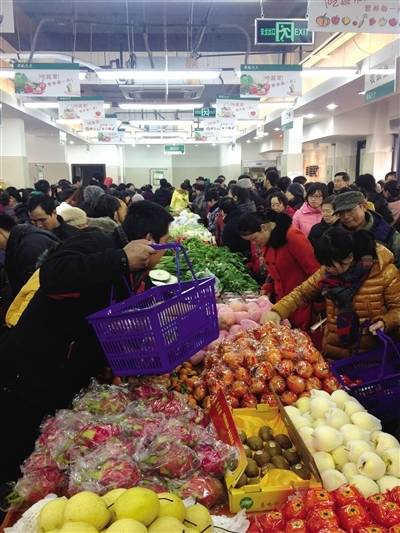
interior
During the several months it was open, the Ministry repeatedly conducted on-the-spot inspections. On 04-19, citing that the paperwork was incomplete, it closed the market, confiscating its electronic scales, and all of its computers and other equipment, forcing it to stay closed until it reorganized
. 
Yesterday, a Vanke spokesperson told the Beijing Business Report that the independently operated market had been welcomed by community residents. Even though they had experienced this setback, Vanke’s “Neighborhood scale complete set of services” strategy would continue. As for when the market would reopen, the Vanke spokesperson said it was not yet determined.
Besides the Xingfu jieshi market, Vanke has also opened the food service dining room Di-wu Shitang, and a dry-cleaners. Compared to the market, at Di-wu Shitang business is flourishing, the number of residents utilizing it is large. Although this may be the result of differing management practices, it also has much to do with the make-up of the new residents. The majority are young, they do not cook their own meals every day. In terms of fresh food products, they might buy fruit sometimes, but they don’t purchase vegetables regularly. Also, Changyang Penninsula is still in the process of selling units and building new buildings. The percentage of residents is not yet very high. In this situation, a dining cafeteria is bound to show quicker results than a market.
A management consultant: “When the market reopens they can readjust its product display and pricing based on data on the age and standing of current residents. Once Changyang Penninsula reaches 70 to 80 percent capacity, they should no longer have a problem.”
An industry insider opined that Vanke may lack experience in this sort of service business. In the future they may need to take on outside help from an expert at retail. But Vanke has already stated they do not intend to seek outside investment in their markets, but want to run them entirely by themselves, in order to ensure the quality of their product. According to the management consultant, it is difficult to judge whether Vanke, which is used to mobilizing on a grand scale, can adjust to being good at small service businesses. However, many feel that for Vanke to take this fresh approach at redefining their business, will have a positive effect.
As more and more real estate magnets wade into the retail business field, it leads to vigorous development, but as their projects all have a similar orientation, this homogeneity leads to less than optimal results. Data shows that up to the third quarter of last year, the unoccupied space in Beijing shopping malls had reached 11%, exceeding the danger zone of 6%. In the 4th quarter of last year, one of the main commercial complexes in Beijing, the Zhongguancun Shangquan shopping mall, had a vacancy rate of 14%.

Zhongguancun Shangquan shopping mall
At present, these malls and commercial complexes are in a gold-plated zone, therefore for the most part they have nothing to worry about. In general, when real estate developers take their first steps into retail, they neglect business management practices. However, if they can just find a way to make a vivid and dramatic impression, the value of their real estate will once again rise.
konjaku: beginning an investigation of the term “city operator[business]” 城市运营商(chengshi yunyingshang),as a term large Chinese real estate developers are starting to use to refer to themselves. I have been following the construction of “micro-cities” in Yanjiao, a city in Hebei just across the river from Beijing. in which real estate projects are conceived of as offering residents shopping, recreation, medical care, and even education, either on site or very close by. Perhaps because of these ambitious projects, the real estate developers are starting to see themselves as “city operators,”in the sense that they see themselves as operating the management systems in these almost self-sufficient micro-cities, once completed. However, even more basic services such as water, power, and sanitation are presumably part of the larger urban fabric, and still under government administration.
The Six Big Real Estate Developers Transform to be “ High-Class, High-End, and High-Minded”: which of them will truly turn into a “city operator business?”
http://yn.winshang.com/news-231085.html 2014-03-25
In the past, large real estate developers have often been labelled as” local tyrants,” seen as engaged in profiteering, buying and selling land to drive up prices, and capital speculating. Nowadays, Wanke (Vanke), Ludi (Green lands), Longhu (Longfor properties), Shouchuang Zhiye (Beijing capital land), Lihai (L’sea), and Beida ziyuan (PKU resources), have, one after another, put forward a new ideal, and goal. They want to be in the business of operating cities. They have resolved to change entirely, to become “ high class, high end, and high-minded.” Residential real estate has reached its ceiling, now, along with the push forward to a new type of urbanization, they are faced with a huge opportunity and a challenge. Among the many developers seeking to transform themselves in the new realities, which of them will truly become “city-operators?”
Vanke –“its power overawes the rest” –providing a full set of city services Vanke is China’s largest residential real estate developer, as its name implies, (“Wanke”) has “10,000 departments.” From strictly residential development, to commercial real estate, now it is transforming itself to “offer a complete set of city services.” It has formerly announced its 5S, or 5 services concept: residential, shopping, leisure, offices, and culture. With its “two flanks fly together” strategy, it truly is awesome.
城市运营商 city operator business
万科 Vanke
绿地 Ludi (Green lands)
龙湖 Longhu (Longfor properties)
首创置业 Shouchuang Zhiye (Beijing capital land)
利海 Lihai (L’sea)
北大资源 Beida ziyuan (PKU resources)
konjaku: this article continues with a description of the other five real estate developers. When I looked further at what Vanke’s concept of “a complete set of city services” entails, I was surprised to find, at least initially, something decidedly not high-end. Instead of gleaming micro-cities of the future, they are offering something more modest and practical.
Vanke “Light on property, heavy on operations” transforms into the business of supplying city services http://sz.winshang.com/news-228442.html
2014-03-13
Vanke group executive vice-president Mao Daqing has stated that after study, they will borrow from the methods of the internet, to transform from selling residential properties to selling city services. “In the next 10 years, Vanke will completely transform itself. If we just repeat the logic of the past, we will be no different from any of the other real estate developers.” Vanke, by industrializing its building systems, including certified green technologies, has completed large residential projects. Through the Neighborhood Home concept they have taken the first exploratory step at providing community services as a part of their business. Except for those that have been open a year or under, in Vanke communities there are already dining rooms, fresh food markets, and laundries. Vanke is thinking over what more they can do. For example, senior centers, in the future possibly services to care for the aged.
From the point of view of real estate, Vanke is putting forth three product lines. The first is the “Neighborhood Home” concept, offering necessary services such as markets, pharmacies, and banks in convenient locations for the residents of communities. The second is the “Lifestyle Plaza,” a complex of stores, restaurants, etc., usually 10,000-30,000 square meters, radiating outward on the periphery of the community. These are not as large or spread out as a mall, but rather in the form of a village or town in scale, appropriate to the size of the community. The third is the “Vanke Plaza:” this is a larger complex appropriate to the size of a large city or city-center. Compared to the “Lifestyle Plaza,” the “Vanke Plaza” is a very large mall, but it is also aimed at providing the lifestyle needs of residents, including fashion, food, community culture, exercise, and childrens’ educational facilities. Lifestyle Plaza: 
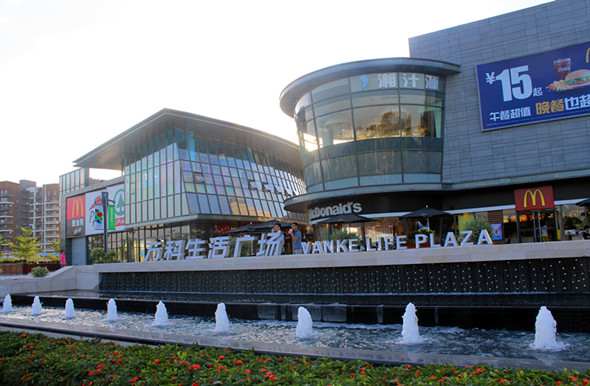 Vanke Plaza:
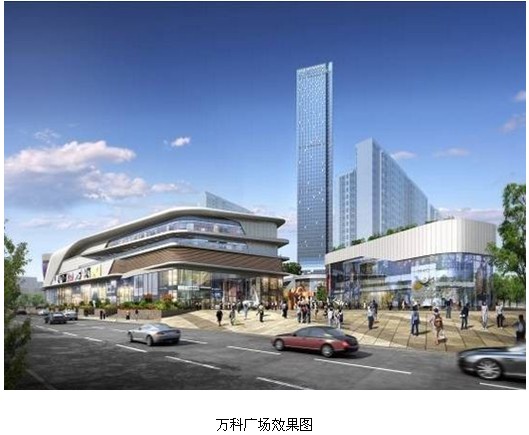

Mao Daqing said, going forward Vanke intends to exercise restraint and be sensitive to each community’s individual needs in planning which businesses to develop. They will even encourage Vanke staff members in the communities to create businesses for their particular communities.
At a recent conference on “Development of Areas under the New Urbanization Model” Vanke General Manager of Life and Family Operations Chen Suijing said, “The concept of the mall often results in something too big for the community, it also has a homogenizing effect which is deleterious. At the same time, we find that in Beijing city there is a lack of businesses supplying what residents absolutely require close by to them, a real gap of one or two times under what is needed. The Beijing Business Committee has a policy to fill the basic daily needs of residents within a 15 minute radius of where they live.” Apart from the business aspect, Beijing Vanke is exploring the idea of building care facilities for the aged. Apparently it has already done a detailed survey of elderly residents in 20 of its residential communities, and is formulating a plan for new system of old age security and care based on the entire community. Part of the plan is to set aside one building in each real estate community they build, offering rentals to the aged. They will start this next year in their Changyang project. However, Mao Daqing revealed that in Vanke’s transformation [into a service provider] it may in the future have to give up its sales targets of 200 to 300 billion yuan a year. In the end though, providing services for residents will lead to more home sales.
轻资产、重运营 light on property, heavy on operations
生活广场 Lifestyle Plaza
万科广场 Vanke Plaza
Vanke tests the water with its Neighborhood Home business concept –it is difficult to support if there are not enough residents
2012-03-14
http://news.dichan.sina.com.cn/2012/03/14/455002.html
After reporting on the Vanke operated Di-wu shitang dining cafeterias, and the Xingfu fresh food markets, this reporter has learned that Beijing Vanke from next month plans to expand into banks, supermarkets, pharmacies and laundries, etc. These are called by either the trademark names, “Five vegetables in one soup” or “Neighborhood Home.” But in some places the proportion of the population is not large enough to support the businesses. In other cases, some Xifang markets have been forced to close.
Vanke Group Vice Director Mao Daqing says the “Neighborhood Home” brand is being tested in the Zhongliang Vanke Changlang bandao (Changlang penninsula) real estate complex. Mao Daqing believes that while in the past Vanke concentrated on building, it must now wed this function to the concept of providing services. Vanke will continue to build high quality residential buildings using advanced industrial techniques and green practices, but at the same time it is exploring the concept of “community business” using the “Neighborhood Home” trademark. That is, beside the Vanke enterprises people are already aware of, such as their chains of fresh food markets and dining “canteens (Xingfujieshi caichang and Di-wu shitang), they also have started banks attracting businesses to an area, supermarkets, drugstores, laundries, etc. Vanke in the future intends to expand this type of community-building business.
Although on the surface “community business” is meant to enrich the community and give satisfaction to customers, underneath it is a strategy of adjustment to changing conditions in the market. Faced with fierce competition, real estate developers must go further to inculcate brand loyalty. According to a management consultant, there are very few truly suitable brand-name service business operating in residential communities, consequently consumption within these communities is low. There is a need to finish, or complete these residential communities by making the necessary residential business services available, which Vanke seeks to answer with its “Neighborhood Home” brand. On the one hand, the “Neighborhood Home” concept is being tested in by Vanke in communities that are new and not yet fully established. For example the Zhongliang Vanke Changlang bandao (Changlang penninsula) real estate complex has been built where there were few already existing residents [near Fanshang, approximately 40 kilometers outside Beijing to the southwest]. Whether there is a large enough population in the area to support these businesses is not yet known. The reason the Di-wu shitang branch there has been successful is that there is not another food and beverage business in the whole district, and because there are a few hundred newly arrived households that have moved into Changlang penninsula. However, there are not enough people to sustain a drug store and a laundry. On the other hand, some of Vanke’s fresh food markets (Xingfujieshi caichang) have been faced with shut-downs, showing that Vanke is faced with problems of how to coordinate. “Vanke considers by providing businesses, these will give back benefits to the residential side, and also cause these communities to appreciate in value. But if the way they operate is not appropriate to the need, it could end up having an unfavorable effect.” said an industry insider.
opening of a new market (Vanke chain)
a pharmacy
a pharmacy
a laundromat

laundromat interior
dining “canteen” Di-wu shitang
a local branch of the banking chain Vanke bought
Di-wu shitang 第五食堂
Xingfu jieshi caichang幸福街市菜场
邻里家Neighborhood Home
五菜一汤 “Five vegetables in one soup
中粮万科长阳半岛 Zhongliang Vanke Changlang bandao
konjaku: I gather from this that there are a number of sites in which the building of residential projects has out-paced, or preceded, the development of basic businesses and services for the new residents. Vanke has decided to expand into this area. Vanke’s foray into the banking sector has been covered in the western media. As this headline shows, the shift is mysterious to market-oriented thinking. “China Vanke’s Bank Investment Puzzles Investors” http://blogs.wsj.com/moneybeat/2013/11/01/china-vankes-bank-investment-puzzles-investors/ there is also http://english.caixin.com/2014-01-27/100634504.html
komjaku: “Tianyangcheng 4th generation” is another large-scale real estate project in Yanjiao, which is to say, another “micro-city” providing “every aspect of modern life.” It’s location was planned to take advantage of development going on in southern Yanjiao.
“At present the southern new city is being energetically developed. Now it is “plan first build afterward.” The government is investing 10 billion yuan. Huge funds will be invested to build the Wumei Wuliu park, an Aviation Museum, and an amusement park larger in scale then the Happy Valley Beijing.”
Excerpt (2014-04-04):
http://news.xinhuanet.com/house/bj/2014-04-04/c_1110096984.htm
This reporter went together with a salesman to the Tianyangcheng 4th generation construction site. While the northern part of Yanjiao city is quite built up with many facilities, this southern part looks like a piece of wasteland. But according to the salesman, in the future this area will have a complete set of shopping opportunities, and a museum along with an amusement park. Therefore Tianyangcheng 4th generation will have an opening price of 12,000 yuan per square meter. The salesman added that this was the third sales period. In the first sales period, the price was only 3000 yuan, and in the second sales period it was 6000, showing that the price has steadily risen. The nearby Hawaiian Blue Harbor had a starting price of 1000 yuan, and the salesman believes that “the main reason was that their residential district had less facilities. We have more demand, because we can offer more facilities.”
konjaku: The following is from the website of the Sky Ocean (Tianyang) real estate group describing Tianyangcheng 4th generation, or, as they put it in English. “Sky Ocean City 4th Generation.” I have made minor changes to the text. A mu is defined as one sixth of an acre.
http://www.skyoceanint.com/Content/2014/09-10/1616488452.html
In the groundbreaking ceremony, Zhou Jin who was chairman of Sky Ocean Real Estate Group also delivered a speech. She said that “Sky Ocean City 4th Generation” was an upgraded version of “Sky Ocean City” after lots of years of development in the real estate sector and one of the most advanced large-scale urban complexes in the world. As a leading city operator of China, Sky Ocean Real Estate Group undertook the duty to promote urban development. The development of Yanjiao “Sky Ocean City 4th Generation” was an in-depth definition of such a social responsibility because it offered full-range business functions to the city and improved the lifestyle options of the local residents with its 1,000 mu amusement park. This project is expected to upgrade the tertiary industry of the city and promote the sustainable development of the city through its service, tourism, cultural and other clean industries.
According to planning, Yanjiao “Sky Ocean City 4th Generation” will cover an area of around3,000 mu[500 acres] and a construction area of 5,000,000 sqm. It is a large-scale urban development service zone that integrates recreational, entertainment,commercial shopping, tourism, vacation, high-end residential, commercial,office, technology interaction, cultural creativity and recuperative facilities. It is expected to promote the development of the local tourism,commercial, creative and other industries and the local urban infrastructures.It will become a central living district and a destination of leisure for Beijing residents.
Finally, the governmental officials and the leaders of Sky Ocean laid the foundation for Yanjiao “Sky Ocean City 4th Generation” together amidst the roaring gunfire salutes, dancing lions and frolic music, witnessing this historic moment in the development of the city.
Today, the Qian’an “Sky Ocean City 4th Generation” of Sky Ocean Real Estate is under construction. This project of Yanjiao “Sky Ocean City 4th Generation” will establish an even more glorious image of the 4th-generation urban complex and become a constituent of the urban development blueprint of southern Beijing, achieving the goal of becoming a new type of city with a new form of suitable living.
燕郊天洋城4代, Tianyangcheng 4th generation, Sky Ocean City 4th Generation
konjaku: I found it striking that Sky Ocean describes itself as “a city operator.” 城市运营商(chengshi yunying shang), literally, in the business of operating cities. In a subsequent post I intend to pursue the meanings and implications of this phrase. Now, I want to look at the images of Tianyangcheng 4th generation as it will appear in the future, a detailed vision of an ideal evolution for the Beijing periphery, emerging out of the “wasteland.” (Click on photos for expanded size)
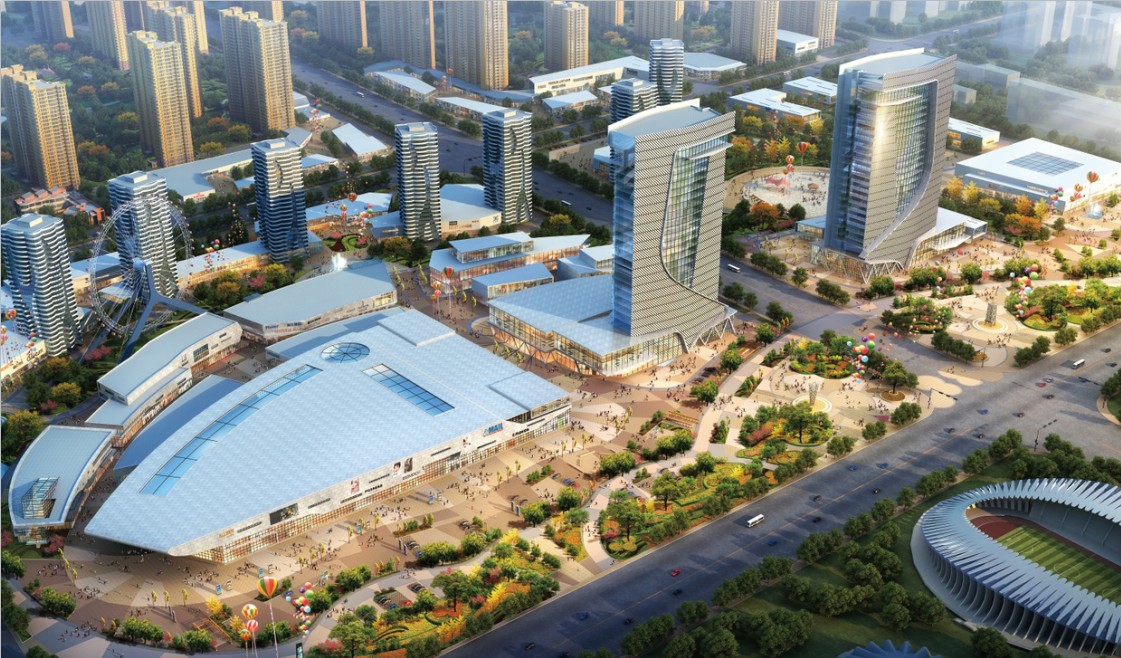

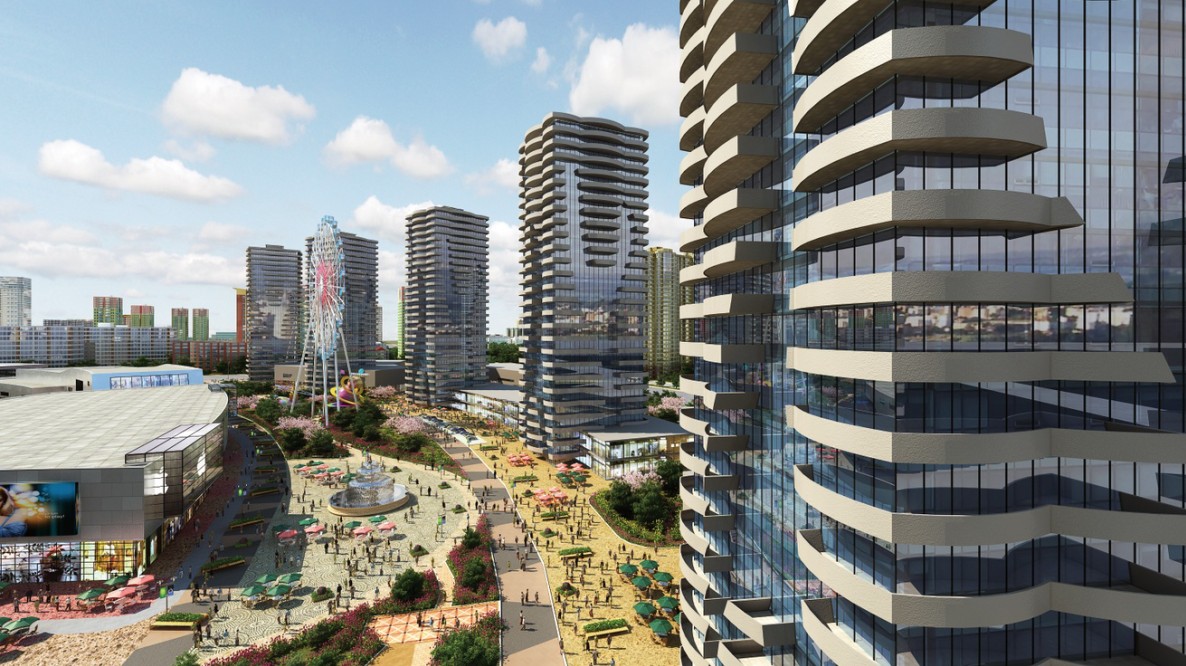


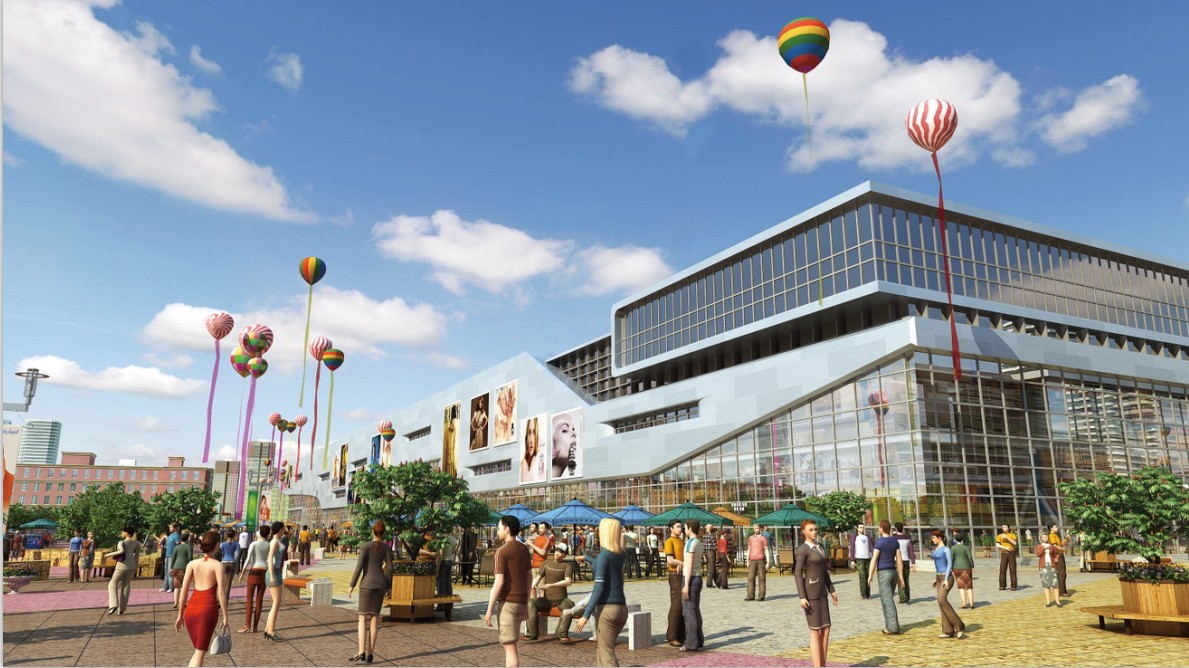

konjaku:Shou’er Tiancheng was the leading real estate project in Yanjiao, opening in 2012 (see previous posts). In 2014, vying to take over first place as the international city of the future, is Huifu Yuerongwan (Banyan Tree Harbor). In September there was a perception that the real estate market in Yanjiao had cooled, but shortly afterwards Yanjiao rebounded into a “warm fall” (Indian summer) of resumed demand.
At one Yanjiao real estate project, people lining up all night is just a ploy
2014-09-25
http://news.wh.house365.com/zx/20140925/024551189.html
During the first half of this year, this reporter interviewed Yanjiao real estate representatives at Shou’er Tiancheng, Tianyangcheng 4th Generation, and Chaobai jiayuan. They and others said they were offering a discount of 2 to 3000 yuan per square meter, and that prices overall were falling by 10,000 yuan.
Two months after that, this reporter found that, as we enter into the “gold 9th month silver 10 month” of autumn [when people are apparently willing to spend more and consumption rises], in Yanjiao, the price drop was continuing, and real estate developers were still offering discounts as an incentive.
On 9-21, one development company announced it would pass out tickets to line up for a new sales offering. On the net, it spread the news that customers were already starting to line up that same night, 40 hours in advance. Real estate insiders were astonished, some had doubts about this, because the general trend was that Yanjiao was cooling off. They did not believe a sales offering in Yanjiao at this point in time would draw so many so early, and they wondered if this was a man made phenomenon.
This reporter went to the scene at 9 in the morning the next day, and estimated there were about 300 people lined up. Among these, some 30% were employees of the real estate developer, sales reps and staff members. After hearing from some real estate reps, this reporter determined that it was likely this line was concocted, because of a competition with another real estate project, the Huifu Yuerongwan. Huifu Yuerongwan was also in the process of a sales offering generating lots of interest, and this development project had to demonstrate that it too could draw a long line. In fact, the development company had handed out numbers to a section of customers beforehand, so there was less need to line up at all.
Huifu Yuerongwan
On 9-21, at 7 in the morning, this reporter was at the sales center for Huifu Yuerongwan, and found several hundred people waiting. Many of these potential purchasers had been in line through the night before, and a few had been there up to 48 hours before. This reporter found that many of them work in Guomao or Sihui. Since Yanjiao is only across the river from Beijing, to them Huifu Yuerongwan is a good value, and lining up that long beforehand is well worth doing.
At 9 AM they formally opened the gates to start letting people in. The sales organization followed the procedure of letting in small batches of people at a time, preserving order. They did not allow the scene of fiery and enthusiastic anticipation to become one in which people were crushed against each other
By the end of the day, 1400 customers had signed up.
Huifu Yuerongwan deputy manager Liu Zhengang said Huifu Yuerongwan aspired to be at the center of the effort to forge Yanjiao into an internationalized city supporting a highly advanced lifestyle. They were not going to depend only on their superior location close to Beijing. Liu believed that the line of people waiting was not only because of the location of Huifu Yuerongwan, but also the quality of the product they were offering.
Huifu Yuerongwan:

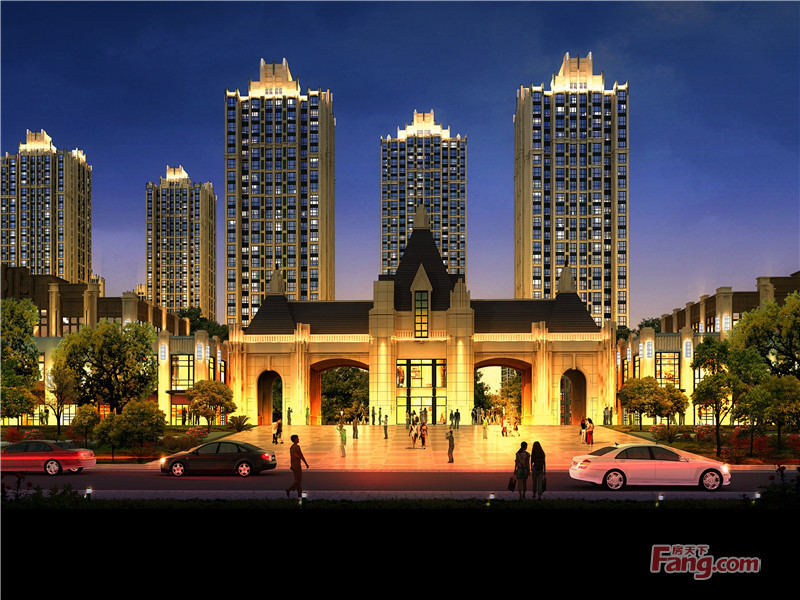


konjaku: As we have seen, Shou’er Tiancheng is building a 12 year multi-school campus for its residents, a shopping center, a hospital, etc. Huifu Yuerongwan is following the same model. They seem the product of an ambition to build more than a residential complex, nothing less than an entire “city” with a complete set of social functions, will do. How will these individual cities, or micro-cities as they are referred to below, knit into the larger urban fabric?
Forming a complete set of high grade facilities: Yanjiao firmly establishes its “micro city” concept
2014-11-06
http://news.163.com/14/1106/14/AACIICIH00014AED.html
Since the Central Bank “930” policy relaxing restrictions on home loans came out, the Beijing real estate market has been experiencing an Indian summer, reviving the area around Beijing, Taking Yanjiao as an example, prices have stopped tumbling and are starting to rise again, and many developments are speeding up the pace of their sales offerings.
This reporter found out that at present the leading seller in Yanjiao is Huifu Yuerongwan. The best of the best, representing the ideal of new city development, Shou’er Tiancheng, Aishangdao [Lovely Island], are priced between 8500 to 11000 yuan per square meter. It is worth nothing that within the framework of Beijing-Tianjin-Hebei unification, the plan calls for not only residential projects, but also to build schools, restaurant and entertainment districts, large scale commerce, high end office buildings — a complete set of facilities, not only to offer new residents a convenient lifestyle, but to bring all the functions of a complete city to the area around the residential projects, in order to enhance their value.
Huifu Yuerongwan at 1,800,000 square meters is a super-large development. Huifu Development Corporation deputy-president Liu Zhengang said that Huifu Yuerongwan was going to be an international “micro-city” with not only residences, but also grade 5A office buildings, and businesses. They have already concluded a contract with Carrefour Department stores and Marriot. “These will not only complete Huifu Yuerongwan by making it a complete set of essential facilities, but it will add important components to Yanjiao city, transforming and upgrading the whole area, ” said Liu Zhengang.
The area on the periphery of Beijing has up to now been limited in being able to fill all the demands of the society at large, because of the principal of the short barrel stave. [von Liebig’s law of the minimum –growth is not governed by the total resources, but by the scarcest resource]. Real estate companies have been aware of this problem. Liu Zhengang said, “Besides residences, we must provide opportunities for work, commerce, social interaction, education, and other social functions. This is the need the micro-city concept addresses. In the future, some companies will have offices and do business in the Huifu Yuerongwan office building. The office staff when they leave work can go to their homes in Huifu Yuerongwan, close by there will be a shopping center, a fitness center, and schools, fulfilling their every need. Since their work and residence is at the same place, their lives will be integrated and be less stressful. This will relieve some of the pressure from excessive congestion in Beijing”[population dispersed to urban centers on the periphery, without having to commute].
According to Liu Zhengang, along with Tongzhou, there are plans to create urban centers to the east of Beijing. Yanjiao is in the forefront of this movement. After many years of adjustment and sedimentation, Yanjiao has reached a certain maturity and rational form. As more people settle there, it will continue to develop in a sound and positive direction.
Reporter: Chen Jingsi
微城市 micro-city
汇福悦榕湾 Huifu Yuerongwan
爱上岛 Aishangdao
 Translations about social issues: China